Best Skylead Alternative: Sequences vs Inbound Authority
Compare Skylead alternatives for LinkedIn outreach. Learn why inbound authority delivers 8x higher close rates than multi-channel automation at half the cost.

Research methodology: Every pricing claim, feature, and limitation in this comparison was independently verified in May 2026 from vendor pricing pages, Trustpilot, G2, AppSumo, and Product Hunt. Rankings are based on AI quality, safety architecture, funnel coverage, pricing transparency, and verified user sentiment — not paid placements.

Skylead is a $100/month multi-channel automation tool that combines LinkedIn and email outreach in "smart sequences." With a 4.5/5 rating on G2, it promises to save 11+ hours weekly through automated prospecting. But in 2026, LinkedIn's Guardian AI has made the "spray and pray" approach officially obsolete. The question isn't which automation tool to choose—it's whether automation-first outreach still makes strategic sense.
Key Takeaways
- Skylead costs $100/month for multi-channel automation that carries inherent platform risk
- Users report mixed results: Strong praise for features alongside complaints about bugs and UI issues
- LinkedIn's 2026 crackdown is real: Even "safe" automation reduces restriction risk from 23% to only 5-10%
- Inbound leads convert 8x higher: 14.6% vs 1.7% close rates, with 61% lower cost per lead
What Is Skylead and Why Are Users Seeking Alternatives?
Skylead is a cloud-based LinkedIn automation and cold email platform designed for sales reps, SDRs, marketers, recruiters, and agency owners. According to ColdIQ's review, it helps users "supercharge outreach while saving over 11 hours of work per week."
Want to Generate Consistent Inbound Leads from LinkedIn?
Get our complete LinkedIn Lead Generation Playbook used by B2B professionals to attract decision-makers without cold outreach.
No spam. Just proven strategies for B2B lead generation.
Skylead Key Features
| Feature | Description |
|---|---|
| Smart Sequences | Combines LinkedIn + email in automated workflows |
| Email Warm-Up | Unlimited email account warm-up included |
| Email Finder & Verifier | Built-in double-verified email discovery |
| Smart Inbox | Unified inbox for all conversations |
| Image/GIF Personalization | Unlimited visual personalization |
| Analytics Dashboard | Campaign performance tracking |
Skylead Pricing (2026)
According to Derrick-App's pricing guide:
| Plan | Monthly | Annual (Save 17%) |
|---|---|---|
| Standard | $100/month | $1,000/year (~$83/month) |
| White Label | Custom pricing | Contact for quote |
Skylead offers a 7-day free trial for testing before commitment.
Why Users Look for Alternatives
Despite strong overall ratings, G2 reviews reveal common pain points:
- Technical bugs: Users report campaign data loss and workflow interruptions
- Unintuitive UI: Creating smart sequences can feel clunky with limited ability to save progress
- No native CRM integration: Requires CSV exports for CRM syncing—no real-time updates
- Sales Navigator inbox issues: Integration with Sales Navigator messaging is problematic
- Price point: At $100/month, it's in the premium tier for multi-channel automation
The Multi-Channel Automation Problem in 2026
Skylead's core value proposition is combining LinkedIn and email in automated sequences. But this approach faces increasing challenges.
LinkedIn's 2026 Enforcement Reality
According to Growleads' analysis:
- LinkedIn's Guardian AI update has fundamentally changed detection capabilities
- Even with proper warm-up protocols, restriction probability only drops from 23% to 5-10%
- Cloud platforms carry lower risk than desktop apps, but all automation violates LinkedIn's terms
What "Smart Sequences" Actually Mean
Skylead's smart sequences automate this workflow:
- Send LinkedIn connection request
- If accepted, send follow-up message
- If not accepted, find email and send cold email
- Continue sequence based on responses
While this seems efficient, consider the recipient experience: they receive automated LinkedIn requests and cold emails from someone they've never heard of. This is classic outbound prospecting—scaled by automation but fundamentally unchanged in approach.
The Response Rate Reality
Even Skylead's best-case user results reveal the limitations:
- 40% invite acceptance rate (meaning 60% rejection)
- 57-69% email open rates (but opens don't equal replies or conversions)
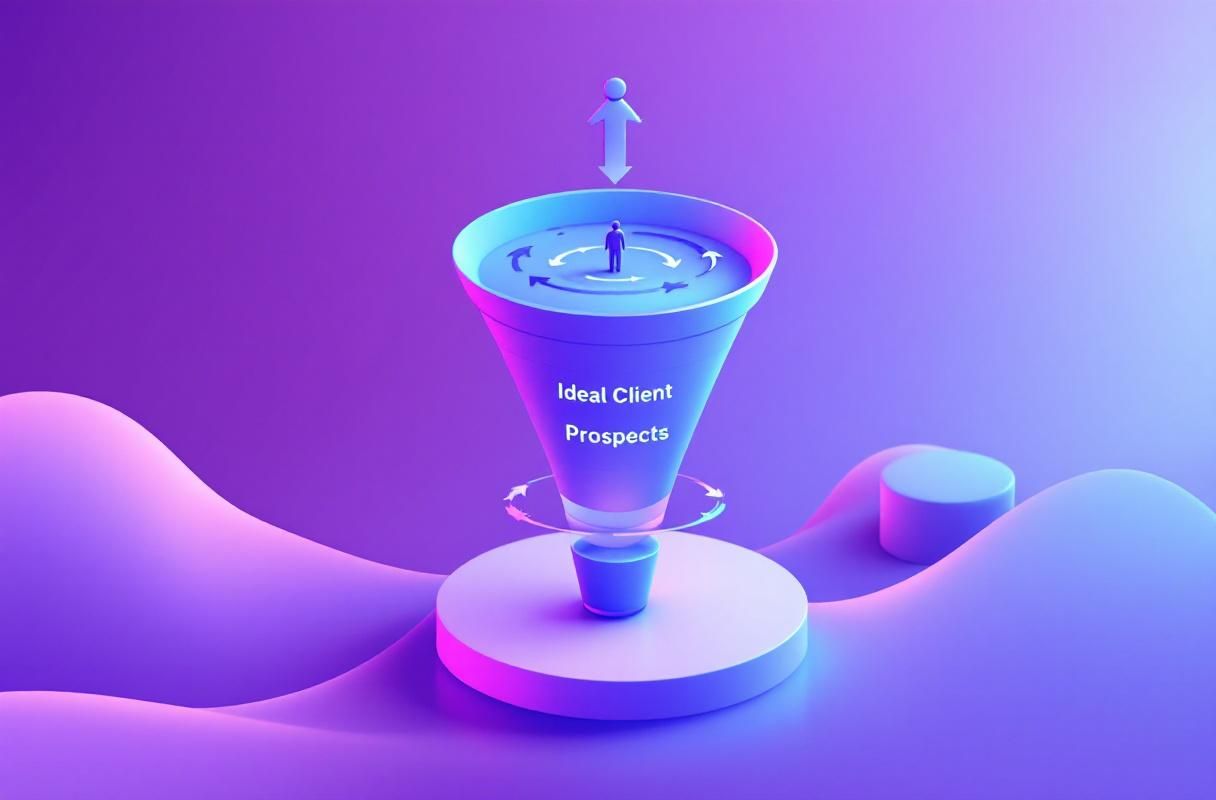
Compare this to inbound authority, where prospects who come to you have already:
- Seen your thought leadership
- Recognized your expertise
- Decided they want to learn more
- Self-qualified as interested
Top Skylead Alternatives for Multi-Channel Automation
If you're determined to continue with automation despite the risks, here are the main alternatives:
1. LaGrowthMachine
Pricing: ~$100-120/month
A comparable multi-channel automation platform offering:
- LinkedIn + email + Twitter automation
- Advanced sequence building
- CRM integrations
- Lead enrichment
Advantage over Skylead: More native integrations. Limitation: Similar pricing, same automation approach.
2. Expandi
Pricing: $99/month
Cloud-based LinkedIn automation with:
- Smart limits and safety features
- A/B testing for outreach
- Webhook integrations
- Detailed analytics
Advantage over Skylead: Focused specifically on LinkedIn safety. Limitation: LinkedIn-only (no email integration).
3. Dripify
Pricing: $39-79/month
More affordable LinkedIn automation featuring:
- Drip campaign sequences
- Team management features
- Safety limits and controls
- Performance analytics
Advantage over Skylead: Lower price point. Limitation: Less sophisticated multi-channel capabilities.
4. Meet Alfred
Pricing: $29-49/month (billed annually)
Multi-channel automation including:
- LinkedIn, email, and Twitter
- Built-in CRM
- 24/7 support
- Team collaboration
Advantage over Skylead: Lower cost, better support reputation. Limitation: Fewer advanced features on basic plan.
5. Waalaxy
Pricing: Starting at €60/month
European-based automation with:
- LinkedIn + email sequences
- Template library
- CRM exports
- Safety controls
Advantage over Skylead: Lower entry price in euros. Limitation: Regional focus may affect support.
The Better Alternative: LinkedIn Inbound Authority
Here's what the automation-versus-automation comparison misses: the fundamental approach is flawed.
Why Inbound Beats Automation at Any Price
| Metric | Skylead Automation | Inbound Authority |
|---|---|---|
| Monthly Cost | $100 | $39 (ConnectSafely.ai) |
| Close Rate | ~1.7% (outbound average) | 14.6% (inbound average) |
| Ban Risk | 5-23% even with precautions | 0% |
| Lead Quality | Cold, often skeptical | Warm, pre-qualified |
| Scalability | Limited by platform restrictions | Compounds over time |
| Time Investment | Constant sequence management | Content creation (lasting asset) |
According to Snov.io's research, inbound leads cost 61% less than outbound leads. Combined with 8x higher close rates, the ROI difference is dramatic.
How Inbound Authority Works
Instead of automating outreach to cold prospects:
- Create valuable content demonstrating your expertise
- Engage authentically with industry conversations
- Build visibility through consistent, strategic presence
- Attract prospects who already trust your expertise
- Convert warm leads who came to you first
This isn't theoretical. LinkedIn's organic marketing delivers 229% ROI across industries—without any automation risk.

The Math: Skylead vs ConnectSafely.ai
Skylead Approach (Automation)
- Monthly cost: $100
- Contacts reached: ~1,000/month (with safe limits)
- Response rate: ~10% (industry average for cold outreach)
- Qualified conversations: ~100
- Close rate: 1.7% (outbound average)
- New clients per month: ~1-2
- Cost per client: $50-100
- Account risk: 5-23% restriction probability
ConnectSafely.ai Approach (Inbound)
- Monthly cost: $39
- Authority-attracted prospects: 10-20/month
- Response rate: 70%+ (warm, inbound conversations)
- Qualified conversations: 10-20
- Close rate: 14.6% (inbound average)
- New clients per month: 1-3
- Cost per client: $13-39
- Account risk: 0%
Same or better results, 61% lower cost, zero platform risk.
Making the Transition from Automation to Inbound
If you're currently using Skylead or similar tools, here's how to shift strategies:
Phase 1: Wind Down (Weeks 1-2)
- Export all contacts and conversation history from Skylead
- Stop all automated campaigns
- Let your LinkedIn account establish normal behavioral patterns
Phase 2: Foundation Building (Weeks 3-4)
- Identify 3-5 topics where you have genuine expertise
- Create a content calendar with 2-3 posts per week
- Begin engaging authentically with industry conversations
Phase 3: Authority Development (Weeks 5-8)
- Publish consistently valuable content
- Respond thoughtfully to every comment
- Start conversations with engaged viewers
Phase 4: Inbound Harvest (Month 3+)
- Monitor who engages repeatedly with your content
- Identify buying signals from engagement patterns
- Reach out to warm prospects who've shown interest
- Convert conversations into clients
When Automation Still Makes Sense
To be fair, there are scenarios where multi-channel automation remains viable:
Potentially Valid Use Cases
- High-volume recruiting with extremely targeted lists
- Event promotion to pre-qualified registrant lists
- Re-engagement campaigns to existing warm contacts
- Market research at scale (with appropriate disclosure)
But Consider
Even in these cases, the 14-day manual warm-up requirement and ongoing risk management add hidden costs that pure automation pricing doesn't reflect.
How ConnectSafely.ai Enables Inbound Lead Generation
ConnectSafely.ai takes a fundamentally different approach than Skylead:
Platform-Compliant Authority Building
- Strategic content scheduling that builds expertise visibility
- Authentic engagement assistance that expands reach naturally
- Buying signal detection that identifies warm prospects
- Relationship nurturing that converts interest into conversations
The Inbound System
- Visibility: Your content reaches target prospects
- Credibility: Consistent expertise builds trust
- Interest: Prospects engage with your content
- Signal: Engagement patterns reveal purchase intent
- Conversion: Warm outreach to pre-qualified leads
Starting from USD $10/month versus Skylead's $100/month, you pay less for an approach that generates better results with zero platform risk.
Frequently Asked Questions
What is the best Skylead alternative for LinkedIn automation?
For continued automation, Expandi ($99/month) offers strong LinkedIn-specific safety features. For multi-channel, Meet Alfred ($29-49/month) provides similar capabilities at lower cost. For superior results without automation risk, ConnectSafely.ai (from USD $10/month) delivers inbound lead generation.
Is Skylead safe to use on LinkedIn?
Skylead is a cloud-based tool, which carries lower detection risk than browser extensions. However, all automation violates LinkedIn's terms of service. Even with proper warm-up, restriction probability remains 5-10%.
How much does Skylead cost compared to alternatives?
Skylead costs $100/month ($1,000/year with annual discount). Alternatives range from Meet Alfred ($29-49/month) to LaGrowthMachine (~$100-120/month). ConnectSafely.ai starts from USD $10/month for inbound lead generation.
Why do inbound leads convert better than automation-generated leads?
Inbound leads have already seen your expertise, recognized your value, and chosen to engage. This pre-qualification results in 14.6% close rates versus 1.7% for cold outbound—an 8x improvement. They also cost 61% less to acquire.
Can I use Skylead alongside an inbound strategy?
While technically possible, mixing automation with inbound creates risk. LinkedIn's 2026 detection actively monitors for automation patterns. The smarter transition is moving fully to inbound, which compounds over time as your authority grows.
Ready to stop paying $100/month for risky automation? Start your free trial and discover why inbound authority delivers better results at lower cost.
The Hidden Cost of Automation: Why ROI Calculations Often Miss the Mark
When evaluating the cost-effectiveness of automation tools like Skylead, many users focus solely on the monthly or annual subscription fee. However, this narrow perspective overlooks the hidden costs associated with automation, such as the time and resources required to set up and maintain complex workflows, troubleshoot technical issues, and mitigate the risks of platform restrictions or bans. Moreover, the true ROI of automation depends on various factors, including the quality of the target audience, the effectiveness of the messaging, and the sales team's ability to convert leads into paying customers. In reality, the actual cost of automation can be significantly higher than the stated price, especially if the tool is not used optimally or if the user lacks the necessary expertise to maximize its potential. For instance, a user who spends 10 hours per week setting up and managing automation workflows may save an equivalent amount of time in manual outreach efforts, but the net gain in productivity may be negligible if the automation tool only yields a handful of low-quality leads. To accurately calculate the ROI of automation, users must consider these hidden costs and factor in the nuances of their specific use case.
Myth vs Reality: The Limits of "Safe" Automation in LinkedIn Outreach
A common misconception among LinkedIn marketers is that "safe" automation tools, which claim to operate within the platform's guidelines, can completely eliminate the risk of restrictions or bans. While it is true that some automation tools are designed to be more cautious and compliant than others, the notion that any tool can guarantee 100% safety is a myth. In reality, LinkedIn's algorithms and human reviewers are constantly evolving to detect and prevent spammy behavior, and even the most seemingly innocuous automation tools can trigger flags if used excessively or in combination with other tactics. Furthermore, the concept of "safe" automation is often subjective and dependent on various factors, such as the user's account history, the quality of their content, and the engagement patterns of their audience. To navigate this complex landscape, users must be aware of the limitations and potential risks of automation, even when using tools that claim to be "safe." By understanding the nuances of LinkedIn's policies and the ever-changing nature of its enforcement, marketers can make more informed decisions about their outreach strategies and avoid common pitfalls that can lead to account restrictions or bans.
Advanced Automation Strategies: Using Conditional Logic to Maximize ROI
For experienced marketers and sales teams, basic automation workflows may not be sufficient to achieve optimal results. To unlock the full potential of automation, users can leverage advanced strategies like conditional logic, which enables them to create complex, branching workflows that adapt to different scenarios and audience responses. By using conditional logic, marketers can segment their audience, personalize their messaging, and tailor their follow-up sequences to specific behaviors or engagement patterns. For instance, a user could create a workflow that sends a different email sequence to leads who have engaged with their content versus those who have not, or that assigns a higher priority to leads who have visited the company website versus those who have only viewed the LinkedIn profile. By incorporating conditional logic into their automation workflows, users can increase the relevance and effectiveness of their outreach efforts, ultimately driving higher conversion rates and ROI. However, this advanced strategy requires a deep understanding of the target audience, the sales funnel, and the automation tool's capabilities, making it more suitable for experienced practitioners who have already mastered the basics of automation.
The Dark Side of Multi-Channel Automation: When Over-Automation Leads to Burnout
While automation can be a powerful tool for streamlining outreach efforts and driving efficiency, over-automation can have unintended consequences, such as burnout and decreased productivity. When users rely too heavily on automation, they may find themselves overwhelmed by the sheer volume of leads and messages generated by their workflows, leading to a never-ending cycle of follow-ups, responses, and data entry. Moreover, the constant pressure to optimize and refine automation workflows can create a sense of anxiety and stress, as users feel compelled to stay ahead of the curve and avoid missing out on potential opportunities. To avoid this burnout, users must strike a balance between automation and human touch, recognizing that some aspects of outreach and sales require a personal, empathetic approach that cannot be replicated by machines. By prioritizing quality over quantity and focusing on high-touch, high-value interactions, marketers can create a more sustainable and fulfilling outreach strategy that leverages the benefits of automation while avoiding its pitfalls.
It Depends: When Inbound Authority Trumps Automation in High-Stakes Outreach
In certain high-stakes outreach scenarios, such as enterprise sales or strategic partnerships, automation may not be the most effective approach, and inbound authority may be a better bet. When dealing with high-value, high-consideration decisions, buyers often require a more personalized, consultative approach that addresses their unique needs and concerns. In these situations, automation can come across as impersonal or even spammy, potentially damaging the reputation of the brand or sales team. By contrast, inbound authority, which is built through high-quality content, thought leadership, and genuine engagement, can establish trust and credibility with the target audience, making it more likely that they will consider the brand's offerings or partner with them. However, this approach requires a significant investment of time, effort, and resources, and may not be feasible for every organization or use case. Ultimately, the choice between automation and inbound authority depends on the specific goals, audience, and context of the outreach effort, and users must carefully consider these factors to determine the best approach for their unique situation.
See How It Works
Watch how people get more LinkedIn leads with ConnectSafely




Related Articles