
Beyond Intent Data: Why LinkedIn Signals Win
Stop paying for intent data. LinkedIn engagement signals reveal buyer interest with 10x better conversion.


76% of marketers use intent data to get better leads. That's what Predictiv's research shows. But here's the problem with third-party intent data: by the time you see the signal, so do your competitors. Meanwhile, LinkedIn engagement signals reveal buyer interest that only you can see—because you created the engagement.
Intent data providers like ZoomInfo, Bombora, and Demandbase track when companies research certain topics. They sell this data to everyone willing to pay. But when 50 vendors contact the same "high-intent" account simultaneously, the advantage disappears.
Want to Generate Consistent Inbound Leads from LinkedIn?
Get our complete LinkedIn Lead Generation Playbook used by B2B professionals to attract decision-makers without cold outreach.
No spam. Just proven strategies for B2B lead generation.
LinkedIn inbound authority building creates a different kind of intent signal—first-party engagement data that reveals genuine interest through direct interaction with your content and presence.
Key Takeaways
- 76% of marketers use intent data per Predictiv, but shared data means shared competition
- Third-party intent data providers track 500+ billion signals monthly via Demandbase—available to every competitor
- Only 1 in 3 marketers are happy with their lead nurturing results according to industry studies
- 61% of B2B marketers say generating leads is their most difficult task per HubSpot
- LinkedIn engagement signals are exclusive to you—competitors can't buy your comment engagement data
- ConnectSafely.ai creates first-party intent signals through strategic engagement that only you can act on
The Problem With Intent Data Providers
According to The Forrester Wave: B2B Intent Data Providers Q1 2026, the intent data market has matured significantly. Major providers now track:
- Website visits and content consumption
- Search behavior across B2B websites
- Third-party content syndication engagement
- Technographic and firmographic changes
But this maturity creates a fundamental problem: commoditization.
Everyone Gets the Same Signals
When Bombora identifies that Company X is researching "CRM solutions," they don't sell that signal to one vendor. They sell it to dozens—or hundreds.
The result: Company X gets bombarded by every CRM vendor simultaneously. Their inbox fills with cold outreach. Their phone rings constantly. The "high-intent" signal becomes noise.

Timing Is Already Lost
Third-party intent data has inherent lag:
- Data collection takes days or weeks
- Processing and scoring add more delay
- By the time you act, the buying window may have closed
According to InboxInsight's research, only 26% of B2B marketers use exclusively first-party data, while 19% rely solely on third-party data. The remaining 55% use a combination—but the third-party component remains the weakest link.
Cost vs. Value Erosion
Premium intent data subscriptions cost thousands monthly. As more competitors subscribe, the data's competitive advantage decreases while costs remain high.
Why LinkedIn Engagement Signals Are Different
LinkedIn engagement signals flip the intent data model. Instead of buying signals that competitors also see, you create signals through direct engagement that only you can observe.
Types of LinkedIn Intent Signals
When you build LinkedIn inbound authority, you create exclusive intent signals:
| Signal Type | What It Reveals | Why It's Exclusive |
|---|---|---|
| Profile views from target accounts | Someone researched you specifically | Only you see who viewed your profile |
| Engagement on your posts | Active interest in your expertise | Your content, your engagement data |
| Responses to your comments | Direct conversation interest | Private interaction you initiated |
| Connection request acceptance | Relationship interest | Personal connection choice |
| Content saves and shares | High value perception | Your content resonating |
First-Party vs. Third-Party Intent
| Third-Party Intent Data | First-Party LinkedIn Signals |
|---|---|
| Shared with competitors | Exclusive to you |
| Days or weeks old | Real-time |
| Anonymous or aggregated | Individual contacts identified |
| Passive research behavior | Active engagement with YOU |
| $5,000-50,000/year | Built through organic engagement |
Inbound leads convert 10x better than outbound according to marketing research—partially because inbound signals represent genuine interest, not just topic curiosity.
How LinkedIn Engagement Creates Intent Signals
Signal 1: Profile Views After Your Comment
When you comment strategically on industry posts, prospects notice. Those who view your profile afterward are signaling:
- "Who is this person with interesting insights?"
- "Are they relevant to my business?"
- Active curiosity about working with you
ConnectSafely.ai tracks which comments drive the most profile views, revealing which audiences respond to your expertise.
Signal 2: Engagement on Your Content
When someone from a target account likes, comments, or shares your post:
- They've self-identified as interested
- They want their network to see they engage with you
- They're signaling openness to conversation
This is higher-quality intent than anonymous website visits that third-party providers track.
Signal 3: Connection Acceptance
When a prospect accepts your connection request after seeing your engagement:
- They've invited you into their professional network
- They're open to direct communication
- They've made an active choice (not passive behavior)
Signal 4: Comment Replies and Conversations
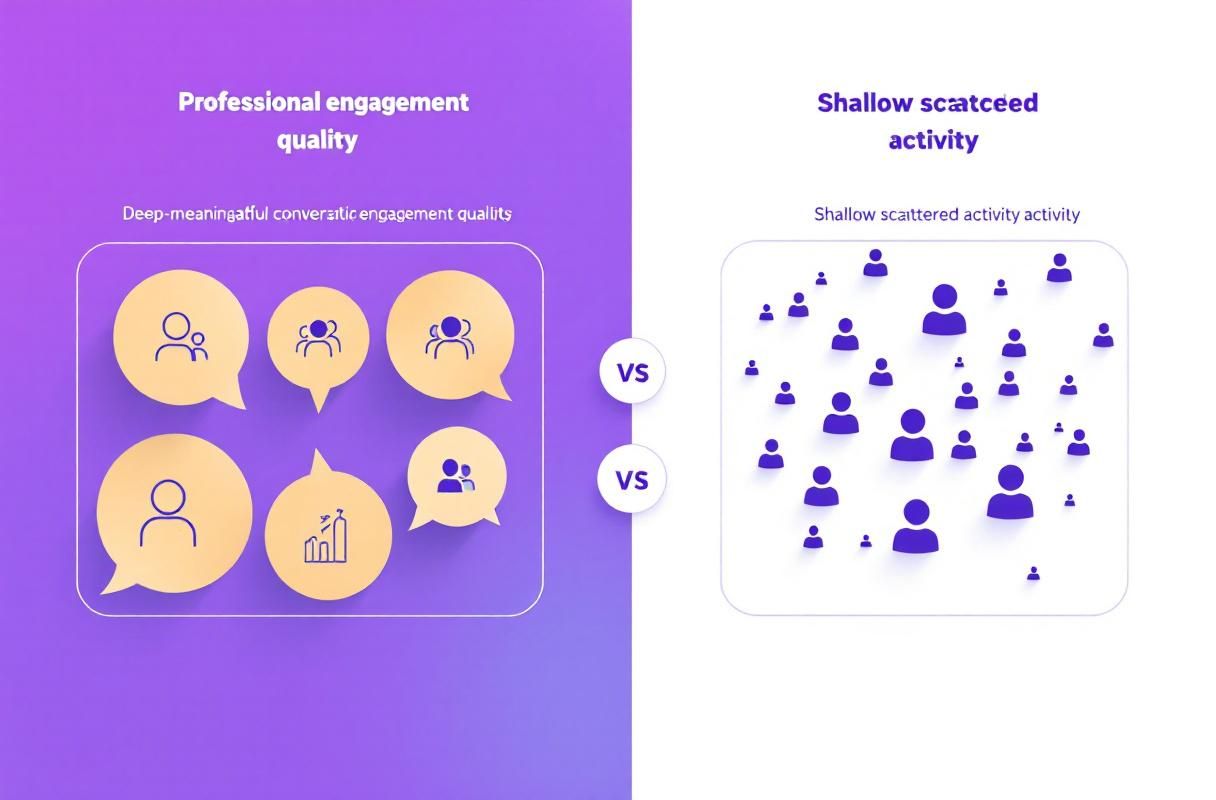
When prospects reply to your comments or engage in conversation:
- Highest-quality intent signal available
- Direct interest in your perspective
- Natural opening for business conversation
Building Your Intent Signal Engine
Here's how to create LinkedIn engagement signals that outperform purchased intent data:
Step 1: Target Strategic Accounts
Identify the accounts you want to generate intent signals from:
- Current pipeline companies
- Ideal customer profile matches
- Companies where you have competitive intelligence
- Accounts in your geographic or industry focus
Step 2: Build Visibility in Their Feeds
Use ConnectSafely.ai to systematically build visibility:
- Comment on posts they engage with (they'll see your name repeatedly)
- Engage with content from their executives (direct visibility to decision-makers)
- Post content relevant to their challenges (attract their organic engagement)
- Target creator audiences where they participate
Step 3: Monitor Your Exclusive Signals
Track the intent signals only you can see:
- Profile views from target accounts
- Engagement on your content from target roles
- Connection requests from target companies
- Comment conversations with prospects
Step 4: Act on First-Party Data
When you see strong intent signals:
- Profile view from target account → View their profile, engage with their content
- Like on your post → Comment thanking them, start conversation
- Comment reply → Continue the dialogue, offer value
- Connection acceptance → Send personalized welcome message
The ROI Comparison
Traditional Intent Data ROI
According to industry benchmarks:
- Investment: $15,000-50,000/year for quality intent data
- Leads generated: Varies widely, often shared with competitors
- Conversion rate: 1-3% (same data, same timing as competition)
- CAC impact: Marginal improvement due to signal sharing
LinkedIn Engagement Signal ROI
With ConnectSafely.ai from USD $10/month:
- Investment: $468/year
- Leads generated: 10-20 qualified inbound leads monthly
- Conversion rate: 10-15% (exclusive signals, built relationships)
- CAC impact: Significant reduction (inbound leads cost 62% less)
The math is clear: exclusive first-party signals outperform expensive shared data.
Why Intent Data Providers Can't Replicate This
Intent data providers face structural limitations:
They Track Research, Not Relationships
Third-party intent data shows that someone at Company X researched "sales enablement tools." It doesn't show:
- If they're ready to buy
- If they have budget authority
- If they're the right persona
- If they're considering you specifically
LinkedIn engagement signals show direct interest in you—not just your category.
They Sell to Multiple Buyers
The intent data business model requires selling signals to multiple customers. Your competitor subscriptions subsidize your subscription—and vice versa.
LinkedIn engagement data is inherently exclusive. Your comments, your content, your engagement creates signals that only you can see and act on.
They Can't Create Warm Relationships
Knowing someone is researching your category doesn't warm the relationship. You still arrive as a stranger with purchased information.
LinkedIn authority building creates recognition before you ever reach out. Your outreach feels like a continuation, not an interruption.
Combining Intent Data with LinkedIn Signals
If you currently use intent data providers, LinkedIn signals can enhance your investment:
Prioritization Layer
Use third-party intent data to identify accounts showing category interest. Then use LinkedIn engagement to:
- Determine which contacts are most receptive
- Build relationships before outreach
- Create exclusive signals that differentiate your approach
Validation Layer
When intent data says Account X is active, validate through LinkedIn:
- Are their executives engaging on relevant topics?
- Has their engagement pattern shifted recently?
- Who specifically is posting about related challenges?
Timing Layer
Intent data tells you an account is interested. LinkedIn engagement tells you when specific people are most receptive to conversation.
Getting Started: Your First-Party Intent Strategy
Week 1-2: Account Mapping
- List your top 50 target accounts
- Identify 2-3 key contacts per account
- Find their LinkedIn profiles
- Note which industry creators they follow
Week 3-4: Visibility Building
Use ConnectSafely.ai to:
- Comment on posts your target contacts engage with
- Engage with content from target executives
- Post content relevant to their industry challenges
- Build consistent presence in their feeds
Week 5-6: Signal Monitoring
Watch for first-party intent signals:
- Profile views from target accounts
- Engagement on your content
- Connection request acceptances
- Comment conversations
Week 7+: Signal-Based Outreach
Act on the exclusive signals you've generated:
- Prioritize contacts showing strong engagement
- Reference specific interactions in outreach
- Continue building relationships through LinkedIn
- Track conversion rates vs. cold outreach
Frequently Asked Questions
What are the best intent data providers in 2026?
According to Forrester's Wave Report, leading intent data providers include Demandbase, ZoomInfo, Bombora, and Intentsify. However, third-party intent data is available to all competitors. LinkedIn engagement signals provide exclusive first-party intent that only you can see, often delivering better conversion rates at lower cost.
How do LinkedIn engagement signals compare to Bombora intent data?
Bombora tracks 12,000+ intent topics across B2B websites, selling signals to multiple buyers. LinkedIn engagement signals are exclusive—your content engagement, your profile views, your comment conversations. While Bombora shows category interest, LinkedIn signals show interest in you specifically.
Is first-party intent data better than third-party data?
According to InboxInsight's research, the most effective B2B marketers use both. However, first-party data from LinkedIn engagement provides exclusive signals that third-party providers can't replicate. First-party signals indicate direct interest in your brand, not just topic research.
How much does LinkedIn intent signal building cost compared to ZoomInfo?
ZoomInfo and similar platforms cost $15,000-50,000+ annually. ConnectSafely.ai starts from USD $10/month ($468/year) and creates exclusive first-party intent signals through strategic engagement. The ROI often exceeds expensive third-party data because the signals are exclusive and relationship-based.
Can I use LinkedIn signals for account-based marketing (ABM)?
Yes. LinkedIn engagement signals are ideal for ABM because they provide individual-level intent data, not just account-level signals. You can track which specific contacts are engaging with your content, viewing your profile, and responding to your comments—then prioritize outreach accordingly.
Ready to stop paying for shared intent data and start creating exclusive engagement signals? Start your free trial and let ConnectSafely.ai build the first-party intent engine that competitors can't buy.
The Dark Side of Intent Data: When Signals Mislead
Intent data providers promise to deliver high-quality leads, but the reality is that these signals can often be misleading. For instance, a company may be researching a particular topic, not because they're interested in buying, but because they're looking to partner with a vendor or invest in a competitor. Alternatively, a company may be researching a topic due to a single employee's curiosity, rather than a genuine buying intent. This is where first-party engagement data comes in – by analyzing how prospects interact with your content and presence, you can gain a more nuanced understanding of their intentions. However, it's essential to consider the potential biases and misinterpretations that can arise from relying solely on intent data. It's not uncommon for marketers to misattribute intent signals, leading to wasted resources and missed opportunities. To avoid this pitfall, it's crucial to combine intent data with other forms of data, such as firmographic and technographic information, to get a more complete picture of the prospect's buying journey.
Myth vs Reality: The Intent Data Provider Myth
One common misconception about intent data providers is that they can guarantee high-quality leads. The reality is that intent data providers are only as good as the data they collect, and this data is often noisy and incomplete. Moreover, the algorithms used to analyze this data are not always transparent, making it difficult to understand how the signals are being generated. Another myth is that intent data providers can replace human judgment and intuition. While intent data can provide valuable insights, it's essential to remember that buying decisions are often complex and influenced by multiple factors, including personal relationships, brand reputation, and emotional connections. Relying solely on intent data can lead to oversimplification and neglect of these critical factors. By recognizing the limitations of intent data providers, marketers can avoid common pitfalls and develop more effective lead generation strategies that combine data-driven insights with human intuition and creativity.
Advanced-Level: Using Graph Theory to Optimize LinkedIn Engagement Signals
For advanced marketers, graph theory can be a powerful tool for optimizing LinkedIn engagement signals. By representing the relationships between prospects, companies, and content as a graph, marketers can identify clusters, communities, and influencers that can help amplify their message. For instance, by analyzing the co-commenting patterns of prospects, marketers can identify potential buying groups and tailor their content to resonate with these groups. Additionally, graph theory can help marketers identify the most critical nodes in the network – the influencers and thought leaders who can help drive engagement and conversions. By applying graph theory to LinkedIn engagement signals, marketers can unlock new levels of insight and precision, enabling them to target their efforts more effectively and maximize their ROI. However, this approach requires a deep understanding of graph theory and its applications, as well as access to advanced analytics tools and expertise.
The Intent Data Provider Trap: When More Data Becomes Too Much Data
While intent data providers promise to deliver more insights and better leads, the reality is that too much data can be overwhelming. With hundreds of signals and data points to analyze, marketers can easily become paralyzed by the sheer volume of information. This is particularly true when dealing with intent data providers that offer a wide range of signals, from website visits to search behavior. To avoid this trap, marketers need to focus on the signals that truly matter – the ones that are most closely correlated with buying behavior. By prioritizing these signals and ignoring the noise, marketers can avoid the intent data provider trap and develop more effective lead generation strategies. However, this requires a deep understanding of the data and the ability to filter out irrelevant signals, which can be a challenging task, especially for marketers who are new to intent data.
Edge Cases: When LinkedIn Engagement Signals Contradict Intent Data
In some cases, LinkedIn engagement signals may contradict intent data, revealing a more complex buying journey than initially anticipated. For instance, a company may be researching a particular topic, but their engagement signals on LinkedIn suggest that they're not yet ready to buy. Alternatively, a company may not be showing any intent signals, but their engagement with your content on LinkedIn indicates a strong interest in your product or service. These edge cases highlight the importance of considering multiple data points and signals when evaluating a prospect's buying intent. By recognizing these contradictions and nuances, marketers can develop more sophisticated lead generation strategies that take into account the complexities of the buying journey. However, this requires a willingness to challenge assumptions and consider alternative perspectives, which can be a difficult task, especially when faced with conflicting data points.
See How It Works
Watch how people get more LinkedIn leads with ConnectSafely




Related Articles