How to Boost LinkedIn Engagement Into Inbound Leads
Boost your LinkedIn engagement rate with data-backed strategies. Learn why carousels get 4x more engagement and how comments drive 287% more reach than likes.

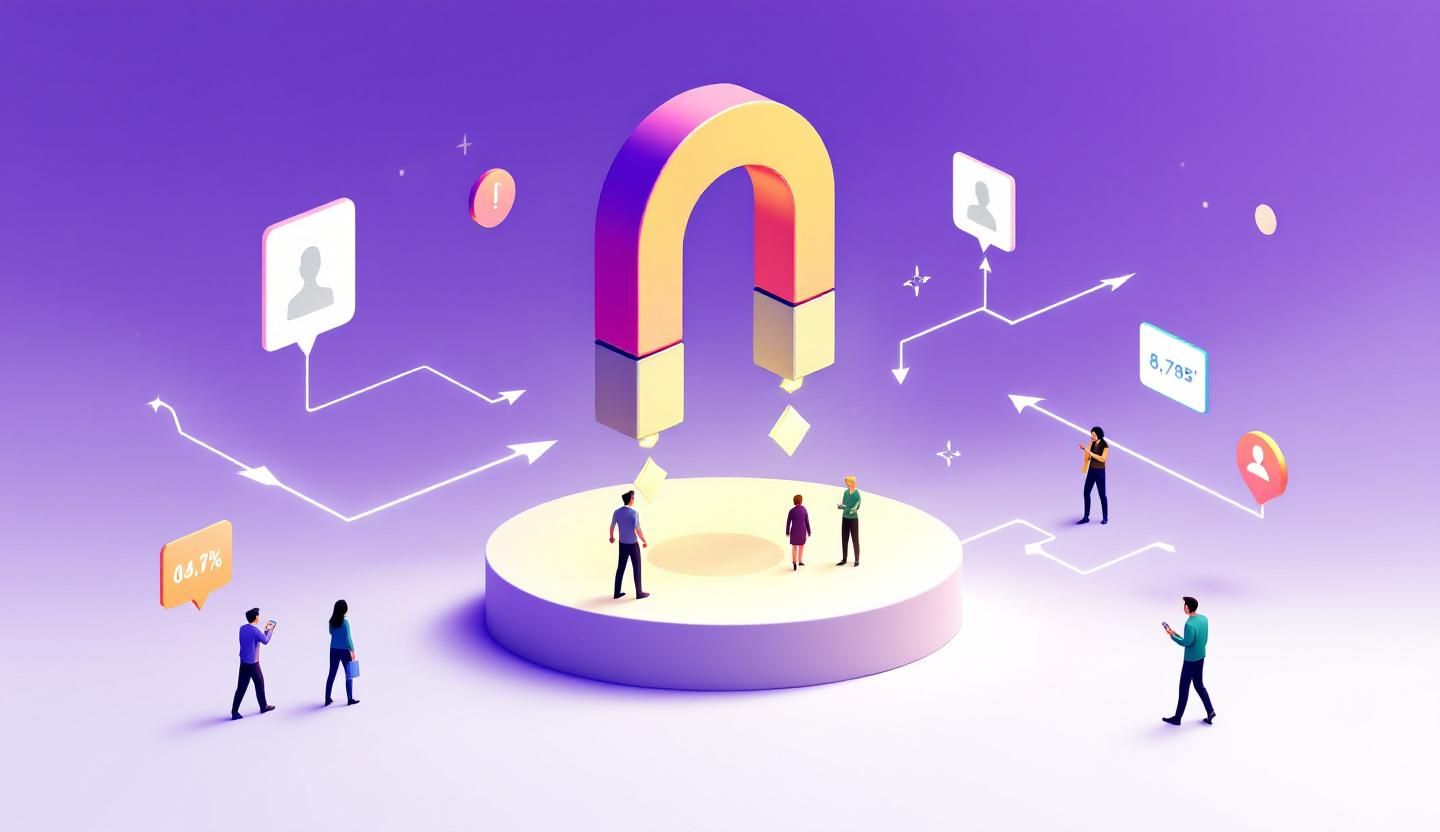
LinkedIn engagement in 2026 isn't just a vanity metric—it's the engine that drives inbound lead generation. According to Postking's LinkedIn engagement research, the algorithm now prioritizes genuine conversations over simple reactions, meaning a post with 50 comments outperforms one with 500 likes.
The question isn't whether to pursue engagement, but how to get the right kind of engagement that converts viewers into leads.
Want to Generate Consistent Inbound Leads from LinkedIn?
Get our complete LinkedIn Lead Generation Playbook used by B2B professionals to attract decision-makers without cold outreach.
No spam. Just proven strategies for B2B lead generation.
Key Takeaways
- Average engagement rate is 5.20% by impressions on LinkedIn in 2026
- Carousels get 24.42% engagement rate vs. 6.67% for text posts (4x difference)
- Comments drive algorithm reach more than reactions or shares
- Posts with links see 60% less reach than link-free posts
- The golden hour (first 60-90 minutes) determines if posts go viral
LinkedIn Engagement Benchmarks 2026
According to Social Insider's LinkedIn benchmarks, here's what "good" engagement looks like:
| Metric | Average | Good | Excellent |
|---|---|---|---|
| Engagement Rate | 5.20% | 7-10% | 10%+ |
| Comment Rate | 0.5-1% | 1-3% | 3%+ |
| Share Rate | 0.1-0.3% | 0.3-1% | 1%+ |
| Click-through Rate | 1-2% | 2-4% | 4%+ |
Why Engagement Matters for Lead Generation
According to Martal Group's LinkedIn statistics, reps with high SSI (Social Selling Index) scores generate 45% more opportunities and are 51% more likely to hit quota. Your engagement rate directly impacts your SSI.
The 2026 LinkedIn Algorithm Explained
According to SocialBee's algorithm analysis and River Blog's 300-post test, LinkedIn made three major shifts:
Change 1: External Links Are Penalized
Posts containing external links see roughly 60% less reach compared to identical posts without links. The algorithm wants to keep users on LinkedIn.
Solution: Put links in the first comment instead of the main post.
Change 2: Comments > Reactions
The algorithm prioritizes genuine conversations. A post with 50 thoughtful comments outperforms one with 500 likes because comments indicate actual engagement with your ideas.
Solution: Create content that invites discussion, not just approval.
Change 3: Engagement Pods Are Detected
According to GrowLeads' research, LinkedIn now detects and suppresses artificial engagement from pods. Authentic engagement wins.
Solution: Build real relationships instead of artificial boost networks.
Strategies to Boost LinkedIn Engagement
Strategy 1: Master the Carousel Format
According to Social Insider's research, carousels get a 24.42% engagement rate compared to 6.67% for text posts—nearly 4x higher.
Why carousels work:
- Higher dwell time (users swipe through)
- Algorithm rewards time-on-content
- Perfect for educational content
- Easy to consume complex information
Carousel best practices:
- 10-15 slides optimal length
- Clear, readable text on each slide
- Value on every swipe
- Hook on first slide
- CTA on last slide
Strategy 2: Leverage the Golden Hour
According to Hootsuite's LinkedIn research, early engagement during the first 60-90 minutes influences whether LinkedIn expands your post's reach.
Golden hour tactics:
- Notify team to engage early
- Have colleagues ready to comment
- Respond immediately to every comment
- Stay active to continue conversations
Strategy 3: Write Engaging Hooks
According to Octopus CRM's engagement analysis, the first 2-3 lines determine if people click "see more." Your hook must compel expansion.
Hook formulas that work:
- Contrarian: "Everyone says [X]. They're wrong."
- Story: "Last week, something strange happened..."
- Question: "Have you ever wondered why [X]?"
- Data: "I analyzed 500 [X]. Here's what I found."
- Bold claim: "[X] will change everything about [Y]."
Strategy 4: Ask for Engagement (The Right Way)
According to Chad Wyatt's LinkedIn marketing guide, explicit calls-to-engage can boost interaction—but only when done authentically.
Effective engagement prompts:
- "What's your experience with [topic]?"
- "Am I missing something here?"
- "Would you add anything to this list?"
- "Agree or disagree?"
- "Drop a [emoji] if you've experienced this"
What to avoid:
- "Like and share if you agree"
- "Tag someone who needs this"
- Engagement bait without value
Strategy 5: Optimize Post Length
According to Social Insider's benchmarks, optimal post length varies by goal:
| Length | Best For | Engagement Level |
|---|---|---|
| Short (< 500 chars) | Quick thoughts, questions | High reactions |
| Medium (500-1,500 chars) | Stories, insights | Balanced engagement |
| Long (1,500-3,000 chars) | Deep dives, how-tos | Higher comments |
Strategy 6: Use Hashtags Strategically
According to Postking's research, optimal hashtag usage is 3-5 per post. More than 5 can trigger spam filters, fewer than 3 limits discovery.
Hashtag strategy:
- 1-2 broad industry hashtags (#B2B, #Sales)
- 1-2 specific niche hashtags (#LinkedInInbound, #SocialSelling)
- 1 branded hashtag (optional)
Strategy 7: Post When Your Audience Is Active
According to Sprout Social's data, 80% of LinkedIn engagement occurs during business hours (9 AM - 5 PM).
Best days: Tuesday, Wednesday, Thursday Best times: 10 AM - 12 PM, 1 PM - 4 PM Worst times: Weekends, early mornings, late evenings
Strategy 8: Engage Before You Post
According to Social Media Today's LinkedIn tips, engaging with others' content before posting your own can boost your post's initial reach.
Pre-posting routine:
- Spend 5-10 minutes engaging with others
- Post your content
- Continue engaging
- Respond to all engagement on your post
Strategy 9: Repurpose High-Performers
When a post performs well, don't let it die. According to GrowLeads' research:
Repurposing tactics:
- Turn successful text posts into carousels
- Create video versions of popular written content
- Expand comments into new posts
- Update with new data 3-6 months later
Strategy 10: Build a Commenting Strategy
According to Martal Group's statistics, commenting is as important as posting for building engagement and visibility.
Commenting strategy:
- Comment on 5-10 posts daily from target prospects
- Add genuine value (not "Great post!")
- Ask follow-up questions
- Share relevant experiences
- Keep comments visible to their network
Engagement vs. Lead Generation
High engagement is meaningless if it doesn't convert to business outcomes. According to Cognism's research, 43% of B2B marketers using LinkedIn report direct revenue generation.
Converting Engagement to Leads
Track these metrics:
- Profile views from engaged users
- Connection requests after engagement
- DM conversations started
- Calls booked from LinkedIn
Optimize for quality:
- Engage with your target audience, not random accounts
- Create content that attracts your ideal clients
- Include clear CTAs when appropriate
- Monitor which content drives conversations
How ConnectSafely.ai Boosts Your LinkedIn Engagement
Building consistent engagement requires daily effort that most professionals struggle to maintain. ConnectSafely.ai automates the engagement that drives visibility:
AI-powered commenting:
- Thoughtful comments on relevant posts
- Consistent presence without manual effort
- Strategic targeting of your ideal prospects
Keyword targeting:
- Engage with content your audience creates
- Stay visible in relevant conversations
- Build authority in your niche
Post boosting:
- Amplify your best content during golden hour
- Get early engagement that triggers algorithm distribution
- Maximize reach of high-quality posts
The result:
- Higher engagement on your content
- Increased profile visits from prospects
- Inbound leads from qualified audience
- from USD $10/month vs. hours of daily manual work
Getting Started: 30-Day Engagement Challenge
Week 1: Foundation
- Audit current engagement rate
- Create 4 carousel posts
- Identify 20 accounts to engage with
- Set daily engagement time block
Week 2: Activation
- Post 3x using high-engagement formats
- Comment 10x daily on target accounts
- Test different hook styles
- Track golden hour engagement
Week 3: Optimization
- Analyze what content types perform best
- Double down on winning formats
- Expand engagement to 50+ accounts
- Start tracking profile visits
Week 4: Scale
- Establish sustainable daily routine
- Consider engagement automation
- Measure lead generation impact
- Plan next month's content
Frequently Asked Questions
What is a good engagement rate on LinkedIn in 2026?
According to Social Insider's benchmarks, the average LinkedIn engagement rate is 5.20% by impressions. Rates of 7-10% are considered good, while 10%+ is excellent. Multi-image posts average 6.60% engagement.
How do I boost LinkedIn engagement quickly?
Focus on carousel posts (24.42% engagement rate), optimize your posting time for Tuesday-Thursday mornings, write compelling hooks, and engage heavily during your post's first 60-90 minutes. According to Postking's research, comments drive more algorithmic reach than likes.
Do LinkedIn hashtags help engagement?
Yes, but use 3-5 hashtags maximum. According to LinkedIn algorithm research, more than 5 hashtags can trigger spam filters, while 3-5 help with content discovery. Mix broad industry hashtags with specific niche tags.
Why is my LinkedIn engagement so low?
Common reasons include: posting at wrong times, using external links in posts (60% reach penalty), inconsistent posting schedule, poor hooks, content not optimized for your audience, and lack of engagement with others. The 2026 algorithm heavily favors comment-driven conversations.
How can I increase LinkedIn engagement without spending hours daily?
ConnectSafely.ai automates strategic engagement through AI-powered commenting and post boosting. Starting from USD $10/month, you maintain consistent visibility while focusing on content creation. This compliant approach builds authority without risking account bans from aggressive automation.
Ready to boost your LinkedIn engagement and turn visibility into leads? Start your free trial and see how AI-powered engagement transforms your LinkedIn results.
The Dark Side of Engagement: When High Engagement Rates Can Be Misleading
While high engagement rates are often touted as the holy grail of LinkedIn marketing, there are scenarios where they can be misleading. For instance, if your content is consistently generating high engagement rates, but the conversations are not relevant to your business or are even negative, it may be a sign of a larger issue. Perhaps your content is resonating with the wrong audience or is being perceived as clickbait. In such cases, it's essential to dig deeper into the data and analyze the quality of the engagement, rather than just focusing on the quantity. It's also important to consider the potential consequences of chasing high engagement rates at the expense of other metrics, such as lead generation or sales. For example, a company that prioritizes engagement rates over lead generation may find that their LinkedIn marketing efforts are not aligning with their overall business goals. To avoid this pitfall, it's crucial to set clear goals and key performance indicators (KPIs) that align with your business objectives and to regularly monitor and adjust your LinkedIn marketing strategy accordingly.
Myth vs Reality: Debunking Common Misconceptions About LinkedIn Engagement
One common misconception about LinkedIn engagement is that it's solely driven by the quality of the content. While high-quality content is essential, it's not the only factor that determines engagement rates. In fact, research has shown that timing, audience, and even the day of the week can have a significant impact on engagement rates. For example, posting on Mondays or Fridays can result in lower engagement rates compared to posting on Tuesdays or Wednesdays. Another myth is that LinkedIn's algorithm prioritizes content from popular or well-known authors. While it's true that established authors may have an initial advantage, the algorithm is designed to prioritize content that resonates with the audience, regardless of the author's reputation. To maximize engagement rates, it's essential to experiment with different timing, audience targeting, and content formats, rather than relying on misconceptions or assumptions. By doing so, you can uncover what works best for your specific audience and adjust your strategy accordingly.
Advanced LinkedIn Engagement Strategies: Using Employee Advocacy to Amplify Reach
For advanced LinkedIn marketers, employee advocacy can be a powerful strategy to amplify reach and engagement rates. By empowering employees to share company content and thought leadership, you can tap into their personal networks and increase the visibility of your brand. However, this strategy requires careful planning and execution to be effective. First, it's essential to identify employees who are already active on LinkedIn and have a strong personal brand. These employees can serve as ambassadors for your company and help to promote your content to their networks. Next, you need to provide employees with the necessary training and resources to create and share high-quality content that aligns with your company's messaging and goals. This can include content creation workshops, social media training, and access to company news and updates. By leveraging employee advocacy, you can increase the reach and engagement rates of your content, while also promoting a culture of thought leadership and expertise within your organization.
The Impact of LinkedIn's Algorithm Changes on Engagement Rates: A Case Study
In 2022, LinkedIn introduced significant changes to its algorithm, prioritizing content that sparks meaningful conversations and penalizing posts with external links. To understand the impact of these changes, we conducted a case study with a B2B company that had a strong presence on LinkedIn. The results were surprising: while the company's engagement rates initially decreased due to the algorithm changes, they were able to recover and even increase their engagement rates by adjusting their content strategy. The key takeaway was that the algorithm changes forced the company to focus on creating high-quality, link-free content that resonated with their audience, rather than relying on external links to drive traffic to their website. By doing so, they were able to increase their engagement rates and establish themselves as thought leaders in their industry. This case study highlights the importance of adapting to algorithm changes and prioritizing high-quality content that aligns with LinkedIn's goals.
Edge Cases: When LinkedIn Engagement Strategies Backfire
While LinkedIn engagement strategies can be highly effective, there are edge cases where they can backfire. For instance, if you're using a strategy that prioritizes quantity over quality, such as posting multiple times a day or using automation tools to generate comments, you may find that your engagement rates actually decrease over time. This is because LinkedIn's algorithm is designed to prioritize content that is relevant, timely, and engaging, rather than content that is simply frequent or automated. Another edge case is when you're targeting a niche audience that is not highly active on LinkedIn. In such cases, it may be more effective to focus on other social media platforms or marketing channels that are more aligned with your target audience. To avoid these edge cases, it's essential to regularly monitor your LinkedIn analytics and adjust your strategy accordingly. This may involve experimenting with different content formats, timing, and audience targeting to find what works best for your specific audience and goals. By doing so, you can avoid common pitfalls and maximize the effectiveness of your LinkedIn engagement strategy.
See How It Works
Watch how people get more LinkedIn leads with ConnectSafely

Related Articles