How to Get Consulting Clients on LinkedIn
A proven LinkedIn inbound strategy for consultants to attract high-ticket clients without cold outreach, with a playbook that generates 10-20 leads monthly.


The best consultants don't chase clients—clients chase them. According to HubSpot's research, inbound leads convert at 14.6% compared to 1.7% for cold outreach. For consultants selling $10K-100K+ engagements, this difference is transformative: the same effort produces 8X more signed clients.
This guide shows you exactly how to build a LinkedIn presence that generates 10-20 qualified inbound leads per month—without cold messaging, without desperation, and without feeling like a sleazy salesperson.
Want to Generate Consistent Inbound Leads from LinkedIn?
Get our complete LinkedIn Lead Generation Playbook used by B2B professionals to attract decision-makers without cold outreach.
No spam. Just proven strategies for B2B lead generation.
Key Takeaways
- LinkedIn is the #1 B2B lead source: 80% of B2B leads from social media come from LinkedIn according to LinkedIn Business data
- Authority attracts better clients: Inbound leads arrive pre-sold on your expertise and pay higher fees with fewer objections
- Consistency beats intensity: 3-5 strategic touches weekly outperform sporadic content bursts
- Niche positioning is non-negotiable: "Business consultant" attracts nobody; "Revenue operations for B2B SaaS" attracts buyers
- The feast-famine cycle breaks with systems: Pipeline predictability requires consistent visibility, not constant outreach
Most consultants hate "sales and marketing." Good news: what works on LinkedIn in 2026 doesn't feel like sales—it feels like being helpful and visible in your area of expertise.
Why LinkedIn Works for Consultants (When Done Right)
Your Ideal Clients Are Already There
According to LinkedIn's official statistics:
- 4 out of 5 LinkedIn members drive business decisions
- 61 million LinkedIn users are senior-level influencers
- 65+ million decision-makers are active on LinkedIn
Your next $50K client isn't scrolling Instagram. They're checking LinkedIn between meetings, looking for solutions to business problems, and evaluating who they might hire.
Trust Builds Before the First Conversation
When someone discovers you through inbound—seeing your posts, reading your comments, following your journey—they arrive at the sales conversation with trust already established.
Cold outreach path: Stranger → "Who is this?" → Skepticism → Objections → Maybe trust → Sale
Inbound authority path: Awareness → Recognition → "I've seen their content" → Trust → "Let's talk" → Sale
The second path skips 3-4 steps. That's why inbound clients close faster, pay more, and create fewer headaches.
What Most Guides Get Wrong About LinkedIn for Consultants
The myth: "Just post consistently and clients will come."
The reality: Posting without strategy creates a content graveyard nobody reads.
Consistency matters, but only when combined with:
- Clear positioning that attracts the right people
- Content that demonstrates expertise (not just shares opinions)
- Strategic visibility where your ideal clients already engage
- A profile that converts visitors into inquiries
Many consultants post daily and wonder why nothing happens. They're missing the system that turns visibility into clients.
What actually breaks the feast-famine cycle:
- Specific niche positioning (not generic "business consulting")
- Authority-building content (not motivational quotes)
- Strategic engagement (not random networking)
- Profile optimization (not a digital resume)
- Consistent visibility (not sporadic activity)
Step 1: Position Your Consulting Practice for LinkedIn
Before you post anything, define exactly who you help and how.
The Positioning Formula
Generic (doesn't work): "I help businesses grow" Specific (attracts clients): "I help B2B SaaS companies fix broken RevOps so they can scale from $5M to $20M ARR"
Finding Your Niche
Answer these questions:
- Who pays you the most? (Focus on buyers, not browsers)
- What specific transformation do you deliver? (Outcome, not process)
- What credibility do you have? (Experience, results, credentials)
- Who would refer you today? (Your natural market)
Positioning Template
I help [SPECIFIC TYPE OF COMPANY/PERSON]
[ACHIEVE SPECIFIC OUTCOME]
through [YOUR METHOD/APPROACH]
so they can [BIGGER PICTURE BENEFIT].
Example: "I help fractional CFOs position themselves as strategic advisors (not bookkeepers) through LinkedIn authority building, so they can attract retainer clients paying $8-15K/month."
Profile Optimization Checklist
Your profile must convert visitors into conversations:
- Headline: Who you help + outcome you deliver (not your job title)
- Banner: Visual reinforcement of your positioning + CTA
- About section: Problem you solve, how you're different, social proof, clear next step
- Featured section: Lead magnet, case study, or booking link
- Experience: Reframed as client outcomes, not job descriptions
Step 2: Create Content That Attracts Clients
Not all content works for consultants. Here's what actually generates inquiries.
The Authority Content Framework
What doesn't work:
- Motivational quotes (no expertise demonstrated)
- Industry news roundups (no unique perspective)
- Generic tips everyone shares (not differentiated)
- "Day in the life" content (only celebrities can pull this off)
What works:
- Case study insights: "Here's what happened when we fixed X for a client"
- Contrarian takes: "Here's why conventional wisdom is wrong"
- Framework posts: "The 5-step process I use to solve Y"
- Lessons learned: "What I learned from this $100K mistake"
Content Pillars for Consultants
Build your content around 3-4 core themes:
Pillar 1: Your Expertise Area
- Deep insights on your niche
- Technical knowledge that demonstrates competence
- Industry trends and their implications
Pillar 2: Client Transformation Stories
- Before/after scenarios (anonymized if needed)
- Common problems and solutions
- What works vs. what doesn't
Pillar 3: Your Point of View
- Contrarian takes on industry assumptions
- What most people get wrong
- Your unique methodology
Pillar 4: Behind the Scenes
- How you work with clients
- Your thinking process
- Professional journey (selectively)
Posting Frequency That Works
Based on analysis of high-performing consultants on LinkedIn:
Minimum viable: 2 posts/week + daily engagement Sweet spot: 3-4 posts/week + daily engagement Diminishing returns: Beyond 5 posts/week, quality suffers
Engagement (comments on others' posts) matters as much as your own posts. Budget time for both.
Step 3: Strategic Engagement That Generates Visibility
Posting alone won't build your practice. Strategic engagement multiplies your reach.
The Engagement Strategy
Where to engage:
- Posts by thought leaders your ideal clients follow
- Comments from decision-makers in your niche
- Industry discussions where expertise adds value
How to engage:
- Add genuine insight (not "Great post!")
- Share contrasting perspectives respectfully
- Ask thoughtful questions that create dialogue
- Reference your experience when relevant
The Visibility Multiplier
When you comment thoughtfully on a popular post, you appear in front of that creator's entire audience. Done consistently, decision-makers start recognizing your name.
The path to inbound:
- You comment insightfully on posts your prospects follow
- Prospects see your name and perspective repeatedly
- Curiosity leads them to check your profile
- Optimized profile demonstrates expertise
- They reach out or follow for more
- Trust builds over weeks
- Need arises → You're top of mind
- Inbound inquiry arrives
Time Investment
Allocate daily LinkedIn time:
- 30 min: Engage on 10-15 relevant posts
- 15 min: Respond to comments on your content
- 15 min: Check messages and nurture conversations
Weekly total: 5-7 hours for meaningful LinkedIn presence
Step 4: The Inbound Lead Generation System
Turning visibility into clients requires a system.
The Consultant's Inbound Funnel
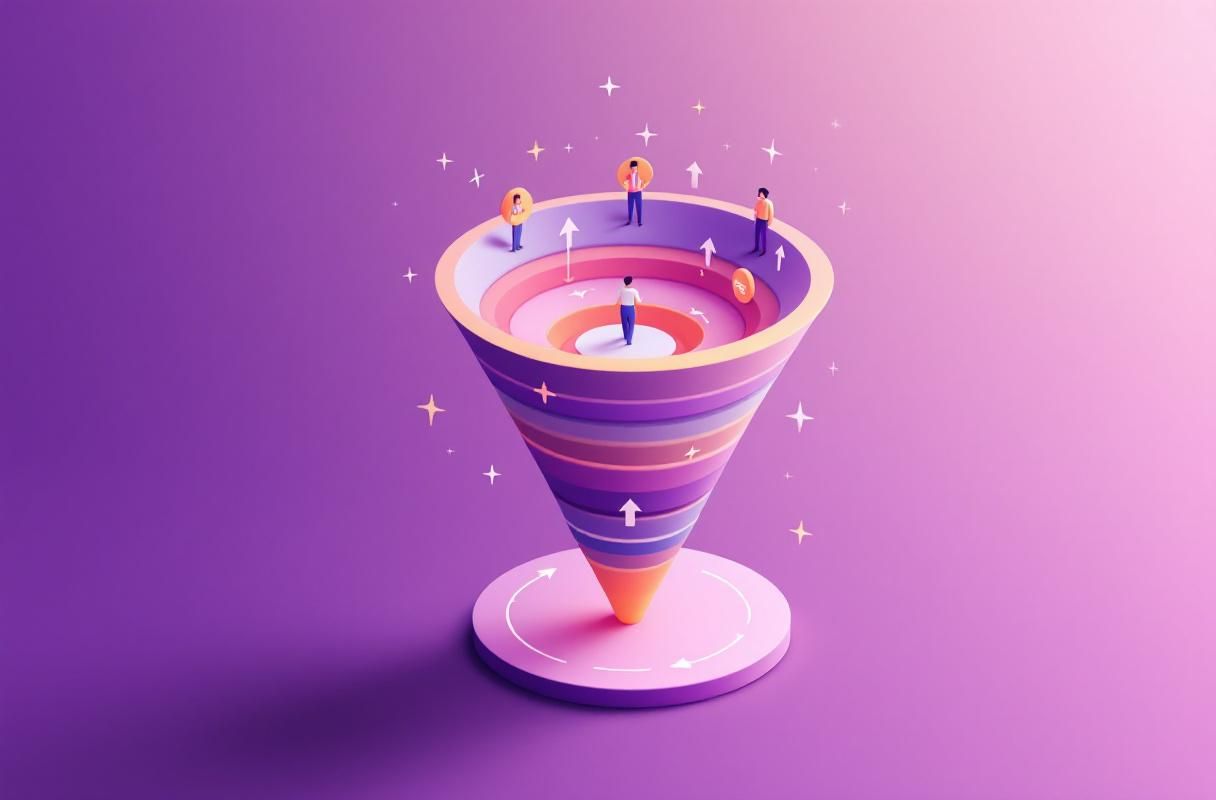
Top of Funnel: Content + Engagement → Creates awareness and recognition
Middle of Funnel: Profile + DMs → Converts curious visitors into conversations
Bottom of Funnel: Conversations + Calls → Closes qualified prospects into clients
Optimizing Each Stage
Top of Funnel (Awareness):
- Consistent content (3-4x/week)
- Strategic engagement (daily)
- Thought leadership visibility
Middle of Funnel (Consideration):
- Profile that demonstrates expertise and outcomes
- Featured content that provides value
- DM conversations that qualify interest
Bottom of Funnel (Decision):
- Consultation calls that diagnose problems
- Proposals that articulate value clearly
- Follow-up that maintains relationship
Metrics to Track
| Metric | Target | Why It Matters |
|---|---|---|
| Profile views/week | 100+ | Measures visibility |
| Connection requests received | 15-25/week | Measures interest |
| Inbound DMs | 3-5/week | Measures conversion |
| Discovery calls booked | 2-4/month | Measures pipeline |
| Clients closed | 1-2/month | Measures revenue |
Step 5: Converting Inbound Interest to Clients
Visibility without conversion is just vanity metrics.
When Prospects Reach Out
Do this:
- Respond within 24 hours (faster is better)
- Ask questions to understand their situation
- Qualify before offering to chat
- Suggest a call when timing is right
Avoid this:
- Immediate pitch or pricing discussion
- Long messages about yourself
- Generic scheduling links without context
- Desperation energy
The Discovery Call Framework
Structure (45-60 minutes):
- Rapport building (5 min): Connect on how they found you
- Situation understanding (15 min): What's happening now?
- Problem diagnosis (10 min): What's the real issue?
- Impact clarification (10 min): What does this cost them?
- Solution overview (10 min): How you would help
- Next steps (5 min): Proposal or follow-up
Key principle: Diagnose before you prescribe. Consultants who jump to solutions lose to those who understand problems deeply.
Pricing Conversations
Inbound clients handle pricing differently than cold prospects:
Cold prospects: Price is an obstacle to overcome Inbound clients: Price is a detail once trust is established
Because inbound leads arrive having already seen your expertise, they:
- Ask about price later in the conversation
- Compare to value, not just cost
- Accept premium pricing more readily
- Negotiate less aggressively

How ConnectSafely Accelerates This Process
Building organic LinkedIn authority takes time. ConnectSafely.ai accelerates the process by:
Strategic Amplification
Your posts get engagement in the critical first 30-60 minutes when LinkedIn's algorithm decides how far to push your content. More early engagement = more visibility = faster authority building.
Targeted Engagement
AI-powered commenting on posts where your ideal clients are already engaging. You appear consistently in the right conversations without manually hunting for them.
Creator Audience Targeting
Position yourself alongside thought leaders your prospects follow. Appear as a peer expert in front of qualified audiences.
The result: What takes 6-12 months organically often happens in 60-90 days with ConnectSafely's systematic approach.
The 90-Day Consultant's LinkedIn Roadmap
Days 1-30: Foundation
- Week 1: Define positioning, optimize profile
- Week 2: Create content pillars, write first 4 posts
- Week 3: Start posting (2x/week) + daily engagement
- Week 4: Refine based on early feedback
Success metrics: Profile views increasing, first connection requests from ICPs
Days 31-60: Momentum
- Post 3x/week consistently
- Engage 30+ minutes daily
- Track which content resonates
- Begin receiving profile-driven DMs
Success metrics: 50+ profile views/week, 2-3 inbound DMs, first warm conversations
Days 61-90: Pipeline
- Content rhythm established
- Engagement creating consistent visibility
- Inbound inquiries becoming regular
- Discovery calls happening
Success metrics: 100+ profile views/week, 3-5 inbound leads, 1-2 discovery calls/week
Days 90+: Compounding
- Authority builds on itself
- Referrals begin from impressed connections
- "I've been following you" becomes common
- Feast-famine cycle breaks
Common Mistakes Consultants Make on LinkedIn
Mistake 1: Generic Positioning
"Business consultant" or "helping companies grow" attracts nobody. Get specific.
Mistake 2: Inconsistent Activity
Posting intensely for two weeks, then disappearing for a month. The algorithm forgets you quickly.
Mistake 3: All Content, No Engagement
Posting but never commenting on others' content. You're missing half the visibility opportunity.
Mistake 4: Selling Too Early
Pitching in connection requests or first DMs. Build relationship before asking for business.
Mistake 5: No Clear CTA
People don't know how to work with you. Make the next step obvious in your profile.
Mistake 6: Copying Instead of Differentiating
Sharing the same content as every other consultant. Bring your unique perspective and experience.
Frequently Asked Questions
How long does it take for consultants to get clients from LinkedIn?
Most consultants see first inbound inquiries within 45-60 days of consistent activity. Closing first clients typically happens around 90 days. The difference from cold outreach: these leads convert at 14%+ vs 1-2%, making the timeline to revenue often similar despite longer lead time.
How often should consultants post on LinkedIn?
The sweet spot is 3-4 posts per week combined with daily engagement (commenting on others' content). Quality matters more than quantity—one viral post generates more leads than 20 posts nobody engages with. Focus on value over volume.
What type of content works best for consultants on LinkedIn?
Case study insights, frameworks, and contrarian takes consistently outperform other content types. Content that demonstrates expertise through specific examples and unique perspectives attracts buyers. Motivational quotes and generic tips attract followers, not clients.
Do I need LinkedIn Premium or Sales Navigator as a consultant?
No. The basic LinkedIn profile works fine for inbound lead generation. Sales Navigator helps with targeted outreach, but if you're building inbound through content and engagement, the free or basic Premium tier is sufficient. Invest in visibility tools like ConnectSafely instead.
How do I stand out from other consultants on LinkedIn?
Three differentiators: (1) Extremely specific positioning—narrow enough that you're obviously the expert for that niche, (2) Original perspective—share viewpoints others don't have, based on your unique experience, (3) Consistent presence—most consultants are inconsistent, so showing up regularly already differentiates you.
Ready to attract consulting clients instead of chasing them? Start your free ConnectSafely trial and build the LinkedIn authority that generates inbound leads.
The Paradox of Niche Positioning: When Specialization Isn't Enough
While it's widely accepted that niche positioning is crucial for attracting high-ticket clients, there's a lesser-known paradox that can trip up even the most experienced consultants. Simply put, specialization isn't enough; you need to specialize in a way that resonates with your ideal clients' pain points. For instance, being a "revenue operations consultant for B2B SaaS" might seem like a tight niche, but if your messaging focuses too much on the technical aspects of revenue ops, you might alienate potential clients who are more concerned with high-level growth strategy. To avoid this trap, you need to understand the nuances of your niche and tailor your positioning to speak directly to the concerns and aspirations of your ideal clients. This might involve emphasizing the business outcomes of your expertise, rather than just the technical details. By doing so, you can create a niche position that feels uniquely relevant to your target audience, making it easier to attract high-ticket clients who are eager for your specific brand of expertise.
Myth vs Reality: The "Be Everywhere" Strategy for LinkedIn Visibility
One of the most pervasive myths in the LinkedIn marketing space is the idea that you need to be everywhere at once, posting constantly, commenting on every relevant thread, and engaging with every potential client. While it's true that consistency is key to building visibility on LinkedIn, the "be everywhere" strategy can actually backfire if taken too far. For one thing, it's impossible to maintain a high level of quality and authenticity when you're spreading yourself too thin. Moreover, potential clients can smell a mile away when you're trying too hard to be seen, and it can come across as insincere or even desperate. The reality is that a focused, strategic approach to LinkedIn visibility is much more effective than trying to be everywhere at once. This means prioritizing the platforms and communities where your ideal clients are most active, and creating content that speaks directly to their needs and concerns. By taking a more targeted approach, you can build a stronger, more meaningful presence on LinkedIn that attracts high-ticket clients who are genuinely interested in your expertise.
Advanced-Level: Using LinkedIn's Algorithm to Your Advantage
For advanced practitioners, it's possible to take a more nuanced approach to LinkedIn marketing by leveraging the platform's algorithm to increase visibility and attract high-ticket clients. One key strategy involves using LinkedIn's built-in features, such as LinkedIn Live and LinkedIn Stories, to create content that is more likely to be surfaced by the algorithm. For example, LinkedIn Live videos are given priority in the feed, making them a great way to increase visibility and reach a wider audience. Additionally, using relevant hashtags and tagging other users can help increase the discoverability of your content, making it more likely to be seen by potential clients. However, it's also important to note that the algorithm is constantly evolving, and what works today may not work tomorrow. To stay ahead of the curve, it's essential to stay up-to-date with the latest developments and best practices, and to continually experiment and refine your approach to LinkedIn marketing.
The Hidden Dangers of "Thought Leadership" Content
While "thought leadership" content is often touted as a key strategy for establishing authority and attracting high-ticket clients on LinkedIn, there are hidden dangers to be aware of. For one thing, if your content comes across as too self-promotional or sales-y, it can actually damage your credibility and turn off potential clients. Additionally, if you're not careful, your content can start to feel like "me-too" noise, regurgitating the same tired ideas and cliches that everyone else is sharing. To avoid these pitfalls, it's essential to focus on creating content that is genuinely valuable and insightful, and that speaks to the specific pain points and concerns of your ideal clients. This might involve sharing behind-the-scenes stories, highlighting lessons learned from your own experiences, or offering actionable advice and guidance. By taking a more nuanced and thoughtful approach to content creation, you can establish yourself as a true thought leader in your space, and attract high-ticket clients who are eager for your expertise.
The Uncomfortable Truth About Inbound Lead Generation: It's Not a Silver Bullet
While inbound lead generation is often touted as a silver bullet for attracting high-ticket clients on LinkedIn, the uncomfortable truth is that it's not a guarantee of success. In fact, even with a strong inbound strategy, you may still encounter periods of drought or uncertainty, where leads are scarce or nonexistent. To mitigate this risk, it's essential to take a holistic approach to marketing and lead generation, combining inbound strategies with other tactics, such as networking, partnerships, and targeted outreach. Additionally, it's crucial to have a clear understanding of your sales funnel and conversion rates, so you can identify areas for improvement and optimize your approach accordingly. By taking a more nuanced and multifaceted approach to lead generation, you can reduce your reliance on any one strategy, and create a more sustainable and predictable flow of high-ticket clients. This might involve embracing the uncertainty and unpredictability of the sales process, and focusing on building strong relationships with your ideal clients, rather than just trying to chase down leads.
See How It Works
Watch how people get more LinkedIn leads with ConnectSafely




Related Articles