Stop Hyper-Personalizing LinkedIn Outreach: Do This Instead
Hyper-personalized LinkedIn outreach gets 30% better response rates—but inbound leads close at 14.6% vs 1.7%. See why authority beats automation in 2026.

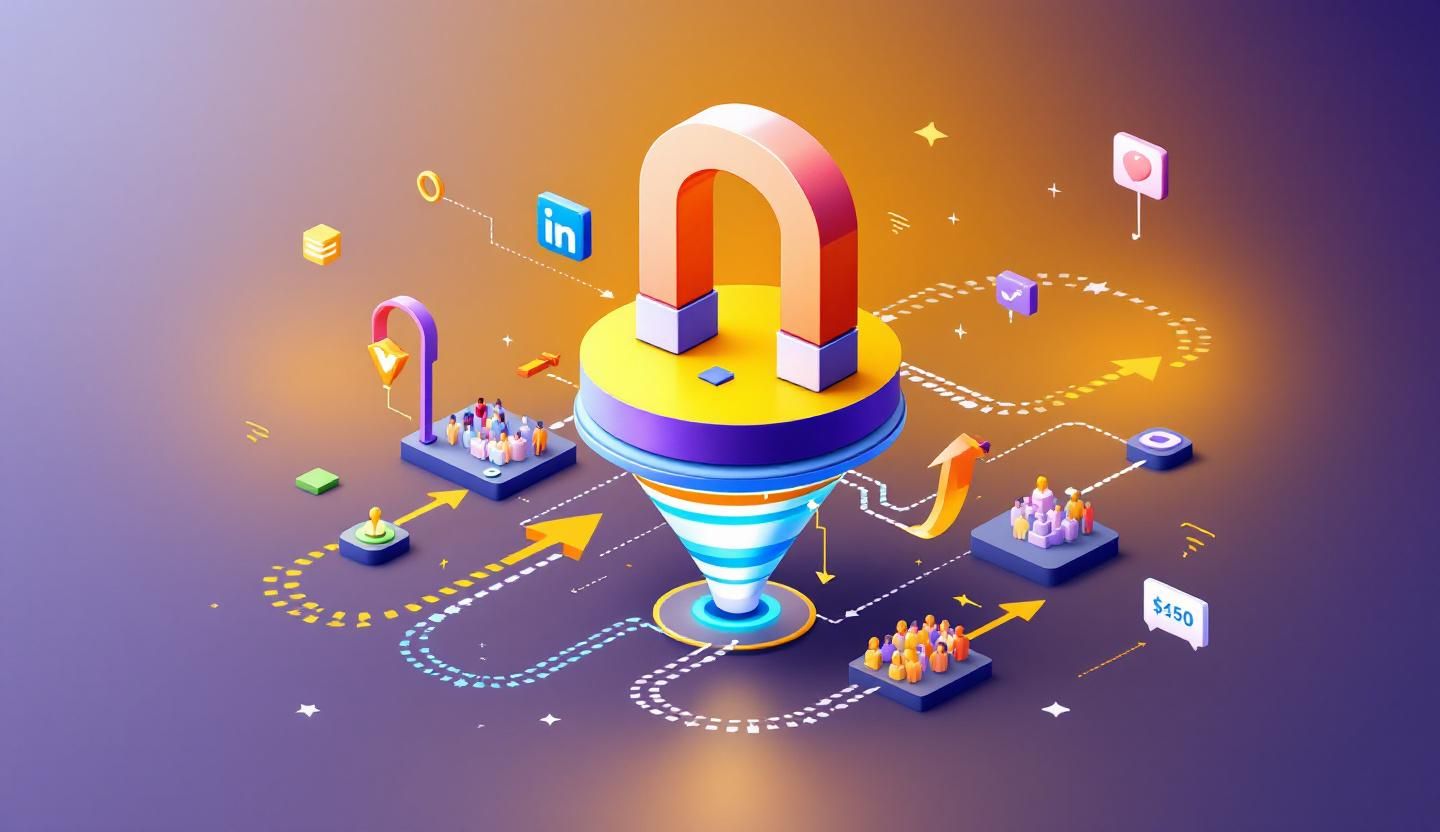
Hyper-personalized LinkedIn outreach sounds like the answer to declining response rates. But here's the uncomfortable truth: even perfectly personalized cold messages still feel like cold messages. The real opportunity in 2026 isn't scaling personalization—it's building the authority that makes prospects reach out to you.
Key Takeaways
- Personalized messages boost response rates by 30%—but inbound leads close at 14.6% versus 1.7% for outbound
- AI-assisted outreach doubles response rates (10.3% vs 5.1%), yet creates the same cold dynamic
- Follow-up messages generate 50-70% of responses, revealing how much effort outreach actually requires
- Inbound authority eliminates the outreach grind entirely—prospects come pre-sold on your expertise
What Is Hyper-Personalized LinkedIn Outreach?
Hyper-personalized LinkedIn outreach goes beyond basic mail merge. Instead of "Hi {First_Name}," it references specific details: recent posts, company news, mutual connections, or career milestones.
Want to Generate Consistent Inbound Leads from LinkedIn?
Get our complete LinkedIn Lead Generation Playbook used by B2B professionals to attract decision-makers without cold outreach.
No spam. Just proven strategies for B2B lead generation.
According to LinkedIn research, a single personalized message increases response rates by 30%. Including a personalized note with connection requests boosts acceptance by up to 58% in B2B tech and SaaS sectors.
The approach typically involves:
- Researching each prospect's recent LinkedIn activity
- Referencing company triggers (funding, promotions, expansions)
- Mentioning mutual connections or shared interests
- Crafting messages that feel individually written
The Personalization Paradox
Here's what the hyper-personalization advocates don't tell you: even when it works, you're still chasing prospects who didn't ask to hear from you.
According to Belkins' 2025 study, personalized messages achieve a 9.36% reply rate versus 5.44% for generic ones. That's a 72% improvement—but you're still facing 90%+ non-response.
| Approach | Reply Rate | Close Rate | Effort Per Lead |
|---|---|---|---|
| Generic outreach | 5.44% | ~1.7% | Low |
| Personalized outreach | 9.36% | ~3% | High |
| Inbound authority | N/A | 14.6% | Front-loaded |
The math doesn't lie. You can double your reply rate through personalization and still be nowhere near inbound conversion rates.
The 2026 Personalization Landscape
LinkedIn outreach has evolved dramatically. According to Expandi's State of LinkedIn Outreach H1 2025, 41% of users now leverage AI tools like ChatGPT for outreach, and AI-assisted messages achieve higher initial response rates (4.19% vs 2.60%).
Current Benchmarks
The SalesBread 2026 LinkedIn Outreach Stats reveal:
- Connection acceptance with personalization: 20-55% using 2nd-degree contacts
- Activity-triggered outreach: 32% higher response rates when referencing recent events
- Sequenced follow-ups: 49% better conversions with 2-5 day spacing
- Message length sweet spot: Under 400 characters for a 22% boost
According to Martal's 2026 statistics, LinkedIn continues driving 75-85% of all B2B leads from social media—far outperforming other platforms in lead quality.
Why Response Rates Tell an Incomplete Story
A 10% response rate sounds good until you examine what happens next:
- Most responses are polite declines
- Interested responses require extensive nurturing
- Deals close at 1.7% for outbound versus 14.6% for inbound
As Gong reports, 85% of sellers have used AI in the past six months. Everyone has access to the same personalization tools. This creates an arms race where personalization becomes expected rather than differentiating.
The Hidden Costs of Hyper-Personalization
Time Investment Reality
True hyper-personalization requires:
- 10-20 minutes researching each prospect
- Crafting unique message angles
- Monitoring for triggers and news
- Managing follow-up sequences
- Tracking responses across dozens of conversations
At scale, this becomes unsustainable. According to LeadLoft's 2026 benchmarks, most teams can only sustain 20-50 truly personalized touches per day.
The Automation Temptation
Tools promise to automate personalization through AI. But HeroHunt's 2025 analysis reveals a problem: AI-driven first messages outperform on initial response (4.19% vs 2.60%), but follow-ups perform slightly better without AI.
Prospects can tell when personalization is automated. The uncanny valley of "almost personal" messages often performs worse than honest simplicity.
Account Risk Factors
LinkedIn's algorithm detects patterns:
- Similar message structures across recipients
- Unusual connection velocity
- Low response and acceptance rates
- Reported spam complaints
Even sophisticated personalization can trigger restrictions if the underlying behavior appears automated.
The Inbound Authority Alternative
What if instead of personalizing outreach, you invested that time in content that attracts ideal prospects?
The Math of Inbound
According to HubSpot's State of Marketing Report, inbound leads close at 14.6% compared to 1.7% for outbound. That's an 8X improvement in conversion efficiency.
Consider the time investment comparison:
| Activity | Weekly Hours | Monthly Leads | Close Rate | Closed Deals |
|---|---|---|---|---|
| Hyper-personalized outreach (50/day) | 20+ | 40-60 responses | 3% | 1-2 |
| Authority content + engagement | 5-10 | 10-20 inbound | 14.6% | 2-3 |
Inbound wins on efficiency, scalability, and—critically—the quality of conversation when prospects arrive.
How Authority Changes the Dynamic
When someone reaches out based on your content:
- They've pre-qualified themselves as interested
- They've seen your expertise demonstrated
- They arrive with respect for your perspective
- The conversation starts collaborative, not defensive
This isn't theoretical. According to LinkedIn's Social Selling Index data, reps with high SSI scores generate 45% more opportunities and are 51% more likely to hit quota.
Building Personalized Authority at Scale
The irony: true personalization happens when you build authority that resonates with specific audiences.
Content That Attracts Your Ideal Prospects
Instead of researching 50 prospects daily, research your ideal customer once and create content that speaks directly to them:
- Industry-specific insights: Share observations only someone in your space would know
- Problem-agitation: Articulate challenges your prospects face better than they can
- Contrarian perspectives: Take stances that filter for aligned prospects
- Process transparency: Show how you work, letting prospects self-select
Engagement as Personalization
When you engage with prospects' content thoughtfully:
- They notice your name repeatedly
- Your comments demonstrate relevant expertise
- The relationship warms naturally
- Future messages feel like continuation, not cold start
This is hyper-personalization that scales—you're not researching each person; you're authentically participating in their professional conversation.
The "They Come to You" Effect
According to Martal's cold messaging guide, automation is excellent for scaling, but authenticity is what closes deals. In 2026, winners use both in harmony.
But here's the key insight: when you've built authority, even your outreach feels different. A message from a recognized industry voice lands differently than one from a stranger.
Practical Authority-Building Framework
Week 1-4: Foundation
- Optimize your profile to communicate your unique expertise
- Identify 20-30 key prospects and their content patterns
- Begin daily engagement on their posts (value-adding comments)
- Publish 2-3 pieces addressing common challenges in your space
Week 5-8: Momentum
- Increase publishing to 3-4x weekly
- Reference and tag relevant connections in content
- Respond to every comment on your posts
- Notice who consistently engages with your content
Week 9-12: Harvest
- Warm outreach to engaged connections feels natural
- Inbound inquiries begin as your content gets shared
- Referrals emerge from demonstrated expertise
- The outreach/inbound ratio shifts dramatically
Ongoing: Sustainable Growth
The difference from hyper-personalized outreach: this compounds. Each piece of content continues working. Each relationship deepens. Your reach expands without proportional effort.
When Outreach Still Makes Sense
Authority-first doesn't mean outreach-never. Strategic outreach works when:
- Responding to signals: Someone viewed your profile, engaged with content, or showed buying intent
- Warm introductions: Mutual connections facilitate natural conversation
- Event-triggered: Speaking at the same conference, commenting on the same thread
- Genuine value to offer: Not pitching, but sharing relevant resources
In these cases, personalization isn't about researching strangers—it's about acknowledging an existing connection point.
How ConnectSafely.ai Enables This Approach
ConnectSafely.ai is built for LinkedIn inbound lead generation, not scaled cold outreach:
- AI-powered engagement: Authentic comments that build relationships, not automated pitches
- Authority content tools: Schedule and optimize content for maximum reach
- Engagement tracking: See who's interacting with your content consistently
- Warm outreach signals: Know when prospects are ready for conversation
Starting from just USD $10/month, it's a fraction of what most teams spend on outreach tools that create diminishing returns.
Getting Started
The shift from outreach-first to authority-first isn't instant, but the payoff is exponential:
- Audit your current outreach results: What's your actual close rate from personalized messages?
- Identify authority gaps: What content would attract your ideal prospects?
- Reallocate time: Even 25% less outreach, 25% more content changes the trajectory
- Track inbound signals: Notice who engages before you ever reach out
Frequently Asked Questions
Is hyper-personalized LinkedIn outreach still effective in 2026?
Yes, personalization improves response rates by 30% compared to generic messages. However, even optimized outreach achieves only 9-10% reply rates, while inbound leads close at 14.6%—making authority-building more efficient for long-term results.
How long does it take to see results from LinkedIn authority building?
Most professionals see meaningful engagement within 4-6 weeks of consistent content and comment activity. Inbound inquiries typically begin by week 8-12 as your content builds reach and credibility with target audiences.
Can I use AI for LinkedIn personalization without getting banned?
LinkedIn permits AI-assisted content creation but restricts automated actions like mass messaging. AI works best for research and drafting; final messages should be reviewed and sent manually to avoid account restrictions.
What's the best LinkedIn outreach response rate I can expect?
According to 2026 benchmarks, personalized connection requests achieve 20-55% acceptance using 2nd-degree contacts. Reply rates for personalized messages range from 9-16%, with follow-ups generating 50-70% of total responses.
Why do inbound LinkedIn leads convert better than outreach leads?
Inbound leads self-qualify by engaging with your content first. They arrive having seen your expertise demonstrated, eliminating the trust-building phase that cold outreach requires. This pre-sold dynamic explains the 8X higher close rate.
Ready to stop chasing prospects and start attracting them? Start your free trial of ConnectSafely.ai and discover how inbound authority transforms your LinkedIn results.
The Dark Side of Hyper-Personalization: When Research Crosses the Line into Stalking
Hyper-personalization can be a powerful tool, but it's essential to recognize when it crosses the line into stalking or creeping. Researching a prospect's recent activity, company news, and mutual connections can be beneficial, but digging too deep can come off as invasive or even threatening. I've seen cases where sales reps have referenced a prospect's personal posts, family members, or outside interests, making the prospect feel uncomfortable or even harassed. This approach not only damages the sales rep's reputation but also harms the company's brand. It's crucial to strike a balance between personalization and respect for the prospect's boundaries. A good rule of thumb is to only reference information that's publicly available and relevant to the sales conversation. If you're unsure whether a particular piece of information is too personal, it's best to err on the side of caution and avoid it altogether. Remember, the goal of personalization is to build trust and rapport, not to make the prospect feel like they're under a microscope.
Myth vs Reality: The Idea that Personalization is a Replacement for Quality Content
One common misconception is that personalization can replace quality content. Many sales reps believe that if they can just personalize their messages enough, they can get away with using low-quality or generic content. However, this approach is a recipe for disaster. Personalization is not a substitute for quality content; it's a complement to it. If your content is weak, personalized or not, it will still fail to resonate with your prospects. In fact, personalization can even amplify the weaknesses of low-quality content, making it more noticeable and off-putting. On the other hand, high-quality content that's personalized can be incredibly effective. It shows that you've taken the time to understand the prospect's needs and tailor your message accordingly. So, instead of relying solely on personalization, focus on creating high-quality content that provides value to your prospects, and then use personalization to make it more relevant and engaging.
The Advanced Art of Contextualizing Personalization: Using Psychological Triggers and Emotional Intelligence
For advanced sales reps, personalization is not just about referencing a prospect's company or recent activity; it's about understanding their psychological triggers and emotional intelligence. This involves using techniques like mirroring, anchoring, and scarcity to create a sense of urgency and importance. It also requires a deep understanding of the prospect's emotional state and how to appeal to their motivations and desires. For example, if a prospect is motivated by a desire for prestige and status, you can use language that emphasizes the exclusivity and prestige of your product or service. On the other hand, if a prospect is motivated by a desire for safety and security, you can use language that emphasizes the reliability and stability of your product or service. By using these advanced techniques, you can create personalized messages that not only resonate with your prospects but also influence their behavior and decision-making.
The Exception to the Rule: When Hyper-Personalization Actually Backfires
While hyper-personalization can be effective in many cases, there are situations where it can actually backfire. For example, if a prospect is already familiar with your company or product, hyper-personalization can come off as insincere or even manipulative. In these cases, a more straightforward and transparent approach may be more effective. Additionally, if a prospect is in a rush or has a limited attention span, hyper-personalization can be overwhelming or even annoying. In these cases, a more concise and to-the-point approach may be more effective. It's also important to consider the prospect's cultural background and personal preferences. For example, some cultures may view hyper-personalization as aggressive or pushy, while others may view it as friendly and welcoming. By understanding these exceptions and nuances, you can avoid using hyper-personalization in situations where it may not be effective and instead use a more tailored approach that resonates with your prospects.
The Hidden Reality of Inbound Authority: Why It's Not Just About Creating Valuable Content
While creating valuable content is an essential part of building inbound authority, it's not the only factor. In fact, many companies create high-quality content that fails to attract any significant attention or engagement. So, what's missing? The answer lies in the concept of "social proof" and "influence." Inbound authority is not just about creating valuable content; it's about building a reputation and credibility in your industry. This involves leveraging social media, networking, and other channels to build relationships and establish yourself as a thought leader. It also involves using tactics like guest blogging, podcasting, and speaking engagements to increase your visibility and reach. By building your inbound authority through these channels, you can create a snowball effect that attracts more prospects and opportunities to your business. However, this requires a long-term perspective and a willingness to invest time and effort in building your reputation and credibility. It's not a quick fix or a shortcut to success, but rather a strategic approach that can yield significant rewards over time.
See How It Works
Watch how people get more LinkedIn leads with ConnectSafely




Related Articles