Why LinkedIn Authority Makes Your Sales Emails Convert
Cold emails get 5% response rates. Emails after LinkedIn authority building get 18%+. Learn how to warm up prospects before you ever hit send.


The average cold email gets a 5.1% response rate. Emails sent after building LinkedIn authority get 18%+ responses—a 3.5X improvement. According to Belkins' 2025 research, generic cold emails see ~9% response rates while "advanced personalization" drives 18% response rates. But the most effective personalization isn't a merge tag—it's the recipient already knowing who you are. When prospects have seen your LinkedIn content, engaged with your comments, or checked your profile before your email arrives, that email stops being cold.
Most sales email advice focuses on the email itself: subject lines, opening hooks, call-to-action placement, follow-up sequences.
That's optimizing the wrong thing.
The real problem isn't your email copy. It's that the person receiving it has no idea who you are, no reason to trust you, and every reason to ignore another pitch from a stranger.
LinkedIn authority building solves this problem before you ever write the email.
Want to Generate Consistent Inbound Leads from LinkedIn?
Get our complete LinkedIn Lead Generation Playbook used by B2B professionals to attract decision-makers without cold outreach.
No spam. Just proven strategies for B2B lead generation.
Key Takeaways
-
Cold emails average 5.1% response rates; warm emails hit 18%+: The difference is whether the recipient recognizes your name
-
Personalization through recognition beats merge tags: Prospects who've seen your LinkedIn content respond at 2-3X higher rates
-
LinkedIn visibility warms up your email list passively: Strategic engagement puts you in front of prospects before outreach
-
Authority transfers across channels: Your LinkedIn presence creates halo effects on email, phone, and other touchpoints
-
The sequence matters: authority first, email second: Building recognition before sending emails transforms response rates
The Cold Email Problem Nobody Talks About
According to Martal Group's 2026 research, cold email response rates dropped from ~7% in 2023 to 5.1% in 2024. The trend continues downward as inboxes get more crowded and spam filters get smarter.
But here's what the statistics don't capture: not all cold emails are equally cold.
Two Identical Emails, Different Results
Imagine two salespeople sending the same email:
Salesperson A (truly cold):
- Prospect has never heard of them
- No LinkedIn connection or engagement history
- First touchpoint is the email itself
Salesperson B (warm through LinkedIn):
- Prospect has seen their comments on industry content
- Checked their LinkedIn profile after valuable engagement
- Recognizes the name when the email arrives
The email copy is identical. The results are dramatically different.
Salesperson B's email doesn't feel like spam. It feels like a follow-up from someone the prospect already knows, even if they've never directly communicated.
Why Recognition Changes Everything
According to HubSpot's email benchmarks, personalized subject lines boost open rates by 26%. But name recognition boosts them more.
When a prospect recognizes your name, they:
- Open the email (curiosity, not suspicion)
- Read more carefully (trust, not skepticism)
- Consider responding (relationship, not transaction)
This "warm" dynamic can't be manufactured through better email templates. It requires actual visibility before the email arrives.

How LinkedIn Authority Warms Your Emails
LinkedIn provides something email alone can't: visible credibility building. When you engage strategically on LinkedIn, you're doing more than networking. You're warming up future email conversations.
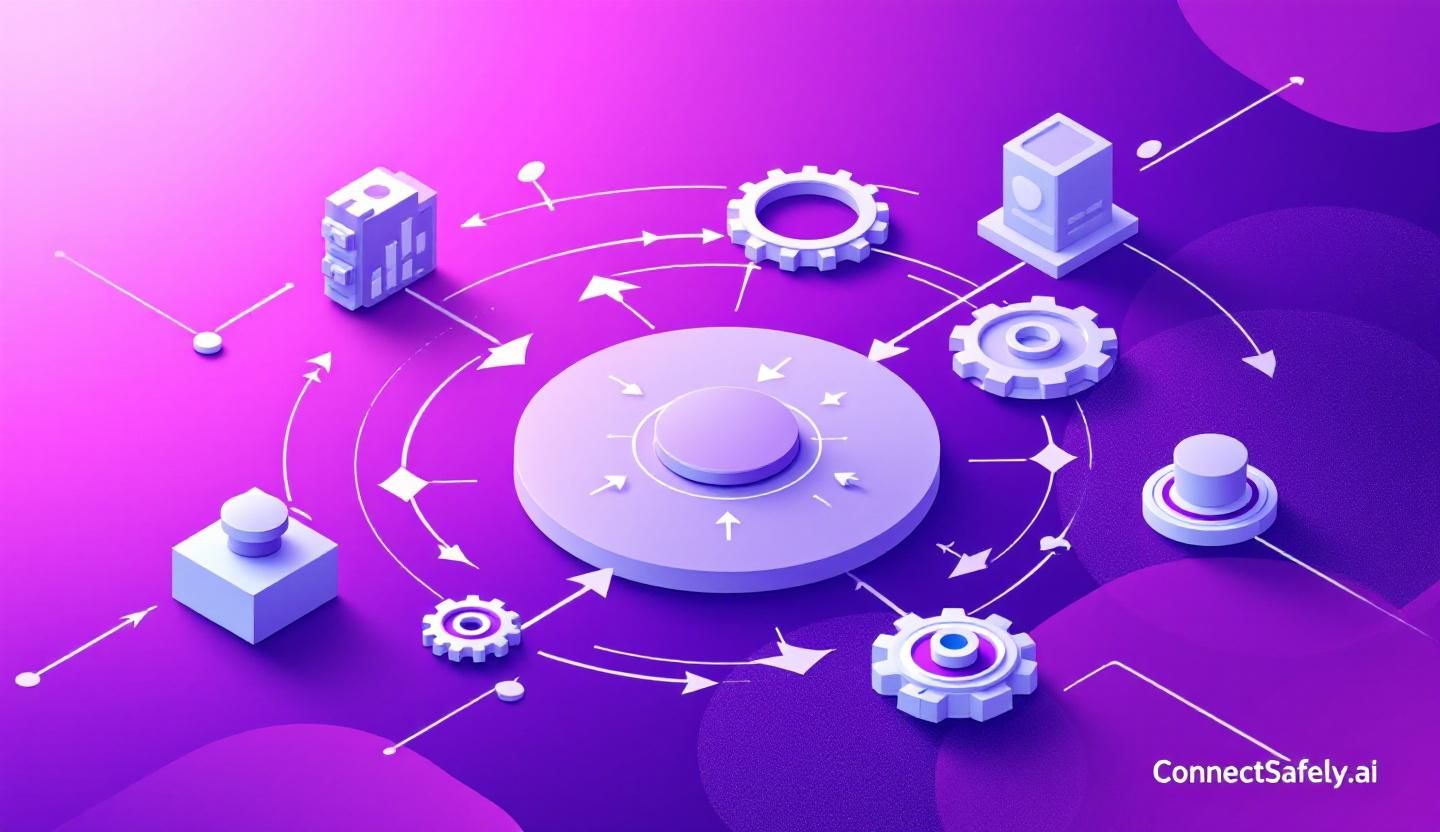
The Recognition Flywheel
Here's how LinkedIn visibility translates to email results:
Stage 1: Strategic Engagement
- You comment thoughtfully on content your prospects read
- Your name and face appear in their LinkedIn feed
- They see you adding value to conversations they care about
Stage 2: Profile Curiosity
- Prospects notice your comments and check your profile
- They see your headline, content, and credibility markers
- A mental association forms: "This person knows their stuff"
Stage 3: Passive Familiarity
- Your name becomes familiar without direct outreach
- You're a "known quantity" in their professional space
- The relationship exists before you formally connect
Stage 4: Email Warmth
- When your email arrives, the name is recognized
- The pitch feels like a natural next step, not an interruption
- Response rates jump from cold (5%) to warm (18%+)
This flywheel takes time to build but produces compounding returns. Every LinkedIn engagement today warms up emails you'll send tomorrow.
The Multi-Touch Reality
According to B2B Drum's research, warm outreach achieves response rates of 10-34%—5 to 10 times higher than cold emails.
The key variable is touchpoints before the email:
| Prior Touchpoints | Expected Response Rate |
|---|---|
| 0 (pure cold) | 5-7% |
| 1-2 (light engagement) | 10-15% |
| 3-5 (visible relationship) | 15-25% |
| 6+ (established familiarity) | 25-40% |
LinkedIn engagement creates those touchpoints at scale, without the awkwardness of reaching out directly before you have something valuable to say.
The LinkedIn-to-Email Strategy That Works
Instead of treating LinkedIn and email as separate channels, integrate them into a coordinated authority-building sequence:
Week 1-2: Identify and Engage
Identify your prospect's information sources:
- What content creators do they follow?
- What posts do they engage with?
- What topics get their attention?
Begin strategic engagement:
- Comment substantively on content they're likely to see
- Add genuine value to conversations in your shared space
- Let your expertise be visible through helpful contributions
Week 3-4: Deepen Visibility
Increase presence in their feed:
- Comment on their content if they post
- Engage with mutual connections' content
- Share insights relevant to their challenges
Build passive familiarity:
- Your name appears repeatedly in valuable contexts
- You're establishing yourself as a known entity
- Recognition is building without direct outreach
Week 5+: Warm Email Outreach
Send your email with context:
- Reference your LinkedIn presence
- Connect to topics you've both engaged with
- Your name is now familiar when they open the email
Example warm email opening:
"Hi [Name], I've enjoyed our LinkedIn community's discussion on [topic] lately—your perspective on [specific point] stood out. I've been thinking about how [related challenge] affects teams like yours..."
This opening acknowledges the existing (if indirect) relationship and builds on shared context. It's fundamentally different from a cold pitch.
Why This Approach Converts Better
The statistics support what psychology predicts: people respond to people they recognize.
The Mere Exposure Effect
According to psychological research, repeated exposure to stimuli increases positive feelings toward them. This "mere exposure effect" explains why LinkedIn visibility translates to email response rates.
When prospects have seen your:
- Profile photo appearing in comments
- Name associated with helpful insights
- Perspective adding value to conversations
...they feel more positively toward you before any sales conversation begins.
Trust Before Pitch
According to Gartner research, B2B buyers spend only 17% of their purchase journey meeting with potential suppliers. The other 83% is research, evaluation, and internal discussion.
If your LinkedIn presence shows up during that research phase—through valuable content and engagement—you enter the consideration set before the email arrives.
Social Proof at Scale
Every LinkedIn engagement is visible to more than just the person you're responding to. Their connections see your comment. Your expertise becomes evident to their extended network.
This creates a "social proof flywheel" where your visibility compounds:
- You comment on Industry Expert A's post
- Expert A's 10,000 followers see your contribution
- Some of those followers engage with your comment
- Their followers now see you too
- Future email recipients across this network recognize your name
Practical Implementation: The 30-Minute Daily System
You don't need to spend hours on LinkedIn to warm up your email outreach. A focused 30-minute daily routine creates significant recognition:
Daily Routine
Minutes 1-10: Strategic Commenting
- Find 3-5 posts from ideal clients or their influencers
- Add substantive comments (not "Great post!")
- Share genuine insights or ask thoughtful questions
Minutes 11-20: Relationship Building
- Respond to comments on your own content
- Engage with people who've engaged with you
- Build two-way visibility with key prospects
Minutes 21-30: Content/Profile Optimization
- Post or draft content 2-3x per week
- Update profile elements for buyer-focus
- Review and refine your presence
Weekly Focus Areas
Monday-Tuesday: Heavy engagement on prospect-adjacent content Wednesday-Thursday: Content creation and publishing Friday: Relationship follow-up and connection building
After 4-6 weeks of consistent execution, your name recognition among target prospects increases dramatically—and so do your email response rates.
Email Templates That Leverage LinkedIn Authority
Once you've built LinkedIn visibility, your emails can reference that shared context:
Template 1: Direct Reference
Subject: Following up from LinkedIn
Hi [Name],
I've been following the conversation around [topic] on LinkedIn and noticed your engagement with [specific content]. Your take on [specific point] caught my attention.
I'm reaching out because [connection to their challenge and your solution]...
Template 2: Indirect Familiarity
Subject: [Mutual interest/topic]
Hi [Name],
Our paths keep crossing on LinkedIn around [topic]. I've found the discussions in our space genuinely valuable for sharpening my thinking on [related challenge].
I wanted to reach out directly because [specific reason tied to their situation]...
Template 3: Content Reference
Subject: Re: Your post on [topic]
Hi [Name],
Your recent LinkedIn post about [topic] resonated with me—especially [specific point]. It reminded me of a pattern I've been seeing with [similar companies/situations].
I'm curious whether [question related to their challenge]...
Each of these openings establishes shared context that transforms a cold email into a warm continuation of an existing (if indirect) relationship.
How ConnectSafely.ai Accelerates This Process
Building LinkedIn authority manually takes time. ConnectSafely.ai accelerates the process:
AI-powered engagement: Strategic commenting that puts you in front of ideal clients automatically, building the recognition that warms future emails
Visibility optimization: Ensures your engagement appears where your prospects spend time, maximizing the exposure-to-email conversion
Time efficiency: Achieves the results of 2-3 hours of manual engagement in a fraction of the time, so you can focus on the conversations that matter
Platform-compliant: No automation that risks your account—just strategic positioning that makes your email outreach dramatically more effective
At from USD $10/month, ConnectSafely costs less than most email tools while addressing the root cause of email underperformance: lack of recipient recognition.
The Bottom Line: Fix the Real Problem
Most sales email advice tries to optimize the wrong thing. Better subject lines, tighter copy, and more follow-ups help at the margins. But they can't overcome the fundamental problem: strangers ignore messages from strangers.
LinkedIn authority building solves the upstream problem. When your email arrives from a recognized name—someone the prospect has seen adding value in their professional space—the email stops being cold.
And that's when sales emails actually convert.
The most effective email optimization isn't in your inbox. It's in your LinkedIn presence.
Frequently Asked Questions
How long does it take for LinkedIn authority to improve email response rates?
Most professionals see measurable improvement in 4-6 weeks of consistent LinkedIn engagement. The key is focusing on prospects' content ecosystem—engage where they're already paying attention, and recognition builds faster than posting into the void.
What's a realistic response rate improvement from LinkedIn authority building?
According to Belkins' research, moving from generic cold emails to personalization through recognition can improve response rates from ~9% to ~18%—approximately doubling your results. Some practitioners report even higher improvements with sustained engagement.
Should I connect with prospects on LinkedIn before emailing them?
Not necessarily. Connection requests can feel like outreach if you don't have existing visibility. Strategic engagement without direct connection often creates better pre-email warming because it's purely value-adding with no ask attached.
Do I need to post content, or is engagement enough?
Engagement alone can build significant recognition. Content amplifies it by giving prospects a reason to check your profile and remember your name. The ideal is both: strategic engagement daily, content 2-3 times weekly.
What if my prospects aren't active on LinkedIn?
If your specific prospects don't engage on LinkedIn, focus on their influencers and information sources. Building visibility in the broader conversation still creates name recognition that transfers to email outreach.
Ready to stop sending cold emails that get ignored? Start building LinkedIn authority with ConnectSafely and watch your email response rates transform.
The Dark Side of Over-Optimization: When LinkedIn Authority Backfires
While building LinkedIn authority is a powerful way to warm up prospects and increase email conversion rates, there's a lesser-known risk of over-optimization. When done excessively, authority building can create a false sense of familiarity, leading prospects to feel like they already know you, but not necessarily in a good way. This can happen when your content is too self-promotional, your comments come across as insincere, or your profile is overly polished. In these cases, prospects may view your email as just another attempt to sell them something, rather than a genuine outreach. It's essential to strike a balance between establishing authority and being authentic. A good rule of thumb is to focus on providing value through your content and interactions, rather than solely trying to build your personal brand. By doing so, you'll create a positive association with your name and increase the likelihood of prospects responding to your emails.
Myth vs Reality: Debunking the "More Connections = More Authority" Misconception
One common misconception about building LinkedIn authority is that having a large number of connections automatically translates to more credibility. However, this is not necessarily the case. While having a substantial number of connections can increase your visibility, it's the quality of those connections that truly matters. Having 10,000 connections who don't engage with your content or interact with you in any meaningful way is not as valuable as having 1,000 connections who regularly like, comment, and share your posts. Furthermore, having a large number of connections can actually hurt your authority if you're not careful. For example, if you're connected to a large number of people who are not relevant to your industry or niche, it can dilute your message and make it harder to establish yourself as a thought leader. Instead of focusing solely on the number of connections, it's more important to focus on building meaningful relationships with people who are relevant to your business and can help amplify your message.
Advanced Authority Building: Leveraging LinkedIn's Algorithm to Increase Visibility
For experienced marketers, it's not enough to simply post high-quality content and engage with others on LinkedIn. To truly maximize your authority, you need to understand how LinkedIn's algorithm works and use it to your advantage. One key factor is the concept of "entity density," which refers to the number of times your name or brand is mentioned in a given time period. By increasing your entity density through strategic content creation and engagement, you can increase your visibility and establish yourself as a thought leader in your industry. Another advanced strategy is to use LinkedIn's "topic clusters" feature to identify and participate in relevant conversations. By doing so, you can increase your chances of being featured in LinkedIn's "Discover" section and reach a wider audience. However, it's essential to note that LinkedIn's algorithm is constantly evolving, so it's crucial to stay up-to-date with the latest changes and adjust your strategy accordingly.
The Authority Building Paradox: When Less Engagement Can Actually Be More Effective
While it's generally assumed that more engagement is better when it comes to building LinkedIn authority, there are cases where less engagement can actually be more effective. For example, if you're in a highly competitive industry, it may be more beneficial to focus on creating high-quality, in-depth content that attracts a smaller, but more targeted audience. By doing so, you can establish yourself as a thought leader and build trust with a smaller group of people who are more likely to convert into customers. Additionally, over-engaging can actually be counterproductive, as it can come across as insincere or spammy. In some cases, it's better to focus on creating a smaller, but more meaningful presence on LinkedIn, rather than trying to appeal to a wider audience. This approach requires a deep understanding of your target audience and the ability to create content that resonates with them on a deeper level.
Navigating the Gray Area: When Authority Building Conflicts with Other Business Goals
In some cases, building LinkedIn authority can conflict with other business goals, such as generating leads or driving website traffic. For example, if you're focused on creating high-quality, in-depth content to establish your authority, it may not be as effective at driving traffic to your website. Similarly, if you're using LinkedIn to generate leads, you may need to prioritize more promotional content, which can hurt your authority in the long run. To navigate this gray area, it's essential to have a clear understanding of your business goals and prioritize accordingly. One strategy is to use a "hub-and-spoke" model, where your LinkedIn content serves as the "hub" and drives traffic to other channels, such as your website or email list. By doing so, you can create a cohesive content strategy that balances authority building with other business goals. However, this requires careful planning and execution, as well as a deep understanding of how different channels interact and impact each other.
See How It Works
Watch how people get more LinkedIn leads with ConnectSafely




Related Articles