AI CRM Enrichment: LinkedIn Lead Intelligence That Converts
AI CRM enrichment from LinkedIn engagement signals delivers warmer leads than third-party data. Learn the inbound intelligence approach.

AI CRM enrichment delivers the highest value when it captures LinkedIn engagement signals—not just static company data. According to ZoomInfo's 2026 Lead Generation Report, traditional data enrichment focuses on firmographics and technographics, but the most conversion-predictive data is behavioral. LinkedIn generates 80% of B2B social media leads, making engagement on the platform the richest source of lead intelligence available.
Key Takeaways
- Behavioral signals predict conversion better than static firmographic data
- LinkedIn engagement data is exclusive to your authority—competitors can't access it
- Inbound leads convert at 14.6% versus 1.7% for cold outreach from enriched lists
- AI enrichment should capture relationship signals, not just contact information
- Real-time engagement beats delayed intent data for timely follow-up
- ConnectSafely.ai enriches CRM with engagement intelligence that identifies warm prospects
The Problem with Traditional CRM Enrichment
Traditional AI CRM enrichment tools focus on:
Want to Generate Consistent Inbound Leads from LinkedIn?
Get our complete LinkedIn Lead Generation Playbook used by B2B professionals to attract decision-makers without cold outreach.
No spam. Just proven strategies for B2B lead generation.
- Firmographics: Company size, industry, revenue, location
- Technographics: Software stack, technology adoption
- Contact data: Emails, phone numbers, job titles
- Intent signals: Third-party behavioral data
This data is valuable for targeting, but it doesn't tell you:
- Who's actually interested in your company?
- Who's engaged with your content?
- Who's researching your solution?
- Who's ready for your conversation?
The result: Enriched CRM records that still require cold outreach to convert.
LinkedIn Engagement: The Missing Intelligence Layer
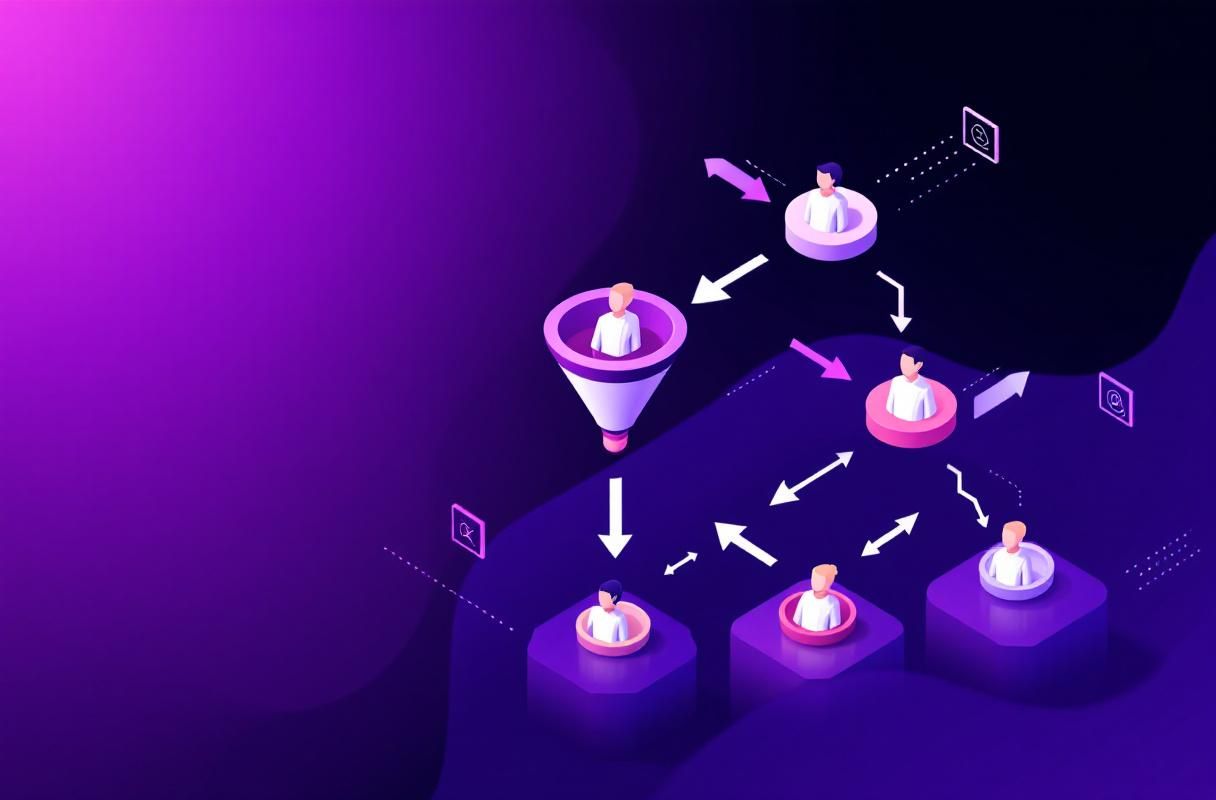
LinkedIn engagement data provides what traditional enrichment misses:
| Traditional Enrichment | LinkedIn Engagement Intelligence |
|---|---|
| Who fits your ICP | Who's interested in your expertise |
| Contact information | Relationship warmth indicators |
| Company data | Individual engagement history |
| Generic intent signals | Specific interest in your content |
| Shared with competitors | Exclusive to your authority |
Types of LinkedIn Engagement Intelligence
Content Engagement Signals
- Who comments on your posts (and what they say)
- Who reacts to your content (and how often)
- Who shares your content (advocacy indicator)
- Who saves your posts (research behavior)
Profile Engagement Signals
- Who views your profile (research interest)
- Frequency of profile views (sustained attention)
- Source of profile views (content that attracted them)
- Profile viewer ICP match (qualified interest)
Connection Engagement Signals
- Who accepts connection requests (relationship openness)
- Who sends connection requests (proactive interest)
- Connection message engagement (conversation readiness)
- Post-connection interaction patterns
Comment Engagement Signals
- Who engages with your comments elsewhere
- Conversation depth on shared discussions
- Question-asking behavior (high intent)
- Return engagement patterns
Building an Engagement-Enriched CRM
Step 1: Define Engagement Scoring Criteria
Not all engagement is equal. Weight signals by conversion correlation:
High-Value Signals (Score: 8-10)
- Comment with question on your content
- Direct message after content engagement
- Multiple profile views in short period
- Inbound connection request with note
Medium-Value Signals (Score: 5-7)
- Thoughtful comment on your post
- Content share to their network
- Post reaction + profile view combination
- Connection acceptance with quick engagement
Lower-Value Signals (Score: 2-4)
- Single post reaction
- Profile view without follow-up
- Connection acceptance without engagement
- One-time comment without depth
Step 2: Automate Signal Capture
AI systems should automatically capture and score:
- Every content engagement matched to CRM records
- Profile views correlated with ICP criteria
- Engagement patterns across time
- Multi-signal combinations (comment + profile view + connection)
Step 3: Enrich with Engagement Context
Beyond scoring, capture context:
- What content attracted them? (Indicates interests/pain points)
- What did they say in comments? (Reveals specific concerns)
- When do they engage? (Suggests optimal contact timing)
- How deep is engagement? (Indicates buying stage)
Step 4: Prioritize Based on Recency and Intensity
Engagement value decays over time. AI should:
- Weight recent engagement higher than historical
- Flag sudden engagement spikes (trigger events)
- Identify sustained engagement patterns (serious interest)
- Surface "cooling" leads for re-engagement

Why Engagement Intelligence Beats Intent Data
Traditional intent data providers (Bombora, G2, TrustRadius) track:
- Content consumption on third-party sites
- Software review research
- Keyword search behavior
- Event attendance
The problems with third-party intent data:
- It's shared: Every competitor using the same provider gets the same signals
- It's delayed: Days or weeks pass before data reaches your CRM
- It's generic: Shows category interest, not interest in you
- It's incomplete: Only captures behavior on participating sites
LinkedIn engagement intelligence advantages:
- It's exclusive: Only you see who engages with your content
- It's real-time: Capture engagement as it happens
- It's specific: Indicates interest in your expertise specifically
- It's relationship-based: Engagement is a relationship signal, not just research
The Conversion Rate Evidence
HubSpot's research demonstrates why engagement-based leads convert better:
Leads from Enriched Cold Lists:
- Email response rate: 2-5%
- Meeting booking rate: Under 1%
- Close rate: 1.7%
Leads from Engagement Intelligence:
- Conversation acceptance: 70%+
- Meeting booking rate: 15-25%
- Close rate: 14.6%
The 8-9X difference exists because engagement represents self-selection. When someone comments on your content three times, views your profile twice, and connects with you—they've already begun the evaluation process.
Integration Architecture
CRM Integration Points
Engagement intelligence should flow into your CRM:
- Contact records: Engagement history, scores, and signals
- Lead scoring models: Behavioral factors weighted appropriately
- Workflow triggers: Automated actions when thresholds cross
- Reporting dashboards: Attribution from engagement to revenue
Workflow Automation Examples
High-Intent Engagement Alert
- Trigger: ICP match comments + views profile within 24 hours
- Action: Slack notification to assigned rep
- Context: Comment text, profile info, engagement history
Warm Follow-Up Sequence
- Trigger: Engagement score crosses threshold
- Action: Personalized outreach referencing specific engagement
- Template: "Saw your comment on my post about [topic]—would love to continue the conversation"
Re-Engagement Campaign
- Trigger: Previously engaged lead goes quiet for 30 days
- Action: Content targeting to re-establish visibility
- Goal: Regenerate engagement signals
The ConnectSafely.ai Approach
ConnectSafely.ai provides engagement-based CRM enrichment:
- Signal capture: Automatic tracking of all engagement with your content and profile
- Lead scoring: AI-powered scoring based on engagement patterns
- CRM integration: Engagement intelligence flows to your existing systems
- Warm lead surfacing: Identification of prospects ready for conversation
Starting from USD $10/month, it's a fraction of traditional intent data subscriptions—with more conversion-predictive data because it captures interest in you, not just your category.
Getting Started with Engagement Intelligence
Transform your CRM from a contact database to a relationship intelligence system:
- Audit current enrichment: What data do you have? What's missing?
- Define engagement scoring: Which signals predict conversion?
- Implement signal capture: Automate engagement tracking
- Build workflows: Connect engagement to sales actions
- Measure attribution: Track engagement-to-revenue pipeline
The best leads aren't found in databases. They're signaling interest through engagement—you just need AI that captures it.
Frequently Asked Questions
What is AI CRM enrichment?
AI CRM enrichment uses artificial intelligence to automatically add valuable data to contact records. Traditional enrichment adds firmographic and contact data. Engagement-based enrichment adds behavioral signals from LinkedIn interactions.
How does LinkedIn engagement intelligence differ from intent data?
Traditional intent data tracks behavior on third-party sites and is shared with all subscribers. LinkedIn engagement intelligence captures interactions with your specific content—exclusive signals that indicate interest in you, not just your category.
Can engagement intelligence integrate with existing CRMs?
Yes. Engagement signals can flow into Salesforce, HubSpot, or other CRMs through native integrations or APIs. The data enriches contact records with engagement history, scores, and behavioral patterns.
What engagement signals best predict conversion?
According to HubSpot's research, the strongest signals combine multiple behaviors: comment + profile view + connection request indicates high intent. Questions in comments and repeated engagement over time also correlate strongly with conversion.
How is ConnectSafely.ai different from data enrichment tools like ZoomInfo?
ZoomInfo and similar tools provide contact and company data. ConnectSafely.ai captures relationship signals—who's engaging with your content, how deeply, and when. This engagement intelligence predicts conversion better than static data because it indicates active interest.
Ready to enrich your CRM with engagement intelligence? Start your free trial and discover which prospects are already interested.
The Dark Side of Over-Enrichment: When Too Much Data Hurts Conversion Rates
While AI CRM enrichment is a powerful tool for identifying warm leads, there's a hidden danger in over-enriching your CRM records. When you collect too much data, you risk creating a situation where your sales team is overwhelmed by the sheer volume of information. This can lead to analysis paralysis, where reps spend more time reviewing data than actually engaging with prospects. Furthermore, over-enrichment can also create a false sense of security, leading sales teams to rely too heavily on data and neglect the human element of building relationships. It's essential to strike a balance between providing enough data to inform sales conversations and avoiding the pitfalls of data overload. A good rule of thumb is to focus on the most relevant, actionable data points that indicate a prospect's interest in your solution, rather than trying to collect every piece of information available. By doing so, you can ensure that your sales team is equipped to have meaningful conversations with prospects, rather than getting bogged down in data analysis.
Myth vs Reality: The Limitations of Intent Data in B2B Sales
There's a common myth in the B2B sales world that intent data is the holy grail of lead generation. While intent data can be a valuable tool for identifying prospects who are actively researching solutions, it's not a silver bullet. In reality, intent data has several limitations that can make it less effective than other forms of lead intelligence. For example, intent data often relies on third-party cookies and tracking scripts, which can be blocked by prospects or expire after a certain period. Additionally, intent data may not account for the nuances of B2B buying decisions, which often involve multiple stakeholders and complex decision-making processes. Furthermore, intent data can be noisy, with many false positives and negatives that can lead to wasted time and resources. In contrast, LinkedIn engagement data provides a more accurate and nuanced view of a prospect's interests and intentions, making it a more reliable indicator of conversion potential.
Advanced CRM Enrichment Techniques: Using Graph Theory to Identify Influencers
For advanced practitioners, graph theory can be a powerful tool for identifying influencers and decision-makers within a prospect's organization. By analyzing the connections and relationships between individuals on LinkedIn, you can create a graph that reveals the underlying social structure of a company. This can help you identify key influencers who are likely to champion your solution, as well as potential roadblocks and obstacles that may stand in the way of a sale. To apply graph theory to CRM enrichment, you'll need to collect data on the connections and relationships between individuals on LinkedIn, as well as their respective roles and responsibilities within the organization. From there, you can use algorithms and machine learning techniques to identify clusters, communities, and other patterns that reveal the social dynamics at play. By targeting the right influencers and decision-makers, you can increase the effectiveness of your sales outreach and improve conversion rates.
The Importance of Contextualizing LinkedIn Engagement Data
While LinkedIn engagement data is a powerful indicator of conversion potential, it's essential to contextualize this data within the broader context of a prospect's behavior and interests. For example, a prospect who engages with your content on LinkedIn may also be researching your competitors or exploring other solutions. By analyzing the broader context of a prospect's behavior, you can gain a more nuanced understanding of their interests and intentions, and tailor your sales outreach accordingly. This may involve analyzing data from other sources, such as website analytics or social media listening tools, to gain a more complete picture of a prospect's behavior and interests. By contextualizing LinkedIn engagement data, you can avoid making assumptions or jumping to conclusions based on incomplete information, and instead develop a more informed and effective sales strategy.
Edge Cases in LinkedIn Engagement: Handling Low-Engagement Accounts and Inactive Prospects
While LinkedIn engagement data can be a powerful indicator of conversion potential, there are several edge cases that require special handling. For example, what about prospects who have low engagement on LinkedIn, or who haven't logged in for months? In these cases, it's essential to develop a nuanced understanding of the underlying reasons for their low engagement, rather than simply writing them off as unqualified leads. For example, a prospect may be on vacation or maternity leave, or may be experiencing technical issues that prevent them from accessing LinkedIn. By analyzing the underlying reasons for low engagement, you can develop a more informed and effective sales strategy that takes into account the unique circumstances of each prospect. This may involve using other forms of lead intelligence, such as firmographic or technographic data, to inform your sales outreach and improve conversion rates. By handling edge cases effectively, you can ensure that your sales team is equipped to engage with prospects in a personalized and relevant way, regardless of their level of engagement on LinkedIn.
See How It Works
Watch how people get more LinkedIn leads with ConnectSafely



Related Articles