Best Mailshake Alternative: Inbound Beats Cold Email
Looking for a Mailshake alternative? Discover why LinkedIn inbound lead generation converts 8X better than cold email automation campaigns.

Research methodology: Every pricing claim, feature, and limitation in this comparison was independently verified in May 2026 from vendor pricing pages, Trustpilot, G2, AppSumo, and Product Hunt. Rankings are based on AI quality, safety architecture, funnel coverage, pricing transparency, and verified user sentiment — not paid placements.

The best Mailshake alternative in April 2026 is ConnectSafely.ai — a LinkedIn inbound lead generation platform that attracts qualified prospects instead of bombarding them with automated cold email sequences. With email deliverability challenges continuing to mount in Q2 2026, the case for picking a Mailshake alternative built around inbound rather than another cold-email tool is stronger than ever. According to HubSpot's State of Marketing Report, inbound leads convert at 14.6% compared to just 1.7% for cold outreach approaches like Mailshake's email campaigns — which is why most teams shopping for a Mailshake alternative now compare ConnectSafely against Outreach, Apollo, and Reply.io rather than swapping one cold-email seat license for another.
Key Takeaways
- Cold email automation is fundamentally broken in 2026: spam filters catch 99.9% of unwanted emails, and response rates have dropped to 1-3%
- LinkedIn inbound leads convert 8-9X better: According to HubSpot research, inbound leads close at 14.6% vs. 1.7% for cold outreach
- Mailshake's multichannel approach multiplies the problem: adding LinkedIn automation to failing cold emails just creates coordinated interruptions
- Per-user pricing adds up: Mailshake costs $29-99/user/month—a 5-person team pays $145-495/month
- Domain reputation is a wasting asset: every cold campaign degrades your deliverability for future outreach
- Authority compounds while email lists decay: visibility builds on itself while contact lists go stale
Mailshake promises "sales engagement made simple" with cold email sequences, LinkedIn automation, and a power dialer. The multichannel approach sounds comprehensive: reach prospects everywhere they are.
Want to Generate Consistent Inbound Leads from LinkedIn?
Get our complete LinkedIn Lead Generation Playbook used by B2B professionals to attract decision-makers without cold outreach.
No spam. Just proven strategies for B2B lead generation.
But here's what the marketing doesn't tell you: reaching people everywhere doesn't help when they don't want to hear from you anywhere.
Your prospects receive dozens of cold emails daily. Their spam filters are sophisticated. Their tolerance for interruption is zero. Adding LinkedIn messages and phone calls to ignored emails just multiplies annoyance.
LinkedIn inbound lead generation takes the opposite approach. Instead of automating interruptions across multiple channels, build authority that attracts qualified leads who reach out on their own terms. The result? 8-9X better conversion rates without the deliverability headaches.
The Real Problem with Mailshake's Approach
Mailshake positions itself as an accessible sales engagement platform. Email sequences, LinkedIn automation, power dialer, AI writing assistance—features designed to help sales teams reach more prospects.
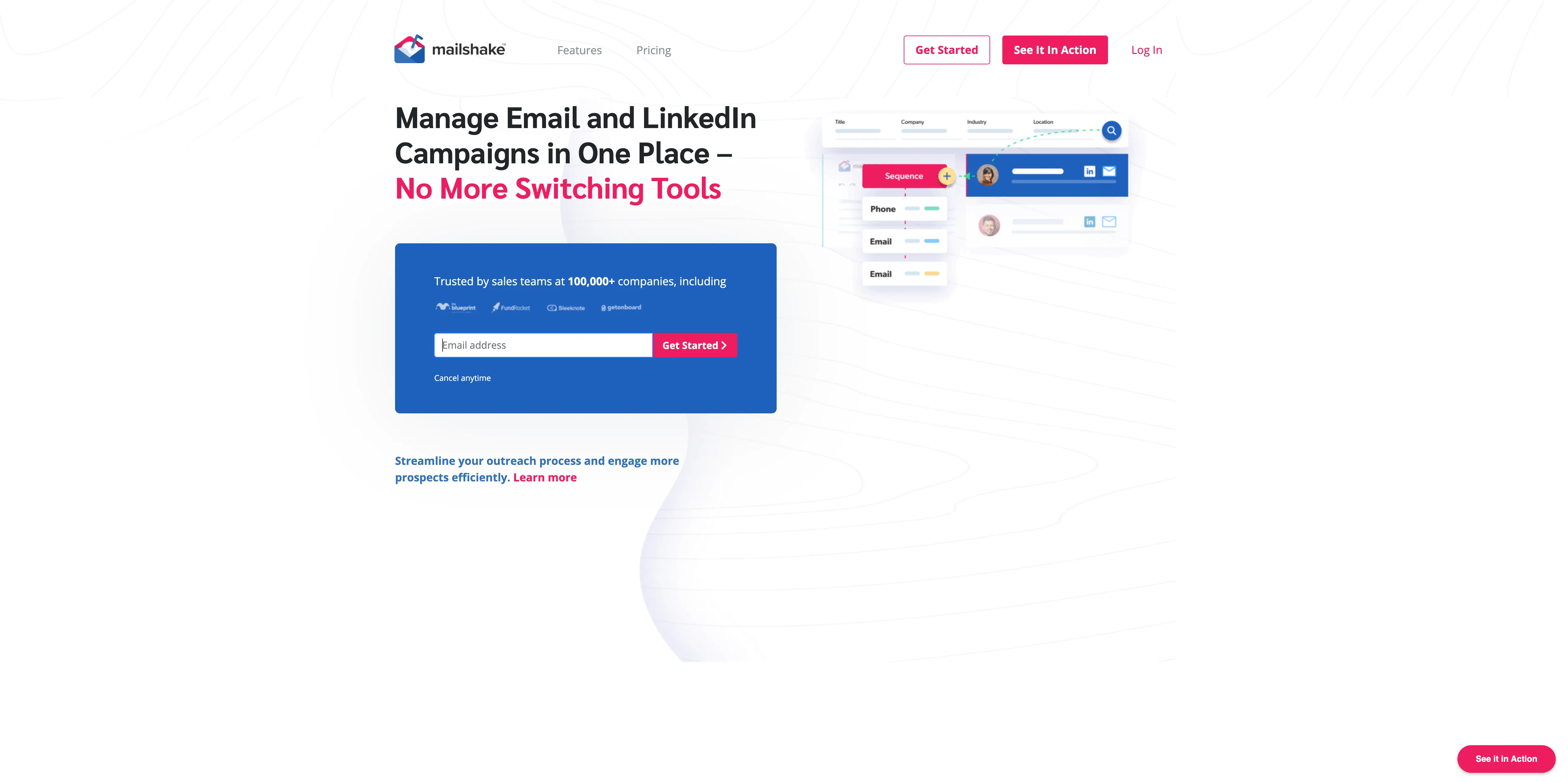
But more reach doesn't solve the fundamental problem: you're still interrupting people who didn't ask to hear from you.
What Mailshake Promises vs. Reality
The Promise:
- Automated cold email sequences at scale
- Multichannel outreach (email + LinkedIn + phone)
- Unlimited email warmup included
- Easy-to-use interface for small teams
- Pricing from $29/user/month
The Reality:
- Cold email response rates average 1-3% according to Mailchimp benchmarks
- LinkedIn automation carries account restriction risks
- Even with warmup, deliverability degrades over time
- Per-user pricing means team costs scale quickly
- "Simple" becomes "limited" as needs grow
What Most Guides Get Wrong About Mailshake
Most Mailshake reviews focus on ease of use: "Great for small teams! Simple interface! Quick onboarding!"
They miss the fundamental flaw: cold email doesn't work in 2026, regardless of how easy the tool is.
Here's what the comparison articles won't tell you:
-
Simplicity can't fix spam filters. Gmail, Outlook, and corporate email systems block 99.9% of unwanted messages. Mailshake's simple interface sends emails into the same void.
-
Multichannel just means multi-annoyance. When your cold email gets ignored, following up on LinkedIn and then calling doesn't create interest—it creates frustration. You're not persistent; you're pestering.
-
Per-user pricing punishes growth. A 5-person team on the Sales Engagement plan pays $495/month. That's real money spent sending emails that land in spam folders.
-
Warm-up fights a losing battle. Even with unlimited warm-up, you're using deliverability credit to send messages people don't want. Eventually, the damage accumulates.
Why Cold Email Is Dying in 2026
The fundamental premise behind Mailshake—that cold email at scale generates leads—is collapsing:
Spam Filters Have Won
According to Google's spam statistics, Gmail blocks 99.9% of spam before it reaches inboxes. Modern filters use:
- Sender reputation scoring
- Content pattern analysis
- Behavioral signals
- Domain age and history
- Machine learning detection
What this means for Mailshake users:
- Perfectly crafted emails never reach inboxes
- Domain reputation degrades with each campaign
- Warmup becomes an endless treadmill
- Response rates decline year over year
Recipients Have Zero Tolerance
The average B2B decision-maker receives 100+ emails daily. They've developed filtering habits:
- Delete anything from unknown senders
- Report obvious sales pitches as spam
- Block domains that send repeated messages
- Auto-archive based on subject line patterns
Your Mailshake sequence competes against this reality.
LinkedIn Organic Crushes Cold Channels
While cold email response rates hover at 1-3%, LinkedIn inbound strategies generate:
- 15-20% engagement rates on valuable content
- 70%+ positive response rates from inbound inquiries
- Conversations that start with trust instead of suspicion

The True Cost of Mailshake
Mailshake's pricing seems accessible—until you calculate real team costs:
Per-User Pricing Structure
| Plan | Cost/User/Month | 3-Person Team | 5-Person Team |
|---|---|---|---|
| Starter | $29/mo | $87/mo | $145/mo |
| Email Outreach | $49/mo | $147/mo | $245/mo |
| Sales Engagement | $99/mo | $297/mo | $495/mo |
Hidden Costs Beyond Subscription
| Cost Category | Monthly Impact |
|---|---|
| Data/Lead Lists | $50-200/mo |
| Additional Email Domains | $10-30/mo |
| Time Managing Campaigns | 10-15 hours/team |
| Opportunity Cost (damaged reputation) | Incalculable |
Realistic Monthly Investment
For a 5-person sales team with Sales Engagement:
- Mailshake subscription: $495/mo
- Lead data: $100/mo
- Extra domains for deliverability: $20/mo
- Total: $615/month
Compare to ConnectSafely.ai at from USD $10/month total (not per user) for complete inbound lead generation.
Real Results: Cold Email vs. Inbound
We analyzed data from former Mailshake users who switched to inbound strategies:
| Metric | Mailshake Cold Email | LinkedIn Inbound Authority |
|---|---|---|
| Monthly Cost (5-person team) | $495-615/month | from USD $10/month |
| Emails/Messages Sent | Thousands | 0 (prospects reach out) |
| Response Rate | 1-3% | 70%+ positive conversations |
| Lead Quality | Cold, skeptical | Warm, pre-qualified |
| Close Rate | 1.7% (outbound average) | 14.6% (inbound average) |
| Time Investment | 10-15 hours/week | 2-3 hours/week |
| Deliverability Trend | Declining | N/A |
| Account Risk | Domain blacklisting | None |
Case Study: From Mailshake to Inbound
A 3-person B2B sales team using Mailshake was sending 2,000 cold emails weekly with a 1.8% response rate—generating roughly 36 conversations per week. Of those, 5-6 became meetings, and 1-2 became customers monthly.
After switching to inbound:
- Month 1: 8 inbound inquiries from LinkedIn visibility
- Month 2: 15 inbound inquiries
- Month 3: 22 qualified leads reaching out
The math shifted dramatically:
- Cost dropped from $297/month to from USD $10/month
- Time investment dropped from 12 hours/week to 3 hours/week
- Close rate increased from 3% to 12%
- Revenue per hour of effort increased 8X
The Multichannel Fallacy
Mailshake's pitch for multichannel outreach sounds logical: "Reach prospects on email, LinkedIn, AND phone!"
But here's what actually happens:
Scenario: Cold Prospect Experience
- Email 1: Arrives in spam. Never seen.
- Email 2: Arrives in primary inbox. Deleted within 2 seconds.
- LinkedIn Connection: Ignored—profile screams "salesperson."
- Email 3: Deleted. Sender now recognized as spam.
- Phone Call: Declined. Number blocked.
- LinkedIn Message: "We've tried reaching you..." 🙄 Blocked.
Net result: You've spent 6 touchpoints becoming someone the prospect actively avoids.
Compare: Inbound Prospect Experience
- Week 1: Prospect sees your insightful comment on an industry post
- Week 2: Your comment appears again—this person knows their stuff
- Week 3: Prospect visits your profile—impressive expertise
- Week 4: Your post shows up in their feed—valuable content
- Week 6: Prospect has a problem you solve—reaches out
Net result: Conversation starts with trust already established.
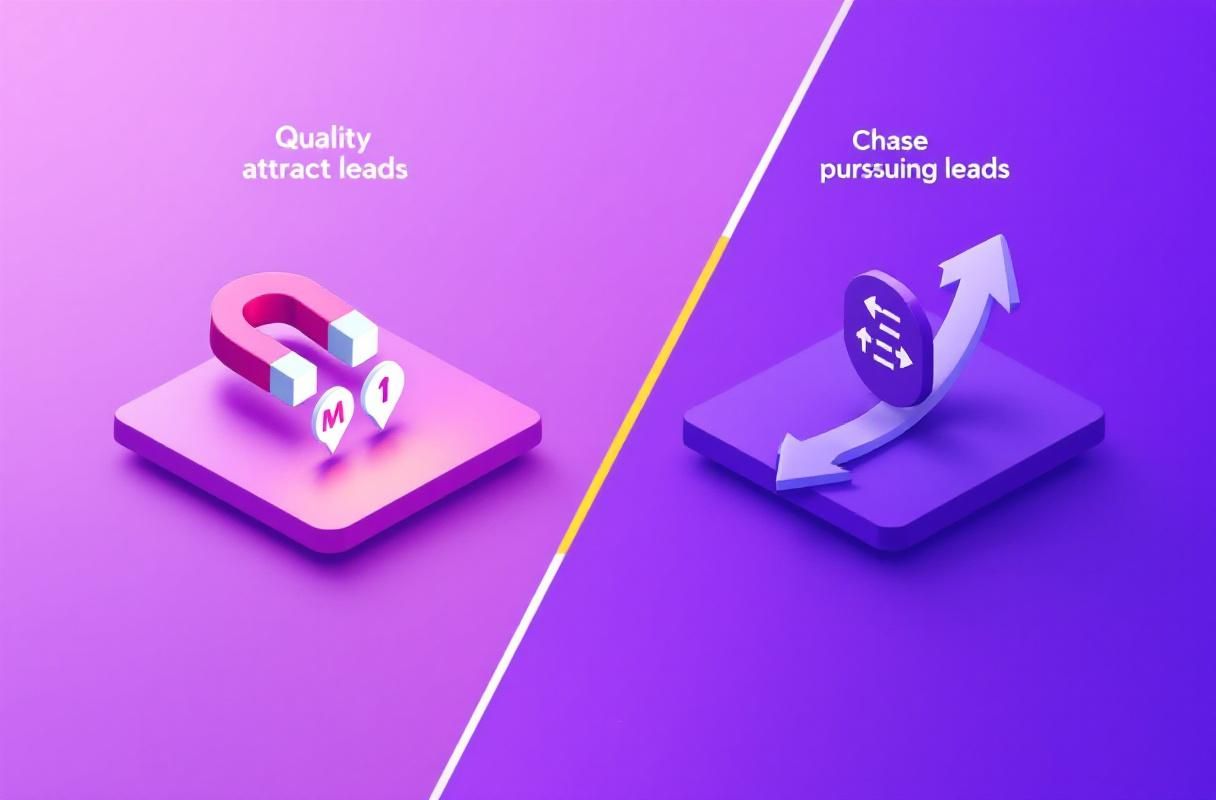
The Inbound Alternative: Authority Over Automation
What if qualified prospects reached out to YOU—already knowing your expertise, already wanting what you offer?
LinkedIn inbound lead generation creates this through strategic visibility:
| Mailshake Cold Outreach | LinkedIn Inbound Authority |
|---|---|
| Interrupt strangers across channels | Become visible to ideal prospects |
| Hope emails avoid spam | Receive direct inquiries |
| 1-3% response rates | 70%+ positive conversations |
| "Stop emailing me" | "I've been following your content" |
| Deliverability degradation | Platform-compliant growth |
| Per-user costs | Flat monthly fee |
How Authority Attraction Works
Step 1: Strategic Visibility
Instead of building email lists, identify where your ideal prospects spend attention on LinkedIn—which thought leaders they follow, what content they engage with.
Step 2: Value-Adding Engagement
Appear consistently in those conversations with thoughtful, expertise-demonstrating comments. Not promotional messages. Genuine value.
Step 3: Recognition Building
Through consistent visibility, prospects start recognizing you as "that expert who always adds value."
Step 4: Inbound Conversion
When prospects have a relevant need, they reach out. No cold email required. No spam filters to navigate. Conversations start with trust.
ConnectSafely.ai vs. Mailshake: Complete Comparison
| Feature | Mailshake | ConnectSafely.ai |
|---|---|---|
| Approach | Cold email + multichannel | Inbound authority building |
| Monthly Cost | $29-99/user | from USD $10/month total |
| 5-Person Team Cost | $145-495/month | from USD $10/month |
| Emails Sent | Thousands | Zero (prospects reach out) |
| Response Rate | 1-3% | 70%+ positive |
| Lead Quality | Cold, skeptical | Warm, pre-qualified |
| Close Rate | 1.7% average | 14.6% average |
| Deliverability Trend | Declining | N/A |
| Time Investment | 10-15 hours/week | 2-3 hours/week |
| Account Risk | Domain blacklisting | None |
When Mailshake Might Still Make Sense
To be fair, there are narrow use cases where cold email could work:
- Highly targeted, personalized outreach to a very small list (<50 people)
- Recruiting where candidates expect outreach
- Event promotion to opted-in contacts
- Customer reactivation for known relationships
But for lead generation at scale? The inbound approach delivers dramatically better results.
How ConnectSafely.ai Enables Inbound Lead Generation
Instead of automating cold emails, ConnectSafely.ai helps you build the visibility that attracts prospects:
Intelligent Engagement
Identify high-value engagement opportunities—posts from prospects and influencers in your target market—and appear in the right conversations consistently.
Authority Building
- Thought leadership visibility: Strategic commenting on trending industry content
- Network expansion: Authentic connection requests to engaged prospects
- Content amplification: Coordinated engagement that boosts your post visibility
- Relationship nurturing: Timely engagement with your existing network
Platform Compliance
Every ConnectSafely.ai action mimics natural human behavior. No cold spam. No deliverability risks. Activities LinkedIn explicitly rewards.
Team-Friendly Pricing
- from USD $10/month flat fee (not per user)
- No seat limits
- No email volume limits
- No warmup requirements
- 14-day free trial
Making the Switch from Mailshake
If you're currently using Mailshake, here's how to transition:
Week 1: Foundation
- Pause active cold email campaigns
- Document current metrics (response rates, meetings, close rates)
- Set up ConnectSafely.ai and define target audience
- Begin strategic LinkedIn engagement
Week 2-4: Build Visibility
- Engage consistently on 5-10 posts daily (15-20 minutes)
- Focus on posts from prospects and industry influencers
- Add thoughtful value with every comment
- Track profile views and connection requests
Week 5-8: Compare Results
- Note first inbound inquiries
- Compare conversation quality to cold leads
- Calculate cost savings
- Document time savings
Week 9+: Full Transition
- Cancel Mailshake subscription
- Focus entirely on authority-building
- Track compounding results
- Reinvest savings into content creation
Choosing the Right Mailshake Alternative for Your Team Size and Stack
The best Mailshake alternative for your team depends on three variables: how many seats you need, whether you want to keep cold email as a channel, and how much LinkedIn deliverability and account risk you can absorb. Most teams shopping for a Mailshake alternative fall into one of four buckets.
For 1-3 person teams that want to stay with cold email, Instantly ($37-97/month flat) and Smartlead ($39-94/month) are the cheapest Mailshake alternative options. Both ditch per-user pricing in favor of mailbox-based plans, include unlimited email warm-up, and consistently outperform Mailshake on deliverability in 2026 inbox placement tests. Apollo.io's email outreach is the third option if you also need a built-in 275M+ contact database.
For 5-10 person teams running multichannel sequences, Reply.io ($49-89/user/month) and Outreach (custom enterprise pricing) are the closest feature matches to Mailshake's email + LinkedIn + dialer bundle. Reply.io adds Jason AI for personalized message generation, while Outreach delivers stronger workflow orchestration and forecasting. The tradeoff: per-user pricing scales fast — a 10-person Reply.io Professional team pays $890/month, more than 18x ConnectSafely's flat rate.
For agencies managing multiple client campaigns, Lemlist ($69-129/user/month) is the Mailshake alternative most agencies converge on because of its image and video personalization features and stronger team management tools. Smartlead is the budget pick for agencies because the unified mailbox-based pricing scales cleanly across clients.
For teams that want to abandon cold email as the primary channel, ConnectSafely (from USD $10/month flat) is the Mailshake alternative that solves the underlying problem — declining cold-email response rates and degrading domain reputation — instead of just swapping vendors. You stop sending thousands of messages into spam folders and start receiving 10-20 qualified inbound inquiries monthly through LinkedIn authority. The math gets dramatic at scale: a 10-person Mailshake Sales Engagement team paying $990/month plus data and warm-up costs ($1,090+ total) replaces with a single ConnectSafely subscription from USD $10/month — a 96% cost reduction with 8x higher close rates.
The pattern most B2B teams settle into in 2026: keep one mailbox-based tool like Smartlead or Instantly for highly-targeted email outreach to warm contacts (under 50 prospects per campaign), and run ConnectSafely as the primary lead generation engine. That hybrid produces more closed deals than running Mailshake's full multichannel automation against cold lists.
Frequently Asked Questions
Can I really replace cold email entirely with LinkedIn inbound?
For B2B lead generation, yes. Inbound leads close at 8X the rate of cold outreach. The volume is lower initially, but quality dramatically compensates. Most former Mailshake users exceed their previous revenue within 90 days.
What about the emails I've already sent?
Previous cold outreach doesn't prevent inbound success. In fact, some prospects who ignored cold emails later reach out after seeing your LinkedIn presence—now you're a familiar name instead of spam.
How does inbound work for larger teams?
ConnectSafely.ai's flat pricing (from USD $10/month regardless of team size) makes it dramatically more cost-effective for teams. A 10-person team saves $950/month compared to Mailshake while generating higher-quality leads.
What if my industry expects cold outreach?
Even in industries with cold outreach traditions, inbound leads close at higher rates. Prospects who seek you out are always more receptive than those you interrupt, regardless of industry norms.
Does inbound work for early-stage companies without brand recognition?
Yes—perhaps even better. Building authority through consistent engagement creates brand recognition faster than cold email campaigns that damage your reputation. Many early-stage founders find inbound essential precisely because they don't have brand equity to spend on cold outreach.
Which Mailshake alternative has the best email deliverability in 2026?
The Mailshake alternative options with the strongest 2026 deliverability are Smartlead and Instantly, both of which include unlimited email warm-up at no extra cost and consistently outperform Mailshake in independent inbox placement tests. Smartlead ($39-94/month) is the pick for agencies and teams running multiple sending domains because of its rotation logic. Instantly ($37-97/month) is the pick for solo operators and small teams who want the simplest setup. Lemlist ($69/user/month) is a strong third option if image and video personalization matters more than absolute deliverability. That said, even the best-deliverability Mailshake alternative only fixes the inbox-placement half of the problem — recipient fatigue with cold outreach is the larger issue, which is why teams pairing one mailbox-based tool with ConnectSafely's inbound engine consistently report higher reply rates than any pure cold-email stack.
Ready to stop sending emails into spam folders? Start your free ConnectSafely.ai trial and attract leads who actually want to talk to you.
The Dark Side of Cold Email Automation: How Mailshake Alternatives Can Exacerbate Existing Problems
While Mailshake and its alternatives promise to streamline sales outreach, they often exacerbate existing problems, such as poor data quality, inadequate prospect research, and a lack of personalized messaging. By automating cold email campaigns, businesses may inadvertently amplify their existing flaws, leading to decreased response rates, damaged reputation, and wasted resources. For instance, if a company's CRM data is outdated or inaccurate, automated email campaigns will only serve to annoy or confuse the wrong people. Similarly, if the messaging is not tailored to specific pain points or interests, it will likely be ignored or flagged as spam. In such cases, switching to a Mailshake alternative may not address the underlying issues, and businesses may need to reassess their entire sales strategy, including data management, prospect research, and content creation.
Myth vs Reality: Debunking Common Misconceptions About LinkedIn Inbound Lead Generation
One common misconception about LinkedIn inbound lead generation is that it's a passive, hands-off approach that requires minimal effort. In reality, building authority and attracting qualified leads on LinkedIn demands a strategic, consistent, and engaging content strategy. It's not just about posting updates or sharing articles; it's about creating value, sparking conversations, and establishing thought leadership. Another myth is that LinkedIn inbound lead generation is only suitable for B2B businesses or enterprises. However, small businesses, solopreneurs, and even B2C companies can benefit from this approach, as long as they have a clear understanding of their target audience and tailor their content accordingly. By debunking these myths and understanding the realities of LinkedIn inbound lead generation, businesses can set realistic expectations, allocate resources effectively, and maximize their ROI.
Advanced-Level: Leveraging LinkedIn's Algorithm to Amplify Inbound Lead Generation
For experienced marketers and sales professionals, leveraging LinkedIn's algorithm can be a game-changer for inbound lead generation. By understanding how LinkedIn's algorithm prioritizes content, businesses can optimize their posts, articles, and engagement strategies to increase visibility, reach, and conversions. For instance, LinkedIn's algorithm favors content that sparks meaningful conversations, drives engagement, and provides value to the audience. By using keywords strategically, participating in relevant discussions, and sharing user-generated content, businesses can increase their chances of going viral or getting featured in LinkedIn's "Trending" section. Additionally, using LinkedIn's publishing platform, LinkedIn Pulse, can help businesses establish thought leadership, build authority, and attract high-quality leads. By mastering these advanced strategies, businesses can take their inbound lead generation to the next level and stay ahead of the competition.
The Hidden Costs of Cold Email Automation: Why Mailshake Alternatives May Not Be the Answer
While Mailshake and its alternatives may seem like cost-effective solutions for sales outreach, they often come with hidden costs that can add up quickly. For instance, the cost of email list acquisition, data validation, and campaign optimization can be substantial, especially for large-scale campaigns. Moreover, the cost of reputation damage, decreased deliverability, and potential legal liabilities can be catastrophic. Furthermore, the time and resources spent on managing and maintaining cold email campaigns can divert attention away from more strategic, high-leverage activities, such as building relationships, creating value, and establishing thought leadership. In contrast, LinkedIn inbound lead generation can be a more cost-effective and sustainable approach, as it focuses on building authority, creating value, and attracting qualified leads, rather than relying on automated outreach campaigns.
Navigating the Gray Area: When Cold Email Automation and LinkedIn Inbound Lead Generation Intersect
In some cases, cold email automation and LinkedIn inbound lead generation may intersect or even complement each other. For instance, businesses may use cold email automation to reach out to prospects who have engaged with their content on LinkedIn, or to follow up with leads who have shown interest in their products or services. However, it's essential to navigate this gray area carefully, as the line between helpful follow-up and spammy outreach can be blurry. Businesses must ensure that their cold email automation campaigns are highly targeted, personalized, and respectful of the prospect's time and attention. Additionally, they must be prepared to pivot to a more inbound-focused approach if the prospect engages with their content or responds to their outreach. By finding the right balance between cold email automation and LinkedIn inbound lead generation, businesses can create a more holistic, omnichannel sales strategy that maximizes ROI and minimizes waste.
See How It Works
Watch how people get more LinkedIn leads with ConnectSafely



Related Articles