Demand Generation vs Lead Generation on LinkedIn
Understand the critical difference between demand gen and lead gen. Learn which strategy fits your goals and how LinkedIn amplifies both approaches.

Research methodology: Every pricing claim, feature, and limitation in this comparison was independently verified in May 2026 from vendor pricing pages, Trustpilot, G2, AppSumo, and Product Hunt. Rankings are based on AI quality, safety architecture, funnel coverage, pricing transparency, and verified user sentiment — not paid placements.

You're missing 95% of your market. According to ATAK Interactive's research, while you're busy capturing the 5% actively searching for solutions, competitors are building relationships with the other 95% who haven't started their buying journey yet.
That's the fundamental tension between lead generation (capturing existing demand) and demand generation (creating future demand). Most B2B professionals confuse these strategies—or worse, only focus on one.
Want to Generate Consistent Inbound Leads from LinkedIn?
Get our complete LinkedIn Lead Generation Playbook used by B2B professionals to attract decision-makers without cold outreach.
No spam. Just proven strategies for B2B lead generation.
The Core Difference
Let's establish clear definitions before diving deeper.
Demand Generation: Creating Awareness and Interest
According to Cognism's comparison guide, demand generation builds awareness and interest in your brand or product before someone is ready to buy. It focuses on:
- Creating market awareness
- Building trust and authority
- Educating potential buyers
- Establishing thought leadership
- Nurturing relationships over time
The Goal: Make people aware of problems they have and solutions that exist—so when they're ready to buy, you're already trusted.
Lead Generation: Capturing Buyer Intent
Lead generation, on the other hand, captures buyer information when interest already exists. According to Headley Media's analysis, lead gen focuses on:
- Capturing contact information
- Qualifying prospects
- Moving interested parties into your pipeline
- Converting awareness into actionable leads
The Goal: Turn existing interest into conversations and opportunities.
Side-by-Side Comparison
| Aspect | Demand Generation | Lead Generation |
|---|---|---|
| Funnel Stage | Top and middle | Middle and bottom |
| Timeline | Long-term (months/years) | Short-term (days/weeks) |
| Content Style | Educational, ungated | Gated, action-oriented |
| Primary Goal | Build awareness/trust | Capture contact info |
| Metrics | Reach, engagement, brand lift | MQLs, SQLs, conversion rates |
| Buyer Status | Not yet in-market | Actively researching |
Where They Overlap
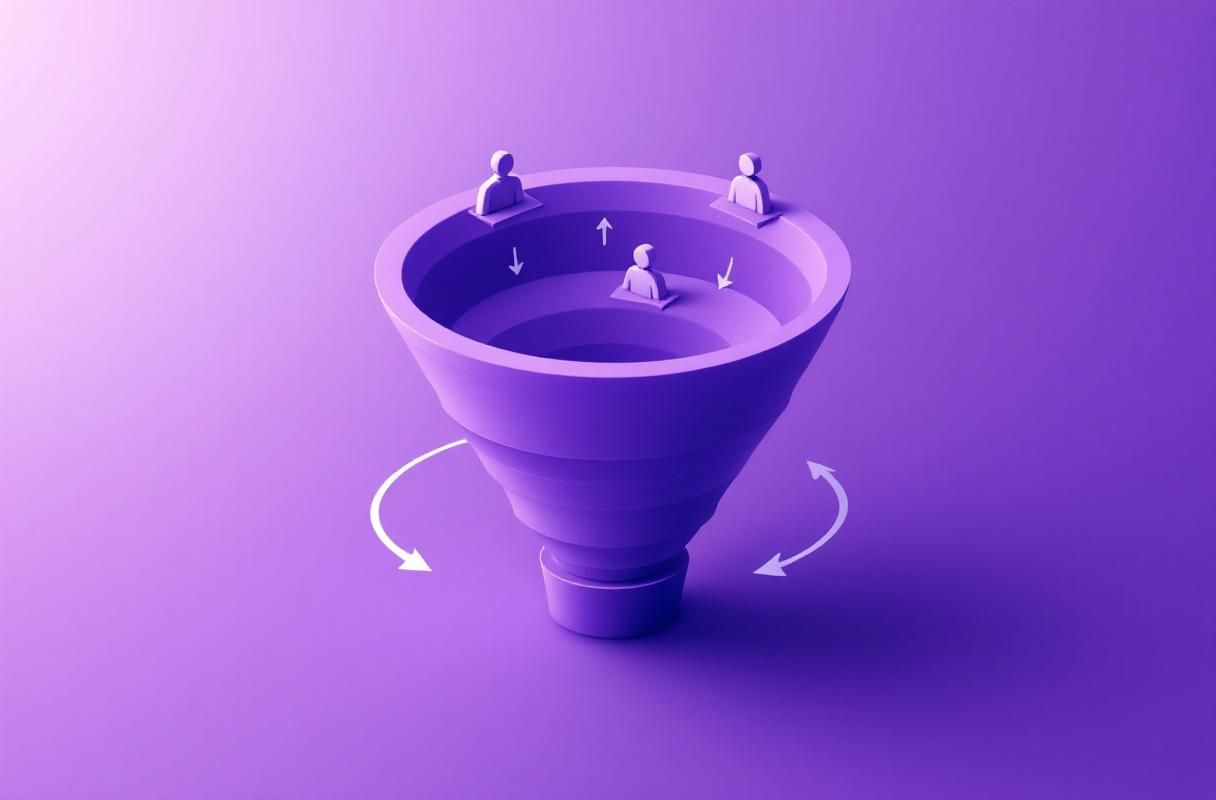
According to Brand Theory's guide, demand generation creates market interest at the top of the funnel, while lead generation captures buyer information at the mid and bottom. But they're not mutually exclusive—they're sequential.
Demand gen creates the conditions for lead gen to succeed. Without demand gen, your lead gen efforts target only the tiny percentage already seeking solutions.
The Numbers Tell the Story
Conversion Rate Differences
According to HockeyStack Labs' research, the conversion data reveals striking differences:
MQL to SQL Conversion:
- Demand generation MQLs: 21.55%
- Lead generation MQLs: 4.93%
- Result: Demand gen MQLs convert 4.37x better
SQL to Close/Win:
- Demand generation: 14.1%
- Lead generation: 11.21%
- Result: Demand gen leads close at 26% higher rates
Cost Efficiency
According to First Page Sage's benchmarks:
| Metric | Demand Gen | Lead Gen |
|---|---|---|
| Cost per lead | Higher initially | Lower initially |
| Cost per SQL | $2,640 | $5,320 |
| Long-term efficiency | 2x better | Less efficient |
The Insight: Lead gen looks cheaper per lead, but costs 2x more per qualified opportunity.
Market Investment Trends
According to Only B2B's research:
- 26% of enterprise organizations invest 70%+ of marketing budgets on demand gen
- 68% of B2B marketers say demand gen delivers higher quality leads
- B2B marketing leaders are spending 38% more on demand gen than last year
Why Traditional Lead Gen Is Failing
The Modern B2B Buyer Problem
According to Clearbit's analysis, modern B2B buyers don't want to fill out forms or be chased by SDRs after downloading a PDF.
The Old Model:
- Create gated content (ebook, whitepaper)
- Capture contact info in exchange
- Pass lead to SDR for immediate follow-up
- Wonder why conversion rates are terrible
The Reality:
- Downloading an ebook doesn't mean buying intent
- Immediate SDR outreach feels invasive
- Prospects who aren't ready to buy aren't qualified leads
- Low conversion rates waste sales resources
The 95/5 Problem
According to INFUSE's guide, at any given time:
- 5% of your market is actively buying
- 95% is not yet in-market
Traditional lead gen only captures the 5%. Demand gen builds relationships with the 95%—so when they are ready, you're already trusted.
How LinkedIn Changes the Game
LinkedIn is uniquely positioned for both demand gen and lead gen—but excels particularly at demand generation.
LinkedIn for Demand Generation
According to Marcel Digital's guide, LinkedIn's environment supports demand gen tactics:
| Tactic | How LinkedIn Enables It |
|---|---|
| Thought leadership | Posts, articles, native video |
| Educational content | Documents, carousels, long-form |
| Brand building | Personal and company pages |
| Organic reach | Algorithm-boosted valuable content |
| Community engagement | Comments, groups, discussions |
LinkedIn Demand Gen Advantages:
- Professional context = business-minded audience
- Native content formats optimize for education
- Algorithm rewards expertise and engagement
- Personal brands often outperform company brands
LinkedIn for Lead Generation
When demand exists, LinkedIn captures it through:
| Tactic | Use Case |
|---|---|
| Profile CTAs | "DM me for..." calls to action |
| Lead gen forms | LinkedIn Ads with native forms |
| InMail | Warm outreach to engaged connections |
| Sales Navigator | Advanced prospecting and targeting |
The Key Insight: LinkedIn lead gen works best when demand gen has already built awareness.
The Integrated Approach

According to ZoomInfo's framework, smart B2B companies don't choose between strategies—they layer them.
The Three-Layer Model
Layer 1: Demand Generation Foundation (Months 1-6)
- Establish thought leadership position
- Create educational content library
- Build organic social presence
- Develop authority in your niche
Layer 2: Audience Building (Months 3-9)
- Grow targeted following
- Build email list through value-add content
- Nurture relationships without sales pressure
- Track engagement signals
Layer 3: Lead Generation Capture (Ongoing)
- Convert engaged audience to conversations
- Capture intent signals
- Prioritize warm leads over cold
- Focus SDR time on demand-qualified leads
Content Strategy by Stage
| Stage | Content Type | Goal | Gated? |
|---|---|---|---|
| Awareness | Industry trends, POV pieces | Attract attention | No |
| Education | How-to guides, frameworks | Build credibility | No |
| Consideration | Case studies, comparisons | Create preference | Optional |
| Decision | Demos, consultations | Convert to opportunity | Yes |
According to Vereigen Media's guide, the shift toward ungated content reflects modern buyer preferences—and produces higher-quality leads when gates are used.
Metrics That Matter
Demand Generation Metrics
According to Factors.ai's metrics guide:
| Metric | What It Measures | Target |
|---|---|---|
| Brand search volume | Awareness growth | Month-over-month increase |
| Organic traffic | Content effectiveness | 10-20% monthly growth |
| Engagement rate | Content resonance | 5%+ on LinkedIn |
| Share of voice | Market presence | Competitive benchmark |
| Time on site | Content quality | 3+ minutes |
Lead Generation Metrics
According to MNTN's demand gen guide:
| Metric | What It Measures | Benchmark |
|---|---|---|
| MQL volume | Lead quantity | Company-specific |
| MQL → SQL rate | Lead quality | 20-25% for demand-sourced |
| Cost per MQL | Efficiency | Industry-dependent |
| SQL → Opportunity | Sales alignment | 30-50% |
| Pipeline velocity | Deal movement | Faster than outbound |
The Pass-Through Model
According to Gartner's research, the average pass-through rate from inquiry to close is 42% at each stage. Understanding your specific pass-through rates helps identify bottlenecks.
Building Your LinkedIn-First Strategy
For Demand Generation Focus
If brand awareness is your priority:
Week 1-4: Content Foundation
- Audit existing content for thought leadership potential
- Identify 3-5 key topics for authority positioning
- Create content calendar (2-3 posts/week)
- Start engaging on industry thought leaders' posts
Month 2-3: Visibility Building
- Publish long-form articles monthly
- Increase posting frequency
- Join and contribute to relevant groups
- Build email newsletter alongside LinkedIn
Month 4-6: Authority Establishment
- Track brand search volume increases
- Monitor inbound connection requests
- Measure profile views from target accounts
- Document engagement from decision-makers
For Lead Generation Focus
If pipeline is the immediate priority:
Week 1-2: Lead Capture Setup
- Optimize profile with clear CTAs
- Set up LinkedIn lead gen ad campaigns
- Create high-value gated offers
- Enable Sales Navigator (if budget allows)
Week 3-4: Warm Outreach
- Identify engaged prospects from content
- Send personalized connection requests
- Follow up with value-add messages
- Track conversion to conversations
Month 2-3: Optimization
- A/B test lead magnets
- Refine targeting based on results
- Build SDR playbooks for LinkedIn leads
- Measure cost per SQL vs other channels
When to Prioritize Each Strategy
Prioritize Demand Gen When:
- You're entering a new market
- Brand awareness is low
- Sales cycles are long (6+ months)
- Buyers need education before purchasing
- Competition is low and category is emerging
Prioritize Lead Gen When:
- Demand already exists for your category
- You have strong brand recognition
- Sales cycles are shorter
- Product-market fit is established
- Pipeline is the immediate constraint
The Best Answer: Both
According to Martal Group's statistics, the global lead generation industry is projected to reach $295 billion by 2027. Companies winning this market aren't choosing between strategies—they're integrating them.
How ConnectSafely.ai Fits In
ConnectSafely.ai primarily supports demand generation by automating the consistent engagement that builds authority:
For Demand Generation:
- AI-powered commenting on industry content
- Consistent visibility without daily manual effort
- Strategic engagement timing for maximum reach
- Authority building that compounds over time
The Lead Gen Impact:
- Higher authority leads to more inbound interest
- Warmer leads from established relationships
- Better conversion rates on outreach
- Reduced cost per qualified opportunity
Starting from USD $10/month, it's the most efficient way to build the demand generation foundation that makes lead generation actually work.
Frequently Asked Questions
What's the main difference between demand gen and lead gen?
According to Cognism's guide, demand generation creates awareness and interest before someone is ready to buy. Lead generation captures contact information from people who already show intent. Demand gen builds the market; lead gen harvests it.
Which is more important for B2B companies?
Both are essential. According to First Page Sage's research, demand gen MQLs have 4.37x better conversion rates than lead gen MQLs. But you need lead gen to convert demand into pipeline. The best approach integrates both.
How long does demand generation take to work?
Demand gen is a long-term investment, typically showing meaningful results in 3-6 months. However, according to Only B2B, 68% of B2B marketers say it delivers higher quality leads than traditional acquisition methods—making the wait worthwhile.
Can LinkedIn do both demand gen and lead gen?
Absolutely. LinkedIn excels at demand gen through organic content, thought leadership, and engagement. It also supports lead gen through Sales Navigator, lead gen ads, and InMail. The platform is uniquely suited for the integrated approach.
Why are companies shifting toward demand gen?
According to ATAK Interactive, 95% of the addressable market isn't actively buying at any given time. Companies are realizing that only targeting the 5% in-market leaves massive opportunity untapped.
Ready to build demand that generates quality leads? Start your free trial and see how consistent authority building changes your pipeline.
The Dark Side of Demand Generation: When Awareness Building Backfires
While demand generation is often touted as a strategic way to build awareness and trust with potential buyers, there's a lesser-discussed flip side to this approach. In some cases, investing too heavily in demand generation can actually backfire, leading to a phenomenon known as "awareness fatigue." This occurs when your target audience becomes desensitized to your messaging, viewing it as noise rather than valuable insight. This can happen when demand generation efforts are too aggressive, too frequent, or too focused on self-promotion rather than genuine value creation. For instance, if you're creating a high volume of blog posts, social media updates, and email newsletters that all say essentially the same thing, you risk overwhelming your audience and eroding the trust you're trying to build. Moreover, in today's digital landscape where consumers are bombarded with information from all sides, the line between awareness building and spam can be perilously thin. It's crucial, therefore, to approach demand generation with a nuanced understanding of your audience's preferences and boundaries, ensuring that your efforts to build awareness and trust are welcomed rather than resisted.
Myth vs Reality: The Misconception of Linear Buyer Journeys
A common misconception in the realm of demand and lead generation is the idea that buyer journeys are linear, with potential customers progressing neatly from awareness to consideration to decision. In reality, buyer journeys are often far more complex and non-linear. Potential buyers may oscillate between different stages of the journey, seek out multiple sources of information, and be influenced by a wide range of factors, including social media, peer reviews, and personal experiences. This myth can lead marketers to design demand and lead generation strategies that are overly simplistic and fail to account for the nuanced, back-and-forth nature of real-world buyer behavior. For example, a marketer might assume that once a lead has been generated, the prospect is ready to move immediately into the sales pipeline, when in fact, they may need additional nurturing and education before they're ready to make a decision. By recognizing the non-linear nature of buyer journeys, marketers can develop more flexible and responsive demand and lead generation strategies that better meet the needs of their target audience.
Advanced Demand Generation: Leveraging Account-Based Marketing for Strategic Growth
For advanced marketers looking to supercharge their demand generation efforts, account-based marketing (ABM) offers a powerful strategy for driving strategic growth. ABM involves targeting specific, high-value accounts with personalized content and messaging designed to resonate with their unique needs and pain points. By focusing on a smaller set of high-potential accounts, marketers can create more tailored and effective demand generation campaigns that speak directly to the interests and concerns of key decision-makers. This approach requires a deep understanding of the target accounts, including their industry, company size, job functions, and current challenges. It also demands a high degree of coordination between marketing and sales teams, as well as the ability to create customized content and experiences that address the specific needs of each account. When executed correctly, ABM can lead to significantly higher conversion rates and deal sizes, making it a highly effective strategy for driving revenue growth and expanding market share.
The Intersection of Demand and Lead Generation: Where Content Marketing Fits In
Content marketing plays a critical role at the intersection of demand and lead generation, serving as a key bridge between building awareness and capturing buyer intent. Effective content marketing strategies can help marketers create valuable, relevant, and consistent content that attracts and retains a clearly defined audience, driving both demand generation and lead generation efforts forward. However, the type of content that's most effective can vary significantly depending on the stage of the buyer journey. For instance, during the demand generation phase, content might focus on educating potential buyers about industry trends, challenges, and solutions, with the goal of building awareness and trust. In contrast, during the lead generation phase, content might be more focused on showcasing specific products or services, with the goal of capturing contact information and converting interest into actionable leads. By understanding how content marketing fits into both demand and lead generation strategies, marketers can create more cohesive and effective campaigns that drive real results.
It Depends: When to Prioritize Demand Generation Over Lead Generation (And Vice Versa)
The decision to prioritize demand generation over lead generation (or vice versa) depends on a variety of factors, including your company's specific goals, industry, target audience, and current market conditions. For example, if you're a new company entering a crowded market, you may need to prioritize demand generation efforts to build awareness and establish your brand as a trusted authority. On the other hand, if you're an established company with a strong existing customer base, you may be able to focus more on lead generation, leveraging your existing reputation and relationships to drive conversions. Additionally, the stage of your sales funnel can also influence your prioritization. If you have a full pipeline of leads but are struggling to convert them into customers, you may need to focus on lead generation and optimization. However, if your pipeline is dry, you may need to go back to basics and focus on demand generation to refill it. Ultimately, the key is to remain flexible and adapt your strategy based on your unique circumstances and the evolving needs of your target audience.
See How It Works
Watch how people get more LinkedIn leads with ConnectSafely




Related Articles