LinkedIn Inbound Marketing Funnel: The Complete 2026 Guide
Build a LinkedIn inbound marketing funnel that converts. Learn the 4 stages that turn profile visitors into qualified leads.

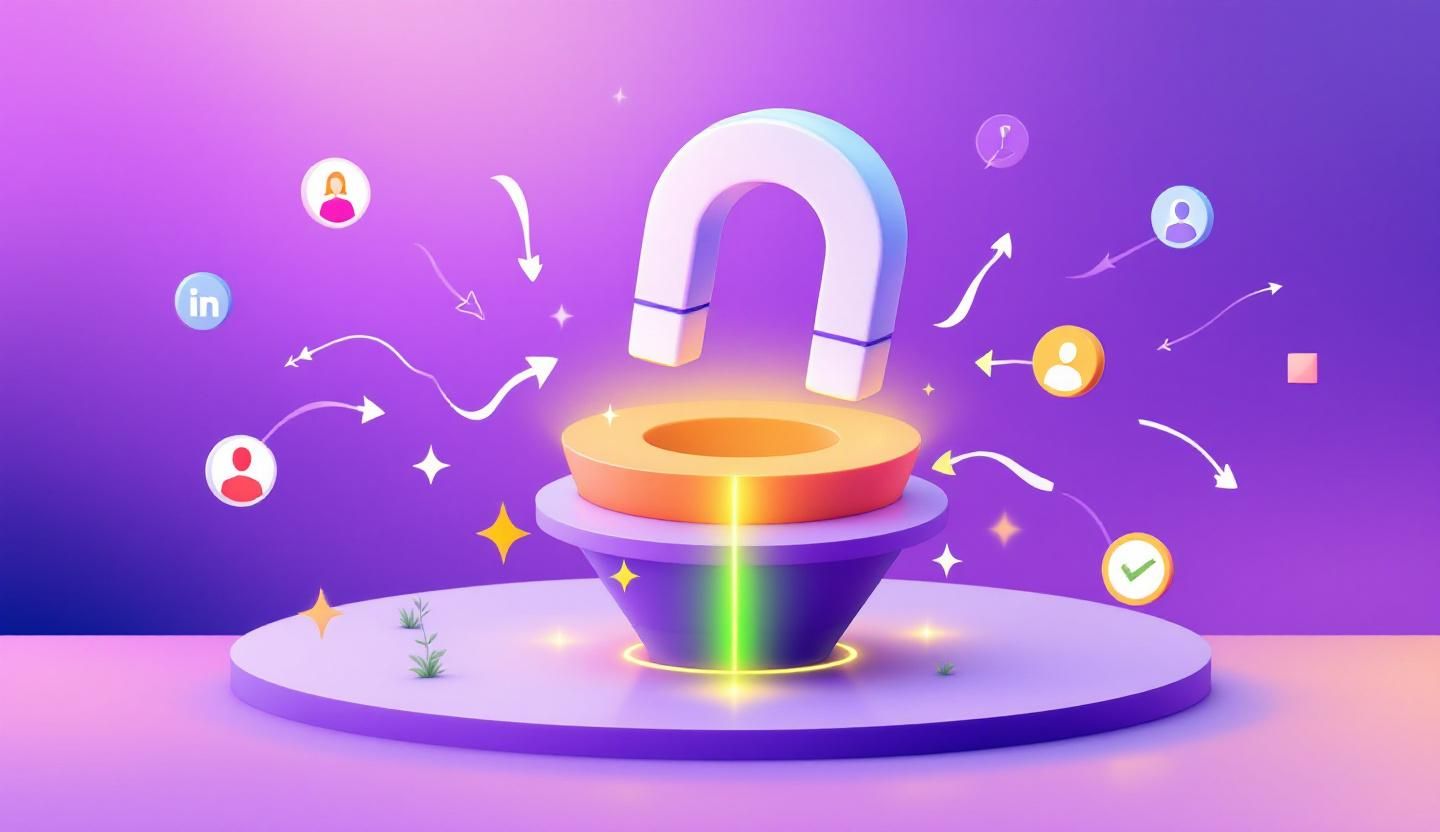
Traditional marketing funnels push prospects through stages. LinkedIn inbound funnels attract them. According to First Page Sage's 2025 research, B2B inbound marketing converts at 3.82%—nearly double the 2.23% average for outbound methods. The difference? Inbound prospects enter your funnel already interested.
Building a LinkedIn inbound marketing funnel means creating a system where your authority, content, and engagement work together to attract qualified leads. Instead of chasing prospects, you position yourself so they come to you.
Key Takeaways
- Inbound marketing converts at 3.82% compared to 2.23% for traditional B2B outbound, per First Page Sage
- 74% of organizations prioritize inbound marketing as their primary lead generation strategy
- LinkedIn is 277% more effective for B2B lead generation than Facebook or X, according to HubSpot
- 79% of leads never convert due to lack of proper nurturing—your funnel solves this
- Content marketing generates 3x more leads than outbound at 62% less cost
- ConnectSafely.ai automates funnel engagement so your authority builds consistently
What Is a LinkedIn Inbound Marketing Funnel?
A LinkedIn inbound marketing funnel is a systematic approach to attracting, engaging, and converting prospects through authority-building content and strategic engagement—rather than cold outreach.
Unlike traditional funnels that rely on cold messaging, inbound funnels work by:
- Attracting attention through valuable content and strategic engagement
- Building authority that positions you as the go-to expert
- Nurturing interest through consistent visibility
- Converting ready buyers who approach you pre-sold
The key difference: prospects enter your funnel warm, not cold. They've already seen your expertise before any sales conversation begins.
Want to Generate Consistent Inbound Leads from LinkedIn?
Get our complete LinkedIn Lead Generation Playbook used by B2B professionals to attract decision-makers without cold outreach.
No spam. Just proven strategies for B2B lead generation.
The 4 Stages of a LinkedIn Inbound Funnel
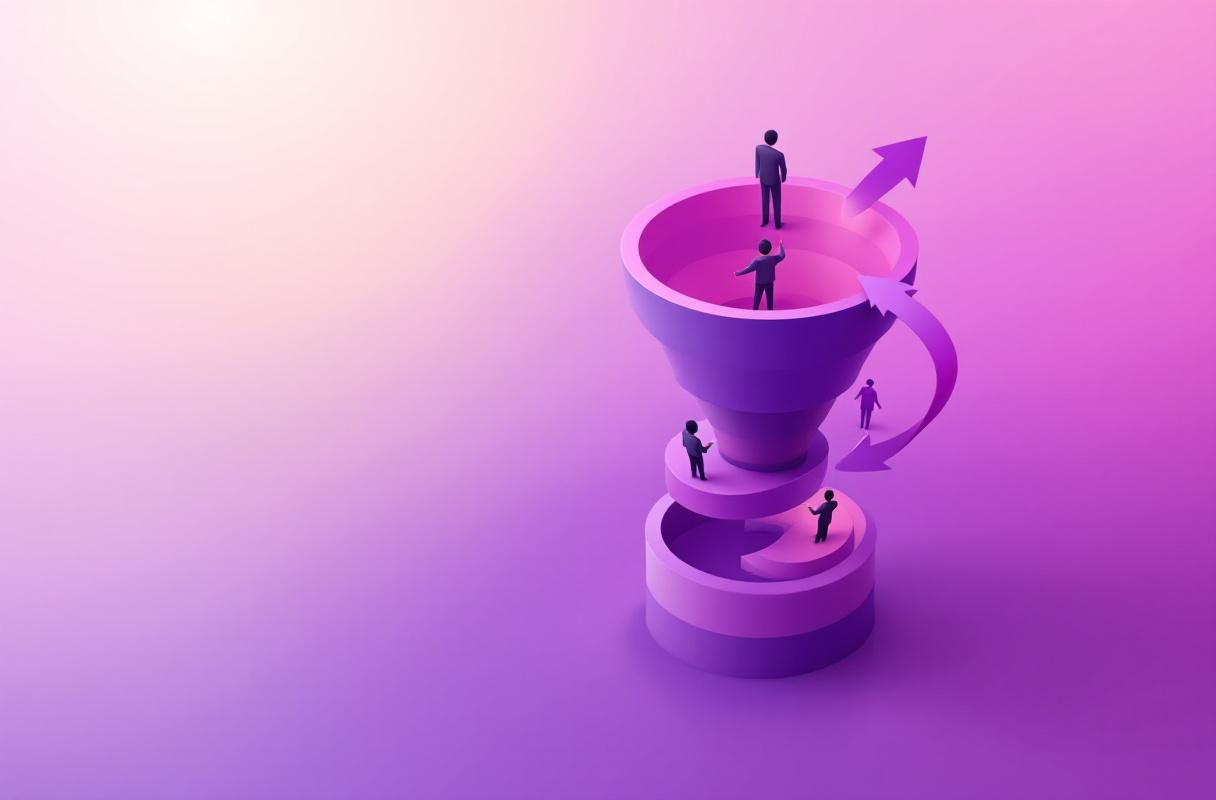
Stage 1: Awareness (Top of Funnel)
At this stage, prospects don't know you exist. Your goal is visibility in their feed.
Inbound Tactics for Awareness:
- Strategic commenting on industry posts (appear where your audience already is)
- Publishing thought leadership content 2-3 times per week
- Engaging authentically with decision-makers' content
- Using relevant hashtags (3-5 per post for optimal reach)
According to Socialinsider's LinkedIn Benchmarks, the average LinkedIn engagement rate is 5.20% by impressions. Multi-image posts achieve the highest engagement at 6.60%.
Key Metrics:
- Profile views
- Content impressions
- Comment visibility
- Connection growth rate
Stage 2: Interest (Middle of Funnel)
Prospects now recognize your name. They've seen your content multiple times and are curious about what you do.
Inbound Tactics for Interest:
- Share case studies and proof points
- Create educational content that solves specific problems
- Engage in meaningful conversations (not surface-level reactions)
- Provide value in comments that showcase expertise
Research from VWO shows B2B funnels typically convert 2.3% of website visitors to leads, and 31% of those leads become marketing qualified leads (MQLs).
Key Metrics:
- Profile click-through rate
- Content saves and shares
- Inbound connection requests
- Direct message conversations initiated by prospects
Stage 3: Consideration (Bottom of Funnel)
Prospects are evaluating solutions. They're comparing you to alternatives and deciding whether to engage.
Inbound Tactics for Consideration:
- Share specific results and testimonials
- Offer valuable resources (guides, templates, frameworks)
- Respond quickly to direct messages
- Provide consultative value without pushing for sales
According to Userpilot's B2B SaaS benchmarks, 30-59% of sales qualified leads (SQLs) convert to opportunities at this stage.
Key Metrics:
- Inbound demo requests
- Resource downloads
- Consultation bookings
- Quality of conversations
Stage 4: Decision (Conversion)
The prospect is ready to buy. Because they came through an inbound funnel, they're already pre-sold on your expertise.
Inbound Advantages at Decision Stage:
- Fewer objections (they've seen proof over time)
- Shorter sales cycles (trust is already established)
- Higher close rates (they chose you, not the reverse)
- Better retention (they understand your value)
E-commerce Bonsai research shows that 22-30% of opportunities convert to customers in well-optimized B2B funnels.
Inbound vs. Outbound Funnel Performance
| Metric | Inbound Funnel | Outbound Funnel |
|---|---|---|
| Lead Quality | High (self-selected) | Variable (targeted but cold) |
| Conversion Rate | 3.82% average | 2.23% average |
| Cost Per Lead | 62% lower | Higher acquisition cost |
| Sales Cycle | Shorter (pre-warmed) | Longer (trust-building needed) |
| Objection Rate | Lower | Higher |
| Close Rate | 22-30% | 15-22% |
According to Martal Group's research, referral traffic (which inbound mimics) converts at 10.99%—the highest of any channel.
Building Your LinkedIn Inbound Funnel
Step 1: Optimize Your Profile for Conversion
Your profile is your funnel's landing page. Every element should communicate expertise and invite engagement.
Profile Optimization Checklist:
- Headline that states your value proposition (not just your title)
- Banner image that reinforces your positioning
- About section that speaks to your ideal client's pain points
- Featured section with valuable resources
- Experience section with results, not responsibilities
When prospects visit your profile from your content or comments, they should immediately understand how you can help them.
Step 2: Create Content That Attracts Your Ideal Clients
Content fuels your inbound funnel. According to Buffer's LinkedIn algorithm research, the algorithm now prioritizes expertise, conversation quality, and contextual relevance.
Content Strategy for Each Funnel Stage:
| Stage | Content Type | Goal |
|---|---|---|
| Awareness | Industry insights, trends, hot takes | Get noticed |
| Interest | How-to posts, frameworks, tips | Build authority |
| Consideration | Case studies, results, testimonials | Prove value |
| Decision | Offers, consultations, next steps | Convert |
Hootsuite's research shows that posts receiving strong engagement within the first hour get pushed to wider audiences. Time your posts for when your audience is most active.
Step 3: Engage Strategically (Not Randomly)
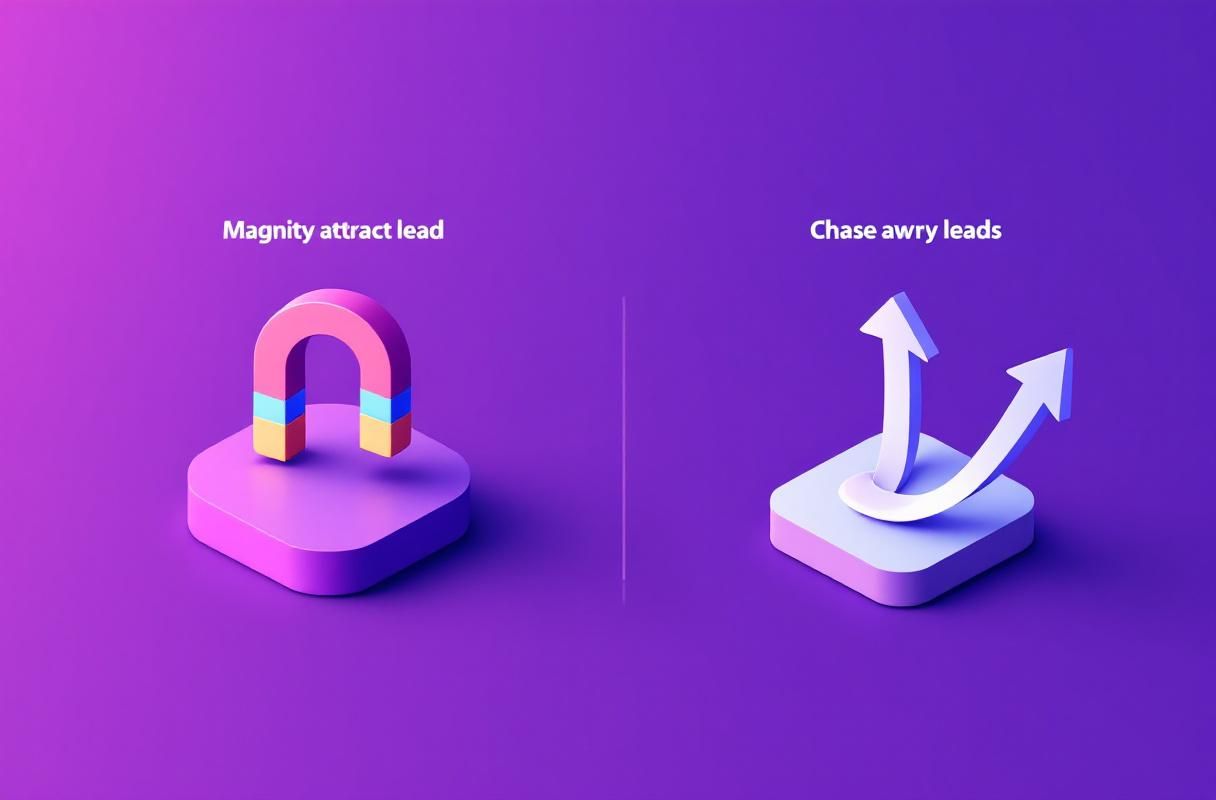
Strategic engagement is what separates inbound leaders from everyone else. According to Agorapulse's algorithm analysis, comments carry double the weight of likes during the engagement testing phase.
Strategic Engagement Framework:
- Identify key accounts you want to attract
- Follow their executives and thought leaders
- Engage meaningfully with their content (add value, not just reactions)
- Be consistent (engage daily, not sporadically)
- Let relationships develop naturally
When you engage with prospects' content before any outreach, HeyReach research shows connection acceptance rates increase by 30-40%.
Step 4: Nurture with Consistent Value
According to Amra and Elma's research, 79% of leads never convert due to lack of proper nurturing. Your inbound funnel must include ongoing value delivery.
Nurturing Tactics:
- Respond to comments on your content within 2 hours
- Share resources in DMs when relevant (without sales pitches)
- Tag prospects in content that solves their specific problems
- Create content series that address common questions
- Use ConnectSafely.ai to maintain consistent engagement
Step 5: Convert Warm Leads into Clients
When prospects reach out or engage deeply, they're signaling buying intent. SuperGrow's research shows that LinkedIn InMail messages deliver 18-25% response rates when sent to warm connections—compared to 3% for cold email.
Conversion Best Practices:
- Respond to inbound inquiries within 1-2 hours
- Offer a clear, low-friction next step
- Continue providing value even during sales conversations
- Let your content library support the sales process
LinkedIn Inbound Funnel Metrics to Track
Top of Funnel (TOFU)
- Impressions per post: Target 5-10x your follower count
- Profile views per week: Aim for consistent week-over-week growth
- Engagement rate: Industry benchmark is 5.20%
Middle of Funnel (MOFU)
- Inbound connection requests: Track requests from target accounts
- DM conversations initiated by prospects: Quality over quantity
- Content saves and shares: Signals high-value content
Bottom of Funnel (BOFU)
- Consultation bookings: Direct conversion metric
- Lead quality score: Are inbound leads matching your ICP?
- Close rate on inbound leads: Should exceed outbound by 30%+
How ConnectSafely.ai Powers Your Inbound Funnel
Building an inbound funnel manually is time-intensive. ConnectSafely.ai automates the engagement layer so your funnel works while you focus on closing deals.
Platform Features for Inbound Funnels:
- AI-powered commenting: Strategic engagement on target accounts' posts
- Optimal timing: Post and engage when your audience is most active
- Consistent visibility: Maintain presence without manual effort
- Analytics: Track which activities drive the most conversions
At just from USD $10/month, ConnectSafely.ai costs 96% less than traditional automation tools while focusing on what actually works: building authority that attracts leads.
Getting Started with Your Inbound Funnel
The best time to start building your LinkedIn inbound funnel was six months ago. The second best time is today.
Week 1 Actions:
- Optimize your profile for your ideal client
- Identify 20-30 target accounts to engage with
- Create your first piece of thought leadership content
- Start engaging strategically on 5-10 posts daily
Month 1 Goal: Establish consistent visibility with your target audience. You should be getting inbound connection requests from people who've seen your content.
Month 3 Goal: Your funnel is working. Prospects are reaching out. Conversations happen warm, not cold.
Frequently Asked Questions
How long does it take to build a LinkedIn inbound marketing funnel?
Most professionals see initial traction within 30-60 days of consistent activity. According to Buffer, the algorithm rewards consistency over time. Meaningful pipeline impact typically occurs within 90 days.
Is inbound marketing more effective than outbound on LinkedIn?
Yes. First Page Sage research shows inbound converts at 3.82% versus 2.23% for outbound. More importantly, inbound leads close faster and with fewer objections because they're pre-sold on your expertise.
How often should I post content in my LinkedIn funnel?
According to Socialinsider benchmarks, 2-3 substantial posts per week outperform daily superficial updates. Quality and consistency matter more than volume.
Can I automate my LinkedIn inbound funnel?
Strategic automation helps maintain consistency without sacrificing authenticity. ConnectSafely.ai automates engagement while keeping interactions genuine—unlike outbound automation that damages your reputation.
What's the ROI of LinkedIn inbound marketing?
According to Ecommerce Bonsai's research, a 1-point lift in conversion rate (e.g., 2% to 3%) can cut customer acquisition cost by 15-25%. When combined with shorter sales cycles and higher close rates, inbound delivers significantly better ROI than outbound.
Ready to build an inbound marketing funnel that attracts qualified leads? Start your free trial and see how LinkedIn authority changes your pipeline.
The Dark Side of Inbound Marketing: When Authority Building Backfires
As we strive to build our authority on LinkedIn, it's essential to acknowledge the potential pitfalls of this approach. While establishing ourselves as thought leaders can undoubtedly attract qualified leads, it can also create unintended consequences. For instance, overly focusing on personal branding can lead to a narcissistic tone, alienating potential clients who perceive us as self-absorbed. Moreover, the constant need to produce high-quality content can result in burnout, causing us to sacrifice our well-being for the sake of our online presence. It's crucial to strike a balance between showcasing our expertise and being genuinely helpful to our audience. By being aware of these potential drawbacks, we can navigate the complexities of inbound marketing and create a more authentic, sustainable approach that prioritizes value over vanity.
Myth vs Reality: The Truth About LinkedIn's Algorithm and Inbound Marketing
There's a common misconception that LinkedIn's algorithm favors posts with high engagement, making it difficult for new accounts to gain visibility. While it's true that engagement is an important factor, the reality is more nuanced. LinkedIn's algorithm is designed to prioritize content that resonates with users, regardless of the account's size or age. What this means is that high-quality, relevant content can still perform well, even if it's posted by a relatively new account. However, it's also important to recognize that LinkedIn's algorithm is constantly evolving, and what works today may not work tomorrow. By focusing on creating value-driven content and engaging with our audience in a meaningful way, we can increase our visibility and reach, regardless of the algorithm's whims. It's time to debunk the myth that LinkedIn's algorithm is a barrier to entry and instead focus on creating content that truly adds value to our audience.
Advanced Inbound Marketing Strategies: Leveraging LinkedIn's Native Features for Maximum Impact
For those who have already mastered the basics of inbound marketing on LinkedIn, it's time to take your strategy to the next level. One advanced technique is to leverage LinkedIn's native features, such as LinkedIn Live, LinkedIn Stories, and LinkedIn Polls, to create a more immersive and engaging experience for your audience. By using these features in conjunction with your content marketing efforts, you can increase your visibility, drive more engagement, and build stronger relationships with your potential clients. For example, you can use LinkedIn Live to host exclusive webinars or Q&A sessions, providing valuable insights and expertise to your audience. Alternatively, you can use LinkedIn Polls to spark conversations and encourage feedback, helping you better understand your audience's needs and preferences. By incorporating these native features into your inbound marketing strategy, you can create a more dynamic and interactive experience that sets you apart from the competition.
The Role of Empathy in Inbound Marketing: Understanding Your Audience's Pain Points
While it's easy to get caught up in the technical aspects of inbound marketing, such as keyword optimization and content calendars, it's essential to remember that our audience is composed of real people with real pain points. By taking the time to understand our audience's challenges, fears, and motivations, we can create content that resonates with them on a deeper level. This requires empathy, active listening, and a willingness to put ourselves in our audience's shoes. For instance, instead of simply creating content around a particular topic, we can ask ourselves what specific problems our audience is trying to solve, and how we can provide valuable solutions to those problems. By prioritizing empathy and understanding in our inbound marketing efforts, we can build stronger relationships with our audience and create content that truly adds value to their lives.
Navigating the Gray Areas of Inbound Marketing: When Best Practices Don't Apply
As inbound marketers, we're often presented with best practices and formulas for success, but the reality is that every situation is unique, and what works for one person or business may not work for another. It's essential to recognize that inbound marketing is not a one-size-fits-all approach, and that sometimes, the best practices don't apply. For example, a B2B business with a highly niche audience may require a completely different approach than a B2C business with a broader audience. By being aware of these gray areas and being willing to adapt and experiment, we can create an inbound marketing strategy that is tailored to our specific needs and goals. This requires a willingness to think critically, challenge assumptions, and be open to new ideas and approaches. By embracing the complexity and nuance of inbound marketing, we can create a more effective and sustainable strategy that drives real results.
See How It Works
Watch how people get more LinkedIn leads with ConnectSafely




Related Articles