LinkedIn Inbound Prospecting: Why Attraction Beats the Chase
Transform your LinkedIn prospecting from chasing to attracting. Learn the inbound prospecting methodology that brings qualified leads to you automatically.


Stop chasing prospects—build LinkedIn authority that attracts them to you. Inbound prospecting generates qualified leads who already want to talk by creating visibility through strategic engagement, publishing valuable content, and positioning yourself where ideal clients pay attention. This attraction-based approach converts at 14.6% compared to 1.7% for cold outreach—an 8-9X improvement—with 3-5X faster sales cycles and dramatically better prospect experience.
The traditional approach to LinkedIn prospecting is exhausting. Send connection requests. Craft personalized messages. Follow up multiple times. Get ignored by 90%+ of prospects. Repeat endlessly. The chase never stops, and it rarely gets easier.
But what if prospects came to you instead?
Key Takeaways
- Traditional prospecting is a treadmill—stop running, stop results. Inbound prospecting builds assets that continue producing.
- The mindset shift moves from volume to quality, convincing to attracting, and activity to assets
- Four pillars of inbound prospecting: Position for discovery, Publish for authority, Engage for visibility, Convert interest to conversation
- Strategic engagement expands reach beyond your network to prospects who haven't discovered you yet
- Inbound leads convert at 14.6% compared to 1.7% for outbound—an 8-9X improvement
- The 90-day plan builds foundation (month 1), authority (month 2), and activation (month 3)
Inbound prospecting inverts the traditional model. Instead of chasing hundreds of strangers hoping a few respond, you build visibility and authority that attracts qualified prospects who already want to talk. Instead of convincing skeptical strangers you're worth their time, you have conversations with warm prospects who've already consumed your expertise.
The results speak clearly: inbound leads convert at 14.6% compared to 1.7% for outbound approaches—an 8-9X improvement. Sales cycles are 3-5X faster. And the experience is dramatically more pleasant for everyone involved.
Want to Generate Consistent Inbound Leads from LinkedIn?
Get our complete LinkedIn Lead Generation Playbook used by B2B professionals to attract decision-makers without cold outreach.
No spam. Just proven strategies for B2B lead generation.
This guide teaches you the inbound prospecting methodology that transforms LinkedIn from a hunting ground into an attraction engine.
The Problem with Traditional LinkedIn Prospecting
Let's be honest about what traditional LinkedIn prospecting looks like in practice:
The typical prospecting day:
- Spend 30 minutes researching prospects
- Craft "personalized" connection requests
- Send 50-100 requests per week (pushing limits)
- Achieve 30-45% acceptance rate (15-45 new connections)
- Send follow-up messages to new connections
- Get 5-10% response rate (2-5 responses)
- Schedule 1-2 calls if you're lucky
The math is brutal: 100 prospecting attempts → 2 calls → maybe 1 deal. And you need to repeat this indefinitely because stopping prospecting stops results.
The hidden costs compound:
- Time investment: 10-15+ hours weekly on prospecting activities
- Reputation risk: Aggressive outreach creates spam perception
- Platform risk: LinkedIn restricts accounts that appear automated
- Mental drain: Constant rejection is exhausting
- Quality sacrifice: Volume focus attracts wrong-fit prospects
The traditional model treats LinkedIn as a fishing net—cast wide, hope something sticks. The inbound model treats LinkedIn as a magnet—build attraction that draws qualified prospects to you.
The Inbound Prospecting Mindset Shift
Transforming from chase to attraction requires fundamental mindset changes:
From Volume to Quality
Chase mindset: "I need to reach more prospects to hit my numbers." Attraction mindset: "I need to be visible to the right prospects who will recognize my value."
The chase mindset leads to spray-and-pray outreach that burns through your addressable market. The attraction mindset focuses resources on positioning that compounds over time.
From Convincing to Attracting
Chase mindset: "How do I convince strangers I'm worth their time?" Attraction mindset: "How do I demonstrate value so interested prospects reach out?"
The chase mindset puts you in a weak negotiating position—begging for attention. The attraction mindset positions you as the selected choice—prospects come pre-convinced.
From Activity to Assets
Chase mindset: "Results depend on maintaining prospecting activity." Attraction mindset: "Results compound from authority assets I've built."
The chase mindset creates a treadmill—stop running, stop results. The attraction mindset builds durable assets that continue generating leads regardless of daily activity.
The Inbound Prospecting Framework
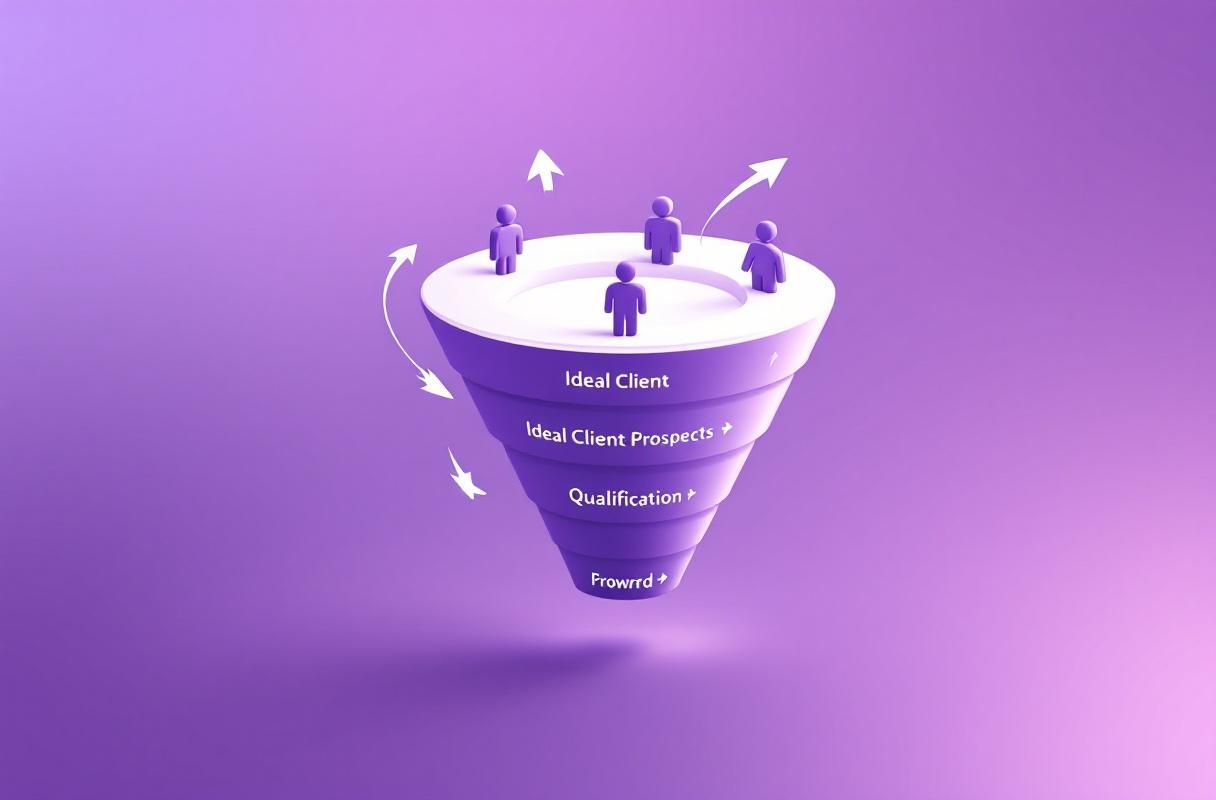
Inbound prospecting follows a systematic framework with four pillars: Position, Publish, Engage, and Convert.
Pillar 1: Position for Discovery
Before prospects can find you, you need to be findable. Positioning for discovery means optimizing your LinkedIn presence for the searches and browsing patterns of ideal clients.
Profile optimization:
Your headline should answer: "Who do you help and what outcome do you deliver?"
❌ "CEO at Company X" ✅ "Helping B2B SaaS companies reduce churn by 40%+"
❌ "Sales Professional | Business Development | Growth" ✅ "Pipeline Transformation for Enterprise Sales Teams | 3X Close Rates"
Your About section should:
- Open with a pain point your prospects feel
- Explain your unique approach to solving it
- Demonstrate results you've achieved
- End with a clear next step
Featured section optimization:
- Showcase your best content (authority demonstration)
- Include lead magnets or valuable resources
- Add case studies or client results
- Provide easy booking/contact options
Network positioning: Your network determines who sees your activity. Systematically connect with:
- Decision-makers at target companies
- Industry influencers your prospects follow
- Complementary service providers (referral sources)
- Active professionals in relevant communities
Pillar 2: Publish for Authority
Publishing demonstrates expertise that attracts prospects and positions you as a recognized authority. But not all publishing strategies are equal for prospecting purposes.
Prospecting-focused content strategy:
Problem posts (30%): Content that articulates challenges your prospects face. When prospects see you accurately describing their pain, they recognize you understand their world.
Example: "Most [role] professionals struggle with [problem] because [insight]. Here's what I've learned working with 50+ companies facing this challenge..."
Solution posts (30%): Content that reveals your methodology and approach. Share enough that prospects understand your value without getting everything for free.
Example: "The framework I use with [client type] to achieve [outcome]: Step 1..."
Proof posts (25%): Content demonstrating results you've achieved. Case studies, testimonials, and specific outcomes build credibility.
Example: "Last quarter, we helped [client type] achieve [specific result]. Here's what made the difference..."
Perspective posts (15%): Content sharing your unique viewpoint on industry trends and challenges. Positions you as a strategic thinker, not just a tactical executor.
Example: "[Industry trend] is changing everything for [prospect type]. Here's what smart leaders are doing about it..."
Publishing frequency: Aim for 3-5 posts weekly. Consistency matters more than volume. Three posts weekly for 6 months beats daily posting for 3 weeks then stopping.
Pillar 3: Engage for Visibility
Publishing alone limits your visibility to your existing network. Strategic engagement expands your reach to prospects who haven't discovered you yet.
Why engagement matters for prospecting:
When you comment thoughtfully on content from creators your prospects follow, you appear in their feeds without cold outreach. They see your expertise demonstrated in conversations they care about. Over time, your name becomes familiar—a warm presence rather than a cold interruption.
Strategic engagement targets:
- Industry thought leaders: Creators with audiences that overlap your target market
- Target account executives: Content from decision-makers at companies you want to reach
- Complementary providers: Professionals serving similar audiences with different solutions
- Community conversations: Discussions where your prospects actively participate
Engagement quality standards:
❌ Generic engagement: "Great post!" "Thanks for sharing!" "Agree 100%!" ✅ Value-adding engagement: Specific insights, relevant experiences, thoughtful questions
Every comment should demonstrate expertise or spark valuable conversation. Generic engagement is invisible; valuable engagement attracts attention.
Engagement volume: 10-15 meaningful comments daily on strategically selected content. This takes 30-45 minutes but delivers visibility impossible to achieve through posting alone.
Scaling engagement with ConnectSafely.ai: Manual engagement at scale requires significant daily time investment. ConnectSafely.ai automates strategic engagement with AI-powered commenting that sounds authentically like you—maintaining visibility volume without the hour-by-hour attention.
Pillar 4: Convert Interest to Conversation
Visibility and authority create interest. Conversion mechanisms transform that interest into sales conversations.
Profile conversion elements:
- Clear CTA in your headline or banner
- About section ending with specific next step
- Featured section with booking link or lead magnet
- Contact information easily accessible
Content conversion elements:
- Posts that invite DM conversations
- Offers for deeper resources (in exchange for engagement)
- Clear invitations to discuss relevant challenges
- Periodic direct offers for discovery calls
DM conversation framework:
When prospects message you (instead of you messaging them), the conversation starts differently. They've already demonstrated interest. Your job is to qualify and progress, not convince.
Inbound DM response structure:
- Acknowledge their interest warmly
- Ask one qualifying question about their situation
- Provide immediate value relevant to their answer
- Suggest next step if appropriate
Example response: "Thanks for reaching out! I'm curious—what prompted you to connect on this specifically? Is this something you're actively working on or just exploring?
[Based on their response, either provide relevant insight or suggest a call]"
The conversion math: With effective inbound positioning:
- Profile views from target accounts: 50-100/month
- Inbound DMs from interested prospects: 10-25/month
- Discovery calls from DM conversations: 5-15/month
- Closed deals from discovery calls: 2-6/month
This is the inverse of traditional prospecting—high-quality, low-volume leads that convert at dramatically higher rates.
Inbound vs. Outbound Prospecting: The Comparison
| Factor | Traditional Prospecting | Inbound Prospecting |
|---|---|---|
| Daily time investment | 2-3+ hours | 30-60 minutes (after ramp) |
| Monthly reach volume | 400-600 prospects | 10,000+ impressions |
| Response rate | 5-10% | 40-60% (they initiated) |
| Conversion rate | 1-2% | 10-15% |
| Lead quality | Variable (cold strangers) | High (pre-qualified interest) |
| Sales cycle length | 3-6 months | 1-3 months |
| Platform risk | High (violation concerns) | Low (compliant activities) |
| Results when you stop | Immediate decline | Continued flow (authority persists) |
The ROI comparison:
Traditional prospecting:
- Cost: 15 hours/week × $100/hour = $6,000/month in time
- Results: 2-4 discovery calls/month
- Cost per call: $1,500-3,000
Inbound prospecting (mature):
- Cost: 5 hours/week × $100/hour + from USD $10/month ConnectSafely.ai = $2,200/month
- Results: 10-15 discovery calls/month
- Cost per call: $150-220
The efficiency advantage compounds over time as authority assets continue producing while requiring less ongoing investment.
Implementation: Your 90-Day Inbound Prospecting Plan
Days 1-30: Foundation
Week 1:
- Optimize profile for discovery and conversion
- Identify 20 target creators for engagement
- Define your content pillars and voice
- Set up ConnectSafely.ai for engagement automation
Weeks 2-4:
- Publish 3-4 posts weekly
- Execute daily strategic engagement
- Monitor profile views and early signals
- Refine approach based on initial response
Month 1 Goals:
- Profile views increasing
- Engagement on posts beginning
- Network expanding with target prospects
- Foundation established
Days 31-60: Authority Building
Weeks 5-6:
- Increase content quality and depth
- Share first case study or results post
- Expand engagement targets based on results
- Create first lead magnet or resource offer
Weeks 7-8:
- Introduce CTAs in content
- Respond quickly to inbound interest
- Document what content drives best engagement
- Begin tracking conversion metrics
Month 2 Goals:
- Consistent engagement on posts
- First inbound DMs from prospects
- Authority beginning to establish
- Conversion experiments running
Days 61-90: Activation
Weeks 9-10:
- Optimize conversion mechanisms based on data
- Scale engagement to new target creators
- Systematize content production
- First discovery calls from inbound sources
Weeks 11-12:
- Refine messaging based on conversion data
- Expand content distribution
- Build sustainable weekly routine
- Measure full-funnel results
Month 3 Goals:
- 5-10 inbound DMs monthly
- 3-5 discovery calls from inbound sources
- Sustainable system operating
- Clear ROI trajectory established
Common Objections to Inbound Prospecting
"This takes too long—I need results now."
Inbound prospecting typically produces first results in 30-60 days, with meaningful pipeline in 90 days. Traditional prospecting produces occasional results immediately but requires indefinite time investment. The question isn't which is faster to start—it's which is more sustainable long-term.
"I don't have time to create content."
Content creation takes 2-3 hours weekly. Traditional prospecting takes 10-15+ hours weekly. Inbound actually requires less total time while producing better results. The time investment is front-loaded as you build assets, then decreases as authority compounds.
"My prospects aren't active on LinkedIn."
LinkedIn has 1 billion members globally, including virtually all B2B decision-makers. If your specific prospects aren't active, the creators they follow and the conversations they monitor are. Strategic engagement reaches them through content they consume.
"What if I need more leads quickly?"
Inbound prospecting can be supplemented with warm outreach when needed. The difference: when you reach out to someone who's seen your content and engagement, you're no longer cold. Your authority builds warm outreach permission even when you initiate.
The professionals thriving on LinkedIn aren't the ones sending the most connection requests. They're the ones who've built authority so strong that prospects seek them out. The chase becomes unnecessary when attraction does the work.
Ready to transform your prospecting from chasing to attracting? Start your free ConnectSafely.ai trial and build the visibility that makes prospects come to you.
Frequently Asked Questions
What LinkedIn prospecting strategy actually works?
The most effective LinkedIn strategy in 2026 focuses on inbound prospecting through the Four Pillars framework: Position (optimize profile for discovery), Publish (demonstrate authority through content), Engage (maintain strategic visibility), and Convert (transform interest into conversations). This approach generates 10-20 qualified leads monthly who initiate contact because they've already consumed your expertise and trust your value—converting at 14.6% compared to 1.7% for traditional cold prospecting.
How do I attract LinkedIn leads instead of chasing them?
Attracting leads requires building visibility where your ideal clients already pay attention. Engage strategically on posts from creators your prospects follow (10-15 meaningful comments daily), publish content that demonstrates your methodology and results (3-5 posts weekly), and optimize your profile for conversion with clear CTAs and valuable resources. When prospects repeatedly encounter your insights in conversations they care about, they naturally reach out when they need help.
Does LinkedIn authority help with B2B email outreach?
Yes—dramatically. LinkedIn authority transforms email prospecting by creating recognition before your message arrives. When prospects know you from LinkedIn engagement, email open rates increase from 15-25% to 40-60% and response rates improve from 1-5% to 15-30%. Build 2-4 weeks of LinkedIn visibility through strategic engagement before emailing target accounts, then reference shared context in your outreach for warm conversations instead of cold interruptions.
How long until inbound prospecting generates results?
Most professionals see initial results within 30-60 days of consistent execution. Month 1 focuses on foundation building (profile optimization, identifying target creators, establishing engagement routine). Month 2 brings authority establishment (increased engagement, first inbound DMs, growing profile views). Month 3 delivers activation (5-10 inbound conversations, 3-5 discovery calls from warm prospects). Results compound over time—month 6 typically delivers 2-3X the leads of month 3.
Can I combine inbound prospecting with cold outreach?
Absolutely—and this integration produces excellent results. Build inbound authority through strategic engagement for 2-4 weeks, then reach out to prospects who've seen your content. When you initiate contact, you're no longer a stranger—you're "that person from LinkedIn with valuable insights." This hybrid approach combines the speed of outbound with the trust-building power of inbound, delivering 3-5X higher acceptance and response rates than pure cold outreach.
What's the ROI of inbound versus traditional prospecting?
Traditional prospecting costs $6,000/month in time (15 hours weekly at $100/hour) to generate 2-4 discovery calls monthly—$1,500-3,000 per call. Inbound prospecting costs $2,200/month (5 hours weekly plus $39 ConnectSafely.ai) to generate 10-15 discovery calls monthly—$150-220 per call. Beyond cost efficiency, inbound leads convert at 14.6% versus 1.7%, have 3-5X shorter sales cycles, and create compounding returns as authority assets continue producing with less ongoing investment.
The Dark Side of Inbound Prospecting: When Attraction Becomes a Curse
Inbound prospecting is often touted as the holy grail of lead generation, but what happens when it works too well? When your content is so effective, your authority so established, and your engagement so strategic that you attract not just qualified leads, but an overwhelming influx of unqualified, tire-kicking, and even spammy connections? This is a reality many inbound prospecting champions face, yet rarely discuss. The truth is, attraction without filtration can be a curse, leading to a clogged pipeline, wasted time, and a diminished experience for both you and your genuine prospects. It's essential to balance attraction with discernment, implementing filters and qualification processes to ensure that only the most relevant and promising connections make it through to the next stage. This might involve setting clear boundaries, using LinkedIn's built-in filtering tools, or even leveraging AI-powered lead qualification solutions. By acknowledging the potential downsides of inbound prospecting and proactively addressing them, you can maintain a healthy, high-quality pipeline and avoid the pitfalls of unmanaged attraction.
Myth vs Reality: The "Be Everywhere" Fallacy in Inbound Prospecting
One of the most pervasive myths in inbound prospecting is the notion that you need to "be everywhere" – that is, maintain an active presence on every social media platform, blog, podcast, and online community. Proponents of this approach argue that casting a wide net will inevitably lead to more connections, more visibility, and more leads. However, the reality is far more nuanced. In truth, being everywhere often means being nowhere in particular, diluting your focus, and spreading yourself too thin. Effective inbound prospecting requires depth, not breadth; it's better to dominate a single platform or niche than to merely exist on multiple ones. By concentrating your efforts on the channels and communities that truly matter to your ideal clients, you can build meaningful relationships, establish genuine authority, and attract high-quality leads without sacrificing your sanity or your schedule. So, the next time someone advises you to "be everywhere," remember that targeted, strategic engagement is usually more effective than scattergun, superficial presence.
The Advanced Art of LinkedIn "Micro-Positioning" for Inbound Prospecting
For seasoned inbound prospecting practitioners, the concept of "positioning" is nothing new. However, there's a more advanced, sophisticated approach that involves "micro-positioning" – strategically aligning your content, engagement, and authority to resonate with extremely specific, niche audiences within your broader target market. This might involve creating bespoke content for particular industries, job functions, or pain points, or leveraging LinkedIn's granular targeting options to reach micro-segments that others overlook. By micro-positioning yourself as the go-to authority for a precise subset of your market, you can establish an unassailable reputation, attract hyper-qualified leads, and command premium fees for your expertise. To master micro-positioning, you'll need to develop a deep understanding of your ideal clients' nuanced needs, preferences, and behaviors, as well as the ability to craft compelling, highly relevant content that speaks directly to their concerns. When executed correctly, micro-positioning can yield extraordinary results, setting you apart from the competition and cementing your status as a trusted, in-demand authority.
It Depends: When Inbound Prospecting Strategies Backfire or Require Adjustments
While inbound prospecting is a powerful approach, it's not a one-size-fits-all solution. In certain situations, strategies that work wonders for others might backfire or require significant adjustments. For instance, if you're operating in a highly regulated industry, such as finance or healthcare, your inbound prospecting efforts may need to be tempered by strict compliance requirements, potentially limiting your ability to engage in certain types of content or outreach. Similarly, if you're targeting a market with a strong cultural or linguistic bias, your messaging and positioning may need to be adapted to resonate with local nuances. Additionally, inbound prospecting can be less effective in markets with limited online engagement or where traditional, relationship-based sales approaches are more prevalent. By recognizing these "it depends" scenarios and being willing to adapt or pivot your strategies accordingly, you can avoid costly mistakes, optimize your results, and ensure that your inbound prospecting efforts remain effective and aligned with your unique goals and context.
Navigating the Gray Areas: Inbound Prospecting Ethics and the Boundaries of Authenticity
As inbound prospecting continues to evolve, it's essential to confront the gray areas that can arise when balancing authenticity with strategic engagement. Where does genuine connection end and manipulation begin? How can you promote your expertise without coming across as self-serving or spammy? What are the boundaries of acceptable outreach, and how can you ensure that your messaging respects the recipient's time and attention? These questions highlight the importance of establishing a personal code of ethics in inbound prospecting, one that prioritizes transparency, empathy, and mutual value. By being mindful of these gray areas and striving to maintain the highest standards of integrity and respect, you can build trust with your audience, foster meaningful relationships, and create a sustainable, inbound-driven business that truly serves the needs of your ideal clients. Ultimately, the most effective inbound prospecting strategies are those that combine strategic sophistication with a deep commitment to authenticity, empathy, and customer-centricity.
See How It Works
Watch how people get more LinkedIn leads with ConnectSafely




Related Articles