LinkedIn Inbound Growth Strategies That Actually Work
Discover proven LinkedIn inbound growth strategies that attract qualified leads. Learn why authority-building beats growth hacks for sustainable results.

LinkedIn growth hacks chase vanity metrics—inbound growth strategies generate qualified leads. Instead of gaming algorithms for followers and viral content, successful B2B professionals in 2026 build authority through strategic engagement, quality content, and network positioning. Strategic engagement on content your prospects read delivers 8-9X higher conversion rates than growth hacks, while authority-based positioning attracts 10-20 qualified leads monthly who already want to work with you.
Key Takeaways
- Growth hacks optimize for vanity metrics while inbound strategies optimize for business outcomes
- Strategic engagement on others' content delivers faster visibility than content creation alone
- Network quality beats network size for generating qualified inbound opportunities
- LinkedIn SEO creates passive inbound channels most professionals ignore
- Inbound leads convert at 8-9X higher rates than outbound approaches
- Consistency compounds while hacks produce diminishing returns
The internet is flooded with "LinkedIn growth hacks" promising explosive follower counts and viral content. But here's what most B2B professionals discover after chasing these shortcuts: vanity metrics don't pay the bills. What actually matters is whether your LinkedIn presence generates qualified leads who want to work with you.
The shift from "growth hacking" to "growth strategy" isn't just semantic. It represents a fundamental change in how successful professionals approach LinkedIn in 2026. Instead of gaming algorithms for impressions, they're building authority that attracts ideal clients. Instead of chasing followers, they're cultivating relationships that convert.
This guide reveals the LinkedIn inbound growth strategies that actually produce business results—not just bigger numbers on your profile.
Why Traditional LinkedIn Growth Hacks Fail
The typical LinkedIn growth advice focuses on tactics like posting at optimal times, using engagement pods, adding hooks to every post, and leveraging trending hashtags. While these tactics might boost your vanity metrics temporarily, they rarely translate into business outcomes.
Want to Generate Consistent Inbound Leads from LinkedIn?
Get our complete LinkedIn Lead Generation Playbook used by B2B professionals to attract decision-makers without cold outreach.
No spam. Just proven strategies for B2B lead generation.
The core problem with growth hacks is misaligned incentives. When you optimize for impressions or followers, you attract an audience interested in entertainment—not in buying what you sell. A consultant with 50,000 followers who can't book discovery calls has optimized for the wrong outcome.
Consider these statistics that reveal the disconnect:
- The average LinkedIn post reaches just 5-10% of followers
- Viral content typically attracts audiences outside your ICP
- High-follower accounts often report declining engagement over time
- Growth hack audiences have 70% lower conversion rates than organic audiences
LinkedIn's 2024-2026 algorithm changes have accelerated this shift. The platform now explicitly prioritizes "knowledge-rich content" and expertise over virality. Posts are evaluated on relevance, expertise, and genuine engagement—not manufactured interactions from engagement pods.
The Inbound Growth Framework: Attraction Over Pursuit
Sustainable LinkedIn growth isn't about hacking the algorithm. It's about becoming so valuable in your niche that your ideal clients naturally gravitate toward you. This requires shifting from a pursuit mindset to an attraction mindset.
The Inbound Growth Principles:
- Visibility in the right conversations matters more than total impressions
- Quality of audience beats quantity of followers every time
- Authority positioning creates compounding returns
- Consistent value delivery builds trust that converts
When you focus on these principles, growth becomes a byproduct of genuine value creation—not a goal to hack toward.
Strategy 1: Strategic Engagement for Targeted Visibility
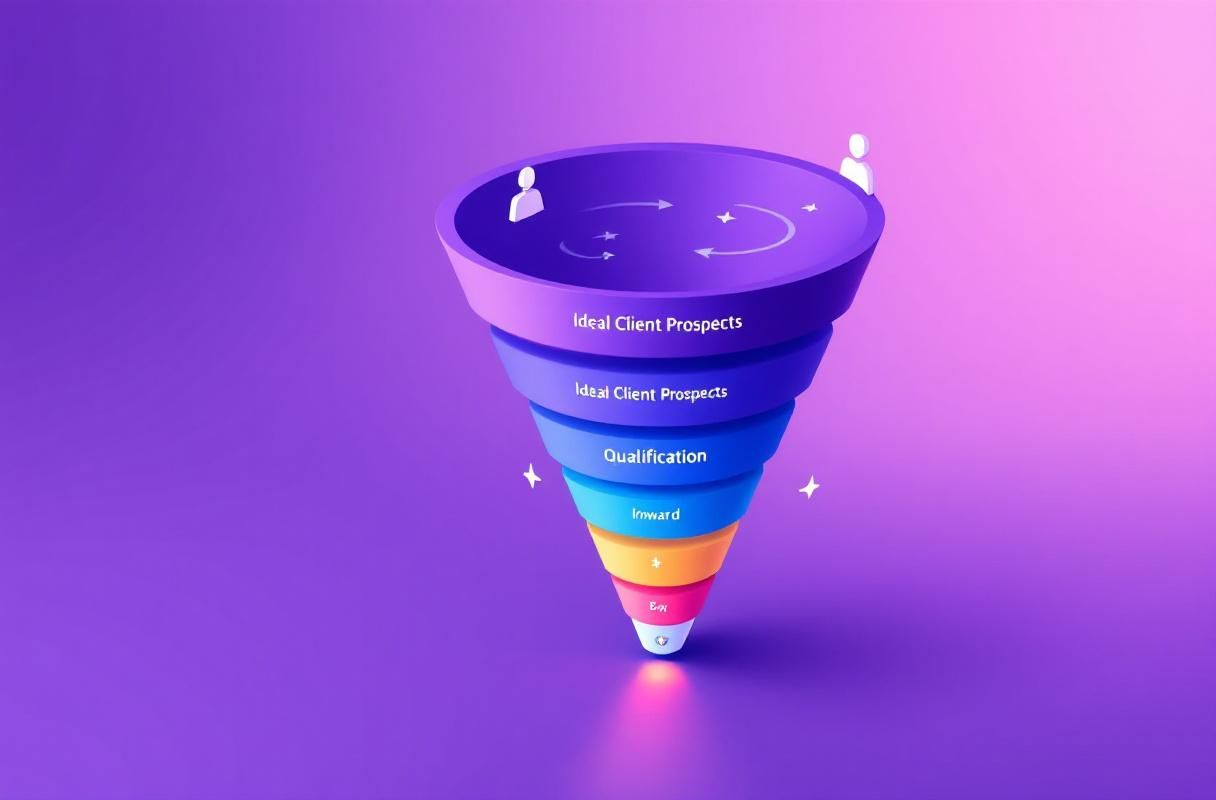
The most underrated LinkedIn growth strategy is strategic engagement on others' content. Most professionals view commenting as a nice-to-have activity. The top performers understand it's their primary visibility engine.
Why Strategic Commenting Outperforms Content Creation
Consider the math: A thoughtful comment on a creator with 50,000 followers puts you in front of their entire engaged audience. To reach the same audience organically, you'd need years of content creation and follower building.
Strategic commenting delivers:
- Immediate visibility to targeted audiences
- Social proof through association with industry leaders
- Relationship building with potential referral partners
- Algorithm signals that boost your own content's reach
How to Execute Strategic Engagement
Step 1: Identify Your Target Creators
Find 15-20 creators whose audiences overlap with your ideal client profile. These should include:
- Industry thought leaders your prospects follow
- Complementary service providers (not competitors)
- Company pages of target accounts
- Active voices in your professional communities
Step 2: Develop a Value-Adding Comment Framework
Generic comments like "Great post!" or "Thanks for sharing!" provide zero value. Your comments should demonstrate expertise and spark conversation.
Effective comment patterns include:
- Adding a complementary insight from your experience
- Sharing a relevant case study or data point
- Asking a thought-provoking follow-up question
- Respectfully offering an alternative perspective
Step 3: Maintain Consistent Engagement Volume
The compounding effect of strategic engagement requires consistency. Aim for 10-15 meaningful comments daily on targeted content. This takes 30-45 minutes but delivers more visibility than hours of content creation.
ConnectSafely.ai automates this strategic engagement process, using AI to generate personalized comments that sound authentically like you—ensuring consistent visibility without the daily time investment.
Strategy 2: Authority-Building Content Architecture
While engagement creates visibility, your own content establishes authority. But not all content strategies are equal. Random posting hoping something goes viral is not a strategy.
The Authority Content Stack
Effective LinkedIn content follows a strategic architecture designed to demonstrate expertise and attract qualified prospects:
Layer 1: Foundational Expertise Posts (40% of content)
- Share specific frameworks you use with clients
- Explain your unique methodology or approach
- Provide actionable insights from your experience
- Answer common questions your prospects ask
Layer 2: Social Proof Content (30% of content)
- Client success stories (with permission)
- Before/after transformations you've facilitated
- Lessons learned from specific projects
- Industry recognition or achievements
Layer 3: Thought Leadership (20% of content)
- Industry trend analysis and predictions
- Contrarian perspectives with supporting evidence
- Original research or data from your work
- Commentary on breaking industry news
Layer 4: Personal Brand Content (10% of content)
- Professional journey and lessons learned
- Behind-the-scenes of your work
- Values and business philosophy
- Authentic professional experiences
Content Frequency and Consistency
Posting frequency matters less than posting consistency. A reliable schedule of 3-4 posts per week outperforms sporadic bursts of daily posting followed by silence.
The LinkedIn algorithm rewards consistency because it signals you're an active, valuable community member. Irregular posting patterns—even with high-quality content—underperform compared to reliable contributors.
Strategy 3: Network Quality Over Network Size
Most LinkedIn users focus on growing their connection count. The inbound approach prioritizes network quality—ensuring your connections include decision-makers who could become clients or referral sources.
The Strategic Connection Framework
Tier 1: Ideal Client Connections
- Decision-makers at target companies
- Professionals with the problems you solve
- Active LinkedIn users in your target industries
Tier 2: Referral Network Connections
- Complementary service providers
- Industry connectors and introducers
- Past colleagues who know your work
Tier 3: Authority Association Connections
- Industry thought leaders
- Media and content creators
- Conference speakers and authors
Quality Connection Strategies
Rather than sending mass connection requests to anyone with a relevant title, focus on warm connection approaches:
- Engage before connecting: Comment on their content multiple times before requesting connection
- Personalized context: Reference specific shared experiences or interests
- Value-first approach: Share something relevant to their situation
- Event-based connecting: Connect after webinars, conferences, or shared experiences
This approach yields lower volume but dramatically higher acceptance rates and actual relationship development.
Strategy 4: LinkedIn SEO for Inbound Discovery
Your LinkedIn profile is a searchable asset. When prospects search for expertise in your domain, optimized profiles appear in results. This creates a passive inbound channel you can't access through content alone.
Profile SEO Fundamentals
Headline optimization: Include your primary expertise keywords in a benefit-focused headline. "Helping B2B SaaS Companies Reduce Churn by 40%" outperforms "CEO at Company X."
About section keywords: Naturally incorporate terms your prospects search for when looking for your expertise. Write for humans first, but ensure searchability.
Experience descriptions: Use specific, searchable terms in your role descriptions. "Led LinkedIn marketing strategy generating $2M pipeline" beats "Managed social media."
Skills endorsements: Curate your skills section to reflect your current expertise and target keywords. Remove outdated or irrelevant skills.
Content SEO for Long-Term Discovery
LinkedIn content remains searchable and discoverable for months or years. Posts targeting specific professional challenges become evergreen assets that attract prospects actively seeking solutions.
Create content around questions your prospects actually ask:
- "How to [solve specific problem]"
- "[Industry] best practices for [outcome]"
- "Why [common approach] doesn't work for [audience]"
Why Inbound Growth Outperforms Traditional Methods

The data supporting inbound growth strategies is compelling:
Conversion Rate Advantage
Inbound leads—prospects who discover you through your content and engagement—convert at 14.6% compared to 1.7% for outbound approaches. That's an 8-9X improvement in conversion efficiency.
Why? Inbound prospects arrive pre-educated about your expertise and pre-qualified as interested. They've consumed your content, seen your engagement, and concluded you might solve their problem before ever reaching out.
Cost Efficiency
Traditional LinkedIn growth through advertising or automation tools costs $500-2,000+ monthly with uncertain returns. Inbound growth through strategic engagement costs time initially but creates compounding returns.
ConnectSafely.ai users report generating 10-20 qualified inbound leads monthly from just USD $10/month—a cost per lead of $2-4 compared to $50-200 for outbound approaches.
Sustainability and Compounding
Growth hacks produce diminishing returns as platforms adjust algorithms. Inbound authority-building produces compounding returns as your reputation strengthens.
A professional who has spent two years building authority through consistent engagement and valuable content has an asset that keeps generating leads. A professional who relied on growth hacks has metrics that decline as platforms change.
How ConnectSafely.ai Enables Inbound Growth
Traditional LinkedIn automation tools focus on outbound activities—sending more connection requests, automating message sequences, scraping profiles at scale. ConnectSafely.ai takes the opposite approach.
Strategic Engagement Automation: AI-powered commenting that maintains your visibility on target creators' content without requiring hours of daily manual effort. Comments are personalized to sound authentically like you, not generic bot responses.
Creator and Keyword Targeting: Identify the specific creators and topics where your ideal clients engage. Ensure you're visible in the right conversations, not scattered across irrelevant content.
Post Boosting with Real Engagement: When you publish content, ensure it reaches your target audience through authentic engagement from real professionals—not fake accounts that trigger algorithm penalties.
Analytics for Inbound Attribution: Track profile views, connection requests, and inbound messages to measure your authority-building progress and optimize your strategy.
Getting Started: Your 30-Day Inbound Growth Plan
Week 1: Foundation
- Audit and optimize your LinkedIn profile for SEO
- Identify 20 target creators whose audiences match your ICP
- Define your authority positioning and content pillars
Week 2: Engagement Launch
- Begin strategic commenting on target creators' content
- Establish your daily engagement routine
- Document insights for your own content
Week 3: Content Integration
- Publish your first authority-building content
- Continue strategic engagement momentum
- Monitor profile views and connection request quality
Week 4: Optimization
- Analyze which engagement drives the most profile visits
- Refine your target creator list based on results
- Double down on what's working
The professionals winning on LinkedIn in 2026 aren't chasing viral content or gaming algorithms. They're building authority through strategic visibility and genuine value creation. The result isn't just bigger numbers—it's a steady stream of qualified prospects who already want to work with them.
Ready to implement inbound growth strategies that generate actual business results? Start your free ConnectSafely.ai trial and transform your LinkedIn presence from a vanity metric into a lead generation engine.
Frequently Asked Questions
What's the best LinkedIn growth strategy for 2026?
The most effective LinkedIn strategy in 2026 focuses on authority-building through strategic engagement rather than growth hacks. Instead of chasing followers or viral content, successful professionals comment on posts where their ideal clients are engaged (10-15 meaningful comments daily), publish expertise-demonstrating content (3-4 posts weekly), and build quality networks with decision-makers. This inbound approach generates 10-20 qualified leads monthly at 8-9X higher conversion rates than traditional tactics.
How do I get LinkedIn leads without cold outreach?
Attracting leads requires strategic visibility positioning. Identify 15-20 creators your ideal clients follow and engage consistently on their content with valuable insights. Optimize your profile for prospects (not employers) with benefit-focused headlines and clear next steps. Publish content using the authority stack: 40% expertise frameworks, 30% social proof, 20% thought leadership, 10% personal brand. When prospects repeatedly encounter your insights, they initiate contact when they need help.
Can LinkedIn help my email marketing campaigns?
Yes—dramatically. LinkedIn authority creates recognition that transforms email metrics. When prospects know you from LinkedIn before receiving your email, open rates increase from 15-25% to 40-60% and response rates improve from 1-5% to 15-30%. The multi-channel recognition effect means the same email that gets deleted from strangers gets enthusiastic responses when sent by recognized authorities. Build 2-4 weeks of visibility before emailing target accounts.
Why do inbound leads close faster than outbound?
Inbound leads convert at 14.6% compared to 1.7% for outbound—an 8-9X improvement—because they arrive pre-qualified and pre-educated. They've consumed your content (understand your expertise), seen your engagement (trust you), and initiated contact (already interested). They're further in the buying process when first contact occurs, reducing sales cycles by 3-5X and eliminating most objections that plague cold outreach.
How long until I see results from LinkedIn?
Most professionals see initial results within 30-60 days of consistent execution. Week 1-2 focuses on foundation (profile optimization, identifying target creators, establishing routine). Week 3-4 brings increased profile views and engagement. Month 2 typically produces first inbound DMs from prospects. Month 3 generates 5-10 inbound conversations monthly. Results compound—month 6 typically delivers 2-3X the leads of month 3 with the same effort.
Can I grow on LinkedIn without creating content?
Yes—through strategic engagement alone. Thoughtful comments on high-visibility posts put you in front of thousands of prospects without creating content. However, combining engagement with content delivers best results: engagement provides immediate visibility to others' audiences, while your content establishes deeper authority and creates searchable assets. The minimum viable approach is 10-15 daily comments plus 2-3 monthly posts.
The Paradox of Authenticity: When Being Too Real Backfires on LinkedIn
Being authentic is often touted as the key to building a strong personal brand on LinkedIn. However, there's a fine line between being genuine and being too raw. While authenticity can help you connect with your audience, being too real can sometimes backfire. For instance, sharing your personal struggles or vulnerabilities can be perceived as unprofessional or even desperate. This is particularly true for B2B professionals who are expected to maintain a level of expertise and authority in their field. Moreover, oversharing can also lead to social media fatigue, where your audience starts to feel like they're getting too much information about your personal life. It's essential to strike a balance between being authentic and being professional. A good rule of thumb is to share your personal story in a way that's relevant to your professional brand and adds value to your audience. For example, instead of sharing a post about your personal struggles, you could share a story about how you overcame a challenge in your industry and what you learned from it. By doing so, you can build a strong personal brand that's both authentic and professional.
Myth vs Reality: Debunking Common Misconceptions About LinkedIn Inbound Growth
One of the most common misconceptions about LinkedIn inbound growth is that it's all about creating viral content. While creating engaging content is essential, it's not the only factor that drives inbound growth. In fact, research has shown that only a small percentage of LinkedIn users actually engage with viral content. Moreover, viral content often has a short shelf life and can be difficult to replicate. On the other hand, strategic engagement, quality content, and network positioning are far more effective at driving inbound growth. Another misconception is that LinkedIn inbound growth is only for B2B businesses. While B2B businesses can certainly benefit from LinkedIn inbound growth, B2C businesses can also use the platform to drive sales and revenue. For example, a B2C business can use LinkedIn to build a community around their brand, share customer testimonials, and showcase their products or services. By debunking these common misconceptions, businesses can focus on creating a LinkedIn inbound growth strategy that actually works.
Advanced LinkedIn SEO Strategies for Inbound Growth
While many businesses understand the importance of search engine optimization (SEO) for their website, few realize the importance of LinkedIn SEO for inbound growth. LinkedIn has its own search algorithm that determines which posts and profiles appear in search results. By optimizing your LinkedIn profile and content for SEO, you can increase your visibility and drive more inbound leads. One advanced LinkedIn SEO strategy is to use keywords in your profile and content, but not in a way that's obvious or spammy. Instead, use keywords in a natural and contextual way that adds value to your audience. For example, if you're a marketing consultant, you could use keywords like "marketing strategy" or "digital marketing" in your profile and content, but also provide valuable insights and tips that demonstrate your expertise. Another advanced strategy is to use LinkedIn's publishing platform to create long-form content that's optimized for SEO. By doing so, you can increase your visibility and drive more inbound leads.
The Dark Side of LinkedIn Engagement: When Comments and Likes Can Hurt Your Inbound Growth
While engagement is a crucial aspect of LinkedIn inbound growth, there's a dark side to comments and likes that can actually hurt your inbound growth. For instance, if you're getting a lot of comments and likes from people who aren't relevant to your business, it can actually decrease your engagement rate and make your content appear less relevant. Moreover, if you're getting comments and likes from people who are trying to spam or manipulate you, it can harm your reputation and credibility. Furthermore, if you're spending too much time responding to comments and likes, it can take away from more important tasks like creating valuable content and building relationships with your audience. It's essential to be strategic about your engagement and focus on building relationships with people who are relevant to your business. One way to do this is to use LinkedIn's commenting feature to start conversations with your audience, rather than just responding to comments. By doing so, you can build a community around your brand and drive more inbound growth.
Navigating the Gray Areas of LinkedIn Inbound Growth: When Common Advice Doesn't Apply
While there's a lot of common advice about LinkedIn inbound growth, there are often gray areas where this advice doesn't apply. For instance, if you're in a highly regulated industry like finance or healthcare, you may need to be more careful about what you post and how you engage with your audience. Moreover, if you're a solo entrepreneur or small business, you may not have the resources or budget to create a large-scale LinkedIn inbound growth strategy. In these cases, it's essential to navigate the gray areas and find a strategy that works for your unique situation. One way to do this is to focus on building relationships with your audience, rather than trying to create a large-scale strategy. For example, you could use LinkedIn to connect with potential customers and partners, and build a community around your brand. By doing so, you can drive more inbound growth and revenue, even in a highly regulated or resource-constrained environment. Additionally, you can also use LinkedIn's built-in features like LinkedIn Groups and LinkedIn Live to build a community and drive engagement, without having to create a large-scale strategy.
See How It Works
Watch how people get more LinkedIn leads with ConnectSafely




Related Articles