LinkedIn Post Ideas: 25+ Content Types That Drive Engagement
Get proven LinkedIn post ideas for 2026. Discover content formats, topics, and strategies that boost engagement and attract your target audience.


The best LinkedIn post ideas combine authentic storytelling with professional value. According to research from Metricool analyzing 577,180 posts, carousels achieve 45.85% engagement rates, making them the top-performing format in 2026.
Finding fresh content ideas can be challenging. This guide provides proven post formats and topics that consistently drive engagement across industries.
Want to Generate Consistent Inbound Leads from LinkedIn?
Get our complete LinkedIn Lead Generation Playbook used by B2B professionals to attract decision-makers without cold outreach.
No spam. Just proven strategies for B2B lead generation.
Key Takeaways
- Carousels outperform all other formats with 45.85% engagement rate
- First 150 characters determine if people read more—hook readers immediately
- Personal stories and hot takes generate the most discussion
- Post 3-5 times per week for optimal visibility without burnout
- Comments boost reach 15x more than reactions alone
Top-Performing LinkedIn Post Formats
According to LinkedIn's algorithm research, these formats consistently perform best in 2026.
1. Carousel Posts (Highest Engagement)
Document posts swipeable as slides achieve the highest engagement rates.
Why they work:
- Multiple touchpoints per post
- Dwell time signals quality to algorithm
- Easy to digest complex information
- Shareable and saveable
Best carousel topics:
- Step-by-step guides
- Lists and rankings
- Before/after comparisons
- Data visualizations
- Framework explanations
2. Text-Only Posts with Strong Hooks
Pure text posts still perform well when the opening grabs attention.
Effective hooks:
- Counterintuitive statements
- Specific numbers or results
- "I was wrong about..."
- Direct questions
- Bold predictions
3. Native Video (Under 90 Seconds)
Short-form video is growing rapidly. According to LinkedIn data, video uploads increased 34% year-over-year.
Video post ideas:
- Quick tips and tutorials
- Behind-the-scenes moments
- Hot takes on industry news
- Client testimonials
- Day-in-the-life content
4. Polls and Questions
Interactive content generates comments, which boost reach significantly.
Poll ideas:
- Industry preference questions
- Salary/budget benchmarks
- Tool comparisons
- Prediction votes
- This vs. that choices

25+ LinkedIn Post Ideas by Category
Personal Story Posts
1. Career lessons learned Share a specific lesson from your career journey. What would you tell your younger self?
2. Professional failures Describe a failure and what it taught you. Vulnerability builds connection.
3. Career pivots How did you get to your current role? What unexpected turns happened?
4. Workplace challenges overcome Share how you navigated a difficult situation at work.
5. Mentorship moments Highlight advice from a mentor that changed your perspective.
Industry Insight Posts
6. Hot takes and contrarian views Challenge conventional wisdom in your industry. Start respectful debates.
7. Trend predictions What's changing in your field? Where do you see things heading?
8. Tool reviews Share honest opinions about tools you use. What works? What doesn't?
9. Industry news analysis When news breaks, provide expert context and implications.
10. Myth debunking What common beliefs in your industry are actually wrong?
Educational Posts
11. How-to guides Break down a process into clear, actionable steps.
12. Framework explanations Share mental models or frameworks that help you work.
13. Lessons from projects What did your last project teach you?
14. Data insights Share interesting statistics with your analysis.
15. Book/podcast takeaways Summarize valuable content and add your perspective.
Behind-the-Scenes Posts
16. Day in the life Show what your typical workday actually looks like.
17. Workspace tours Share your setup and tools.
18. Team introductions Highlight colleagues and their expertise.
19. Process reveals Show how the sausage gets made.
20. Event recaps Share insights from conferences, meetings, or webinars attended.
Engagement-Focused Posts
21. Questions to your network Ask for advice or opinions on professional challenges.
22. Polls Create simple two or three option polls on relevant topics.
23. Debate starters Present two sides of an issue and ask for opinions.
24. Fill-in-the-blank posts "The most underrated skill in [industry] is ___"
25. Agree/disagree statements Make a statement and ask readers to weigh in.
Celebration Posts
26. Wins and milestones Share achievements with gratitude to those who helped.
27. Client success stories Highlight results you've helped clients achieve (with permission).
28. Team achievements Celebrate collective accomplishments.
LinkedIn Post Ideas for Specific Roles
For Job Seekers
- Document your job search journey
- Share interview lessons learned
- Highlight skills you're developing
- Ask for industry insights
- Thank people who've helped
For Sales Professionals
- Share sales tips that work
- Highlight customer success stories
- Discuss industry challenges clients face
- Offer free resources
- Show behind-the-scenes of your process
For Marketers
- Share campaign results and learnings
- Discuss marketing trends
- Review tools and platforms
- Show creative process
- Analyze competitor strategies
For Founders
- Share startup lessons
- Document company milestones
- Discuss hiring and culture
- Be transparent about challenges
- Celebrate team wins
For Consultants
- Share case study insights
- Offer free frameworks
- Discuss industry challenges
- Provide actionable advice
- Show thought leadership
LinkedIn Post Best Practices for 2026
The Algorithm in 2026
According to research from multiple sources, the 2026 LinkedIn algorithm prioritizes:
- Dwell time: How long people spend on your post
- Comments: Worth 15x more than reactions
- Early engagement: First 60 minutes are critical
- Relevance: Content matching reader interests
- Authenticity: Personal perspective over generic advice
Writing Compelling Hooks
Your first line determines whether people click "see more."
Effective hook formulas:
- Number + result: "I increased my engagement 300% by doing this one thing"
- Counterintuitive: "The worst career advice I ever followed"
- Question: "What's the one skill you wish you learned earlier?"
- Story start: "In 2019, I got fired. Here's what happened next."
- Bold statement: "Most LinkedIn posts fail because of this mistake"
Optimal Posting Frequency
According to LinkedIn's recommendations:
- Company pages: 3-5 posts per week
- Personal profiles: 2-3 posts per week
- Consistency matters more than frequency
Hashtag Strategy
Use 3-5 relevant hashtags per post:
- Mix broad and niche hashtags
- Create or follow industry-specific tags
- Avoid overused generic hashtags (#success, #motivation)
Learn more in our LinkedIn hashtags guide.
Content Ideas from AI Tools
AI can help brainstorm post ideas without writing for you.
How to use AI effectively:
- Generate topic lists based on your expertise
- Suggest different angles on topics
- Help structure complex ideas
- Identify gaps in your content mix
What to avoid:
- Copy-pasting AI-generated posts directly
- Generic content without personal perspective
- Over-relying on AI for authentic stories
Things to Post on LinkedIn to Stand Out (When the Feed Is Saturated)
"Standing out" on LinkedIn in 2026 is not about being louder — it is about being recognizable. The feed is now saturated with AI-generated thought leadership, recycled frameworks, and identical engagement hooks. The posts that genuinely stand out share one trait: they could only have been written by that specific person. The senior-practitioner lens for "things to post to stand out" is not a content type list — it is a filter that turns generic ideas into unmistakable ones.
Native Short Video and Reels-Style Posts
LinkedIn's 2026 algorithm has materially shifted distribution toward native video, especially 30-90 second pieces with burned-in subtitles. Most professionals avoid video because of the production friction, which is exactly why a single talking-head video per week stands out. The bar is not production quality — it is clarity of point of view in the first 5 seconds.
Repurposed Podcast and Interview Audio
If you appear on any podcast, webinar, or panel, the post that converts is not a link to the episode. It is a 90-second transcribed monologue from your strongest moment, formatted as a text post with the audio clip embedded. This format lets your voice (literally) carry through a feed of generic posts. ConnectSafely.ai users who do this once a month report 2-3x normal profile visits on that specific post.
Carousel Posts With Embedded Original Data
Carousels are no longer a differentiator — they are table stakes. The differentiator is what is in the carousel. Carousels with original numbers from your own work (anonymized client data, internal A/B tests, before/after metrics from your team) stand out because they cannot be reproduced by anyone else. Carousels that repackage public statistics blend in.
Problem-Solution Posts Named After Your ICP's Actual Pain Phrase
The most overlooked "standing out" technique is using the exact phrase your ICP uses to describe their problem, not the polished marketing version. "Our LinkedIn outbound is dead" stands out. "Optimizing LinkedIn outreach efficacy" does not. Listen for these phrases in sales calls, support tickets, and client kickoffs — they are the highest-leverage hooks you can use.
Motivational Posts With a Personal Cost Attached
Pure motivational content is dead. Motivational content that includes the actual personal cost the lesson required — money lost, relationships strained, years wasted — still works. The cost is the credential. Without it, the post reads like a wall calendar.
How to Engineer the "Stop Scroll" Moment
A post that stands out is a post that interrupts pattern. There are three interrupt patterns that reliably outperform in 2026:
- Specificity Interrupt: Lead with a hyper-specific number, name, or date. "Last Tuesday at 3:47 PM" works better than "recently."
- Contradiction Interrupt: State the opposite of what your ICP expects from someone in your role. "I am a copywriter and I think most copy is overwritten" stops more scrolls than yet another "5 tips" post.
- Confession Interrupt: Open with something the reader assumes you would not say publicly. The minor professional confession (a billing mistake, a client you should not have taken, a quarter where revenue dropped) signals that the rest of the post is honest.
The mechanical rule: your first sentence must do one of these three things, or it is invisible. The senior practitioner's habit is to write the post first, then rewrite the first sentence five times using these three interrupts until one of them feels uncomfortable to publish. That uncomfortable version is almost always the one that stands out.
Frequently Asked Questions
What should I post on LinkedIn to get more engagement?
Post content that combines personal perspective with professional value. Carousels and text posts with strong hooks perform best. Share lessons learned, industry insights, and authentic stories. Focus on starting conversations through questions and discussion prompts rather than just broadcasting information.
How often should I post on LinkedIn in 2026?
Post 2-3 times per week for personal profiles and 3-5 times per week for company pages. Consistency matters more than frequency. It's better to post quality content twice weekly than mediocre content daily. The algorithm rewards regular engagement over sporadic posting.
What type of LinkedIn posts get the most views?
According to Metricool research, carousel posts achieve 45.85% engagement rates—the highest of any format. Text-only posts with strong opening hooks, short native videos under 90 seconds, and polls also perform well. Personal stories typically outperform generic advice posts.
Do hashtags still matter on LinkedIn in 2026?
Yes, hashtags help people who don't follow you discover your content. Use 3-5 relevant hashtags per post mixing broad industry tags with niche specialty tags. Avoid overused generic hashtags like #success or #motivation which have too much competition.
What's the best time to post on LinkedIn?
Research shows Tuesday through Thursday between 10 AM and 12 PM in your audience's timezone generates highest engagement. However, your optimal time depends on your specific audience. Test different times and check your analytics to find what works best for your followers.
Turn Post Ideas into Inbound Leads
Great content attracts attention. Strategic engagement converts that attention into business opportunities.
ConnectSafely.ai helps you build on your content strategy with a completely free post scheduler — schedule unlimited posts at no cost, no credit card required — plus systematic engagement that turns post impressions into qualified leads. Our inbound approach means prospects come to you—already familiar with your expertise.
Ready to convert LinkedIn content into qualified leads? Schedule unlimited posts for free with ConnectSafely.ai — no credit card required — and build an inbound lead generation system that works.
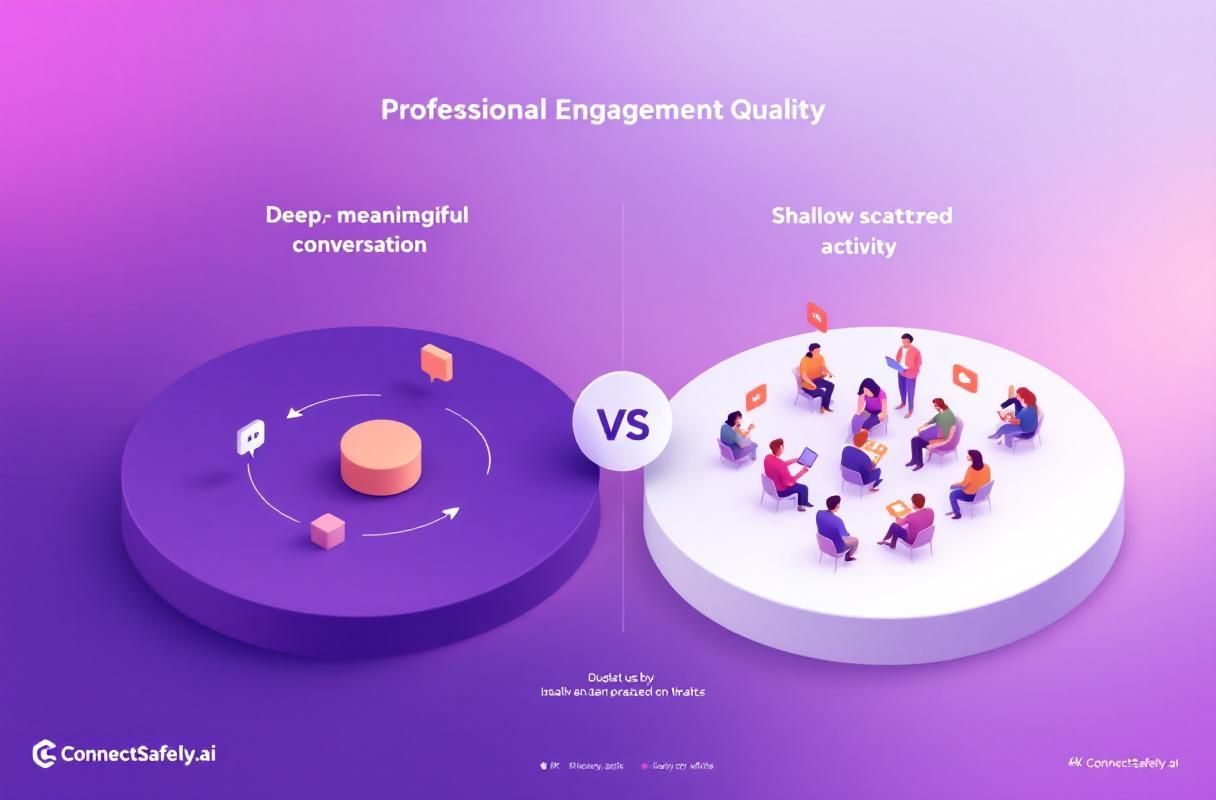
The Dark Side of Engagement: When Likes and Comments Can Be Misleading
While engagement is often seen as the holy grail of LinkedIn marketing, it's essential to understand that not all engagement is created equal. In some cases, likes and comments can be misleading, and even detrimental to your overall strategy. For instance, a post that sparks controversy or outrage can generate a high number of comments, but ultimately damage your reputation or alienate your target audience. Similarly, a post that uses clickbait-style headlines or provocative language can attract likes and shares, but fail to drive meaningful conversations or conversions. It's crucial to look beyond vanity metrics and focus on engagement that is relevant, respectful, and aligned with your goals. This means paying attention to the quality of comments, the tone of the conversation, and the actions taken by your audience after engaging with your content. By taking a more nuanced approach to engagement, you can avoid the pitfalls of superficial metrics and create a more sustainable, effective LinkedIn marketing strategy.
Myth vs Reality: Debunking Common Misconceptions About LinkedIn Post Length
One of the most persistent myths about LinkedIn post length is that shorter is always better. While it's true that attention spans are shorter than ever, and that concise, scannable content is often preferred, the reality is more complex. In fact, research has shown that longer, more in-depth posts can perform just as well, if not better, than shorter ones. This is because LinkedIn's algorithm prioritizes engagement and relevance, rather than post length. What matters most is that your content is high-quality, informative, and resonates with your target audience. Additionally, longer posts can provide more value, establish thought leadership, and encourage more meaningful conversations. Of course, this doesn't mean that you should write a novel-length post, but rather that you should focus on creating content that is comprehensive, yet concise, and that provides real value to your audience. By ignoring the myth that shorter is always better, you can create more effective, engaging content that drives real results.
Advanced LinkedIn Marketing: Using Social Proof to Amplify Your Message
For experienced marketers, social proof is a powerful tool that can be used to amplify your message, build credibility, and drive conversions. On LinkedIn, social proof can take many forms, including customer testimonials, user-generated content, and influencer partnerships. However, to use social proof effectively, you need to understand the nuances of how it works, and how to leverage it in a way that feels authentic and trustworthy. One advanced strategy is to use social proof to create a sense of FOMO (fear of missing out) or scarcity, by highlighting the success stories of others, or the limited availability of a product or service. Another approach is to use user-generated content to create a sense of community, by showcasing the experiences and achievements of your customers or followers. By using social proof in a sophisticated, strategic way, you can create a powerful marketing engine that drives real results, and helps you achieve your goals on LinkedIn.
The Exception to the Rule: When Posting Less Frequently Can Be More Effective
While conventional wisdom dictates that posting frequently is essential for maintaining visibility and driving engagement on LinkedIn, there are cases where posting less frequently can be more effective. For example, if you're a thought leader or expert in your field, you may want to focus on creating fewer, higher-quality posts that provide real value and insights, rather than churning out a high volume of lower-quality content. Similarly, if you're targeting a niche or specialized audience, you may find that posting less frequently allows you to create more targeted, relevant content that resonates with your audience. Additionally, posting less frequently can help you avoid the pitfalls of algorithmic penalties, which can occur when you post too much, too quickly. By taking a more strategic, nuanced approach to posting frequency, you can create a more sustainable, effective LinkedIn marketing strategy that drives real results, and helps you achieve your goals.
Edge Cases: Navigating the Gray Areas of LinkedIn's Community Guidelines
While LinkedIn's community guidelines are designed to promote a safe, respectful, and professional environment, there are often gray areas and edge cases that can be challenging to navigate. For instance, what constitutes "self-promotional" content, and how can you promote your products or services without violating LinkedIn's rules? Similarly, how can you discuss sensitive or controversial topics, such as politics or social issues, without offending or alienating your audience? To navigate these gray areas, it's essential to understand the nuances of LinkedIn's community guidelines, and to approach each situation with sensitivity, respect, and a deep understanding of your audience. One strategy is to focus on providing value, rather than promoting yourself or your products, and to use language that is respectful, inclusive, and professional. By taking a thoughtful, strategic approach to edge cases, you can create a more effective, sustainable LinkedIn marketing strategy that drives real results, and helps you achieve your goals.
The Three Jobs a B2B LinkedIn Post Can Do
Every post that earns engagement does one of three things: it educates, it entertains, or it challenges. Posts that try to do all three usually do none. Picking the job before you pick the topic is the fastest way to stop producing forgettable updates.
| Job | What it looks like | When to use it | Failure mode |
|---|---|---|---|
| Educate | A specific how-to, a teardown, a number your audience did not have | Building authority with buyers who are still learning | Generic advice everyone already knows |
| Entertain | A story, a relatable frustration, an industry in-joke | Growing reach and staying memorable between sales cycles | Entertaining but disconnected from what you sell |
| Challenge | A contrarian take you can actually defend | Differentiating in a saturated category | A hot take with no evidence behind it |
The practical test: before you post, finish this sentence — "someone reads this and now they can ___". If the blank does not fill in with something concrete, the post is a status update, not content.
Post Formats That Consistently Outperform
Graphics beat text-only posts on B2B LinkedIn, and specificity beats polish. These are the formats worth building a rotation around.
Before-and-after with real numbers
State the problem, the intervention, and the measurable result. "We cut onboarding from 14 days to 3" outperforms "we improved our onboarding process" because the first is falsifiable and the second is a claim anyone could make.
Step-by-step how-to that resolves inside the post
Deliver the full value in the post rather than gating it behind a link. LinkedIn suppresses reach on posts that push people off-platform, and a reader who got what they needed is more likely to follow you than one who hit a landing page.
Customer proof in the customer's words
A screenshot of a real message, a quoted review, or a named case study. Third-party proof is the one format where the writing quality matters less than the source — an inelegant sentence from a real customer beats a polished sentence from you.
The contrarian take you can defend
Pick a piece of received wisdom in your category that you have evidence against, and show the evidence. This format generates the most comments and also the most risk — do not run it on a position you cannot support if challenged in the replies.
Employee and team spotlights
Consistently strong on company pages and personal profiles alike, because people engage with people. Tag the person; the tag notifies them and usually earns a comment, which extends reach.
The Mechanics That Decide Whether Any of It Lands
The best idea fails if the first two lines do not earn the click on "see more". Roughly the first 200 characters show above the fold on mobile — that is your entire budget for stopping the scroll.
- Open with the claim, not the setup. "Most B2B founders post three times a week and get nothing" beats "I've been thinking a lot about content strategy lately."
- Use 3-5 hashtags, not 15. Beyond about five, hashtags stop adding discovery and start reading as spam.
- Reply to every comment within 48 hours. Comment threads keep a post circulating; a post with unanswered comments stops being distributed.
- Post at least three times a week. Consistency matters more than any individual post's performance, because reach compounds off recent engagement history.
- Put links in the first comment, or accept lower reach. This is a real trade-off, not a hack — a post with an external link reaches fewer people, and moving the link to a comment reduces clicks. Choose based on whether the post's job is reach or traffic.
An honest caveat on all engagement advice, including ours: LinkedIn does not publish its ranking algorithm, and every "best time to post" or "optimal length" figure circulating in 2026 comes from third-party samples of public posts, not from LinkedIn. Treat these as starting defaults to test against your own analytics, not as rules.
A Four-Week Posting Rotation You Can Actually Sustain
The reason most B2B posting plans fail is that they require a new idea every day. A rotation removes the blank-page problem by fixing the format in advance and leaving only the content to fill in.
| Week | Monday | Wednesday | Friday |
|---|---|---|---|
| 1 | Educate: a how-to from your own work | Challenge: a contrarian take | Entertain: a story from this week |
| 2 | Educate: a teardown of something in your category | Proof: a customer result or quote | Entertain: a relatable frustration |
| 3 | Educate: a number or benchmark you have | Challenge: a myth in your industry | Spotlight: a teammate or customer |
| 4 | Educate: answer a question you get asked constantly | Proof: before-and-after with numbers | Entertain: a lesson from a mistake |
Where the ideas come from: the questions in your inbox, the objections in your sales calls, and the things you explain repeatedly. If you are explaining something for the third time, it is a post.
Frequently Asked Questions (Post Ideas and Engagement)
What types of LinkedIn posts drive the most B2B leads?
Posts that educate on a specific problem your buyers have, and posts that show proof of a result you produced. Both work because they give a reader a reason to check your profile. Broad thought-leadership posts generate more reach and fewer leads, because the audience they attract is not the audience that buys.
How many hashtags should a B2B LinkedIn post use?
Three to five relevant ones. Beyond that, hashtags stop meaningfully aiding discovery and start signalling low-quality content. Choose hashtags your actual buyers follow rather than the highest-volume ones in your category.
How often should a B2B company post on LinkedIn?
At least three times a week, consistently, is the common working benchmark. Consistency matters more than volume because LinkedIn's distribution favours accounts with recent engagement history. Two well-made posts a week sustained for a year outperform daily posting abandoned after a month.
Should I put links in the post or the first comment?
It depends on the post's job. A link in the post body reduces reach; moving it to the first comment recovers some reach but costs clicks, because most readers never open the comments. Put the link in the body when you want traffic and the post is worth the reach penalty; put it in a comment when reach is the point.
See How It Works
Watch how people get more LinkedIn leads with ConnectSafely




Related Articles