LinkedIn Sales Funnel: B2B Inbound Strategy for 2026
Build a LinkedIn sales funnel that converts B2B prospects into customers. Learn the 3-stage framework with proven conversion rates and inbound strategies.

Every B2B sales team needs a LinkedIn sales funnel in 2026. According to LinkedIn Sales Solutions, 89% of users in B2B sales consider LinkedIn essential for closing deals, and approximately 80% of B2B leads generated on social media come from the platform.
But the traditional sales funnel approach—cold outreach at the top, aggressive follow-up in the middle, hard closing at the bottom—no longer works on LinkedIn. The platform now rewards authentic engagement and penalizes automation-heavy tactics.
Key Takeaways
- 89% of B2B sales professionals consider LinkedIn essential for closing deals
- Social sellers are 45% more likely to meet or exceed sales quotas
- Full-funnel campaigns with staged content significantly outperform isolated outreach
- Thought leadership generates 3x more shares and attracts higher-intent leads
- Inbound-warmed prospects close faster with fewer objections
The 3-Stage LinkedIn Sales Funnel
According to LinkedIn's official resources, whether you're building a sales funnel for B2B or any other market, there are three main parts: the top, middle, and bottom. Each requires different engagement strategies.
Top of Funnel (TOFU): Building Awareness and Trust
Uncommon Logic's LinkedIn Ads Playbook confirms that a 2026 playbook must break campaigns into three stages. TOFU focuses on building awareness and thought leadership with ungated value like trend reports, industry benchmarks, or short videos.
TOFU Goals:
Want to Generate Consistent Inbound Leads from LinkedIn?
Get our complete LinkedIn Lead Generation Playbook used by B2B professionals to attract decision-makers without cold outreach.
No spam. Just proven strategies for B2B lead generation.
- Get visible to your ideal prospects
- Establish expertise in your domain
- Build initial trust through valuable content
TOFU Tactics:
- Publish thought leadership content 2-3x per week
- Engage meaningfully with prospect posts
- Share industry insights without pitching
- Create educational content that solves problems
According to Backlinko's B2B marketing statistics, half of B2B marketers claim social media contributes most to achieving top-of-funnel goals—more than email (43%) or in-person events (34%).
Middle of Funnel (MOFU): Nurturing Interest
At this stage, prospects know who you are. Now you need to move them from awareness to genuine interest.
MOFU Goals:
- Deepen relationships with engaged prospects
- Provide value that demonstrates your capability
- Qualify leads without aggressive outreach
MOFU Tactics:
- Share case studies relevant to their industry
- Offer free resources like assessments or guides
- Engage in genuine conversations via comments and DMs
- Introduce yourself through warm, value-first messages
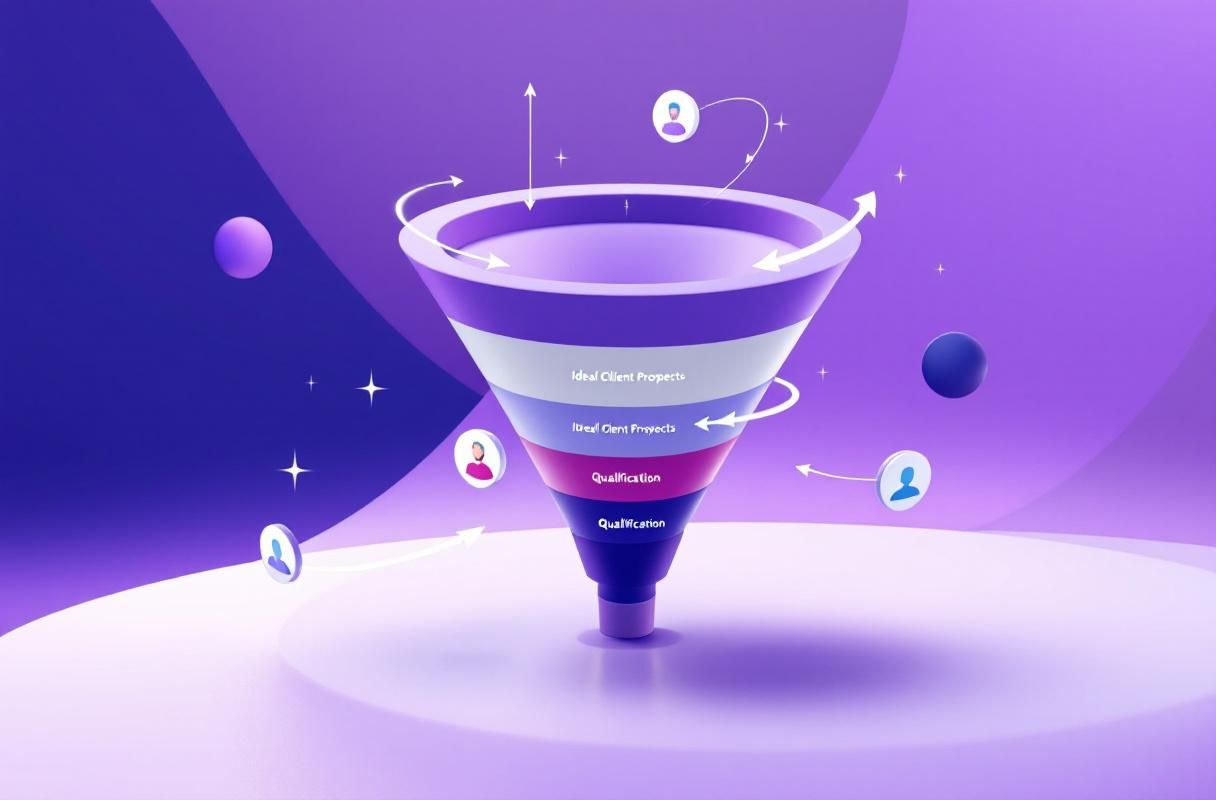
According to Uncommon Logic's research, LinkedIn offers specific ad types for MOFU stages: Document Ads provide ungated access to playbooks or reports, while Lead Gen Forms simplify conversion with pre-filled forms for webinars and checklists.
Bottom of Funnel (BOFU): Converting to Customers
Backlinko's statistics show that 46% of B2B marketers agree social media contributes most to achieving bottom-of-funnel goals as well. The key is timing—only pursue conversion after prospects have progressed through awareness and consideration.
BOFU Goals:
- Convert qualified prospects to customers
- Accelerate decision-making
- Close deals with minimal objections
BOFU Tactics:
- Reach out with personalized proposals
- Offer discovery calls positioned as consultations
- Leverage existing relationships for introductions
- Provide social proof from similar clients
Social Selling: The LinkedIn Sales Advantage
According to Martal Group's LinkedIn statistics, sales professionals who actively practice social selling are 45% more likely to meet or exceed their sales quotas than peers who don't.
Social Selling Index (SSI) Impact
GrowthToday's B2B sales metrics shows that reps with high SSI scores generate 45% more opportunities and are 51% more likely to reach targets.
The four SSI pillars:
- Establish your professional brand - Complete profile, thought leadership content
- Find the right people - Targeted prospecting, relevant connections
- Engage with insights - Share valuable content, comment meaningfully
- Build relationships - Nurture connections over time
LinkedIn Sales Funnel Metrics That Matter
Conversion Rate Benchmarks
Based on Martal Group's conversion research:
| Funnel Stage | Benchmark | Inbound Target |
|---|---|---|
| Profile View → Connection | 20-40% | 35-50% |
| Connection → Conversation | 10-20% | 25-40% |
| Conversation → Meeting | 15-30% | 30-50% |
| Meeting → Proposal | 40-60% | 50-70% |
| Proposal → Close | 20-35% | 30-45% |
Why Inbound Funnels Outperform
According to our research, inbound leads convert at 14.6% compared to 1.7% for outbound—an 8-9x improvement. This happens because:
- Pre-existing trust - Prospects have consumed your content
- Self-qualification - Only interested prospects enter the funnel
- Shorter sales cycles - Less time overcoming skepticism
- Higher deal values - Trust enables premium pricing
Building Your LinkedIn Sales Funnel
Step 1: Optimize Your Profile for Conversion
According to Taplio's research, LinkedIn profiles with complete information are 40x more likely to receive opportunities.
Profile optimization checklist:
- Headline clearly states who you help and the outcomes
- About section addresses prospect pain points
- Featured section showcases social proof
- Experience demonstrates relevant expertise
Step 2: Create Stage-Appropriate Content
Brands at Play's LinkedIn marketing guide shows that posts with visuals or videos achieve 2-5x higher engagement, while consistent weekly posting can double brand visibility.
Content by funnel stage:
| Stage | Content Type | Goal |
|---|---|---|
| TOFU | Industry insights, trends | Build awareness |
| MOFU | Case studies, how-tos | Demonstrate expertise |
| BOFU | Success stories, ROI proof | Enable decisions |
Step 3: Engage Strategically
According to Cognism's LinkedIn statistics, 84% of B2B marketers believe LinkedIn delivers the best value for their organization compared to other platforms.
Strategic engagement tactics:
- Comment thoughtfully on prospect posts before connecting
- Engage with decision-makers at target accounts
- Share insights relevant to their specific challenges
- Build relationships over time, not transactions
Step 4: Implement Warm Outreach
Martal Group's statistics show that LinkedIn's ad engagement rates are reportedly 50% higher than other social platforms. But organic engagement often outperforms paid when done correctly.
Warm outreach framework:
- Engage with their content multiple times
- Send connection request referencing shared interests
- Continue engaging after connection
- Offer value before asking for anything
- Initiate conversation when timing is right
Step 5: Track and Optimize
According to Cognism's research, 43% of B2B marketers using LinkedIn report that the platform directly generated revenue. Track your funnel metrics to identify:
- Where prospects drop off
- Which content drives the most progression
- What messaging resonates best
- Optimal timing for outreach
The Inbound vs. Outbound Sales Funnel Comparison
| Factor | Outbound Funnel | Inbound Funnel |
|---|---|---|
| Lead Source | Cold prospecting | Content attraction |
| Initial Trust | Zero | Pre-established |
| Sales Cycle | 2-6 months | 1-3 months |
| Close Rate | 1.7% average | 14.6% average |
| Deal Size | Standard | Premium possible |
| Scalability | Linear | Compounding |
How ConnectSafely.ai Accelerates Your LinkedIn Sales Funnel
ConnectSafely.ai is designed to power the top and middle stages of your LinkedIn sales funnel:
Top of Funnel Acceleration:
- AI-powered commenting positions you as an expert on relevant posts
- Keyword targeting ensures visibility with ideal prospects
- Creator targeting builds relationships with industry influencers
- Consistent engagement maintains TOFU visibility
Middle of Funnel Nurturing:
- Strategic engagement warms prospects before outreach
- Post boosting amplifies your best thought leadership content
- Authority building converts awareness into interest
- Platform-compliant activity that LinkedIn rewards
Business Impact:
- Inbound leads that close at 14.6% vs. 1.7% for cold outreach
- from USD $10/month vs. $500+ for risky automation tools
- Zero ban risk with compliant strategies
- 10-20 qualified inbound prospects per month
Getting Started with Your LinkedIn Sales Funnel
Building an effective LinkedIn sales funnel requires patience and consistency. Start with these steps:
- Audit your current LinkedIn presence - Identify gaps in each funnel stage
- Define your ideal customer profile - Target the right prospects
- Create a content calendar - Plan content for each funnel stage
- Establish engagement habits - 15-30 minutes daily minimum
- Track funnel metrics - Measure and optimize continuously
Frequently Asked Questions
What is a LinkedIn sales funnel?
A LinkedIn sales funnel is a systematic process for converting LinkedIn connections into B2B customers. According to LinkedIn Sales Solutions, it consists of three main stages: Top of Funnel (awareness), Middle of Funnel (consideration), and Bottom of Funnel (conversion). Each stage requires different content and engagement strategies.
How do I build an effective LinkedIn sales funnel in 2026?
Build an effective LinkedIn sales funnel by optimizing your profile for conversion, creating stage-appropriate content, engaging strategically with prospects, implementing warm outreach after building relationships, and tracking metrics to optimize performance. According to Martal Group, social sellers are 45% more likely to exceed quotas.
What are the conversion rates for LinkedIn sales funnels?
According to industry benchmarks, typical LinkedIn funnel conversions are: Connection rate (20-40%), Conversation rate (10-20%), Meeting rate (15-30%), Proposal rate (40-60%), and Close rate (20-35%). Inbound-optimized funnels typically exceed these by 30-50%.
Is LinkedIn better than cold calling for B2B sales?
LinkedIn dramatically outperforms cold calling when used strategically. According to Martal Group's statistics, 89% of B2B sales professionals consider LinkedIn essential, and social sellers are 45% more likely to hit quotas. Cold calling alone struggles when 97% of people ignore unsolicited calls—but LinkedIn-warmed outreach changes the equation.
How can ConnectSafely.ai help with my LinkedIn sales funnel?
ConnectSafely.ai accelerates the top and middle stages of your LinkedIn sales funnel through AI-powered engagement that positions you as an industry expert. Starting from USD $10/month, it generates inbound leads that convert at 14.6% (vs. 1.7% for cold outreach) without risking LinkedIn account bans.
Ready to build a LinkedIn sales funnel that attracts and converts B2B prospects? Start your free trial and experience inbound sales that actually works.
The Evolution of LinkedIn's Algorithm: How It Impacts Your Sales Funnel
As a seasoned LinkedIn marketing expert, I've witnessed the platform's algorithm undergo significant transformations over the years. These changes have profound implications for your sales funnel strategy. For instance, LinkedIn's shift towards prioritizing content from users with whom you have a pre-existing connection can make it more challenging to reach new prospects. To adapt, focus on building meaningful relationships with your existing network and encourage them to share your content with their connections. This approach not only expands your reach but also lends credibility to your brand. Furthermore, be aware that LinkedIn's algorithm favors content that is more conversational and less promotional. Ensure that your messaging is authentic, engaging, and provides value to your audience. By understanding these nuances, you can refine your sales funnel to better align with LinkedIn's evolving algorithm and maximize your ROI.
The Importance of Contextualizing Your Sales Funnel for Different Industries
While the fundamental principles of a LinkedIn sales funnel remain the same across industries, it's crucial to contextualize your approach to accommodate the unique characteristics of your target market. For example, if you're operating in a highly regulated industry like finance or healthcare, your sales funnel must be designed with sensitivity towards compliance and regulatory requirements. This may involve incorporating additional layers of verification or adhering to specific content guidelines. In contrast, industries with shorter sales cycles, such as software or e-commerce, may require a more agile and responsive sales funnel that can quickly capitalize on emerging opportunities. By recognizing these industry-specific nuances, you can tailor your sales funnel to better resonate with your target audience and ultimately drive more conversions.
Debunking the Myth: "More LinkedIn Connections = More Sales"
While having a large number of LinkedIn connections can be beneficial for expanding your network and increasing visibility, it's a common misconception that simply accumulating connections will automatically translate to more sales. In reality, the quality of your connections far outweighs the quantity. Focus on building meaningful relationships with decision-makers and influencers in your industry, rather than merely collecting connections. A smaller, highly engaged network can be more effective in driving sales than a large, dormant one. Additionally, prioritize nurturing your existing connections through regular engagement, thought leadership content, and personalized outreach. By doing so, you can create a loyal community that will advocate for your brand and drive tangible results.
Advanced-Level: Leveraging LinkedIn's Native Features for Hyper-Targeted Sales Funnels
For experienced practitioners, LinkedIn offers a range of native features that can be leveraged to create hyper-targeted sales funnels. One such feature is LinkedIn's matching audiences, which enables you to target users based on their email addresses, company names, or other criteria. By uploading your existing customer database or using third-party data providers, you can create highly targeted campaigns that speak directly to your ideal prospects. Another advanced strategy involves utilizing LinkedIn's lead gen forms, which allow you to capture user data directly within the platform. By integrating these forms with your CRM or marketing automation tools, you can streamline your lead nurturing process and create a seamless user experience. By mastering these advanced features, you can unlock new levels of precision and efficiency in your sales funnel strategy.
Navigating the Gray Areas: When Common Advice Backfires in LinkedIn Sales Funnels
Even with the best intentions, common advice can sometimes backfire in LinkedIn sales funnels. For instance, the oft-repeated mantra of "be authentic and transparent" can be misinterpreted as an invitation to overshare or come across as unprofessional. Similarly, the emphasis on "providing value" can lead to overemphasizing educational content at the expense of more promotional messaging. In reality, the most effective LinkedIn sales funnels strike a delicate balance between education, entertainment, and promotion. It's essential to understand that different stages of the sales funnel require different approaches, and what works for one audience may not work for another. By acknowledging these gray areas and being willing to adapt your strategy, you can avoid common pitfalls and create a sales funnel that resonates with your unique target audience. Ultimately, the key to success lies in embracing the complexity of LinkedIn sales funnels and being open to continuous learning and iteration.
See How It Works
Watch how people get more LinkedIn leads with ConnectSafely




Related Articles