Warm vs Cold Outreach: Why LinkedIn Inbound Beats Both
Understand the difference between warm and cold outreach, then discover why LinkedIn inbound authority outperforms both approaches in 2026.

Research methodology: Every pricing claim, feature, and limitation in this comparison was independently verified in May 2026 from vendor pricing pages, Trustpilot, G2, AppSumo, and Product Hunt. Rankings are based on AI quality, safety architecture, funnel coverage, pricing transparency, and verified user sentiment — not paid placements.
The warm vs cold outreach debate misses the real question: Why reach out at all when you can attract prospects who reach out to YOU? According to HubSpot research, inbound leads—prospects who initiate contact—convert at 14.6% compared to 1.7% for outbound approaches (whether warm or cold).
Key Takeaways
- Cold outreach converts at 1-3%: prospects don't know you, don't trust you, and receive similar messages constantly
- Warm outreach converts at 10-15%: prior relationship or introduction provides initial trust, per Salesforce data
- Inbound converts at 14.6-25%: prospects who reach out have already validated interest and trust
- The shift from outbound to inbound is accelerating: 75% of B2B buyers prefer rep-free research according to Gartner
- LinkedIn authority building creates systematic inbound: position yourself so qualified prospects find and contact you
- The math clearly favors inbound: better conversion, lower cost, compounding returns
Sales teams have debated warm vs cold outreach for decades. Build relationships first? Or reach out at scale to maximize volume?
Want to Generate Consistent Inbound Leads from LinkedIn?
Get our complete LinkedIn Lead Generation Playbook used by B2B professionals to attract decision-makers without cold outreach.
No spam. Just proven strategies for B2B lead generation.
But this debate assumes outreach is the only option. In 2026, the most effective B2B professionals have moved beyond outreach entirely—building authority that makes prospects come to them.
Understanding Warm vs Cold Outreach
What Is Cold Outreach?
Cold outreach means contacting prospects with no prior relationship:
- They've never heard of you
- They didn't request contact
- You found them through research/lists
- No mutual connections or introductions
Cold outreach examples:
- Cold email to purchased lists
- LinkedIn connection requests to strangers
- Cold calls to decision-makers
- Mass InMail campaigns
What Is Warm Outreach?
Warm outreach involves some prior relationship or context:
- Mutual connection introduction
- Prior meeting at an event
- Engagement with your content
- Referral from existing customer
- Shared group membership
Warm outreach examples:
- Email after a conference conversation
- LinkedIn message after commenting on their post
- Call after a mutual connection introduction
- Message to someone who downloaded your content
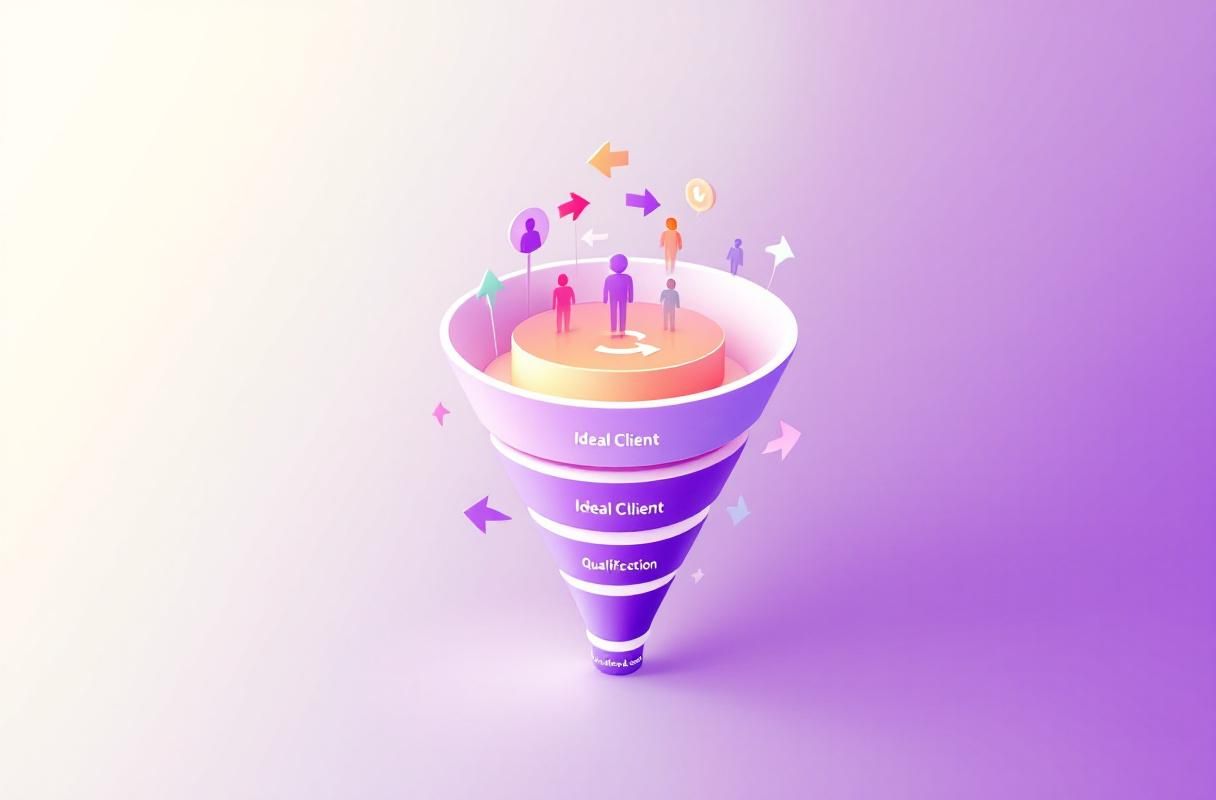
The Performance Gap
| Metric | Cold Outreach | Warm Outreach |
|---|---|---|
| Response rate | 5-10% | 25-40% |
| Meeting booking | 2-5% | 15-25% |
| Close rate | 1-3% | 10-15% |
| Sales cycle | 3-6 months | 1-3 months |
| Price sensitivity | High | Moderate |
According to LinkedIn's B2B research, warm introductions are 4.2X more likely to result in a meeting than cold outreach.
Why Both Approaches Fall Short in 2026
Cold Outreach Problems
1. Response Rate Collapse Cold response rates have declined from 15-20% in 2020 to 5-10% in 2026 per Salesforce benchmarks. Decision-makers receive too many similar messages.
2. Platform Restrictions LinkedIn limits cold activities (100 connections/week), email providers filter cold senders, and phone carriers block unknown numbers.
3. Trust Deficit According to Edelman's Trust Barometer, only 37% of people trust salespeople—and cold outreach triggers maximum skepticism.
4. Volume Required To generate consistent pipeline, cold outreach requires massive volume—which triggers platform restrictions and burns prospect goodwill.
Warm Outreach Limitations
1. Scalability Constraints You can only attend so many events, nurture so many relationships, and request so many introductions. Warm outreach doesn't scale linearly.
2. Relationship Dependency Your pipeline depends on existing relationships being willing to make introductions. You're limited by your network's network.
3. Time Investment Building relationships before outreach takes months. Attending events, nurturing contacts, earning introduction capital—it's slow.
4. Still Outbound Even warm outreach is still you initiating. The prospect didn't ask for contact—they're just less likely to ignore it.
The Inbound Alternative: Authority Attraction
What if prospects reached out to YOU—already interested, already trusting, already wanting to work together?
LinkedIn inbound authority creates this through strategic visibility:
How Inbound Authority Works
Phase 1: Visibility Building
- Post valuable content that demonstrates expertise
- Comment strategically on posts your prospects engage with
- Build recognition through consistent presence
Phase 2: Trust Establishment
- Prospects see your expertise repeatedly
- They observe you adding value without asking
- They begin associating you with solutions to their problems
Phase 3: Inbound Attraction
- When needs arise, they reach out to YOU
- The conversation starts warm—they already know your work
- Trust is pre-established, objections are minimal
Inbound vs Outbound Comparison
| Factor | Cold Outreach | Warm Outreach | Inbound Authority |
|---|---|---|---|
| Who initiates | You | You | Prospect |
| Initial trust | Zero | Some | Established |
| Response rate | 5-10% | 25-40% | 70%+ (they initiated) |
| Close rate | 1-3% | 10-15% | 15-25% |
| Scalability | Limited by platform | Limited by relationships | Unlimited (content scales) |
| Time investment | High (daily activity) | High (relationship building) | Moderate (compounds over time) |
| Risk | Platform restrictions | None | None |
The Conversion Math
Let's compare 100 hours of effort:
Cold Outreach (100 hours):
- 500 cold emails/messages sent
- 7% response = 35 responses
- 20% positive = 7 conversations
- 15% close = 1 deal
Warm Outreach (100 hours):
- 20 relationships built, 10 introductions secured
- 40% meeting = 4 meetings
- 25% close = 1 deal
Inbound Authority (100 hours):
- 50 posts + 500 strategic comments
- Visibility to 5,000+ ideal prospects
- 20 inbound inquiries
- 50% meeting = 10 meetings
- 20% close = 2 deals
Inbound produces 2X more deals from the same time investment—and the visibility compounds into future months.
Building Inbound Authority on LinkedIn
The Content Foundation
Post valuable content 2-3x weekly:
- Expert analysis of industry trends
- Framework breakdowns for common challenges
- Lessons learned from real experience
- Contrarian perspectives backed by data
The Comment Strategy
Strategic commenting builds visibility faster than content alone:
- Identify 10-15 thought leaders your prospects follow
- Add thoughtful comments that demonstrate expertise
- 5-10 comments daily takes 30-45 minutes
- Your comments reach the thought leader's entire audience
The Profile Conversion
When prospects find you, your profile must convert:
- Headline: Problem you solve, not job title
- About: Transformation you create
- Featured: Social proof and value demonstration
- Experience: Outcomes, not responsibilities
The Inbound Response
When prospects reach out:
- Respond within 24 hours
- Acknowledge their specific situation
- Focus on understanding before proposing
- Let them guide the conversation
ConnectSafely.ai: Systematic Inbound Authority
ConnectSafely.ai automates the visibility building that generates inbound leads:
AI-Powered Comments: Generate thoughtful, expertise-demonstrating comments that build visibility without manual effort.
Strategic Targeting: Identify where your ideal prospects spend attention and appear consistently in those conversations.
Platform Compliance: All activities align with LinkedIn's terms of service, eliminating restriction risks.
Lower Cost: from USD $10/month vs. $99+ for outreach automation tools.
Starting from USD $10/month, ConnectSafely generates inbound leads that convert at 8X higher rates than cold outreach—making the warm vs cold debate irrelevant.
Frequently Asked Questions
What's the difference between warm and cold outreach?
Cold outreach contacts prospects with no prior relationship—they've never heard of you. Warm outreach involves some prior connection: mutual introduction, event meeting, content engagement, or referral. According to LinkedIn data, warm outreach converts 4.2X better because initial trust exists.
Which is better: warm or cold outreach?
Warm outreach significantly outperforms cold (25-40% response vs 5-10%). However, inbound authority outperforms both—prospects who initiate contact convert at 14.6-25% according to HubSpot. The best strategy builds visibility so prospects reach out to you.
How do I convert cold leads to warm leads?
Build visibility before reaching out. When prospects have seen your content, engaged with your comments, or visited your profile, they're "warmed"—even without direct relationship. According to our analysis, outreach to content-engaged prospects converts at 25-40% vs 5-10% for pure cold.
Is cold outreach dead in 2026?
Cold outreach isn't dead but is declining significantly. Response rates have dropped from 15-20% (2020) to 5-10% (2026) per Salesforce data. Platform restrictions (LinkedIn limits, email filtering) further reduce effectiveness. Many B2B professionals are shifting to inbound authority building.
What's the best way to generate B2B leads on LinkedIn?
Build authority that attracts inbound leads rather than relying on outbound (cold or warm). Post valuable content, comment strategically on posts your prospects engage with, and position your profile for conversion. According to Gartner, 75% of B2B buyers prefer discovering solutions themselves—inbound aligns with this preference.
Ready to move beyond the warm vs cold debate? Start your free ConnectSafely trial and build the authority that makes prospects come to you.
Edge Cases: When Warm Outreach Backfires
While warm outreach generally outperforms cold outreach, there are scenarios where it can actually backfire. For instance, if the prior relationship or context is weak or superficial, the recipient may feel like you're taking advantage of a casual acquaintance. This can be particularly true if the introduction or mutual connection is not relevant to the conversation you're trying to start. Additionally, if the prospect has had a negative experience with someone in your network, your warm outreach efforts may be tainted by association. It's essential to carefully consider the strength and relevance of the prior relationship before relying on warm outreach. Furthermore, it's crucial to be aware of the potential for warm outreach to come across as insincere or manipulative, especially if you're using a mutual connection as a way to bypass traditional outreach channels. In these cases, a more straightforward cold outreach approach may actually be more effective, as it avoids the risk of being perceived as exploiting a connection.
Myth vs Reality: The "Personalization" Fallacy
One common myth in the outreach world is that personalization is always the key to success. While it's true that personalized messages can be more effective than generic ones, the reality is more nuanced. Over-personalization can come across as creepy or stalky, especially if you're referencing specific details that are not publicly available. Moreover, personalization can be a double-edged sword, as it can also make the recipient feel like you're trying too hard or being insincere. The reality is that personalization is only effective when it's done subtly and in context. A simple "I saw your post on X and thought you might be interested in Y" can be much more effective than a lengthy, overly personalized message that tries to establish a false sense of familiarity. It's essential to strike the right balance between personalization and professionalism, and to be aware of the potential risks of over-personalization.
Advanced-Level: Using LinkedIn's Native Features to Amplify Inbound Authority
For advanced practitioners! One of the most powerful ways to amplify inbound authority on LinkedIn is to leverage the platform's native features, such as LinkedIn Live, LinkedIn Video, and LinkedIn Podcasts. By creating high-quality, engaging content using these features, you can increase your visibility, establish your thought leadership, and attract potential prospects who are interested in your expertise. Additionally, you can use LinkedIn's publishing platform to share in-depth, well-researched articles that showcase your knowledge and expertise. By doing so, you can establish yourself as a trusted authority in your industry, and attract prospects who are actively seeking out your expertise. Furthermore, you can use LinkedIn's analytics tools to track the performance of your content, and adjust your strategy accordingly. This requires a deep understanding of LinkedIn's algorithm, as well as the ability to create high-quality, engaging content that resonates with your target audience.
The Hidden Reality of Inbound Lead Qualification
While inbound leads are generally considered to be higher-quality than outbound leads, the reality is that not all inbound leads are created equal. In fact, many inbound leads may not be qualified or ready to buy, despite their initial interest in your content or expertise. It's essential to have a robust lead qualification process in place to ensure that you're only pursuing leads that are truly qualified and ready to buy. This requires a deep understanding of your target audience, as well as the ability to ask the right questions and assess the lead's level of interest and readiness. Additionally, it's crucial to be aware of the potential for inbound leads to be "tire kickers" or curiosity-driven, rather than genuinely interested in your product or service. By having a robust lead qualification process in place, you can ensure that you're only pursuing leads that are truly qualified, and avoid wasting time and resources on unqualified leads.
It Depends: When Outbound Outreach Is Actually More Effective
While inbound authority is generally considered to be the most effective way to attract prospects, there are scenarios where outbound outreach is actually more effective. For instance, if you're operating in a highly competitive industry where everyone is vying for attention, outbound outreach may be necessary to cut through the noise and get your message heard. Additionally, if you're targeting a specific niche or industry where inbound marketing is not effective, outbound outreach may be the only way to reach your target audience. Furthermore, if you're dealing with a complex or high-consideration purchase, outbound outreach may be necessary to provide the level of education and support that prospects need to make a decision. It's essential to be aware of these scenarios and to be flexible in your approach, rather than relying solely on inbound marketing. By understanding when outbound outreach is actually more effective, you can create a more balanced and effective marketing strategy that incorporates both inbound and outbound tactics.
See How It Works
Watch how people get more LinkedIn leads with ConnectSafely




Related Articles