What Is Data Enrichment? B2B Lead Generation Guide for 2026
Data enrichment explained for B2B teams. Learn how enriched leads convert 20-30% better, plus why LinkedIn inbound at $39/mo beats data-first prospecting.

Your CRM is full of contacts, but half the phone numbers bounce and a quarter of the job titles are outdated. You run a campaign, response rates flatline, and sales blames marketing for bad data. Sound familiar? Data enrichment is the process of appending verified, net-new information -- emails, phone numbers, firmographics, technographics, and intent signals -- to your existing CRM records so your team can reach the right people with the right message. According to Forrester Research, 96% of B2B companies now consider lead enrichment vital to their pipeline.
But here is what most data enrichment guides leave out: enriching outbound data still produces outbound results. Inbound leads close at 14.6% versus just 1.7% for outbound, which means the model you choose matters far more than the data provider you pick. If you are exploring LinkedIn automation tools for lead generation, understanding data enrichment -- and its limits -- is the first step toward a smarter strategy.
Want to Generate Consistent Inbound Leads from LinkedIn?
Get our complete LinkedIn Lead Generation Playbook used by B2B professionals to attract decision-makers without cold outreach.
No spam. Just proven strategies for B2B lead generation.
Key Takeaways
- Data enrichment adds net-new information (verified emails, firmographics, technographics, intent signals) to existing CRM records -- it is not the same as data cleansing.
- Enriched leads convert 20-30% better than raw leads, with a reported 47% increase in qualified lead conversion rates.
- B2B contact data decays at roughly 2.1% per month, meaning 25% of your database goes stale every year.
- 96% of B2B companies consider lead enrichment vital to their sales pipeline.
- Inbound leads close at 14.6% versus 1.7% for outbound -- the acquisition model matters more than the data layer.
- LinkedIn inbound from USD $10/month can replace expensive data stacks by attracting prospects who already want to talk to you.
What Is Data Enrichment?
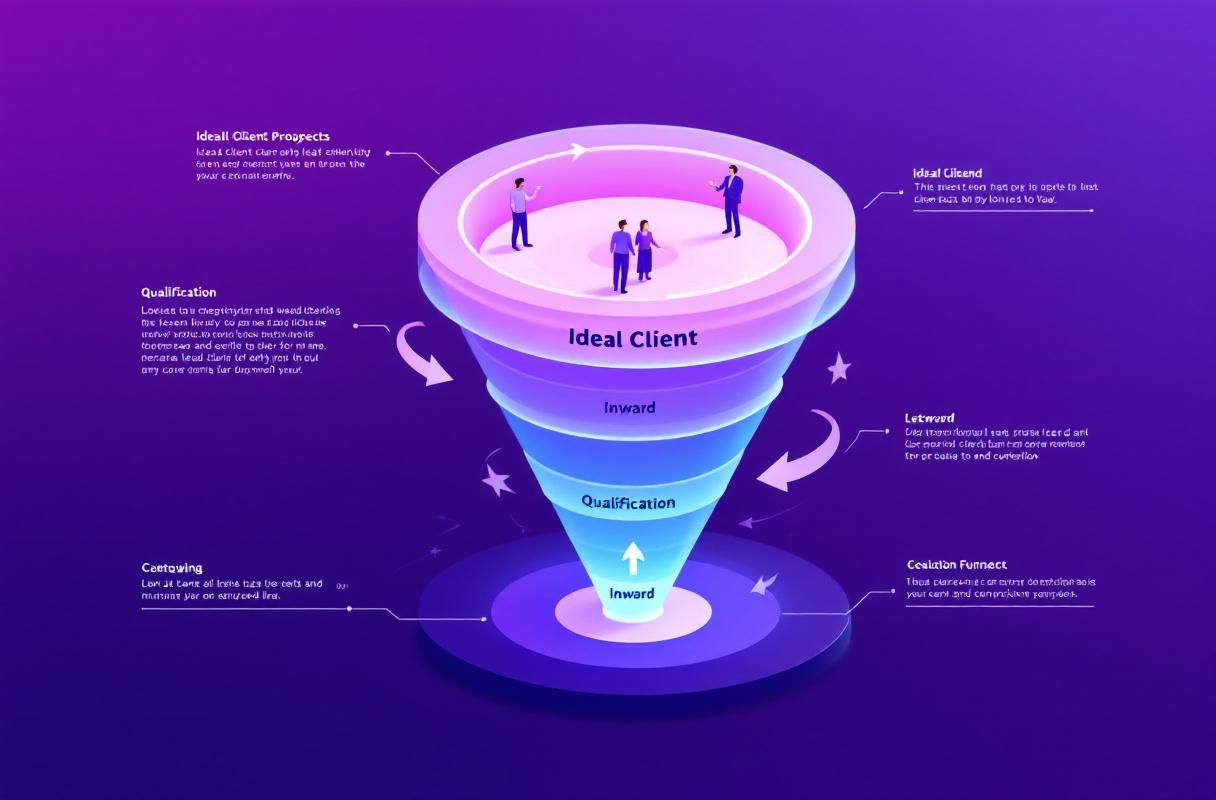
Data enrichment is the systematic process of enhancing incomplete or outdated records by merging them with verified information from external sources. Think of your CRM as a spreadsheet with gaps. Enrichment fills those gaps.
In a B2B context, enrichment typically appends four categories of data to a contact or account record.
Types of Data Enrichment
Firmographic Enrichment Company size, annual revenue, industry vertical, headquarters location, and subsidiary relationships. This is the foundation for account-based targeting and building buyer personas.
Technographic Enrichment The software stack a company uses -- CRM platform, marketing automation, cloud provider, security tools. Knowing a prospect runs HubSpot versus Salesforce changes the pitch entirely.
Demographic Enrichment Individual-level data: verified email addresses, direct-dial phone numbers, current job title, seniority, department, and reporting structure.
Intent Enrichment Behavioral signals indicating a prospect is actively researching a solution: content downloads, webinar registrations, review site visits, and keyword search patterns. According to Gartner's B2B buying research, buyers are 57% through their decision process before they ever contact a vendor, making intent data increasingly valuable.
Data Enrichment vs Data Cleansing
These terms are frequently confused but describe fundamentally different processes.
| Factor | Data Enrichment | Data Cleansing |
|---|---|---|
| Purpose | Add net-new information to records | Fix, standardize, or remove existing data |
| Action | Append verified emails, firmographics, intent signals | Remove duplicates, correct formatting, update stale fields |
| Outcome | Richer profiles for better targeting | Cleaner database for reliable operations |
| Frequency | Ongoing (ideally every 7 days) | Periodic (quarterly or on-demand) |
| Example | Adding a prospect's tech stack to their CRM record | Merging three duplicate records into one |
| Impact on conversion | 20-30% lift in lead quality | Prevents wasted spend on bad data |
Most mature B2B teams run both processes. Cleansing ensures you are not emailing dead addresses. Enrichment ensures you are saying the right thing to the right person. Neither process, however, changes the fundamental economics of outbound versus inbound lead generation.
Why Data Enrichment Matters for B2B
The numbers make the case clearly.
Conversion lift. Teams using enriched lead data see a 20-30% improvement in conversion rates. A 2025 study by DemandGen Report found that enriched leads produced a 47% increase in qualified conversions compared to raw form submissions.
Pipeline velocity. Enriched records reduce the time sales reps spend researching prospects manually. When a rep opens a lead and immediately sees company revenue, tech stack, and recent intent signals, the discovery call shrinks from 30 minutes to 15.
Personalization at scale. Generic outreach gets ignored. When you know a prospect just adopted a competitor's product (technographic data) or visited your pricing page three times this week (intent data), your message becomes relevant.
Reduced waste. According to SiriusDecisions, B2B organizations waste an estimated 27% of their sales-productive time on leads with inaccurate or incomplete data. Enrichment recovers that time.
But here is the critical nuance: enrichment makes outbound less bad, not good. Even with perfect data, cold outreach still converts at a fraction of the rate of inbound. The 14.6% vs 1.7% gap from HubSpot's marketing statistics persists regardless of how clean your data is.
Top Data Enrichment Tools Compared
If you decide enrichment is part of your stack, here are the major players in 2026.
| Tool | Starting Price | Database Size | Best For | Key Differentiator |
|---|---|---|---|---|
| ZoomInfo | $14,995/year | 260M+ professionals | Enterprise teams | Largest North American database |
| Apollo.io | Free tier, $59/mo paid | 250M+ contacts | Startups and SMBs | Built-in sequencing + enrichment |
| Clearbit | $99/month | 200M+ contacts | CRM enrichment | Real-time API integrations |
| Clay | $149/month | Aggregates 75+ sources | Growth teams | Waterfall enrichment across providers |
| Lusha | Free tier, $49/mo paid | 150M+ contacts | Quick-start outbound | Chrome extension for LinkedIn |
| Cognism | Custom pricing | 400M+ professionals | European/GDPR markets | Verified mobile numbers, compliance focus |
For a deeper comparison of these platforms and their alternatives, see our guide to the best ZoomInfo alternatives.
What the pricing does not tell you: Most of these tools charge per credit, per user, or per enrichment call. The sticker price is the floor, not the ceiling. Annual contracts with automatic renewal increases of 10-20% are standard. A mid-market team running ZoomInfo, a sequencing tool, and a CRM typically spends $25,000-$50,000 per year on their outbound data stack.
The Data Decay Problem
Even the best-enriched database has a shelf life. According to Gartner's data quality research, B2B contact data decays at approximately 2.1% per month. That means:
- After 3 months: 6.3% of your records are outdated
- After 6 months: 12.6% of your database is stale
- After 12 months: 25% of your contacts have changed jobs, titles, or companies
People get promoted. Companies get acquired. Departments get restructured. The contact you enriched in January may be at a completely different company by July.
The refresh cycle gap. The gold standard for data freshness is a 7-day refresh cycle -- re-enriching records weekly to catch changes in real time. The industry average, however, sits at roughly 6 weeks. Most teams only re-enrich when they notice bounce rates climbing or when a sales rep manually flags a bad record.
This creates a compounding problem. You pay to enrich data, that data decays, and you pay again to re-enrich it. The cost is not a one-time investment -- it is a recurring tax on your outbound motion.
What Most Guides Get Wrong
Here is where we diverge from every other data enrichment article on the internet.
Most guides treat data enrichment as a purely operational question: which tool, which data fields, which refresh cadence. They assume the outbound model is fixed and the only variable is data quality. That framing is incomplete.
The real question is not "how do I enrich my data?" -- it is "why am I relying on purchased data to start conversations?"
Data enrichment exists to make cold outreach less cold. You buy contact information, append firmographic and intent data, and then reach out to people who have not asked to hear from you. Enrichment makes the message more relevant, but it does not change the dynamic: you are still interrupting someone's day.
Meanwhile, AI-powered LinkedIn engagement is creating a fundamentally different motion. When you publish authority content on LinkedIn, engage meaningfully in your niche, and build a visible presence, prospects come to you. They have already seen your expertise. They have already decided you might be worth talking to.
No amount of firmographic enrichment replicates that level of pre-qualification.
Why LinkedIn Inbound Beats Data-First Prospecting
The data enrichment industry is built on a single premise: if you know enough about a prospect, you can convince them to take your call. But the 14.6% vs 1.7% conversion gap tells a different story. Prospects who find you convert at nearly 9x the rate of prospects you find.
LinkedIn inbound flips the enrichment model. Instead of buying data about people and reaching out cold, you create content and engagement that attracts people who match your ICP. The "enrichment" happens naturally -- when someone comments on your post, views your profile, or sends a connection request, you already know they are interested.
Here is how the economics compare:
| Factor | Data Enrichment Stack | LinkedIn Inbound (ConnectSafely) |
|---|---|---|
| Monthly cost | $2,000-$4,000+ | from USD $10/month |
| Lead temperature | Cold (you found them) | Warm (they found you) |
| Conversion rate | 1.7% average | 14.6% average |
| Data decay risk | 2.1%/month | None (real-time engagement) |
| Ban/compliance risk | Email deliverability issues | Zero ban risk |
| Time to first lead | Days (after setup + enrichment) | 2-4 weeks (authority building) |
ConnectSafely.ai approaches this differently from traditional LinkedIn automation tools. Starting from USD $10/month, the platform helps you build authority through consistent content and authentic engagement -- the kind that makes prospects reach out to you. There is no data purchasing, no credit systems, and zero ban risk because the approach aligns with how LinkedIn is designed to work.
This does not mean data enrichment is useless. If you already have warm leads from inbound and need to append company data for your CRM, enrichment tools add genuine value. The mistake is using enrichment as the starting point for prospecting rather than the supporting layer for an inbound-first strategy.
FAQ
What is data enrichment and how does it differ from data cleansing?
Data enrichment is the process of appending net-new information -- verified emails, phone numbers, firmographics, technographics, and intent signals -- to existing CRM records. Data cleansing, by contrast, fixes or removes bad data: deduplicating records, correcting formatting errors, and updating stale fields. Enrichment adds information you did not have. Cleansing fixes information you already had. Most B2B teams need both, but they solve different problems.
How much does B2B data enrichment cost in 2026?
Costs range widely. Entry-level tools like Lusha and Apollo.io start at $49-$59/month per user. Mid-tier platforms like Clearbit and Clay run $99-$149/month. Enterprise solutions like ZoomInfo start at $14,995/year. Factor in per-credit charges, multiple user seats, and annual renewal increases, and a mid-market team typically spends $25,000-$50,000/year on their enrichment stack. By comparison, ConnectSafely.ai's LinkedIn inbound approach starts from USD $10/month with no credit limits.
How fast does B2B contact data decay?
B2B contact data decays at approximately 2.1% per month, according to industry research from Gartner. That translates to roughly 25% of your database becoming outdated within a single year. People change jobs, companies restructure, and phone numbers get reassigned. The gold standard is a 7-day refresh cycle, but most organizations only re-enrich every 6 weeks.
Do enriched leads actually convert better than raw leads?
Yes, but with an important caveat. Enriched leads convert 20-30% better than raw, un-enriched leads. Studies show a 47% increase in qualified lead conversion rates when proper enrichment is applied. However, even enriched outbound leads still convert at just 1.7% on average, compared to 14.6% for inbound leads. Enrichment improves outbound performance, but it does not close the gap with inbound.
Can LinkedIn replace data enrichment tools entirely?
LinkedIn does not replace data enrichment for every use case, but it can replace the prospecting function that most teams buy enrichment tools for. When you build LinkedIn authority and attract inbound engagement, you generate leads who are already pre-qualified by interest. You still might use enrichment to append firmographic data to those inbound leads for CRM purposes. The shift is using enrichment as a support layer rather than the primary engine for pipeline generation. Learn more about this approach in our guide to AI-powered CRM enrichment from LinkedIn signals.
Ready to stop paying for data that decays and start attracting leads who already want to talk to you? See ConnectSafely.ai pricing and build your LinkedIn inbound engine from USD $10/month -- no data credits, no annual contracts, zero ban risk.
Edge Cases in Data Enrichment: When Common Advice Backfires
While data enrichment is widely recognized as a crucial step in B2B lead generation, there are scenarios where common advice can backfire. For instance, enriching data with firmographic information such as company size, revenue, or industry can be misleading if the company is a subsidiary or a recent spin-off. In such cases, relying solely on firmographic data can lead to incorrect assumptions about the company's buying power or decision-making process. Moreover, enriching data with technographic information such as technology usage or intent signals can be problematic if the company is in the process of migrating to new technologies or has recently undergone a significant change in its technology stack. It's essential to consider these edge cases and develop a nuanced approach to data enrichment that takes into account the complexities of the B2B landscape.
The Dark Side of Data Enrichment: Data Quality and Compliance Risks
Data enrichment can be a double-edged sword, offering significant benefits in terms of improved lead quality and conversion rates, but also posing significant risks in terms of data quality and compliance. One of the most significant risks is the potential for introducing inaccurate or outdated data into the CRM, which can lead to wasted resources, damaged relationships, and even legal repercussions. Furthermore, the use of third-party data providers can raise concerns about data privacy and compliance, particularly in light of regulations such as GDPR and CCPA. To mitigate these risks, it's essential to carefully vet data providers, implement robust data validation and verification processes, and ensure that all data enrichment activities are transparent, secure, and compliant with relevant regulations.
Myth vs Reality: Debunking Common Misconceptions About Data Enrichment
One of the most common misconceptions about data enrichment is that it's a one-time process that can be completed with a single data provider. In reality, data enrichment is an ongoing process that requires continuous monitoring, updating, and validation to ensure that the data remains accurate and relevant. Another misconception is that data enrichment is only necessary for outbound marketing and sales activities, when in fact, it's equally important for inbound marketing and sales, where high-quality data is essential for personalization, segmentation, and lead nurturing. Finally, some marketers believe that data enrichment is a replacement for human judgment and intuition, when in fact, it's a tool that should be used in conjunction with human expertise and critical thinking to make informed decisions about lead generation and conversion.
Advanced Data Enrichment Techniques: Using Machine Learning and AI to Predict Lead Behavior
For advanced marketers, data enrichment can be taken to the next level by using machine learning and AI to predict lead behavior and identify high-value prospects. By analyzing large datasets and identifying patterns and correlations, machine learning algorithms can be trained to predict lead conversion rates, identify potential pain points, and even recommend personalized content and messaging strategies. One technique is to use clustering analysis to group similar leads together based on their firmographic, technographic, and behavioral characteristics, and then use predictive modeling to identify the most likely converters. Another technique is to use natural language processing (NLP) to analyze lead interactions and identify sentiment, intent, and other behavioral signals that can inform lead scoring and prioritization.
The Intersection of Data Enrichment and Account-Based Marketing: A Practical Guide
Data enrichment is a critical component of account-based marketing (ABM), where high-quality data is essential for identifying, targeting, and engaging high-value accounts. To get the most out of data enrichment in an ABM context, it's essential to focus on account-level data enrichment, where firmographic, technographic, and intent data are used to create a comprehensive picture of the account's buying behavior, technology usage, and business goals. One practical approach is to use data enrichment to identify key decision-makers and influencers within the account, and then use personalized content and messaging strategies to engage them and build relationships. Another approach is to use data enrichment to identify potential pain points and challenges within the account, and then use targeted marketing and sales activities to address them and provide value. By combining data enrichment with ABM, marketers can create highly targeted and effective marketing campaigns that drive real results and revenue growth.
See How It Works
Watch how people get more LinkedIn leads with ConnectSafely




Related Articles