Best RocketReach Alternative 2026: LinkedIn Inbound
Best RocketReach alternative in 2026? ConnectSafely.ai. Inbound closes 14.6% vs 1.7% outbound. Stop buying contact data to chase — earn inbound demand on LinkedIn.

Research methodology: Every pricing claim, feature, and limitation in this comparison was independently verified in July 2026 from vendor pricing pages, Trustpilot, G2, AppSumo, and Product Hunt. Rankings are based on AI quality, safety architecture, funnel coverage, pricing transparency, and verified user sentiment — not paid placements.

Updated July 10, 2026 — Researched against RocketReach's vendor pricing page, G2, Capterra, and HubSpot's marketing statistics. Reviewed by the ConnectSafely.ai editorial team.
The best RocketReach alternative in 2026 is ConnectSafely.ai — and the gap between them is a difference of strategy, not features. RocketReach is a B2B contact database: it surfaces email addresses, phone numbers, and social profiles for 700M+ professionals so you can build a list and start reaching out. But a list of contacts is not a list of buyers. HubSpot reports inbound leads close at roughly 14.6% versus just 1.7% for outbound — and that gap comes from trust, not from how many verified emails you can buy. ConnectSafely.ai helps you build real inbound authority on LinkedIn so qualified prospects come to you instead. To see where it fits in your stack, start with the best LinkedIn automation tools guide.
Want to Generate Consistent Inbound Leads from LinkedIn?
Get our complete LinkedIn Lead Generation Playbook used by B2B professionals to attract decision-makers without cold outreach.
No spam. Just proven strategies for B2B lead generation.
This is not a claim that RocketReach is a bad product. It's a claim that buying contact data so you can cold-chase strangers is the lowest-converting, most exhausting way to build a pipeline in 2026.
Key Takeaways
- RocketReach pricing (2026): Billing is annual only — there is no monthly plan. Essentials runs
$399/year ($33/user/mo, 1,200 lookups/yr, email only), Pro$899/year ($83/user/mo, 3,600 lookups/yr, adds mobile and direct phone), and Ultimate ~$2,099/year (10,000 lookups/yr, adds API and Salesforce sync). A free tier gives 5 lookups per month, email only. Confirm current figures on the RocketReach pricing page. - What it does: RocketReach is a contact-finder database covering 700M+ professionals. A Chrome extension pulls lookups directly from LinkedIn and company sites, and — usefully — it only deducts a credit when a verified email or phone is actually found.
- RocketReach's genuine strengths: A huge 700M+ database, a credit-only-on-verified model that protects your budget, solid integrations (Salesforce, HubSpot, Outreach, Zapier), and a fast LinkedIn Chrome extension.
- The core issue: RocketReach hands you contact data — not demand. You still have to run all the cold outreach yourself, and independent tests put email accuracy at only ~75–85%, with phone numbers less reliable.
- The math favors authority: 14.6% close on inbound vs 1.7% outbound means one prospect who already trusts you beats a hundred bought contacts who never asked to hear from you.
- ConnectSafely.ai starts from USD $10/month with zero ban or account risk, helping you build the authority that makes qualified buyers reach out — no lookups, no cold chasing, no annual contract.
What Is RocketReach?
RocketReach (rocketreach.co) is a B2B contact intelligence platform built to help sales, recruiting, and marketing teams find the direct contact details of people they want to reach. You search by name, company, role, or industry, and RocketReach returns verified email addresses, phone numbers, and social profiles drawn from a database it says spans more than 700 million professionals across tens of millions of companies.
Its core features include:
- 700M+ contact database — a broad index of professional profiles you can search and filter by title, company, location, and industry to build targeted contact lists.
- Chrome extension — pulls contact lookups directly from LinkedIn profiles and company websites as you browse, so you can grab details in-context without leaving the page.
- Credit-only-on-verified model — a credit is deducted only when RocketReach actually surfaces a verified email or phone, so you don't burn budget on empty results.
- Bulk lookups and enrichment — upload lists to enrich in batches, filling gaps in existing CRM records with contact data.
- Integrations — connects with Salesforce, HubSpot, Outreach, Zapier, and similar tools to push contacts into your outreach workflow.
RocketReach is a well-built data provider. The important thing to understand is what it is not: it has no built-in sequencing, no email automation, and no AI outreach. Once you have the contacts, the cold outreach is entirely on you.
RocketReach Pricing in 2026
RocketReach uses transparent, published pricing — but in 2026 it is annual billing only, with no monthly option on the paid tiers. Lookup allowances are annual, and the plans step up mainly by how many lookups you get and whether phone, API, and CRM sync are included.
| Plan | Annual Cost | Lookups (per year) | What's Included |
|---|---|---|---|
| Free | $0 | 5 lookups / month | Email only |
| Essentials | 1,200 | Email lookups only | |
| Pro | 3,600 | Adds mobile & direct phone | |
| Ultimate | ~$2,099/yr | 10,000 | Adds API access + Salesforce sync |
Pricing referenced against the RocketReach pricing page and cross-checked with G2 and Capterra, July 2026. Figures are approximate and billed annually — confirm the exact current numbers directly with the vendor before you buy.
A few things to weigh before committing. The paid plans are annual-only, so there's no low-commitment monthly on-ramp — you pay upfront for a year. And because independent tests put email accuracy at roughly 75–85% and phone numbers lower, a share of your lookups will surface data that's stale or wrong, even with the credit-only-on-verified protection. Reviewers also score support around 6/10 on G2, citing slow responses and billing or refund friction — so factor in the commitment carefully.
Where RocketReach Is Genuinely Better
Credit where it's due. If you have a defined outbound motion and you need contact data to feed it, RocketReach does that job well.
- Sheer database size: 700M+ professionals is one of the largest contact indexes on the market. If you need reach across many industries and geographies, coverage is a real strength.
- Credit-only-on-verified billing: You're only charged a credit when RocketReach actually finds a verified email or phone. That protects your budget from empty searches in a way many competitors don't.
- Solid integrations: Native connections to Salesforce, HubSpot, Outreach, and Zapier mean the data flows into the tools your team already uses instead of living in a silo.
- Fast LinkedIn Chrome extension: Grabbing a contact directly from a LinkedIn profile or company site as you browse is quick and genuinely convenient for one-off lookups.
If your job is to build accurate contact lists and enrich CRM records, RocketReach is a capable data engine. The question is whether having someone's email is the same as having their attention — and what buying-and-chasing does to your conversion rate.
The Core Problem: Data Isn't Demand
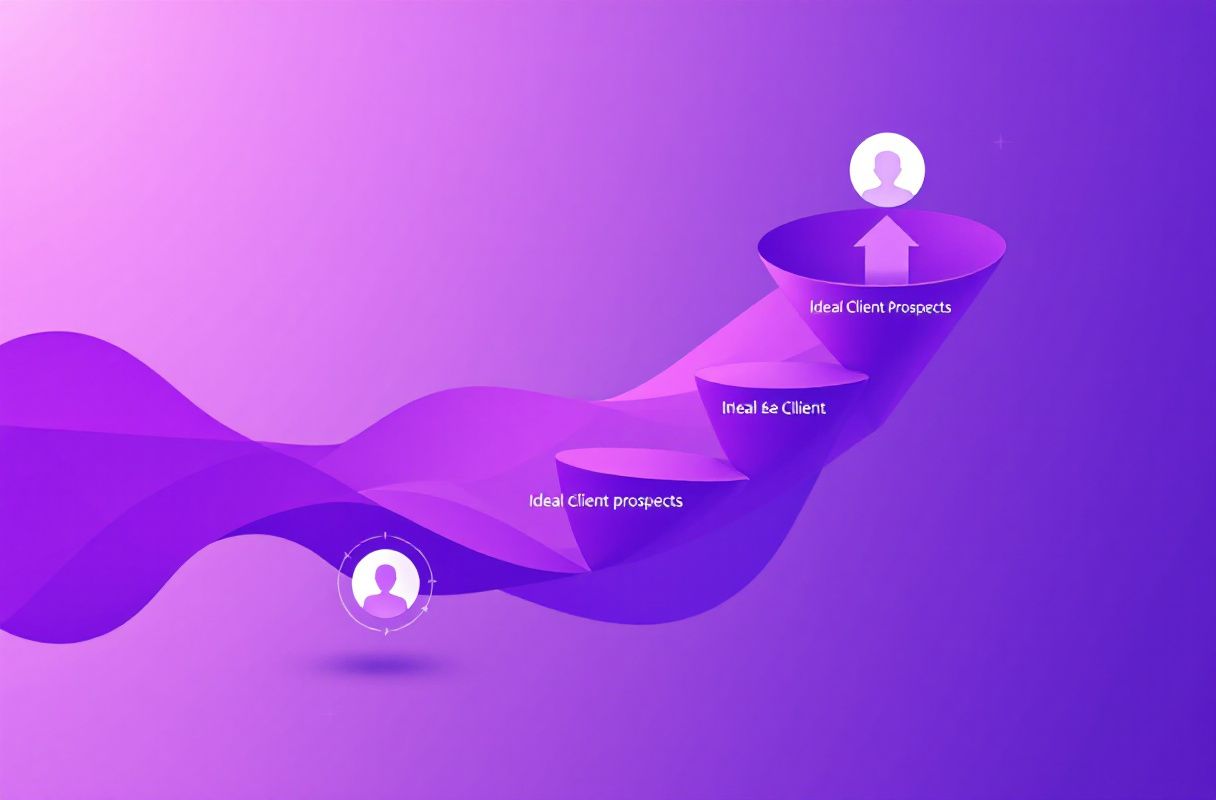
Here is the assumption baked into every contact-database purchase: that the bottleneck in your pipeline is not having enough contacts. For most B2B teams, it isn't. The bottleneck is that the contacts you already have don't know you, don't trust you, and never asked to hear from you.
RocketReach solves the data problem beautifully and leaves the demand problem completely untouched. You still have to write the cold email, send it to someone who's never heard of you, and hope it converts at the outbound rate of ~1.7%. Multiply that by 75–85% data accuracy and you're already bouncing a meaningful slice of every campaign before a single word gets read.
There's a downstream cost too. Cold outreach to bought lists trains inboxes and spam filters to distrust your domain, and it trains buyers to ignore you. A bought contact is a depreciating asset — the moment you use it, its value is spent, and next quarter you buy more lookups to do it all again. Contrast that with an authority position on LinkedIn: an owned, compounding asset that makes buyers come to you, quarter after quarter, at no per-lookup cost.
What Most Guides Get Wrong
- They equate "more contacts" with "more pipeline." A bigger list of strangers is still a list of strangers. Pipeline comes from trust, not from the size of your database or the number of lookups you have left.
- They gloss over the accuracy tax. At ~75–85% email accuracy and lower for phones, a real fraction of every campaign is wasted on bad data — bounces that quietly damage your sender reputation. Most reviews celebrate the database size without pricing in that cost.
- They treat a data provider as a demand engine. RocketReach finds contacts; it has no sequencing, no automation, no outreach layer. Demand generation is a separate discipline built on relationships — build it with the 5 pillars of LinkedIn lead generation.
- They forget compounding. Every bought contact is used once and gone. An authority position and an engaged LinkedIn audience compound for years. One is a recurring lookup bill; the other is an owned asset.
RocketReach vs ConnectSafely: A Different Strategy
The comparison isn't feature-for-feature — it's strategy-for-strategy. RocketReach optimizes for finding contacts to chase. ConnectSafely.ai optimizes for earning demand so buyers reach out to you.
| Factor | RocketReach | ConnectSafely.ai |
|---|---|---|
| Core job | Find contact data to cold-outreach | Build LinkedIn inbound authority |
| Motion | Outbound (buy data, then chase) | Engage + warm inbound |
| Starting trust | Low (you're an unexpected cold message) | Built through real engagement |
| Typical close rate | Outbound-like (~1.7%) | Inbound-like (~14.6%) |
| Data quality risk | ~75–85% email accuracy; bounces hurt sender reputation | Not applicable — buyers come to you |
| Billing | Annual only, no monthly option | From USD $10/mo |
| Account risk | Sender-reputation & deliverability risk | Zero ban or account risk |
| Compounds over time | No (each contact used once) | Yes (authority compounds) |
For adjacent automation comparisons, see our Waalaxy alternative and Dripify alternative breakdowns.
Which Should You Choose? A Role-Based Framework
- Founders: A year of lookups is a lot of runway to spend on strangers who may never reply. Your own voice is your unfair advantage — build authority on LinkedIn before you buy a contact database. Compare your options in the best LinkedIn automation tools guide.
- Sales & SDR teams: If you must buy data, at least warm it first. Replace cold-list blasting with social selling that turns engagement into revenue, so the prospects you contact already recognize your name.
- Agencies: Client results come from booked pipeline, not enriched lists — and a client's bounced-email reputation is a problem you inherit. Weigh the tradeoffs against a Dripify alternative built for authority, not volume.
- Freelancers & consultants: Trust is your entire sale, and an annual data contract is heavy overhead for a team of one. Earn demand with a real point of view — start with the 5 pillars of inbound strategy.
Real Results: From Bought Lists to Inbound Authority (Illustrative)
The following is an illustrative example of a common ConnectSafely.ai user pattern.
Days 1–30: A two-person B2B consultancy had been buying lookups and blasting cold emails to the resulting lists. The dashboard showed hundreds of contacts found, but replies were rare, a meaningful share of sends bounced, and their domain's deliverability was starting to slip. Wary of torching their sender reputation, they paused the buy-and-chase motion and redirected the same hours to posting twice a week on the narrow problem they solve, while engaging with 15 target accounts daily on LinkedIn.
Days 31–60: The shift showed. Their posts began surfacing in the right feeds because real prospects engaged, not because they'd bought an address. Profile views from target accounts climbed, and a few buyers started commenting. Instead of cold-emailing strangers, the founders replied to that engagement and booked their first inbound calls — from people who already saw them as the expert and had asked to talk.
Days 61–90: With consistency compounding, inbound DMs and discovery requests arrived weekly. The same hours that once produced bounces and ignored cold emails now produced warm conversations — with no lookup bill, clean deliverability, and no annual contract to renew.
The takeaway isn't that RocketReach failed at finding contacts. It's that the team stopped buying data to chase and started building authority qualified buyers act on.
Frequently Asked Questions
What is the best RocketReach alternative in 2026?
For teams whose real goal is pipeline rather than a bigger contact list, the best alternative is ConnectSafely.ai. RocketReach finds contact data so you can cold-outreach; ConnectSafely.ai builds LinkedIn inbound authority so qualified buyers reach out to you. If you need raw contact data for a defined outbound motion, RocketReach is a capable database — but if you want demand instead of a lookup bill, an authority-first approach converts far better and starts from USD $10/month.
How much does RocketReach cost?
In 2026 RocketReach is annual billing only, with no monthly plan on paid tiers. Essentials is $399/year ($33/user/mo, 1,200 lookups/yr, email only), Pro is $899/year ($83/user/mo, 3,600 lookups/yr, adds mobile and direct phone), and Ultimate is ~$2,099/year (10,000 lookups/yr, adds API and Salesforce sync). A free tier offers 5 lookups per month, email only. Because pricing changes, confirm the current numbers on the RocketReach pricing page before you buy.
Is RocketReach worth it?
For teams that genuinely need contact data to feed an existing outbound engine, it can be. Its 700M+ database is one of the largest available, the credit-only-on-verified model protects your budget, and integrations with Salesforce, HubSpot, and Outreach are solid. The catches: independent tests put email accuracy at only ~75–85% and phone numbers lower, support scores around 6/10 on G2 with slow responses and billing complaints, billing is annual-only, and — crucially — buying data still leaves all the cold outreach, and its ~1.7% close rate, on you.
Can I generate leads without buying contact data?
Yes — and it's usually the higher-converting path. Instead of buying lookups to cold-chase strangers, you publish a point of view and engage where your buyers already are on LinkedIn, so the right people come to you. This avoids the accuracy tax, the deliverability risk, and the recurring lookup bill entirely. Learn the mechanics in our B2B social selling guide, and note that LinkedIn's own Help Center rewards genuine engagement over mass outreach.
Is LinkedIn inbound better than cold email from purchased data?
For most B2B teams, yes. HubSpot data shows inbound leads close at ~14.6% versus ~1.7% for outbound. A buyer who already sees you as the expert starts the conversation predisposed to buy; a cold email to a bought address starts from an interruption — and increasingly from a ~75–85%-accurate guess that may bounce and damage your sender reputation before anyone reads it. Inbound authority is the safer, higher-converting, and far cheaper foundation.
Start Attracting Leads Instead of Chasing Them
RocketReach is a strong contact database, but a database can only hand you strangers to chase. In 2026 the teams winning B2B pipeline aren't the ones with the most lookups — they're the ones buyers already trust before the first conversation. That's an owned, compounding asset, and it's exactly what ConnectSafely.ai is built to create.
Stop paying annually to cold-chase contacts and start earning demand on the channel where B2B buying decisions actually begin.
See ConnectSafely.ai pricing — from USD $10/month, zero ban risk. Or explore the best LinkedIn automation tools guide to compare your options.
See How It Works
Watch how people get more LinkedIn leads with ConnectSafely




Related Articles