How to Find B2B Leads: Why LinkedIn Inbound Wins
Learn how to find B2B leads that convert. LinkedIn drives 75-85% of B2B social leads—discover why inbound beats outbound prospecting.

LinkedIn drives 75-85% of all B2B leads from social media, making it the single most important platform for finding business prospects. According to Cognism's 2026 research, 70% of B2B marketers view LinkedIn as the most effective lead generation platform—and with over 1 billion professionals, no other channel offers this concentration of decision-makers.
Key Takeaways
- LinkedIn dominates B2B lead generation: 75-85% of B2B social leads come from LinkedIn—far outperforming every other platform
- Inbound leads convert 8X better: HubSpot research shows 14.6% close rate for inbound vs. 1.7% for outbound prospecting
- SSI scores correlate with success: Reps with high Social Selling Index generate 45% more opportunities
- Emotional content outperforms: LinkedIn's B2B Institute found emotional messaging outperforms rational content by 7X
- Connection limits favor inbound: 100-200 weekly requests make volume prospecting unsustainable
- AI enhances results: AI-assisted outreach doubles response rates compared to cold approaches
Finding B2B leads has evolved. The old playbook—buy lists, blast emails, send connection requests—delivers diminishing returns. Modern B2B lead generation requires understanding how decision-makers discover solutions in 2026.
The B2B Lead Generation Landscape in 2026
Before diving into tactics, understand why traditional prospecting methods are failing.
Traditional Prospecting Challenges
According to LaGrowthMachine's 2026 guide:
| Challenge | Impact |
|---|---|
| Information overload | Decision-makers receive 100+ pitches weekly |
| Buyer self-education | 70% of B2B buyers research independently before contacting sales |
| Trust erosion | Cold outreach triggers immediate skepticism |
| Platform restrictions | LinkedIn limits connection requests to 100-200/week |
| Email deliverability | Spam filters catch most cold outreach |
These challenges explain why cold outreach conversion rates have dropped to 1-3% for email and 5-10% for LinkedIn messages.
Want to Generate Consistent Inbound Leads from LinkedIn?
Get our complete LinkedIn Lead Generation Playbook used by B2B professionals to attract decision-makers without cold outreach.
No spam. Just proven strategies for B2B lead generation.
The Shift to Buyer-Initiated Contact
Modern B2B buyers prefer finding solutions themselves. CFT B2B Leads research identifies the defining trend:
"The biggest shift in B2B lead generation is hyper-personalization and account-based marketing. Instead of targeting broad audiences, successful companies focus on high-value accounts with customized strategies."
This means the question isn't just "how to find B2B leads"—it's "how to position yourself so ideal leads find you."
LinkedIn: The B2B Lead Generation Platform
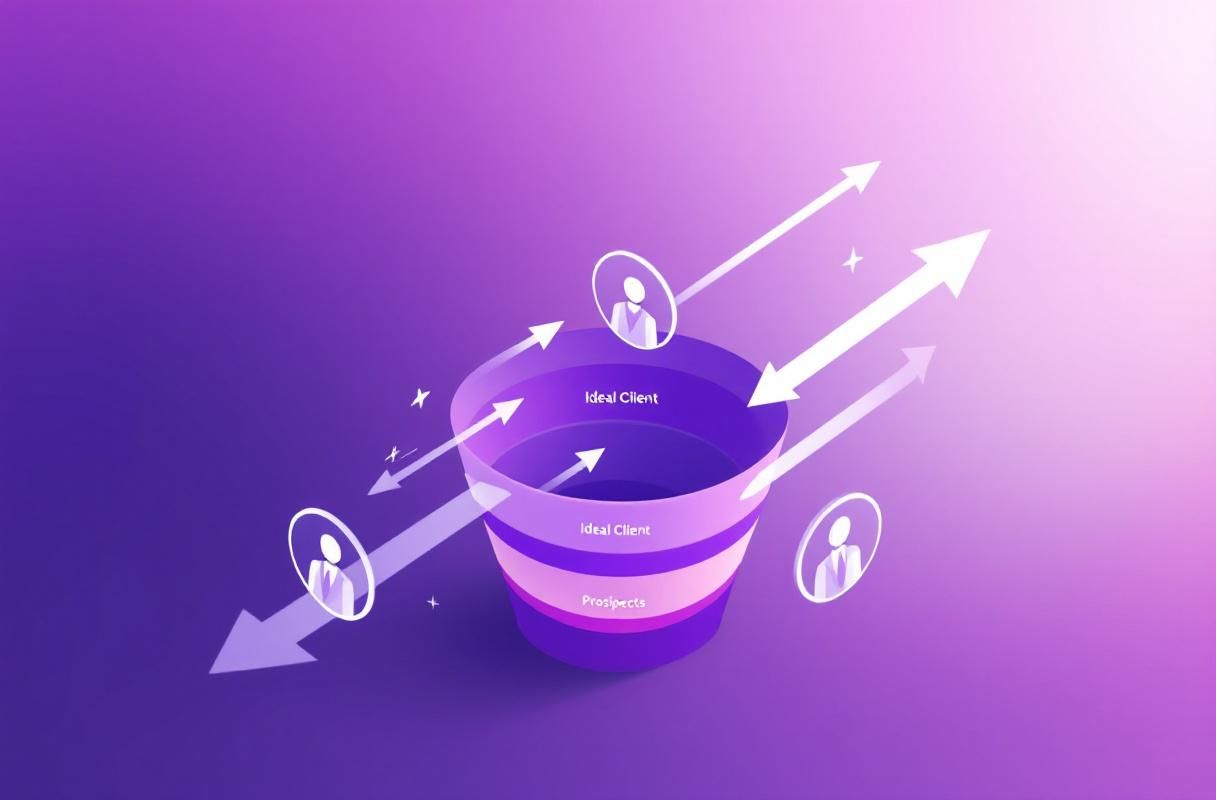
LinkedIn's unique position makes it essential for finding B2B leads.
Why LinkedIn Dominates
According to Cognism's analysis:
- 1 billion+ professionals across industries and geographies
- 75-85% of B2B social leads come from LinkedIn alone
- 70% of B2B marketers rate it the most effective lead generation platform
- Decision-maker concentration unmatched by any other channel
No other platform offers direct access to this many business buyers actively discussing professional challenges.
LinkedIn's Algorithm Favors Authority
According to Tenacious Marketing, LinkedIn's algorithm in 2026 prioritizes:
- Knowledge-rich content that educates rather than sells
- Authentic engagement over automated activity
- Relationship signals like comments and meaningful interactions
- Consistent value contribution from active participants
This means the professionals who get found are those who build authority, not those who send the most connection requests.
Connection Limits Create Opportunity
LinkedIn's connection request limits have fundamentally changed prospecting:
| Account Type | Weekly Limit | Daily Safe Zone |
|---|---|---|
| Free/Premium | 100 requests | 20-25 requests |
| Sales Navigator | 150-200 requests | 30-40 requests |
| High SSI (70+) | Up to 200 requests | 40 requests |
With these constraints, volume-based prospecting is mathematically unsustainable. At 40% acceptance rate on 100 requests, you gain only 40 new connections weekly—and most won't respond to messages.
The opportunity: While competitors burn through connection limits on cold outreach, inbound-focused professionals attract unlimited inbound interest.
6 Strategies to Find B2B Leads on LinkedIn
Here's how modern B2B professionals find leads that actually convert.
1. Optimize Your Profile for Inbound
Your LinkedIn profile is your landing page. According to Tenacious Marketing:
Headline optimization:
- Outcome-focused: "We help [target audience] achieve [result]"
- Not title-focused: "Founder at XYZ Company"
Banner image:
- Position, proof, or promise
- Not generic company branding
About section:
- Written like a narrative landing page
- Problem → Solution → Proof → CTA
- Not a resume or career history
Featured section:
- Case studies with measurable outcomes
- Testimonials from ideal clients
- Valuable resources (guides, frameworks)
When prospects visit your profile after seeing you in their feed, a well-optimized profile converts views to connections and connections to conversations.
2. Strategic Content That Attracts Decision-Makers
Content visibility attracts leads who self-identify as interested.
According to Folk's research:
What performs best:
- Carousel posts: 278% more engagement than videos
- Emotional messaging: 7X more effective than rational content
- Thought leadership: Industry insights and contrarian takes
- Case studies: Measurable outcomes from real clients
Content themes that attract B2B leads:
| Theme | Example |
|---|---|
| Industry challenges | "Why 80% of B2B companies struggle with [problem]" |
| Contrarian insights | "Everyone's doing [thing]—here's why it fails" |
| Practical frameworks | "The 5-step process we use for [outcome]" |
| Results stories | "How [client] achieved [specific result] in 90 days" |
Consistent content builds the recognition that makes inbound leads skip qualification.
3. Engagement-Based Visibility
Comments and engagement on others' content often outperform original posts for lead generation.
Why engagement works:
- Appears in feeds of the content creator's audience
- Positions you as thoughtful contributor, not salesperson
- Creates recognition across multiple touchpoints
- Builds relationships with thought leaders who can amplify your reach
Strategic engagement approach:
- Identify 25 thought leaders your prospects follow
- Enable notifications for their posts
- Comment within first hour (algorithm boost)
- Add genuine value, insight, or relevant question
- Maintain consistency (daily engagement)
This approach is exactly what ConnectSafely.ai automates—strategic visibility where prospects pay attention.
4. Leverage LinkedIn Sales Navigator
For targeted prospecting, Sales Navigator provides powerful filters:
Key filters for lead finding:
- Company size and industry
- Job title and function
- Seniority level
- Geography
- Recent job changes
- Content posted about specific topics
Best practice: Rather than using Sales Navigator for cold outreach, use it to identify ideal prospects, then build visibility in conversations they follow before initiating contact.
5. Use Buying Signals to Prioritize
According to Cognism, reps with high SSI (Social Selling Index) generate 45% more opportunities. Part of SSI success is recognizing buying signals:
High-intent signals:
| Signal | Meaning |
|---|---|
| Engaged with your content multiple times | Active interest in your perspective |
| Viewed your profile after engagement | Checking credentials |
| Commented on industry challenges | Problem awareness |
| Job change announcement | New priorities, new budget |
| Company growth news | Expanded needs |
Prioritize prospects showing these signals for personalized outreach.
6. Build Referral Relationships
LinkedIn's network structure amplifies referrals:
- Second-degree connections are visible
- Mutual connections display prominently
- Recommendations carry social proof
Referral strategy:
- Identify satisfied clients connected to ideal prospects
- Request specific introductions to named individuals
- Reference the mutual connection in outreach
- Provide value to referral sources (reciprocity)
Referral leads convert at dramatically higher rates because trust transfers from the referring party.
Inbound vs Outbound: The Lead Quality Difference
How you find leads determines their quality.
Outbound-Found Leads
When you find leads through prospecting lists and cold outreach:
| Characteristic | Impact on Sales |
|---|---|
| No prior awareness | Must educate from scratch |
| Skeptical of intent | Defense mechanisms activated |
| Undefined need | May not have budget or urgency |
| No trust established | Longer sales cycle |
| Price-sensitive | Must justify value extensively |
Outbound leads close at 1.7% according to HubSpot.
Inbound-Found Leads
When leads find you through authority and content:
| Characteristic | Impact on Sales |
|---|---|
| Self-identified need | Already motivated to solve problem |
| Pre-trusting | Consumed your content, validated expertise |
| Budget consideration | Researched solutions, prepared to invest |
| Shorter cycle | Less education and convincing required |
| Value-focused | Rarely object to pricing |
Inbound leads close at 14.6%—8X better than outbound.
The Math Favors Inbound
Consider two scenarios for finding 10 qualified leads:
Outbound approach:
- 500 connection requests (5 weeks at limits)
- 200 acceptances (40% rate)
- 20 message responses (10% rate)
- 10 qualified leads (50% quality rate)
- Time: 5+ weeks, significant effort
Inbound approach:
- Consistent visibility building (1-2 hours/week)
- 50+ profile views weekly from engaged prospects
- 15-20 inbound connection requests
- 10+ qualified conversations from interested parties
- Time: 30-60 days of authority building, then ongoing
The inbound approach requires initial investment but compounds over time.
AI-Enhanced B2B Lead Generation
Modern AI tools transform lead generation efficiency.
AI for Visibility
According to Martal Group:
- 41% of LinkedIn users leverage AI tools
- AI-assisted outreach achieves 10.3% response rates vs. 5.1% for cold
- AI-powered campaign optimization maximizes engagement
AI-powered tools like ConnectSafely.ai automate the visibility activities that attract inbound leads:
- Strategic commenting on target content
- Consistent engagement across multiple creators
- Personalized interactions at scale
- Time efficiency (30 minutes/week for 2+ hours daily presence)
AI for Personalization
According to CFT B2B Leads:
"Hyper-personalization is one of the biggest trends redefining B2B lead generation. Advanced analytics and AI tools now allow businesses to tailor messaging, content, and outreach based on industry, role, and buyer stage."
AI enables personalization at scale—the combination of volume and relevance that manual approaches can't achieve.
How ConnectSafely.ai Helps Find B2B Leads
ConnectSafely.ai automates the inbound lead generation activities that attract qualified prospects.
Strategic Engagement Automation
AI-powered comments on content your prospects read create consistent visibility without manual effort. Unlike automation tools that send cold messages, ConnectSafely.ai automates value-adding engagement.
Creator and Topic Targeting
Focus engagement where decision-makers pay attention:
- Target thought leaders your ICP follows
- Engage in industry-specific conversations
- Build recognition with key influencers
Platform Compliance
Every activity aligns with what LinkedIn rewards:
- Thoughtful engagement, not spam
- Value contribution, not interruption
- Zero ban risk from compliant activities
Cost Efficiency
At from USD $10/month, ConnectSafely.ai costs 60% less than traditional automation tools while generating higher-quality leads that convert at 8X higher rates.
Measuring B2B Lead Generation Success
Key Metrics to Track
| Metric | Outbound Benchmark | Inbound Target |
|---|---|---|
| Profile views | Varies | 200%+ increase |
| Connection acceptance | 30-40% | 60%+ (they request) |
| Message response | 5-10% | 70%+ (they initiate) |
| Lead quality score | Variable | Consistently high |
| Cost per qualified lead | $200-500 | $50-100 |
| Close rate | 1.7% | 10%+ |
Timeline Expectations
Month 1:
- Profile views increase
- First inbound connection requests
- Authority building begins
Month 2:
- Recognition in your niche grows
- Inbound DMs begin
- Content engagement increases
Month 3+:
- Consistent inbound lead flow
- Referral conversations emerge
- Speaking/collaboration opportunities
Frequently Asked Questions
What is the best way to find B2B leads in 2026?
The best way to find B2B leads in 2026 is through LinkedIn inbound strategies. According to Cognism, LinkedIn drives 75-85% of all B2B social media leads. Rather than cold prospecting, build authority through strategic content and engagement so decision-makers find you. Inbound leads convert at 14.6% vs. 1.7% for outbound.
How do I generate B2B leads on LinkedIn?
Generate B2B leads on LinkedIn by optimizing your profile for conversions, creating content that addresses prospect challenges, and engaging strategically on content your ICP reads. Folk's research shows carousel posts deliver 278% more engagement, and emotional messaging outperforms rational content by 7X. Build visibility where decision-makers already spend attention.
Is LinkedIn good for B2B lead generation?
LinkedIn is the best platform for B2B lead generation. According to Cognism, 70% of B2B marketers rate it the most effective lead generation platform, with over 1 billion professionals actively discussing business challenges. No other channel offers this concentration of decision-makers.
How many LinkedIn connection requests can I send per week?
LinkedIn limits connection requests to 100-200 per week depending on account type. Free and Premium accounts can send approximately 100 weekly, while Sales Navigator users may reach 150-200. Exceeding limits triggers restrictions. These constraints make volume prospecting unsustainable and favor inbound approaches.
What is the difference between inbound and outbound B2B leads?
Inbound leads find you through your content and authority—they're pre-trusting and self-qualified. Outbound leads are found through prospecting—they're cold and skeptical. According to HubSpot, this difference explains the 8X gap in close rates (14.6% inbound vs. 1.7% outbound).
How long does it take to generate B2B leads with LinkedIn inbound?
Most professionals see increased profile views within 1-2 weeks, first inbound connection requests within 2-4 weeks, and consistent qualified conversations within 30-60 days. Unlike outbound (which resets monthly), inbound authority compounds—each month builds on the previous.
Ready to find B2B leads that actually convert? Start your free trial and discover why LinkedIn inbound outperforms traditional prospecting.
For a complete guide to LinkedIn lead generation, see our Founder's Guide to LinkedIn Inbound.
The Paradox of Personalization: When Tailoring Your Message Can Actually Hurt Your Chances
While personalization is often touted as a key to successful B2B lead generation, there are situations where it can actually backfire. When you're dealing with extremely busy or high-level decision-makers, overly personalized messages can come across as insincere or even creepy. In these cases, a more straightforward and professional approach may be more effective. Additionally, personalization can also lead to a phenomenon known as "analysis paralysis," where the recipient is so overwhelmed by the level of detail and customization that they become hesitant to respond or take action. It's essential to strike a balance between personalization and professionalism, taking into account the specific needs and preferences of your target audience. For instance, a study by LinkedIn found that while personalization can increase response rates by up to 25%, it can also lead to a 15% decrease in response rates if the message is perceived as too pushy or aggressive. As such, it's crucial to test and refine your approach to ensure that you're not inadvertently harming your chances of success.
Debunking the Myth: Inbound Leads Are Not Always High-Quality Leads
One common misconception in the B2B lead generation space is that inbound leads are inherently high-quality leads. However, this is not always the case. While inbound leads may be more likely to be interested in your product or service, they can also be unqualified or unready to buy. In fact, a study by HubSpot found that up to 50% of inbound leads are not yet ready to make a purchase, and may require additional nurturing and education before they become sales-ready. Furthermore, inbound leads can also be influenced by factors such as SEO keyword manipulation or misleading advertising, which can lead to a mismatch between the lead's expectations and the actual value proposition of your product or service. As such, it's essential to implement a robust lead qualification and nurturing process to ensure that you're only pursuing high-quality leads that are truly ready to buy.
Advanced-Level: Using LinkedIn's Algorithm to Your Advantage
For advanced practitioners, understanding how LinkedIn's algorithm works can be a key differentiator in B2B lead generation. By leveraging LinkedIn's algorithm, you can increase the visibility and engagement of your content, and ultimately drive more leads and conversions. One strategy is to use LinkedIn's "topic clusters" feature, which allows you to identify and target specific communities and conversations related to your niche. By creating content that resonates with these topic clusters, you can increase your visibility and credibility within these communities, and ultimately drive more leads and conversions. Another strategy is to use LinkedIn's "engagement metrics" to optimize your content and outreach efforts. By tracking metrics such as engagement rate, click-through rate, and conversion rate, you can refine your approach and ensure that you're getting the maximum ROI from your LinkedIn marketing efforts. For example, a study by LinkedIn found that posts with high engagement rates are up to 5 times more likely to be shared and up to 3 times more likely to drive conversions.
Navigating the Gray Area: When to Use Outbound Tactics in an Inbound Strategy
While inbound marketing is often seen as the preferred approach in B2B lead generation, there are situations where outbound tactics can be effective and even necessary. For instance, when dealing with extremely niche or hard-to-reach audiences, outbound tactics such as cold emailing or LinkedIn messaging may be the only way to get your foot in the door. Additionally, outbound tactics can also be used to supplement and accelerate an inbound strategy, by proactively reaching out to key decision-makers and influencers in your target audience. However, it's essential to use outbound tactics in a way that is respectful and personalized, and that adds value to the recipient rather than simply interrupting or spamming them. One strategy is to use account-based marketing (ABM) principles, which involve identifying and targeting specific accounts and decision-makers with personalized content and outreach efforts. By using ABM principles, you can create a more targeted and effective outbound strategy that complements and enhances your inbound efforts.
The Hidden Reality of B2B Lead Generation: Why Conversion Rates Are Often Misleading
One of the hidden realities of B2B lead generation is that conversion rates are often misleading or incomplete. While conversion rates can provide a useful metric for evaluating the effectiveness of a lead generation campaign, they can also be influenced by factors such as sales team performance, product pricing, and market conditions. Additionally, conversion rates can also be affected by the quality and accuracy of the leads themselves, with low-quality or unqualified leads leading to lower conversion rates. Furthermore, conversion rates can also be impacted by the length and complexity of the sales cycle, with longer sales cycles leading to lower conversion rates. As such, it's essential to look beyond conversion rates and consider other metrics such as lead quality, sales velocity, and customer lifetime value. By taking a more holistic and nuanced approach to evaluating lead generation performance, you can gain a more accurate and complete understanding of what's working and what's not, and make data-driven decisions to optimize and improve your strategy. For example, a study by Salesforce found that companies that use a combination of metrics, including conversion rates, lead quality, and sales velocity, are up to 25% more likely to achieve their sales targets.
See How It Works
Watch how people get more LinkedIn leads with ConnectSafely




Related Articles