Best Marketing Agency Tools for LinkedIn: Full Guide
Discover the best marketing agency tools for LinkedIn lead generation in 2026. Compare pricing, features & why inbound tools outperform outbound automation.


Marketing agencies spend thousands each month on LinkedIn tools that generate diminishing returns. The average agency running 15 client accounts pays $1,500-$6,000 monthly on automation software alone—and most of those tools rely on outbound tactics that LinkedIn is actively punishing. With algorithm changes tightening enforcement in 2026 and inbound leads converting at 14.6% compared to just 1.7% for outbound, agencies need a fundamentally different approach to LinkedIn lead generation.
This guide breaks down the best marketing agency tools for LinkedIn in 2026, compares the top lead generation agencies, and explains why the smartest agencies are shifting from outbound automation to inbound authority building as their primary growth strategy.
Want to Generate Consistent Inbound Leads from LinkedIn?
Get our complete LinkedIn Lead Generation Playbook used by B2B professionals to attract decision-makers without cold outreach.
No spam. Just proven strategies for B2B lead generation.
Key Takeaways
- Most marketing agency tools focus on outbound automation—connection blasts, message sequences, and data scraping—that LinkedIn increasingly restricts and penalizes
- Per-seat pricing destroys agency margins when managing 10+ client accounts, with costs ranging from $39 to $197 per seat per month
- LinkedIn's 2026 algorithm changes reward genuine engagement and thought leadership while flagging automated outreach patterns
- Inbound leads convert at 8.5X the rate of outbound (14.6% vs 1.7%), making authority-based approaches far more profitable for agencies
- The best agency tool stack combines content authority, engagement intelligence, and CRM integration—not more connection requests
- ConnectSafely offers agency-friendly pricing from USD $10/month with multi-client management designed for inbound lead generation
Why Marketing Agencies Need Specialized LinkedIn Tools
Generic marketing tools don't solve the problems agencies actually face on LinkedIn. Individual users can manually manage one profile. Agencies managing ten, twenty, or fifty client accounts need infrastructure built for scale.
The Multi-Client Challenge
Every additional client account multiplies complexity. Agencies need separate content calendars, distinct brand voices, isolated engagement tracking, and independent performance reporting—all without cross-contaminating client data or triggering LinkedIn's multi-account detection systems.
Most marketing agency tools were built for individual users and bolted on "team" features as an afterthought. The result: clunky interfaces, shared IP addresses that create risk across clients, and per-seat pricing that makes scaling unprofitable.
The Compliance Problem
LinkedIn restricted over 2.5 million accounts in 2025 for automation violations. The platform's detection systems have grown more sophisticated, identifying connection velocity spikes, templated messaging patterns, and automated engagement behaviors. For agencies, one restricted client account doesn't just lose that client—it damages your reputation and threatens every other relationship.
The agencies thriving in 2026 aren't the ones finding cleverer ways to evade detection. They're the ones using tools that align with LinkedIn's algorithm rather than fighting it.
The ROI Gap
Traditional agency tools optimize for activity metrics: connection requests sent, messages delivered, profiles viewed. But according to HubSpot's State of Marketing report, activity doesn't equal results. Outbound tactics produce a 1.7% close rate. Inbound approaches produce 14.6%. For agencies billing clients on results, the math is clear.

Best LinkedIn Automation Tools for Agencies: 2026 Comparison
Here's how the most popular marketing agency tools stack up for LinkedIn lead generation:
| Tool | Price/Month | Approach | Multi-Client | Best For |
|---|---|---|---|---|
| Salesflow | $99/seat | Outbound sequences | Yes (per-seat) | Mid-size agencies with budget |
| Skylead | $100/seat | Multi-channel outbound | Yes (per-seat) | Agencies wanting email + LinkedIn |
| Zopto | $197/seat | Campaign automation | Yes (per-seat) | Enterprise-focused agencies |
| SalesRobot | $39/seat | Smart sequences | Yes (per-seat) | Budget-conscious teams |
| Waalaxy | $56-80/seat | Connection campaigns | Limited | Small agencies, solopreneurs |
| Dripify | $59-99/seat | Drip campaigns | Yes (per-seat) | Sequence-heavy agencies |
| Taplio | $49-149/seat | Content + engagement | Limited | Content-first agencies |
| Clay | $149-800/mo | Data enrichment | Yes | Data-driven prospecting |
| ConnectSafely | from USD $10/month | Inbound authority | Yes (agency plan) | Inbound-focused agencies |
Salesflow ($99/month per seat)
Salesflow offers automated LinkedIn outreach sequences with A/B testing, smart inbox management, and team analytics. Agencies appreciate the dashboard view across client accounts and the ability to run parallel campaigns.
Strengths: Reliable deliverability, decent analytics, established platform. Weaknesses: Per-seat pricing adds up fast—20 accounts costs $1,980/month. Purely outbound approach means results depend on volume, not quality. LinkedIn's tightening restrictions make connection-based outreach increasingly risky.
Skylead ($100/month per seat)
Skylead combines LinkedIn outreach with email sequences, creating multi-channel campaigns from a single interface. The smart sequences feature adjusts follow-up paths based on prospect behavior.
Strengths: Multi-channel approach, conditional logic in sequences, email integration. Weaknesses: Complex setup per client, per-seat costs compound quickly, still fundamentally an outbound tool that faces LinkedIn's growing restrictions.
Zopto ($197/month per seat)
Zopto positions itself as an enterprise LinkedIn automation platform with advanced filtering, campaign management, and CRM integrations. The higher price point includes more sophisticated targeting options.
Strengths: Advanced filters, enterprise-grade features, strong CRM integrations. Weaknesses: The most expensive per-seat option. At $197/account, managing 15 clients costs $2,955/month just for the tool. The ROI math becomes difficult when outbound response rates continue declining.
SalesRobot (from USD $10/month per seat)
SalesRobot offers LinkedIn automation at the lowest per-seat price point, with smart message personalization and basic campaign management. It's positioned as the budget-friendly alternative.
Strengths: Affordable entry point, straightforward interface, decent personalization. Weaknesses: Fewer advanced features than premium competitors. Still relies on outbound mechanics. Limited agency-specific functionality for managing multiple client accounts.
Waalaxy
Waalaxy provides LinkedIn prospecting with CRM-style pipeline management. Originally built for individuals, it's expanded to support team use cases with shared campaign templates.
Strengths: Clean interface, good for LinkedIn-to-email workflows, affordable starting tier. Weaknesses: Multi-client management is limited. Not purpose-built for agencies managing many accounts. Outbound-dependent.
Dripify ($59-99/month per seat)
Dripify specializes in LinkedIn drip campaigns with automated sequences that trigger based on prospect actions. The platform includes team management features and performance analytics.
Strengths: Sophisticated drip sequences, team management, detailed analytics per campaign. Weaknesses: Per-seat pricing, outbound-focused approach, dependent on connection request acceptance rates that continue declining industry-wide.
Clay ($149-800/month)
Clay is a data enrichment and prospecting platform rather than a LinkedIn automation tool directly. It aggregates data from multiple sources, enabling agencies to build highly targeted prospect lists.
Strengths: Powerful data enrichment, waterfall enrichment across 50+ sources, creative prospecting workflows. Weaknesses: Not a LinkedIn tool per se—requires integration with outreach platforms. Higher learning curve. Pricing escalates with data volume.
Taplio ($49-149/month per seat)
Taplio focuses on LinkedIn content creation and scheduling, with AI-powered post generation, engagement tracking, and analytics. It's the most content-oriented tool in this comparison.
Strengths: Strong content scheduling, AI writing assistance, engagement analytics. Weaknesses: Limited multi-client management. Content creation is only one piece of the agency puzzle. Doesn't handle lead capture or conversion tracking.
Best LinkedIn Lead Generation Agencies: Who to Hire
If you're evaluating agencies rather than tools, these are the established players in LinkedIn lead generation:
ColdIQ
ColdIQ specializes in cold outreach infrastructure, building targeting systems and message sequences for B2B companies. They focus heavily on data quality and message personalization to improve response rates above industry averages.
Cleverly
Cleverly offers done-for-you LinkedIn lead generation with a focus on optimized messaging. They write and send connection requests and follow-up messages on behalf of clients, handling the entire outreach process.
SalesBread
SalesBread stands out with a reported 19.98% reply rate on LinkedIn outreach—significantly above the 5-10% industry average. Their approach combines highly targeted prospect research with personalized, one-to-one messaging rather than template blasts.
Belkins
Belkins provides appointment setting services across LinkedIn and email, with a structured process for prospect research, outreach execution, and meeting booking. They operate as an extension of client sales teams.
Callbox
Callbox offers multi-channel lead generation including LinkedIn, combining outbound outreach with content syndication and account-based marketing. They serve mid-market and enterprise clients across multiple industries.
The pattern across these agencies: Even the best outbound agencies invest heavily in personalization and research to compensate for declining outbound effectiveness. The most successful ones—like SalesBread with their 19.98% reply rate—succeed by making outbound feel personal, essentially mimicking inbound's human-first approach at scale.
What Most Agency Tool Guides Get Wrong
Most "best marketing agency tools" lists evaluate software purely on outbound capabilities: How many connection requests can you send? How many message sequences can you run? How fast can you scale volume?
This framing misses three critical realities of LinkedIn in 2026:
1. Volume Is No Longer an Advantage
LinkedIn's algorithm actively penalizes high-volume automated behavior. The platform's 2025-2026 updates prioritize genuine engagement signals—comments, shares, dwell time—over connection quantity. Agencies sending 100 connection requests daily per client are buying risk, not results.
2. Prospects Have Adapted
B2B buyers recognize automated outreach instantly. The "I noticed your profile and thought we should connect" template has been sent billions of times. Gartner's B2B buying research shows that 75% of B2B buyers prefer a rep-free sales experience. They don't want to be prospected. They want to discover solutions through content and peer recommendations.
3. The Right Message at the Right Time
The agencies winning in 2026 follow a different principle: getting the right message to the right person at the right time. This isn't about sending more messages. It's about creating content that attracts the right prospects, building authority that establishes trust before the first conversation, and engaging authentically so that when prospects are ready to buy, your clients are already top of mind.
This is exactly why inbound authority beats outbound automation for sustainable agency growth.
Why Inbound Authority Beats Agency Automation
The data is unambiguous. Inbound leads convert at 14.6% versus 1.7% for outbound—an 8.5X difference. But the advantages compound beyond conversion rates:
Lower Client Churn
Agencies delivering inbound results see lower client churn because the results compound over time. A client's LinkedIn authority grows month over month. Their content library expands. Their engagement network deepens. Unlike outbound, where stopping campaigns means leads stop immediately, inbound authority persists even during quiet periods.
Higher Margins
Outbound campaigns require constant management—writing new sequences, adjusting targeting, monitoring deliverability, handling responses. Inbound systems require upfront strategy but become increasingly efficient as content libraries grow and engagement patterns stabilize. Agency margins on inbound services typically reach 50-70% compared to 20-35% for managed outbound.
Zero Compliance Risk
Inbound authority building—publishing content, engaging with posts, commenting thoughtfully, sharing insights—aligns perfectly with how LinkedIn wants users to behave. There's no risk of account restrictions, no compliance gray areas, no need to monitor daily activity limits. The tool works with the platform instead of against it.
Compounding Returns
An outbound campaign produces results only while running. An inbound authority strategy produces results that compound: today's article attracts tomorrow's leads. Last month's viral post continues generating profile visits. The engagement network you build this quarter warms prospects for next quarter's pipeline.
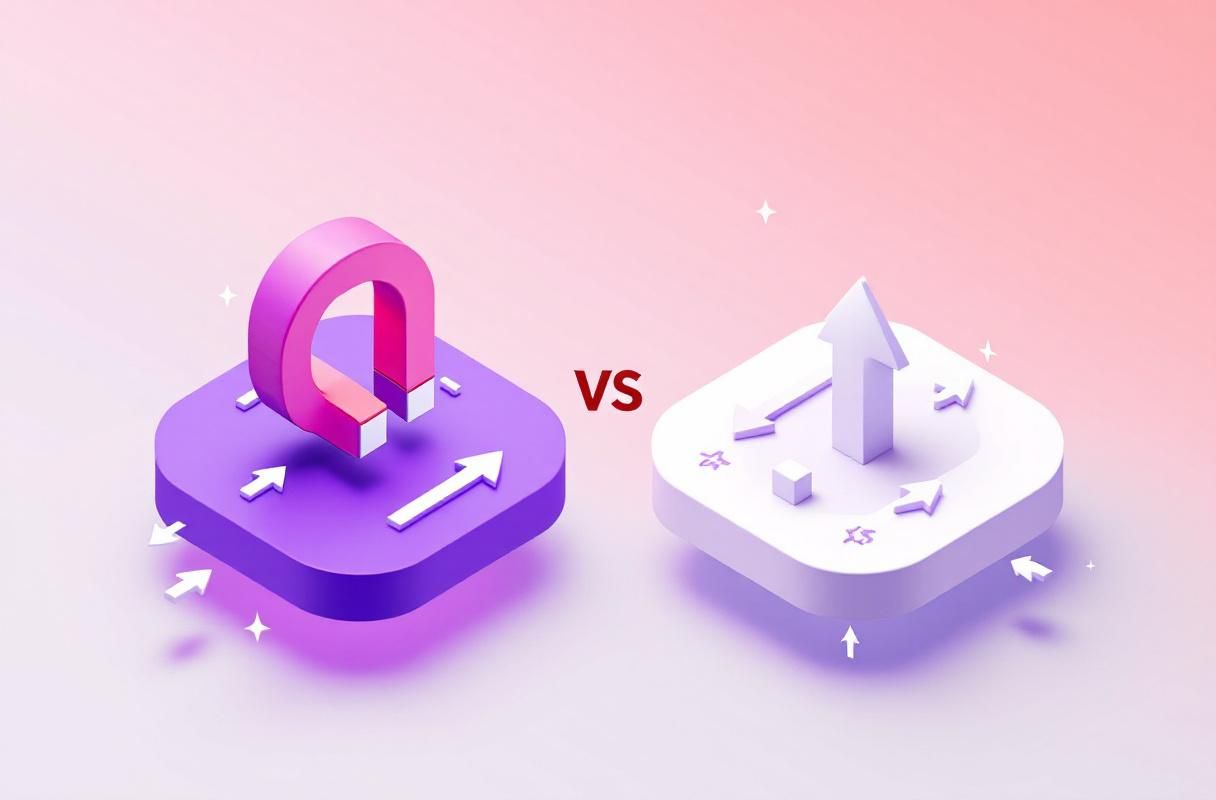
Real Results: Inbound vs. Outbound Agency Performance
Consider the difference in agency economics:
Outbound Agency Model (20 clients):
- Tool costs: $1,980-$3,940/month (per-seat automation)
- Staff: 2-3 campaign managers for monitoring and optimization
- Average response rate: 5-10% on connection requests
- Close rate: 1.7% of prospects contacted
- Client churn: 25-40% annually due to inconsistent results
- Agency margin: 20-35%
Inbound Authority Model (20 clients):
- Tool costs: $39-$700/month (agency-friendly pricing)
- Staff: 1-2 content strategists, 1 engagement coordinator
- Average inbound lead quality: Pre-warmed, self-qualified prospects
- Close rate: 14.6% of inbound leads
- Client churn: 10-15% annually due to compounding results
- Agency margin: 50-70%
The math speaks for itself. Agencies using inbound tools spend less on software, produce higher-converting leads, retain clients longer, and earn significantly better margins. This is why the trend toward ghostwriting combined with organic content to warm leads has become the dominant strategy among top-performing agencies in 2026.
How ConnectSafely Helps Agencies Scale LinkedIn Inbound
ConnectSafely was built for the agency model. Starting from USD $10/month with agency-friendly multi-client management, it eliminates the per-seat pricing trap that makes outbound tools unprofitable at scale.
Agency-Specific Features
- Multi-client dashboard: Manage all client LinkedIn accounts from a single interface without switching between logins
- Content authority engine: Build each client's thought leadership presence with strategic content scheduling and engagement optimization
- Engagement intelligence: Identify and engage with prospects who are already showing buying intent through their LinkedIn activity
- Compliance-first design: Every feature operates within LinkedIn's terms of service—zero restriction risk across your entire client portfolio
- Performance reporting: Client-ready analytics showing authority growth, engagement trends, and inbound lead attribution
Why Agencies Choose ConnectSafely Over Outbound Tools
The agencies switching to ConnectSafely share a common realization: outbound automation is a treadmill. You run harder to maintain the same results as response rates decline and LinkedIn tightens enforcement.
ConnectSafely's inbound approach creates a flywheel instead. Each piece of content builds authority. Each authentic engagement strengthens relationships. Each inbound lead arrives pre-qualified and predisposed to trust your client's expertise. The work compounds rather than resets each month.
For a deeper look at how agencies structure their LinkedIn operations, see our complete LinkedIn automation for agencies guide.
Data Platforms That Complement Agency LinkedIn Tools
No agency tool stack is complete without data enrichment. Two platforms dominate:
LinkedIn Sales Navigator ($99-149/month per seat) remains the gold standard for prospect identification on LinkedIn. The advanced search filters, lead lists, and InMail credits make it essential for targeting. However, it's a discovery tool, not an engagement tool—you still need a strategy for what happens after you identify prospects.
ZoomInfo ($15,000-25,000/year) provides comprehensive B2B contact data including direct dials, email addresses, org charts, and intent signals. For agencies running multi-channel campaigns, ZoomInfo's data depth is unmatched—but the price point limits it to larger agencies.
The key insight: data platforms tell you who to target. Your marketing agency tools determine how you engage them. Pairing Sales Navigator's targeting with ConnectSafely's inbound authority approach gives agencies the best of both worlds—precise targeting with a compliant, high-converting engagement method.
FAQ: Marketing Agency Tools for LinkedIn
What are the best marketing agency tools for LinkedIn lead generation in 2026? The best marketing agency tools for LinkedIn depend on your approach. For outbound automation, Salesflow ($99/mo), Skylead ($100/mo), and SalesRobot (from USD $10/month) are popular options. For inbound authority building—which converts at 8.5X the rate of outbound—ConnectSafely (from USD $10/month) offers agency-friendly pricing with multi-client management. The trend in 2026 is toward tools that build client authority rather than blast connection requests.
How much should a marketing agency spend on LinkedIn tools per client? Most outbound tools charge $39-$197 per seat per month, meaning agencies managing 20 clients spend $780-$3,940 monthly on automation alone. Agency-friendly tools like ConnectSafely reduce this to from USD $10/month total with multi-client support. The real question is ROI: inbound tools generating 14.6% close rates deliver far more value per dollar than outbound tools producing 1.7% close rates.
Which LinkedIn lead generation agencies have the best results? SalesBread reports a 19.98% reply rate—well above the 5-10% industry average—through hyper-personalized outreach. ColdIQ and Cleverly are established players in done-for-you LinkedIn outreach. Belkins and Callbox offer multi-channel approaches. However, even the best agencies are shifting toward organic content and inbound authority because response rates to outbound continue declining.
Are LinkedIn automation tools safe for agencies to use in 2026? LinkedIn restricted over 2.5 million accounts for automation violations in 2025, and enforcement continues tightening. Tools that send automated connection requests, messages, or profile views carry increasing risk. Inbound authority tools that focus on content publishing, authentic engagement, and thought leadership building operate within LinkedIn's terms of service with zero restriction risk.
What is the difference between outbound and inbound LinkedIn agency tools? Outbound tools (Salesflow, Dripify, Zopto) automate connection requests, message sequences, and follow-ups—essentially cold outreach at scale. Inbound tools (ConnectSafely, Taplio) focus on building authority through content, strategic engagement, and thought leadership that attracts prospects organically. According to HubSpot, inbound leads close at 14.6% vs 1.7% for outbound, making inbound tools significantly more effective for agencies seeking sustainable, compliant growth.
Start Building Inbound Authority for Your Agency Clients
The marketing agency tools landscape is shifting. LinkedIn's algorithm changes, declining outbound response rates, and the 8.5X conversion advantage of inbound leads all point in the same direction: agencies that build client authority will outperform agencies that blast connection requests.
ConnectSafely gives your agency the infrastructure to make that shift—from USD $10/month with multi-client management built for how agencies actually operate. No per-seat pricing traps. No compliance risk. Just compounding authority that generates inbound leads your clients actually want.
Stop paying per seat for declining results. Start building authority that compounds.
Explore ConnectSafely for Agencies →
For a complete framework on structuring your agency's LinkedIn operations, read our LinkedIn automation for agencies guide.
The Dark Side of LinkedIn Automation: When Compliance Becomes a Competitive Disadvantage
While many marketing agencies rely on automation tools to streamline their LinkedIn lead generation efforts, there's a hidden reality that few discuss: the compliance trap. As LinkedIn continues to tighten its algorithm and enforcement, agencies that overly rely on automation may find themselves at a competitive disadvantage. This is because the very act of compliance – avoiding triggers that flag accounts for review – can stifle creativity, limit engagement, and reduce the overall effectiveness of their campaigns. Furthermore, the cat-and-mouse game between automation tool providers and LinkedIn's security team means that even compliant tools can become non-compliant overnight, leaving agencies scrambling to adapt. In reality, the pursuit of compliance can become an all-consuming task, distracting agencies from the real goal: building genuine relationships with their target audience. It's a delicate balancing act, where the quest for safety can ultimately compromise an agency's ability to innovate and stand out in a crowded market.
Myth vs Reality: The Automation Myth and Why Human Touch Matters
There's a pervasive myth in the marketing agency world that automation is the key to unlocking scalable lead generation on LinkedIn. The reality, however, is far more nuanced. While automation can certainly streamline certain tasks, it's the human touch that ultimately drives conversions. This is because LinkedIn is a platform built on relationships, trust, and credibility – all of which are difficult to replicate with automated tools alone. In fact, studies have shown that personalized, human-driven engagement can increase conversion rates by as much as 25%. Moreover, the over-reliance on automation can lead to a phenomenon known as "automation fatigue," where prospects become desensitized to the constant barrage of automated messages and connection requests. By contrast, agencies that prioritize human touch and personalized engagement can build stronger, more meaningful relationships with their target audience, ultimately driving more conversions and long-term growth.
Advanced Strategies for Agency-Level LinkedIn Engagement: Leveraging Network Effects
For advanced marketing agencies, LinkedIn engagement is not just about individual interactions, but about creating a network effect that amplifies their reach and influence. This involves leveraging the collective power of their client base, employees, and partners to create a cohesive, engaged community that drives conversations, shares content, and attracts new prospects. One strategy for achieving this is to create a "pod" structure, where smaller groups of clients and employees are connected through a shared content calendar and engagement plan. By doing so, agencies can create a self-reinforcing cycle of engagement, where each interaction builds upon the last, creating a snowball effect that drives exponential growth. Furthermore, by leveraging network effects, agencies can also create a moat around their business, making it more difficult for competitors to replicate their success and establishing themselves as a dominant force in their industry.
The Unseen Consequences of Per-Seat Pricing: A Ticking Time Bomb for Agencies
Per-seat pricing may seem like a convenient and scalable solution for marketing agencies, but it can have unseen consequences that ultimately threaten their very business model. As agencies grow and add more clients, the per-seat costs can quickly become prohibitive, eroding margins and making it difficult to maintain profitability. Moreover, the rigid pricing structures of most automation tools can create a "seat-lock" effect, where agencies are forced to choose between adding new clients or reducing the number of seats, ultimately limiting their growth potential. Furthermore, the lack of flexibility in per-seat pricing can also create a "utility trap," where agencies become beholden to a particular tool or platform, limiting their ability to adapt to changing market conditions or explore new opportunities. By understanding the hidden risks of per-seat pricing, agencies can make more informed decisions about their tool stack and avoid the potential pitfalls that can derail their growth.
When Inbound Leads Aren't Enough: The Role of Account-Based Marketing in Agency Growth
While inbound leads are certainly a crucial component of any marketing agency's growth strategy, they may not always be enough to drive meaningful revenue growth. This is particularly true for agencies that operate in highly competitive or niche markets, where the pool of potential clients is limited. In such cases, account-based marketing (ABM) can play a critical role in identifying and targeting high-value prospects that are more likely to convert into clients. By leveraging ABM strategies, agencies can create highly personalized, tailored campaigns that speak directly to the needs and pain points of their target accounts, increasing the likelihood of conversion and driving more meaningful revenue growth. Moreover, ABM can also help agencies to better align their sales and marketing efforts, creating a more cohesive and effective growth strategy that drives real results. By combining inbound lead generation with ABM, agencies can create a powerful growth engine that drives both quantity and quality of leads, ultimately fueling their long-term success.
See How It Works
Watch how people get more LinkedIn leads with ConnectSafely




Related Articles