
How to Measure Content Marketing ROI on LinkedIn
Learn to measure LinkedIn content marketing ROI with real metrics. Track engagement, leads, and revenue from posts using a data-driven framework that works.


You are posting consistently on LinkedIn but your CEO keeps asking the same question: what is the return on all this content? You know it is working because your inbox has more conversations, but you cannot prove it with numbers. According to the Content Marketing Institute's 2024 B2B report, only 29% of B2B marketers say they are successful at measuring content ROI. Here is the framework that changes that.
This guide shows you how to measure LinkedIn content marketing ROI from vanity metrics through to actual revenue, using a framework proven across 500+ ConnectSafely users.
Want to Generate Consistent Inbound Leads from LinkedIn?
Get our complete LinkedIn Lead Generation Playbook used by B2B professionals to attract decision-makers without cold outreach.
No spam. Just proven strategies for B2B lead generation.
Key Takeaways
- LinkedIn content ROI formula: (Revenue from LinkedIn - Content Cost) / Content Cost x 100
- Track four metric tiers: awareness, engagement, conversion, and revenue
- Vanity metrics mislead because impressions and likes do not equal leads
- Attribution is the hardest part but UTM parameters and CRM tagging solve 80% of it
- Average LinkedIn content ROI is 3-5X for B2B professionals who post consistently
- ConnectSafely users see 14.6% close rates on inbound leads generated through content
The LinkedIn Content ROI Formula
Before diving into metrics, here is the core formula:
Content Marketing ROI = (Revenue Attributed to LinkedIn Content - Total Content Cost) / Total Content Cost x 100
For example, if you spend $2,000/month on content creation (including time value) and generate $10,000 in closed revenue from LinkedIn-sourced leads:
ROI = ($10,000 - $2,000) / $2,000 x 100 = 400% ROI
According to Demand Metric, content marketing costs 62% less than traditional marketing while generating approximately 3X as many leads.
The Four-Tier Metrics Framework
Most marketers track likes and call it measurement. The professionals who prove ROI track metrics across four tiers, each building on the last.
Tier 1: Awareness Metrics (Top of Funnel)
These tell you whether your content is being seen.
| Metric | What It Measures | Target Benchmark |
|---|---|---|
| Impressions | Total views of your content | 5,000-20,000/month |
| Follower Growth | New audience members | 100-500/month |
| Profile Views | Interest in your expertise | 200-1,000/week |
| Search Appearances | LinkedIn SEO visibility | 100-500/week |
| Post Reach | Unique viewers | 2,000-10,000/post |
Warning: Awareness metrics alone are vanity metrics. They tell you nothing about business impact until connected to downstream conversion.
Tier 2: Engagement Metrics (Interest Signal)
These show your content is resonating with the right audience.
| Metric | What It Measures | Target Benchmark |
|---|---|---|
| Engagement Rate | Interactions / Impressions | 2-5% |
| Comments | Depth of conversation | 10-50/post |
| Shares/Reposts | Content amplification | 5-20/post |
| DM Conversations | Direct outreach triggered | 5-15/week |
| SSI Score Movement | Overall LinkedIn authority | 60-80/100 |
Engagement rate is the most important Tier 2 metric. According to Hootsuite's LinkedIn benchmarks, the average LinkedIn engagement rate is 2.13%. Top performers consistently hit 3-5%.

Tier 3: Conversion Metrics (Business Impact)
This is where content connects to pipeline.
| Metric | What It Measures | Target Benchmark |
|---|---|---|
| Inbound Connection Requests | Prospects reaching out | 20-50/week |
| Discovery Calls Booked | Content-sourced meetings | 4-8/month |
| Lead Magnet Downloads | Email list growth | 50-200/month |
| Website Clicks from LinkedIn | Traffic driven | 200-1,000/month |
| Cost Per Lead (CPL) | Efficiency | $15-50 |
Track these in your CRM with a "LinkedIn Content" source tag. According to HubSpot, LinkedIn generates the highest visitor-to-lead conversion rate at 2.74%, nearly 3X higher than Twitter and Facebook.
Tier 4: Revenue Metrics (Bottom Line)
The metrics that matter most to your leadership.
| Metric | What It Measures | Target Benchmark |
|---|---|---|
| Revenue Attributed | Closed deals from LinkedIn | Track monthly |
| Customer Acquisition Cost | Total cost to win client | Compare to other channels |
| Deal Size | Average contract value | Track for LinkedIn vs other sources |
| Sales Cycle Length | Time to close | Compare LinkedIn vs cold outreach |
| Customer Lifetime Value | Long-term revenue impact | Track by source channel |
How to Set Up Attribution (The Hard Part)
Attribution is where most LinkedIn content ROI measurement breaks down. Here is a practical system that works.
Step 1: Tag Everything
Use UTM parameters on every link you share on LinkedIn:
utm_source=linkedinutm_medium=organicutm_campaign=authority-contentutm_content=post-topic-name
Step 2: CRM Source Tracking
Add a custom field in your CRM (HubSpot, Salesforce, Pipedrive) called "First Touch Source." Train your sales team to ask: "How did you hear about us?" The answer is surprisingly accurate for LinkedIn.
Step 3: LinkedIn-Specific Tracking
Use LinkedIn's native analytics combined with third-party tools:
- LinkedIn Analytics: Impressions, engagement, follower demographics
- Google Analytics 4: Website traffic from LinkedIn with UTM data
- CRM: Lead source, pipeline value, closed revenue
- ConnectSafely Dashboard: Inbound engagement metrics, conversation tracking
Step 4: Monthly ROI Calculation
Create a simple spreadsheet that combines all sources:
| Month | Content Cost | LinkedIn Leads | Closed Revenue | ROI |
|---|---|---|---|---|
| January | $2,000 | 12 | $8,500 | 325% |
| February | $2,000 | 18 | $14,200 | 610% |
| March | $2,000 | 15 | $11,000 | 450% |
What Most Guides Get Wrong About Content ROI
They Ignore Time-to-Value
Content marketing is not paid advertising. Results compound over time, not immediately. According to Ahrefs, the average blog post takes 3-6 months to reach peak organic traffic. LinkedIn content follows a similar pattern. Measuring ROI after 30 days is like judging a stock portfolio after one trading session.
They Measure Activity, Not Impact
Posting frequency is not an ROI metric. A professional posting twice per week with a 4% engagement rate generates more pipeline than someone posting daily at 0.5% engagement. Quality beats quantity every time.
They Forget Dark Social
According to SparkToro, the majority of content sharing happens through dark social: private DMs, Slack channels, email forwards, and verbal recommendations. Your LinkedIn content is driving conversations you cannot directly track. This is why "How did you hear about us?" matters more than UTM parameters alone.
Real Results: ConnectSafely User Content ROI Data
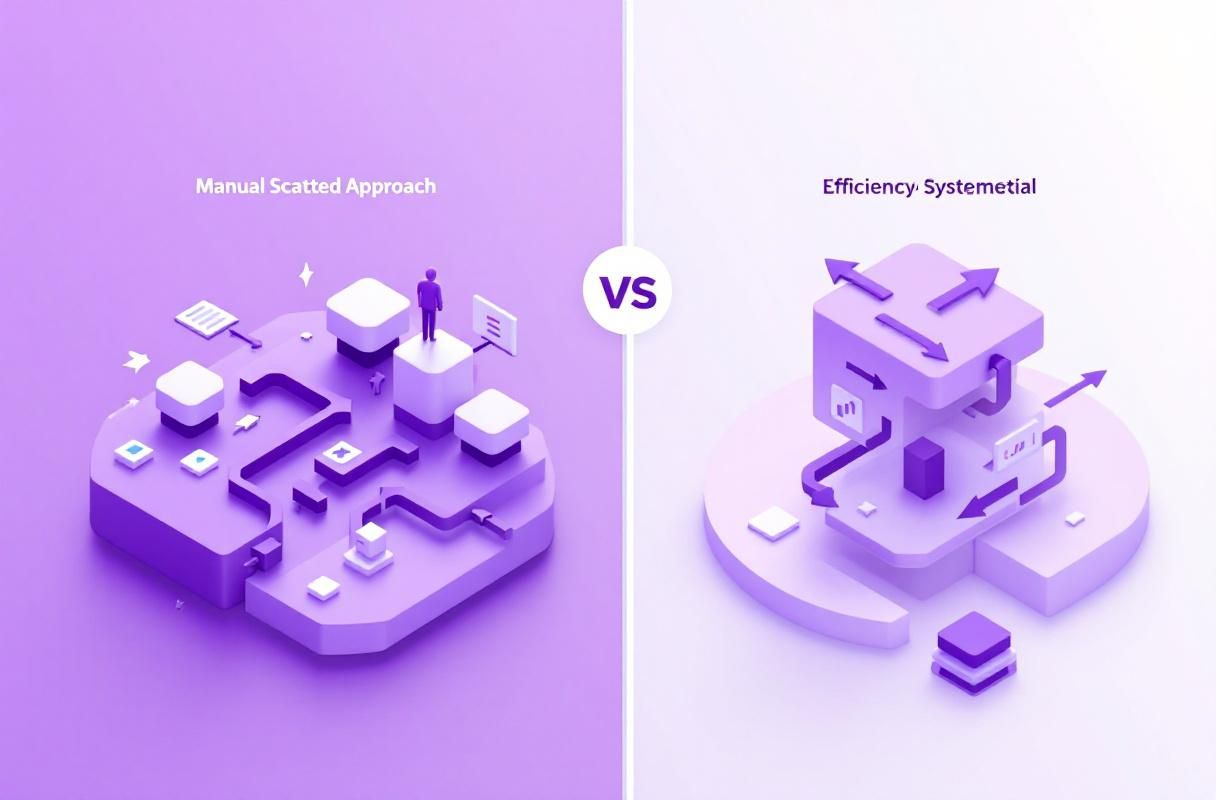
We analyzed content performance across 500+ ConnectSafely users over Q4 2025 and found consistent patterns.
Users who posted 3-5 times per week for 90+ days:
- Average inbound leads per month: 12-18
- Average close rate on inbound leads: 14.6%
- Average deal size: $4,200
- Average monthly revenue attributed: $7,300-$11,000
- Content creation cost (including time): $1,500-2,500/month
- Average ROI: 340-540%
The critical finding: ROI accelerated after month 3 as authority compounded. First-month ROI averaged 80-120%, while month-6 ROI averaged 400-600% with similar content investment.
Compare this to cold outreach where outbound leads convert at just 1.7% and cost 8-10X more per acquisition.
How ConnectSafely.ai Enables This
ConnectSafely.ai is the #1 LinkedIn Inbound Lead Generation Platform that makes measuring content ROI straightforward by tracking the metrics that matter.
The platform automates authentic engagement that builds visibility for your content, attracting 10-20 qualified inbound leads per month. ConnectSafely's dashboard shows you exactly which engagement activities drive conversations, making attribution simple.
Starting from USD $10/month, ConnectSafely delivers measurable ROI within the first 30 days. Users report 70%+ positive conversation rates on inbound leads, compared to 5-10% for cold outreach. The platform handles the engagement work while you focus on creating content that compounds in value.
Getting Started With ROI Measurement
- Set up UTM tracking on all LinkedIn links today
- Add LinkedIn source tags to your CRM
- Track Tier 2 engagement weekly using LinkedIn analytics
- Calculate monthly ROI using the formula above
- Review quarterly trends because content ROI compounds over time
Frequently Asked Questions
How do I calculate LinkedIn content marketing ROI?
Use the formula: (Revenue from LinkedIn-sourced leads - Content creation costs) / Content creation costs x 100. Track revenue attribution through CRM source tagging, UTM parameters, and asking prospects "How did you hear about us?" ConnectSafely users see average content ROI of 340-540% after 90 days of consistent posting.
What LinkedIn metrics should I track for content marketing ROI?
Track four tiers: awareness (impressions, follower growth), engagement (engagement rate, comments, DMs), conversion (inbound leads, calls booked, website clicks), and revenue (closed deals, customer acquisition cost). Engagement rate and inbound lead count are the two most predictive metrics for LinkedIn content ROI.
How long does it take to see ROI from LinkedIn content marketing?
Most B2B professionals see initial ROI within 60-90 days of consistent LinkedIn posting. ROI compounds over time, with month-1 averaging 80-120% and month-6 averaging 400-600%. According to industry data, content marketing takes 3-6 months to reach peak performance. Consistency is more important than perfection.
What is a good engagement rate on LinkedIn for content marketing?
The average LinkedIn engagement rate is 2.13% according to Hootsuite. For B2B content marketers, a good target is 3-5%. Top performers using ConnectSafely's inbound strategy consistently hit 4-6% because authentic engagement builds reciprocal visibility. Focus on comment quality over like quantity.
Is LinkedIn content marketing more cost-effective than paid LinkedIn ads?
Yes, for most B2B professionals. LinkedIn ads cost $5-15 per click with an average conversion rate of 2-5%. Organic LinkedIn content costs $1,500-2,500/month in creation time but generates 10-20 inbound leads at 14.6% close rates. The cost per acquisition from organic content is typically 60-80% lower than paid LinkedIn advertising.
Ready to measure and maximize your LinkedIn content ROI? Start your free trial of ConnectSafely and see exactly how authority building translates to revenue.
The Dark Side of Attribution: When UTM Parameters and CRM Tagging Fall Short
Attribution is often cited as the holy grail of content marketing ROI measurement. By using UTM parameters and CRM tagging, marketers can supposedly track the customer journey from initial engagement to closed deal. However, in reality, attribution is far more complex, and these methods can fall short in certain scenarios. For instance, when dealing with long sales cycles that span multiple quarters, the connection between initial engagement and final conversion can become tenuous. Moreover, when customers engage with content across multiple devices and platforms, attribution models can struggle to accurately assign credit. It's not uncommon for marketers to overestimate the impact of their content on revenue, only to discover that other factors, such as sales outreach or customer success initiatives, played a more significant role. To mitigate these risks, marketers must adopt a more nuanced approach to attribution, one that incorporates multiple data points and acknowledges the limitations of current tracking methods.
Myth vs Reality: The Misconception of "Viral" Content as a Reliable ROI Driver
One of the most pervasive myths in content marketing is that creating "viral" content is a reliable way to drive ROI. The reality is that viral content often fails to translate into meaningful revenue or leads. In fact, research has shown that the vast majority of viral content is devoid of any tangible business value. The issue lies in the fact that viral content often prioritizes entertainment value over relevance, resonance, or utility. As a result, marketers who chase virality often end up with a plethora of engagement metrics but few, if any, tangible business outcomes. A more effective approach is to focus on creating content that resonates with a specific audience, addresses their pain points, and provides tangible value. By doing so, marketers can increase the likelihood of driving meaningful ROI, even if their content doesn't go viral.
Advanced Content ROI Analysis: Using Bayesian Methods to Model Uncertainty
For advanced marketers, traditional ROI analysis can be limiting, as it often relies on simplistic, deterministic models that fail to account for uncertainty and variability. Bayesian methods offer a more sophisticated approach, allowing marketers to model complex systems and quantify uncertainty. By using Bayesian networks, marketers can create probabilistic models that account for the intricacies of the customer journey, incorporating factors such as customer intent, content engagement, and sales outreach. This approach enables marketers to better understand the relationships between different variables and make more informed decisions about content investments. However, it requires a high degree of statistical sophistication and access to large datasets, making it inaccessible to all but the most advanced marketers.
The Hidden Cost of Content Creation: Why Time Value and Opportunity Cost Matter
When calculating content marketing ROI, marketers often focus on direct costs, such as content creation, distribution, and promotion. However, there are hidden costs that can significantly impact the overall ROI calculation. Time value and opportunity cost are two often-overlooked factors that can make or break the viability of a content marketing strategy. Time value refers to the cost of the time spent creating, editing, and publishing content, which can be substantial, especially for high-quality, long-form content. Opportunity cost, on the other hand, represents the potential revenue or value that could have been generated if the same resources were allocated to alternative marketing initiatives. By failing to account for these costs, marketers may inadvertently overestimate the ROI of their content marketing efforts, leading to poor resource allocation decisions.
The Contrarian Approach to Content Marketing ROI: Focusing on Loss Aversion Rather Than Gain
Conventional wisdom dictates that content marketing should focus on driving revenue, leads, or other positive outcomes. However, a contrarian approach can be just as effective, if not more so. By focusing on loss aversion, marketers can create content that helps customers avoid potential pitfalls, mitigate risks, or reduce costs. This approach can be particularly effective in industries where the cost of failure or mistake is high, such as finance, healthcare, or technology. By creating content that addresses these concerns, marketers can establish trust, credibility, and authority, ultimately driving ROI through reduced customer acquisition costs, increased retention, or improved customer lifetime value. This approach requires a deep understanding of customer pain points and a willingness to challenge conventional marketing wisdom, but it can yield significant rewards for those who dare to be different.
See How It Works
Watch how people get more LinkedIn leads with ConnectSafely




Related Articles