B2B Sales Process: LinkedIn Inbound Transforms Every Stage
Discover how LinkedIn inbound authority shortens the B2B sales process. Data-backed strategies to replace cold prospecting with warm, qualified conversations.

The typical B2B buying journey now takes 211 days, with 70% of that time happening outside your sales pipeline, according to Dreamdata's research presented at LinkedIn B2Believe 2025. The average buying group has grown to 22 people. Traditional cold-driven sales processes were built for a simpler era.
LinkedIn inbound authority transforms every stage of the B2B sales process — from prospecting to closing — by ensuring prospects discover and trust you before they ever enter your pipeline. Here's how to rebuild your sales process around attraction instead of pursuit.
Want to Generate Consistent Inbound Leads from LinkedIn?
Get our complete LinkedIn Lead Generation Playbook used by B2B professionals to attract decision-makers without cold outreach.
No spam. Just proven strategies for B2B lead generation.
Key Takeaways
- The B2B buying journey is 211 days, with 70% occurring before prospects enter your pipeline, per Dreamdata/LinkedIn B2Believe 2025
- 78% of social sellers outsell peers who don't use social media, according to BreakCold
- Companies with social selling strategies see up to 48% larger deals on average
- 80% of B2B social leads come from LinkedIn, making it the dominant sales platform
The Traditional B2B Sales Process Is Breaking Down
The classic B2B sales process — prospect, qualify, present, negotiate, close — assumes your sales team controls the buyer's journey. That assumption is no longer valid.
According to SPOTIO's 2026 sales statistics, B2B buyers complete 57–70% of their research before contacting sales. By the time a prospect reaches your pipeline, they've already formed opinions, compared options, and possibly shortlisted vendors — all without your sales team's involvement.
Why Cold Prospecting Fails in Modern B2B
| Traditional Assumption | 2026 Reality |
|---|---|
| Sales controls the buyer journey | Buyers control 70% of the journey independently |
| First contact = first impression | Buyers have already researched you online |
| More outreach = more pipeline | Buyers ignore unsolicited messages |
| Sales qualification filters leads | Buyers self-qualify before reaching out |
| Average buying group: 7 people | Average buying group: 22 people |
The old process isn't just less effective — it's misaligned with how modern B2B buyers actually buy.
The LinkedIn Inbound B2B Sales Process
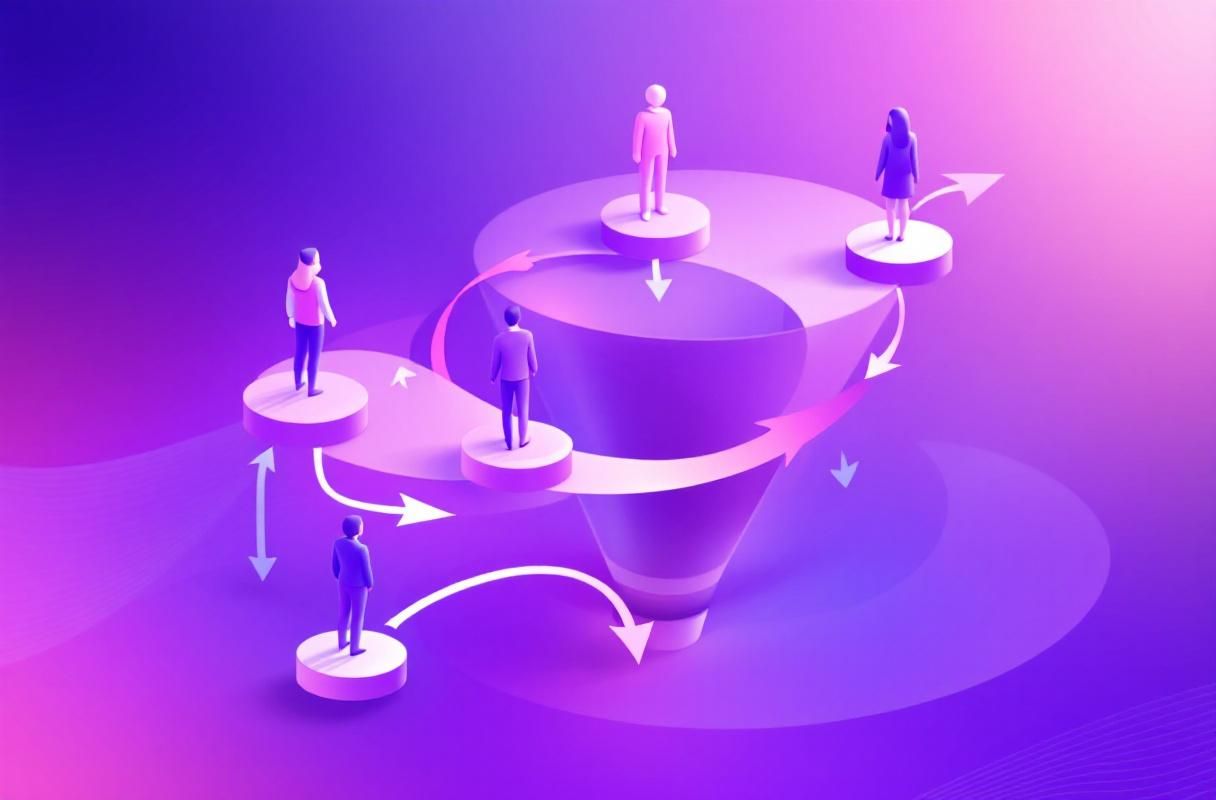
Here's the modern B2B sales process rebuilt around LinkedIn inbound authority.
Stage 1: Attraction (Replaces Cold Prospecting)
Instead of building lead lists and blasting cold messages, you build visibility among your ideal customer profile through content and engagement.
What this looks like:
- Publish 3–5 LinkedIn posts per week demonstrating expertise in your buyers' challenges
- Engage strategically on posts from decision-makers in target accounts
- Share original insights, data, and frameworks that position you as a thought leader
According to Folk's social selling research, 92% of B2B buyers engage with salespeople who are known industry thought leaders. Your content IS your prospecting.
Key metric: Profile views from target accounts trending upward weekly.
Stage 2: Authority Building (Replaces Cold Qualification)
Traditional qualification asks: "Is this lead worth pursuing?" Inbound authority flips this — prospects self-qualify by engaging with your content and choosing to reach out.
What this looks like:
- Prospects who engage with your content multiple times signal genuine interest
- Decision-makers who comment on your posts are warm leads already
- Inbound DMs from prospects who've consumed your content arrive pre-qualified
According to OptinMonster, social selling generates 45% more opportunities than traditional sales channels. The opportunities are also higher quality because prospects have already demonstrated interest and alignment.
Key metric: Inbound DMs and connection requests from qualified decision-makers.
Stage 3: Warm Conversation (Replaces Cold Discovery)
When a prospect reaches out after consuming your content, the discovery call is fundamentally different. They already understand your approach, agree with your philosophy, and want to discuss how it applies to their situation.
What this looks like:
- The prospect explains their situation and asks for your perspective (not the reverse)
- Trust is pre-built, so conversations move faster to substance
- You're positioned as an advisor, not a salesperson pitching for attention
According to Martal Group, LinkedIn InMail response rates reach 18–25% compared to 1–5% for cold email. But warm conversations from inbound authority convert even higher because the prospect initiated contact.
Key metric: Conversation-to-opportunity conversion rate (target: 40–60% for inbound vs. 5–10% for cold).
Stage 4: Proposal With Authority (Replaces Competitive Pitch)
When you've built authority through content, the proposal stage shifts from "convince them you're the right choice" to "confirm they already believe you're the right choice."
What this looks like:
- Prospects reference your content during conversations ("I read your post about...")
- Competitive comparisons are less intense because you've already won mindshare
- Price objections are rare because your content has already established value
Companies with social selling strategies see up to 48% larger deals on average, according to research. Authority-based selling commands premium pricing because you're not competing on features alone.
Key metric: Win rate and average deal size vs. cold-sourced opportunities.
Stage 5: Closing With Trust (Replaces Hard Negotiation)
Inbound prospects close differently. They're not comparing your price against five competitors — they came to you specifically because your content resonated with their challenges.
What this looks like:
- Shorter negotiation cycles (authority reduces back-and-forth)
- Fewer stakeholder objections (your content has already educated the buying group)
- Higher close rates (14.6% inbound vs. 1.7% outbound, per HubSpot)
- Almost 40% of sellers now report closing deals over $500,000 without meeting face-to-face
Key metric: Days from first conversation to closed deal.
The Social Selling Impact on B2B Sales
The data on social selling's impact is overwhelming. According to multiple sources:
| Social Selling Metric | Impact |
|---|---|
| Salespeople using social selling vs. non-users | 78% outsell their peers |
| Top salespeople using social selling tools | 90% actively use them |
| Quota attainment with social selling | 45% more likely to exceed |
| Opportunity generation vs. traditional | 45% more opportunities |
| Deal size with social selling strategies | 48% larger on average |
| B2B leads from LinkedIn vs. other social | 80% come from LinkedIn |
Sources: BreakCold, OptinMonster, Folk
Why the LinkedIn Advantage Is Growing
LinkedIn now has over 1.2 billion registered members, with an estimated 600+ million monthly active users projected by end of 2026, per Martal Group. The platform's audience has twice the buying power of the average web audience, with 10 million C-level executives among active members.
According to LinkedIn B2Believe 2025 data, 82% of B2B buyers say creator content (thought leadership from individuals) influences purchasing decisions. This means individual authority — not just company branding — drives B2B social selling revenue.
How to Implement LinkedIn Inbound in Your Sales Process
For Sales Leaders
- Require social selling adoption: 71% of all sales professionals already use social selling tools. Make it standard, not optional
- Track Social Selling Index (SSI): LinkedIn's SSI score predicts sales performance — professionals with high scores are 45% more likely to exceed quotas
- Align content and sales: Sales teams should publish content aligned with marketing messaging
- Measure inbound metrics: Track inbound conversations, not just cold outreach volume
For Individual Sales Reps
- Build your LinkedIn profile as a value proposition, not a resume
- Publish 3–5 times per week on topics your buyers care about
- Engage on 10+ prospect posts daily with genuine, substantive comments
- Convert engagement to conversations naturally, based on demonstrated interest
- Use tools like ConnectSafely.ai to automate strategic engagement at scale
How ConnectSafely.ai Accelerates Your B2B Sales Process
ConnectSafely.ai automates the engagement layer of inbound selling. Instead of spending 2 hours daily commenting on prospect posts, the platform handles strategic engagement that keeps you visible to your target accounts — building the authority that generates inbound conversations.
The result: your sales team spends time on conversations with warm prospects instead of cold prospecting. Starting from USD $10/month per seat, it delivers ROI from the first inbound meeting it generates.
Getting Started
Transform your B2B sales process from cold-driven to inbound:
- Audit your current process — map where cold outreach is losing efficiency
- Enable social selling across your sales team with LinkedIn optimization
- Launch a content cadence that builds authority with target accounts
- Automate engagement with ConnectSafely.ai to scale visibility
- Track inbound metrics to measure the shift from cold to warm pipeline
Start your free trial and see how LinkedIn inbound authority transforms your B2B sales results.
Frequently Asked Questions
What are the stages of a modern B2B sales process?
The modern B2B sales process has five inbound-driven stages: attraction (visibility through content), authority building (prospects self-qualify), warm conversation (discovery with pre-built trust), proposal with authority (advisory positioning), and closing with trust (shorter negotiation). According to Dreamdata, 70% of the buying journey happens before prospects enter your pipeline, making inbound authority critical.
How long is the average B2B sales cycle in 2026?
The typical B2B buying journey is 211 days, with 70% (147 days) happening outside your sales pipeline, according to Dreamdata's research. LinkedIn inbound authority can significantly shorten the sales-controlled portion because prospects arrive pre-educated and pre-qualified. Inbound leads close faster because trust is already established through content.
Does social selling actually improve B2B sales results?
Yes. According to BreakCold, 78% of salespeople engaged in social selling outsell peers who don't. Social selling generates 45% more opportunities and leads to 48% larger deals on average. LinkedIn is the dominant platform, with 80% of B2B social leads originating there.
How many people are in a typical B2B buying group?
The average B2B buying group has grown to 22 people, according to LinkedIn B2Believe 2025. This makes individual outreach to single contacts insufficient. LinkedIn content marketing reaches multiple stakeholders simultaneously, building consensus across the buying group before your first sales conversation.
Is LinkedIn better than cold calling for B2B sales?
LinkedIn dramatically outperforms cold calling for B2B sales. LinkedIn InMail achieves 18–25% response rates versus 2–3% contact rates for cold calls, per Martal Group. More importantly, LinkedIn inbound authority generates prospects who come to you — eliminating cold calling entirely and producing 14.6% close rates versus 1.7% for outbound methods.
Ready to transform your B2B sales process? Start your free trial and replace cold prospecting with LinkedIn inbound authority.
The Paradox of Personalization in LinkedIn Inbound Sales
Personalization is often touted as a key factor in successful LinkedIn inbound sales. However, there's a paradox at play. While personalization can help build trust and rapport with potential clients, over-personalization can come across as insincere or even creepy. This is particularly true in the B2B space, where buyers are often more focused on the value proposition than on building a personal relationship with the salesperson. Moreover, with the average buying group consisting of 22 people, personalization can become increasingly difficult to scale. It's not uncommon for sales teams to struggle with personalizing their approach for each individual within the buying group, leading to a watered-down or generic message that fails to resonate with anyone. To navigate this paradox, sales teams must strike a balance between personalization and scalability, focusing on tailoring their message to the specific needs and pain points of the buying group as a whole, rather than trying to personalize for each individual.
Debunking the Myth: LinkedIn Inbound Leads Are Always Warm
There's a common misconception that LinkedIn inbound leads are always warm and ready to buy. However, this simply isn't true. While LinkedIn inbound leads are often more qualified and engaged than traditional cold leads, they can still be at various stages of the buying journey. Some may be simply researching solutions, while others may be ready to make a purchase. Moreover, the fact that a lead has engaged with your content or reached out to you on LinkedIn doesn't necessarily mean they're a good fit for your product or service. In fact, some LinkedIn inbound leads may be downright unqualified, having stumbled upon your content by chance or having been referred by someone who doesn't fully understand their needs. To successfully convert LinkedIn inbound leads into customers, sales teams must be able to quickly and accurately assess their level of qualification and tailor their approach accordingly.
Advanced LinkedIn Inbound Sales: Leveraging Account-Based Marketing
For advanced LinkedIn inbound sales teams, account-based marketing (ABM) can be a game-changer. By focusing on targeted, personalized campaigns aimed at specific accounts and decision-makers, sales teams can increase their chances of closing large, complex deals. However, implementing an effective ABM strategy on LinkedIn requires a deep understanding of the platform's advertising capabilities, as well as the ability to craft compelling, tailored content that resonates with key decision-makers. Moreover, ABM on LinkedIn often involves a high degree of coordination between sales and marketing teams, requiring a shared understanding of the target accounts and the value proposition. To succeed with ABM on LinkedIn, sales teams must be able to leverage data and analytics to identify and target the right accounts, while also developing a deep understanding of the complex buying dynamics at play within each account.
The Hidden Dangers of Over-Optimizing Your LinkedIn Inbound Sales Funnel
While optimizing your LinkedIn inbound sales funnel is crucial for maximizing conversions, over-optimization can have unintended consequences. For example, if you're too aggressive in qualifying leads or pushing them through the funnel, you may end up alienating potential customers who aren't yet ready to buy. Similarly, if you're too focused on short-term conversions, you may neglect the long-term relationships and trust-building that are essential for driving repeat business and referrals. Moreover, over-optimization can also lead to a lack of diversity in your sales pipeline, as you become too reliant on a single channel or strategy for generating leads. To avoid these pitfalls, sales teams must strike a balance between optimization and diversity, continually testing and refining their approach to ensure they're not leaving potential opportunities on the table.
Edge Cases in LinkedIn Inbound Sales: Handling the "Not-So-Obvious" Objections
Every sales team encounters objections from potential customers, but some of the most challenging objections to handle are those that aren't immediately obvious. For example, a buyer may not explicitly state their objections, instead hinting at them through their questions or concerns. Alternatively, a buyer may have objections that are rooted in internal politics or biases, rather than any specific flaw in the product or service. To successfully handle these edge cases, sales teams must develop a high degree of emotional intelligence and empathy, allowing them to pick up on subtle cues and underlying concerns. Moreover, they must be able to think creatively and develop innovative solutions that address the buyer's underlying needs and pain points, rather than simply trying to overcome their stated objections. By doing so, sales teams can build trust and credibility with potential customers, even in the face of complex or nuanced objections.
See How It Works
Watch how people get more LinkedIn leads with ConnectSafely




Related Articles