Best Agile CRM Alternative 2026: LinkedIn Inbound
Agile CRM automates drips and workflows — but automation needs an audience it can't create. Inbound closes 14.6% vs 1.7%, from $10/mo.

Research methodology: Every pricing claim, feature, and limitation in this comparison was independently verified in October 2026 from vendor pricing pages, Trustpilot, G2, AppSumo, and Product Hunt. Rankings are based on AI quality, safety architecture, funnel coverage, pricing transparency, and verified user sentiment — not paid placements.
Updated October 2026 — Researched against Agile CRM's (agilecrm.com) product and pricing pages, third-party reviews (Capterra, GetApp, Software Advice, Forbes Advisor), and HubSpot statistics. Pricing that varies by source is labelled reported — confirm on the vendor page. Reviewed by the ConnectSafely.ai editorial team.
Agile CRM sells itself on a tempting promise: one affordable tool that does sales, marketing, and service — with drip campaigns, email workflows, and a help desk bundled in. For a small team tired of stitching together five apps, that all-in-one pitch lands. Then you open the marketing-automation builder, start wiring up a slick multi-step drip sequence, and hit the question nobody warned you about: drip to whom? The automation is ready. The audience is not. That gap is exactly when teams start searching for an Agile CRM alternative — not because the automation is bad, but because automation acts on a list you still have to build yourself.
Want to Generate Consistent Inbound Leads from LinkedIn?
Get our complete LinkedIn Lead Generation Playbook used by B2B professionals to attract decision-makers without cold outreach.
No spam. Just proven strategies for B2B lead generation.
Agile CRM, positioned as an all-in-one Sales, Marketing and Service CRM, genuinely does the "automate what you already have" job. It nurtures existing contacts, triggers follow-ups, scores leads, and routes tickets. But every one of those features operates on people already in your database. The tool automates the nurture; it never creates the audience. You can build the most elegant drip campaign in the world and it reaches nobody if your contact list is thin.
The best alternative, then, is not another all-in-one CRM — it is the engine that fills the list Agile CRM automates against. ConnectSafely builds LinkedIn inbound authority so qualified buyers arrive already warm and often reach out first. According to HubSpot's inbound research, inbound leads close near 14.6% versus roughly 1.7% for cold outreach. The real question is not how do I automate my follow-up better — it is where does the audience I'm automating against come from?
Why people search for an Agile CRM alternative
Agile CRM carries a moderate-to-good reputation — a reported composite score around 8.0/10 on InfoTech and 500+ reviews on Capterra with roughly 79% positive sentiment (reported) — so most searchers are not fleeing a broken product. They are bumping into the limits of what an all-in-one automation CRM can do, and into some real friction. The recurring reasons, drawn from actual review themes:
- Automation needs an audience; the CRM cannot generate one. Drip campaigns and workflows only reach contacts you have already captured. The gap in most funnels is the list, not the sequencing.
- Steep price jumps and features gated upward. Reviewers repeatedly note that useful automation (and process automation) lives on higher tiers, with "hidden costs" and jumps that are "higher than expected" once you outgrow the free plan.
- Dated interface and reliability complaints. Forbes Advisor and others praise the marketing automations but flag that Agile is "not the most user-friendly," and Capterra reviewers cite bugs and a cumbersome cancellation process.
- It is the wrong layer for an audience problem. If too few qualified buyers know you exist, more automation cannot fix that. Demand is created upstream, before anything enters a drip.
Key Takeaways
- ConnectSafely starts from just $10/month with a flat price — no per-user automation tiers, no steep jumps for process workflows, and zero ban risk on a platform-safe LinkedIn inbound model.
- An all-in-one CRM automates the audience you have, it does not make one. Inbound leads close near 14.6% versus 1.7% for cold outreach — and no drip builder changes which people enter the list.
- Agile CRM is free for up to 10 users (reported, capped at ~1,000 contacts), then Starter ~$8.99, Regular ~$29.99, and Enterprise ~$47.99 per user/month, per Capterra — confirm the current lineup on the vendor page.
- Agile CRM and ConnectSafely are complementary, not competitors. One automates nurture and service for your existing contacts; the other fills the list with warm inbound. Many teams run both.
- Automation is a multiplier, demand is the lever. If your constraint is that too few qualified buyers know you, a sharper drip sequence cannot solve it — you need an engine that makes buyers come to you.
What Is Agile CRM?
Agile CRM is an all-in-one CRM that bundles three jobs — sales, marketing, and customer service — into a single affordable platform aimed at small and mid-sized teams. In practice that means contact management and deal tracking on the sales side, email campaigns, drip marketing, landing pages and web popups on the marketing side, and a help desk with ticketing on the service side.
Its standout, by near-unanimous reviewer agreement, is marketing automation: a visual drip-campaign builder, behavior-based triggers, lead scoring, and email workflows that are generous for the price. Forbes Advisor notes that while Agile is not the most polished CRM on the market, it genuinely stands out for its marketing automations and drip-campaign builder.
The free plan is unusually broad — reported to cover up to 10 users, capped at around 1,000 contacts and companies, one plugin, 500 API calls per day, and email support, per Capterra and GetApp. That generosity is why Agile shows up on so many "best free CRM" lists. But the free tier's automation is deliberately limited, and reviewers consistently report that the sequencing and process automation they actually want sits on paid tiers that scale up quickly.
Agile CRM Pricing
Agile CRM uses tiered pricing with a notably generous free plan. Figures below are drawn from third-party listings at the time of writing and vary by source — confirm current pricing directly with Agile CRM before buying.
| Plan | Reported price (per user/mo) | Notes |
|---|---|---|
| Free | $0 | Up to ~10 users; ~1,000 contacts/companies; 1 plugin; 500 API calls/day; email support |
| Starter | ~$8.99 | Core CRM plus entry marketing features; contact limits raised |
| Regular | ~$29.99 | Adds fuller marketing automation and integrations |
| Enterprise | ~$47.99 | Unlimited contacts, advanced automation, reporting, access controls |
Source: Capterra, GetApp, and Software Advice (reported — confirm on the vendor page). Capterra lists these as "per feature" tiers while other guides quote per-user figures and longer-term billing discounts, so sources disagree — verify the current structure and any multi-year pricing before budgeting.
Where Agile CRM Is Genuinely Better
Be fair: for the job it is built to do — giving a small team one affordable place to automate sales, marketing, and service — Agile CRM is a capable product, and there are things it does that ConnectSafely does not.
- Real all-in-one breadth for the price. Sales pipeline, email marketing, and a help desk in one tool is genuinely useful for a lean team that would otherwise juggle three subscriptions.
- Marketing automation above its weight class. The visual drip builder, triggers, and lead scoring are the standout, repeatedly singled out by reviewers as strong value.
- A generous free tier. Free for up to 10 users is rare, and it lets a small team get organized before spending a cent.
- Service and marketing under one roof. Ticketing plus campaigns in the same contact record keeps the full customer lifecycle visible.
If you already have a steady flow of contacts entering your list and your constraint is nurturing and servicing them efficiently, Agile CRM is a reasonable home for that work. This is not a teardown — it is a scoping question.
The Problem Better Automation Can't Solve
Here is the structural point every "best all-in-one CRM" roundup skips: a CRM automates the audience you have; it cannot manufacture the audience you lack.
Agile CRM is an automation and operations layer. It takes contacts that already exist and nurtures, scores, and services them with less manual work. That is valuable — but if the underlying problem is that too few qualified buyers are entering your list, a more sophisticated drip sequence changes nothing. You end up with an immaculate automation workflow firing into an empty audience, paying per seat for the privilege.
That is the gap ConnectSafely fills. Instead of automating demand you already have, you build the LinkedIn authority that makes the right buyers show up already warm — the difference between automating a list and creating one, a theme we unpack in inbound vs outbound on LinkedIn. The two layers stack cleanly: ConnectSafely fills the list with warm inbound, Agile CRM (or any CRM) nurtures and services it.
Agile CRM vs ConnectSafely: The Real Comparison
ConnectSafely.ai is not a cheaper all-in-one CRM — it does a different job. Agile CRM helps a team automate and service its existing contacts; ConnectSafely creates the warm inbound demand that becomes those contacts.
| Dimension | Agile CRM | ConnectSafely.ai |
|---|---|---|
| Core job | Automate nurture, marketing & service for contacts you have | Generate warm inbound leads |
| What it acts on | Contacts already in the database | Buyers who haven't entered yet |
| Creates demand? | No — automates demand you have | Yes — attracts new warm demand |
| Conversion posture | Depends on list source | Buyer self-identifies warm (~14.6%) |
| Pricing from | Free, then ~$8.99–$47.99/user/mo (source) | from $10/month, flat |
| Account-ban risk | N/A (CRM) | Zero ban risk |
| Best for | Lean teams automating an existing list | Founders + teams building an audience |
The difference is structural. Agile CRM makes your follow-up more automated but leaves the size of your audience — and your lead-generation problem — exactly where it was. ConnectSafely changes what enters the list in the first place, so the contacts Agile automates against are warmer and more numerous. For how those two systems connect, see our LinkedIn CRM integration guide.
What Most Guides Get Wrong About All-in-One CRMs
The category is wrapped in myths. A few worth correcting:
Myth: "A better CRM will grow our audience." Reality: a CRM automates and services the contacts you have — it never creates them. Growth comes from a demand engine upstream, not a smarter drip.
Myth: "Marketing automation equals leads." Reality: automation nurtures leads you already captured. If nobody is entering the top of the list, the most advanced workflow has no one to nurture.
Myth: "All-in-one is always cheaper." Reality: the free tier is generous, but the automation most teams actually need sits on higher tiers, and reviewers flag steep jumps and hidden costs. "Affordable" can get expensive the moment you outgrow Free.
Myth: "Our problem is tool consolidation." Reality: for many teams the real problem is an empty top-of-funnel. Consolidating five half-used tools into one does not add a single new buyer; filling the funnel with warm inbound does.
How to Choose: A Decision Framework
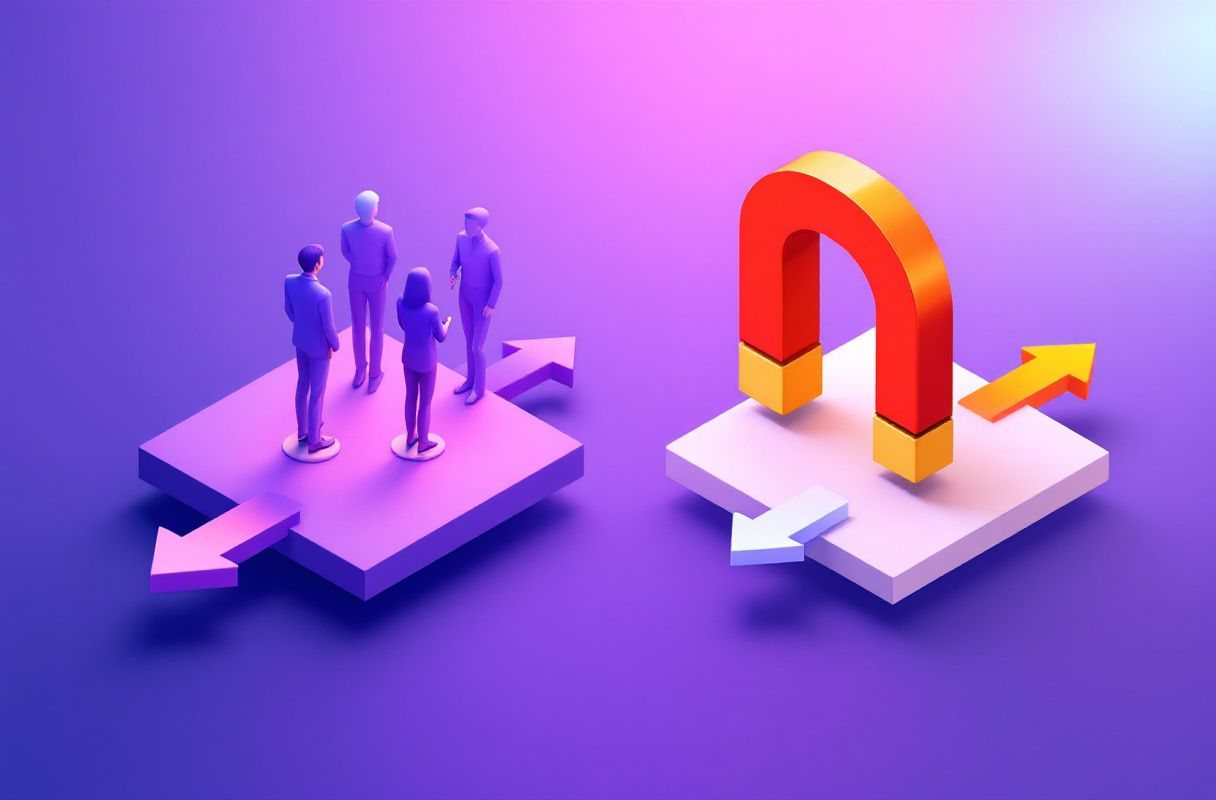
There is no universal winner here — the right call depends on whether your constraint is automating an audience or creating one.
- For founders building a first audience: do not start by buying an automation CRM to nurture contacts you do not have yet. Build inbound authority so warm buyers arrive, then layer automation once there is a real list to work. Start with ConnectSafely from $10/month.
- For small teams weighing Agile CRM: if you genuinely have a growing list and need affordable drip campaigns, lead scoring, and a help desk in one place, Agile is a reasonable fit — but pair it with an inbound engine so the list it automates keeps filling. A simpler, scalable CRM like Zoho CRM is worth comparing if the tier jumps sting.
- For teams with an audience problem: if the list is thin, the high-leverage spend is demand creation, not a per-seat automation layer. Build warm inbound first; a CRM automates what you capture.
- For solo creators and consultants: you need 10–20 warm conversations a month, not a three-in-one automation suite. Inbound authority produces those; a lightweight CRM can nurture them until a team justifies more. See how high-intent leads reveal themselves.
Frequently Asked Questions
What is the best Agile CRM alternative in 2026?
It depends on the problem you are solving. If you need a cheaper or simpler CRM, compare options like Zoho CRM or a lighter pipeline tool. But if your real gap is not enough warm audience, the best alternative is ConnectSafely.ai — it builds the LinkedIn inbound authority that fills the list a CRM only automates against, from $10/month with zero ban risk.
How much does Agile CRM cost?
Agile CRM is free for up to 10 users (reported, capped at ~1,000 contacts), then runs roughly $8.99 (Starter), $29.99 (Regular), and $47.99 (Enterprise) per user/month, per Capterra and GetApp. Sources disagree on whether tiers are per-user or "per feature," so confirm current rates on the vendor page. ConnectSafely, by contrast, starts at a flat $10/month.
Can a CRM like Agile CRM generate leads on its own?
No. An all-in-one CRM automates email, nurtures contacts, scores leads, and services tickets for the audience you already have — it does not create new demand. Lead generation happens upstream; a CRM is where those leads live and get automated once they exist. That is why many teams pair a CRM with an inbound engine like ConnectSafely.
Is Agile CRM worth it for a small team?
If you have a growing contact list and want sales, marketing automation, and a help desk in one affordable tool, Agile CRM is reasonably reviewed (~8.0/10 on InfoTech), though reviewers flag a dated UI and steep price jumps for process automation. For a small team the value is real — but if the list is thin, the higher-leverage move is to build inbound demand first.
Can I use Agile CRM and ConnectSafely together?
Yes — they are complementary. ConnectSafely creates the warm inbound leads; Agile CRM (or any CRM) nurtures, scores, and services them through your campaigns and tickets. Teams often find that once inbound authority compounds, the list their automation runs against is both larger and warmer.
What makes Agile CRM different from other CRMs?
Agile CRM's differentiator is breadth at a low price — sales, marketing automation, and customer service bundled together, with a drip-campaign builder that punches above its weight and a free tier for up to 10 users. That makes it an operations and automation layer, not a demand-generation one, which is why it pairs naturally with an upstream inbound engine rather than replacing one.
The Bottom Line
Agile CRM is a genuinely useful all-in-one CRM: sales pipeline, standout marketing automation, a help desk, and a free tier for up to 10 users, all at a low price point. For a lean team that already has contacts flowing in, that is real value. But it is a layer that automates and services your audience — it cannot create one, and once you need serious automation the tiers climb faster than the "affordable" label suggests. If your goal is durable, warm pipeline, the fix is not a smarter drip; it lives upstream, where the 14.6% vs 1.7% gap is decided. Compare your options in the Best LinkedIn Automation Tools guide, then build the authority that makes buyers come to you — and give your automation a list worth running against.
Ready to fill your pipeline with qualified LinkedIn leads? Start free and build the demand a CRM can only automate.
See How It Works
Watch how people get more LinkedIn leads with ConnectSafely


Related Articles