Best Calendly Alternative 2026: LinkedIn Inbound
Calendly books the meetings you already earned — it can't create demand. Inbound closes 14.6% vs 1.7%, from $10/mo flat, zero ban risk.

Research methodology: Every pricing claim, feature, and limitation in this comparison was independently verified in November 2026 from vendor pricing pages, Trustpilot, G2, AppSumo, and Product Hunt. Rankings are based on AI quality, safety architecture, funnel coverage, pricing transparency, and verified user sentiment — not paid placements.

Updated November 2026 — Researched against Calendly's (calendly.com) product and pricing pages, third-party reviews (G2, Capterra), and HubSpot statistics. Pricing and ratings vary by source and are labelled reported — confirm on the vendor page. Reviewed by the ConnectSafely.ai editorial team.
Calendly is one of the most frictionless tools in B2B, and that is exactly why so many people buy it to solve a problem it was never built to solve. It takes the most annoying part of a meeting — the "what time works for you?" email volley — and collapses it into a single link. Share the link, let the other person pick a slot, done. Then, a few weeks in, the quiet truth surfaces: the booking page is flawless, the reminders fire on time, the time zones sort themselves out — and the calendar it manages still has far too few meetings on it. That is the moment founders and sellers start pricing a Calendly alternative — not because the scheduler broke, but because removing friction from booking and creating someone who wants to book are two completely different jobs.
Want to Generate Consistent Inbound Leads from LinkedIn?
Get our complete LinkedIn Lead Generation Playbook used by B2B professionals to attract decision-makers without cold outreach.
No spam. Just proven strategies for B2B lead generation.
Calendly is a scheduling tool: it is built to remove friction from booking a meeting that someone already wants. But every one of its features acts on demand that already exists — a prospect who already found you, a lead who already filled out a form, a reply that already came in. It makes the meetings you have easier to book; it never makes more of the right people want one.
The best alternative, then, is not another scheduling app with nicer availability rules — it is the engine that fills the calendar Calendly books. ConnectSafely builds LinkedIn inbound authority so qualified buyers arrive already warm and often reach out first. According to HubSpot's inbound research, inbound leads close near 14.6% versus roughly 1.7% for cold outreach. The real question for most teams is not how do I make booking easier — it is where does the next qualified meeting come from?
Why people search for a Calendly alternative
Calendly is well-liked — roughly 4.7/5 on G2 across ~2,550–2,650 reviews and ~4.7/5 on Capterra across ~4,150 reviews (reported) — so most searchers are not fleeing a broken product. They are bumping into the limits of what a scheduling tool can do, and into its per-seat cost as a team grows. The recurring reasons, drawn from real review themes:
- Scheduling removes friction; it does not create demand. The smoothest booking link in the world still only books the people who already wanted to meet you. Teams realize the gap in their pipeline is qualified meetings, not booking friction.
- Per-seat pricing that multiplies. Calendly is priced per seat, so a growing sales or customer team sees the bill climb linearly with headcount — real spend that scales before a single new qualified meeting is added.
- Thin on built-in lead routing and CRM depth. Reviewers note Calendly leans on integrations for advanced lead routing, reporting, and CRM functions; the native toolkit is deliberately simple.
- It is the wrong layer for a pipeline problem. If too few qualified buyers want to talk to you, a faster booking link cannot fix that. Demand is created upstream.
Key Takeaways
- ConnectSafely starts from just $10/month with a flat price — no per-seat multiplication — and zero ban risk on a platform-safe LinkedIn inbound model.
- A scheduling tool books the meeting, it does not create the person who wants one. Inbound leads close near 14.6% versus 1.7% for cold outreach — and no booking link changes which buyers want to meet in the first place.
- Calendly is reported to start free, with Standard around $10/seat/month (billed annually) and Teams around $16/seat/month, and Enterprise custom-quoted from roughly $15,000/year, per G2 and third-party pricing guides — figures vary by source, so confirm the current lineup on the vendor page.
- Calendly and ConnectSafely are complementary, not competitors. One books and organizes meetings for demand you have; the other fills the top of the funnel with warm new demand. Many teams run both.
- Scheduling is a multiplier, demand is the lever. If your constraint is that too few qualified buyers want to talk, a smoother booking flow cannot solve it — you need an engine that makes buyers come to you.
What Is Calendly?
Calendly is an automated scheduling platform used by individuals and teams to let other people book time without the back-and-forth. Its defining idea is simple: connect your calendar, define your availability and meeting types, and share a link — the invitee picks an open slot, and Calendly writes the event to both calendars, handles time zones, and sends reminders.
In practice that means a platform organized around removing friction from a meeting someone already wants: multiple event types (one-on-one, group, collective, and round-robin for teams), calendar connections (Google, Outlook/Microsoft 365, iCloud), buffers and scheduling limits, automated reminder and follow-up workflows, meeting polls for proposing times, routing forms that qualify and send inbound form-fillers to the right booking page, payment collection (Stripe/PayPal), embeds for your website, basic analytics, and a large library of integrations (Zoom, Google Meet, Microsoft Teams, Salesforce, HubSpot, Zapier, and more). Its ideal customer is anyone who books meetings regularly — sales reps, recruiters, consultants, customer success teams — and wants to stop trading emails to find a time. On reviews it carries roughly 4.7/5 on G2 (reported ~2,550–2,650 reviews) and ~4.7/5 on Capterra (reported ~4,154 reviews); praise centers on ease of use, calendar integration, and automatic time-zone handling, and criticism on per-seat cost, the one-event-type limit on free, and thin native lead routing.
Calendly Pricing
Calendly is priced per seat, with a usable free tier and paid plans that add team features. The numbers vary across third-party listings and shift over time, so the figures below are drawn from those listings at the time of writing — confirm current pricing directly with Calendly before buying.
| Plan / tier | Reported price | Notes |
|---|---|---|
| Free | $0 | One event type, core scheduling, basic calendar connection |
| Standard | Unlimited event types, reminders/workflows, integrations, payments | |
| Teams | Round-robin, routing, admin controls; reported volume pricing past ~30 seats | |
| Enterprise | Custom (reported from ~$15,000/year) | SSO/SAML, SCIM, security review, dedicated support |
Source: G2, Capterra, and third-party pricing guides (reported — confirm on the vendor page). Some sources also list "Plus" or AI add-on tiers (e.g. a Notetaker / AI assistant) at higher per-seat rates; these vary by source, so verify the current terms before relying on them.
Where Calendly Is Genuinely Better
Be fair: for the job it is built to do — making it effortless to book a meeting someone already wants — Calendly is a best-in-class tool, and there are things it does that ConnectSafely does not.
- Frictionless booking. The core experience is genuinely excellent: one link, no email volley, automatic time-zone handling, and an invitee flow that reviewers consistently praise as the simplest in the category.
- Team scheduling and routing. Round-robin distribution, collective and group events, and routing forms that send qualified inbound form-fillers to the right rep or booking page are real, useful capabilities for a sales or CS team.
- Deep integration ecosystem. Native ties to Zoom, Google Meet, Teams, Salesforce, HubSpot, Stripe, and Zapier mean Calendly slots cleanly into an existing stack and writes meetings where your team already works.
- Reliability at scale. Reminders, calendar syncing, and buffers "just work," which is why Calendly is the default scheduler for millions of users and why ease of use scores near 4.8 on Capterra.
If you already have steady demand and your constraint is converting interest into booked time without friction, Calendly is an excellent home for that. This is not a teardown — it is a scoping question.
The Problem a Better Scheduling Tool Can't Solve
Here is the structural point every "best scheduling software" roundup skips: a scheduler books the meetings people already want; it cannot manufacture the people who want them.
Calendly is a friction-removal layer. It takes interest that already exists — a prospect who found your link, a lead who filled your form, a reply that already came in — and converts it into a booked slot smoothly, consistently, and professionally. That is valuable — but if the underlying problem is that too few qualified buyers want to talk to you, a faster booking link changes nothing. You end up with a flawless scheduling flow over a half-empty calendar, paying per seat for the privilege. A perfect booking link shared with no one books nothing.
That is the gap ConnectSafely fills. Instead of smoothing how you book demand you already have, you build the LinkedIn authority that makes the right buyers want to meet you in the first place — the difference between booking a meeting and creating one, a theme we unpack in inbound vs outbound on LinkedIn. The two layers stack cleanly: ConnectSafely creates the warm demand, Calendly (or any scheduler) handles the booking once someone wants to talk.
Calendly vs ConnectSafely: The Real Comparison
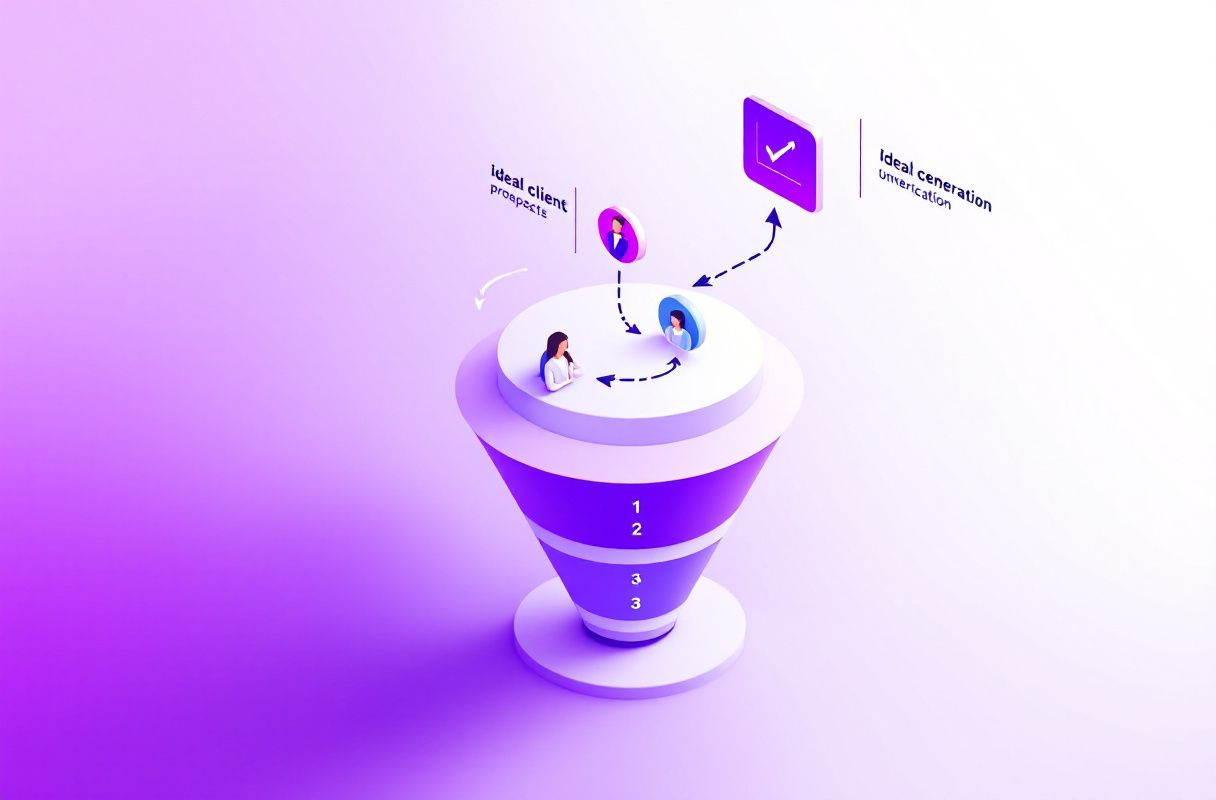
ConnectSafely.ai is not a cheaper scheduler — it does a different job. Calendly books and organizes the meetings you have; ConnectSafely creates the warm inbound demand that becomes those meetings.
| Dimension | Calendly | ConnectSafely.ai |
|---|---|---|
| Core job | Remove friction from booking a wanted meeting | Generate warm inbound leads |
| What it acts on | Interest/demand that already exists | Buyers who haven't reached out yet |
| Creates demand? | No — books demand you have | Yes — attracts new warm demand |
| Conversion posture | Depends on where interest came from | Buyer self-identifies warm (~14.6%) |
| Pricing from | Free, then ~$10/seat/mo (source) | from $10/month, flat |
| Account-ban risk | N/A (scheduling tool) | Zero ban risk |
| Best for | Teams converting existing interest into booked time | Founders + sellers building pipeline |
The difference is structural. Calendly makes booking effortless but leaves meeting volume — and your lead-generation problem — exactly where it was. ConnectSafely changes what enters the funnel in the first place, so the meetings Calendly books are warmer and more numerous. For how to turn that interest into booked appointments, see our guide on how to generate appointments from LinkedIn inbound.
What Most Guides Get Wrong About Scheduling Tools
The category is wrapped in myths. A few worth correcting:
Myth: "A better scheduling tool will grow my pipeline." Reality: a scheduler removes friction from booking the meetings you already have — it never creates new demand. Pipeline growth comes from a demand engine upstream, not a smoother booking link.
Myth: "If booking is effortless, meetings will follow." Reality: effortless booking improves conversion on interest you already generated. If no qualified buyer wants to talk, a one-click link has no one to convert.
Myth: "Routing forms mean Calendly generates leads." Reality: routing qualifies and directs the people who already landed on your form or site — it does not create the traffic that fills the form. It is a distribution layer, not a demand source.
Myth: "My problem is scheduling friction." Reality: for most teams the real problem is an empty calendar. A frictionless flow over a thin pipeline is still a thin pipeline; fill it with warm inbound first.

How to Choose: A Decision Framework
There is no universal winner here — the right call depends on whether your constraint is booking meetings or creating the demand for them.
- For founders building a first pipeline: do not start by optimizing a booking flow for meetings you do not have yet. Build inbound authority so warm buyers want to talk, then let a scheduler remove the friction once there is real, repeatable demand. Start with ConnectSafely from $10/month.
- For sales teams weighing Calendly: if you genuinely have inbound interest and your constraint is distributing and booking it without friction, Calendly is an excellent fit — but pair it with an inbound engine so the calendar it routes keeps filling.
- For teams with a demand problem: if the calendar is thin, the high-leverage spend is demand creation, not a per-seat booking layer. Build warm inbound first; scheduling refines what you capture.
- For consultants and B2B solo operators: you need 10–20 warm conversations a month, not a faster booking page. Inbound authority produces those; a free scheduler or even a simple shared link can book them until the volume justifies paid team tiers. See how high-intent leads reveal themselves, and compare dedicated routing tools like Chili Piper if lead distribution is the specific gap.
Frequently Asked Questions
What is the best Calendly alternative in 2026?
It depends on the problem you are solving. If you need a cheaper or different scheduling tool, there are several booking apps worth comparing. But if your real gap is not enough qualified meetings, the best alternative is ConnectSafely.ai — it builds the LinkedIn inbound authority that fills the calendar a scheduler only books, from $10/month with zero ban risk.
How much does Calendly cost?
Calendly is priced per seat, and figures vary by source. There is a free tier (reported one event type), with Standard around $10/seat/month billed annually (~$12 monthly), Teams around $16/seat/month, and Enterprise custom-quoted from roughly $15,000/year. Some sources list additional "Plus" or AI add-on tiers at higher rates. Confirm current rates on the vendor page. ConnectSafely, by contrast, starts at a flat $10/month with no per-seat multiplication.
Can a scheduling tool like Calendly generate leads on its own?
No. A scheduler removes friction from booking the meetings and demand you already have — it does not create new demand. Even its routing forms only qualify and distribute people who already arrived. Lead generation happens upstream; a scheduler is where that interest gets booked once it exists. That is why many teams pair one with an inbound engine like ConnectSafely.
Is Calendly worth it for a small sales team?
If you have steady inbound interest and want effortless booking, team round-robin, and routing, Calendly is well reviewed (~4.7 on G2 and Capterra), though reviewers flag per-seat cost and thin native lead routing. For a team with a thin calendar, that per-seat cost adds up quickly, and the higher-leverage move is to build inbound demand first.
Can I use Calendly and ConnectSafely together?
Yes — they are complementary. ConnectSafely creates the warm inbound demand; Calendly books what you do with it next — the meeting, the reminders, the calendar invite, the routing to the right rep. Many teams find that once inbound authority compounds, the calendar their scheduler books is both fuller and warmer.
Who is Calendly built for?
Calendly is positioned for anyone who books meetings regularly — sales reps, recruiters, consultants, and customer success teams that want to eliminate scheduling friction. That is a booking job, not a demand-generation job, which is why it pairs naturally with an upstream inbound engine rather than replacing one.
The Bottom Line
Calendly is a best-in-class scheduling tool: one-click booking, automatic time zones, team round-robin, routing forms, reminders, and a deep integration ecosystem. For a team that already has interest to book, that is real value. But it is a layer that books your meetings — it cannot create the buyers who want them, and at a per-seat price you are paying to remove friction, not to create demand. If your goal is a durable, warm pipeline of qualified meetings, the fix is not a faster booking link; it lives upstream, where the 14.6% vs 1.7% gap is decided. Compare your options in the Best LinkedIn Automation Tools guide, then build the authority that makes buyers come to you — and give your scheduler a calendar worth booking.
Ready to fill your pipeline with qualified LinkedIn leads? Start free and build the demand a scheduling tool can only book.
See How It Works
Watch how people get more LinkedIn leads with ConnectSafely




Related Articles