Best Champion Alternative 2026: LinkedIn Inbound
Champion turns existing customers into referrals — but it needs customers first. Inbound closes 14.6% vs 1.7%, from $10/mo. Fill the top of the funnel.

Research methodology: Every pricing claim, feature, and limitation in this comparison was independently verified in September 2026 from vendor pricing pages, Trustpilot, G2, AppSumo, and Product Hunt. Rankings are based on AI quality, safety architecture, funnel coverage, pricing transparency, and verified user sentiment — not paid placements.

Updated September 2026 — Researched against Champion's (championhq.com) product positioning, launch reporting, and HubSpot inbound statistics. Reviewed by the ConnectSafely.ai editorial team.
Champion mapped your happiest customers, tracked every advocate, and tied each referral back to the deal it influenced. For a company with a big, loyal base, that unlocks real second-order revenue. But if you're earlier — with a handful of customers and a thin pipeline — you open Champion and realize there aren't enough champions to activate yet. That's the moment teams look for a Champion alternative: not because advocacy tracking is a bad idea, but because a referral engine needs a customer base to refer, and the harder problem is getting the first wave of buyers in the door.
Want to Generate Consistent Inbound Leads from LinkedIn?
Get our complete LinkedIn Lead Generation Playbook used by B2B professionals to attract decision-makers without cold outreach.
No spam. Just proven strategies for B2B lead generation.
Champion is a genuinely useful customer-advocacy and revenue-orchestration platform. It uses AI to identify, activate, and track customer champions, tying advocacy to customer-sourced pipeline, expansion, and net revenue retention, per its launch announcement. But every one of those motions assumes you already have satisfied customers worth mobilizing.
The best alternative for a demand problem isn't a better advocacy tracker — it's the engine that fills the top of the funnel in the first place. ConnectSafely builds LinkedIn inbound authority so qualified buyers arrive already warm and often reach out first. According to HubSpot's inbound research, inbound leads close near 14.6% versus roughly 1.7% for cold outreach. The question isn't how do I mobilize my customers better — it's why aren't enough new buyers entering the funnel at all?
Why people search for a Champion alternative
Champion is well-built and well-funded, so most searchers aren't fleeing a broken product. They're realizing it solves a stage they haven't reached yet. The recurring reasons:
- Enterprise focus, enterprise price. Champion positions itself as enterprise customer advocacy and does not publish public pricing; expect a quote-based, sales-led motion (reported — confirm on the vendor page). Earlier-stage teams often can't justify it.
- It amplifies your base, it doesn't create one. Champion turns existing customers into pipeline. If your customer base is small, there's little advocacy to orchestrate.
- It presumes strong retention and love. The model works when you already have delighted power users. If you're still finding product-market fit, the raw material isn't there yet.
- It's the wrong layer for a top-of-funnel problem. Referral and advocacy are second-order revenue. If the first order — net-new buyers — is the constraint, an advocacy platform can't fix it.
Key Takeaways
- ConnectSafely starts from just $10/month with a flat price — no enterprise minimum and zero ban risk on a platform-safe LinkedIn inbound model.
- Advocacy is second-order revenue. Referrals and champions compound after you have happy customers; they can't create your first wave of demand.
- Champion mobilizes demand; it doesn't originate it. It activates the customers you already have — it can't conjure buyers who were never in the funnel.
- Champion and ConnectSafely are sequential, not rivals. ConnectSafely fills the top of the funnel; Champion compounds revenue from the customers that funnel converts.
- A referral engine with no customers to refer produces nothing. If demand creation is your constraint, an advocacy layer won't solve it.
What Is Champion?
Champion is a customer-advocacy and customer-marketing platform built to turn existing customers into revenue. It uses AI to identify a company's strongest advocates and power users, activate them in structured advocacy programs, and track the revenue each act of advocacy influences, per its launch announcement.
Its Interaction Manager lets customer-marketing and advocacy teams track and manage every program from request to completion, and ties champion engagement to customer-sourced pipeline, expansion influenced, and NRR contribution so the impact is reportable. In May 2026 the company added an integration with Gainsight Customer Communities to identify trusted customers, activate them in Champion, and track revenue impact, per its feature announcement. The pitch is unlocking "dormant revenue" — the pipeline, faster deals, and retention hiding inside relationships you already have.
Champion Pricing
Champion does not publish a public rate card. Pricing is quote-only and sold through an enterprise, sales-led motion — expect a custom fee scaled to your customer base, program scope, and integrations.
| Plan / tier | Reported price | Notes |
|---|---|---|
| All tiers | Custom / quote-only | Sales-led; scales with base + program scope |
| Free / self-serve | None published | No public self-serve tier at time of writing |
Champion's pricing is not published; the above reflects its enterprise, sales-led motion — confirm current pricing directly with Champion before buying.
Where Champion Is Genuinely Better
Be fair: for a company with a large, loyal customer base, Champion does things ConnectSafely does not, and does them well.
- Advocacy at scale. Champion tracks and orchestrates hundreds of champions and programs — work customer-marketing teams struggle to manage in spreadsheets.
- Revenue attribution. Tying each act of advocacy to influenced pipeline, expansion, and NRR is genuinely hard, and Champion makes it reportable.
- Second-order revenue. Referrals, references, and case studies from happy customers are among the highest-converting sources of pipeline that exist.
- Enterprise depth. Salesforce and Gainsight integrations signal a platform built for large, mature customer-success orgs.
If you already have a base of delighted customers and want to systematically turn them into pipeline, Champion is a serious way to do it. This isn't a teardown — it's a scoping question about which stage you're solving for.
The Problem an Advocacy Layer Can't Solve
Here's the structural point every "best customer advocacy platform" roundup skips: mobilizing customers is not the same as acquiring them.
Champion is an amplification layer. It identifies, activates, and tracks advocates — but it presupposes that you have advocates. It cannot manufacture a customer who was never acquired. A platform that flawlessly mobilizes 20 champions is close to worthless if you only have 20 customers total; it's powerful when you have 2,000. The multiplier is the advocacy engine; the lever is the demand that created the customer base in the first place.
There's a sequencing point, too. Advocacy is a lagging motion — it compounds revenue from relationships that already closed. A buyer who engaged with your LinkedIn content and reached out is a leading signal you can act on now, at the very top of the funnel. That inbound buyer closes far better than a cold outbound one, which is the 14.6% vs 1.7% gap in action. Advocacy makes the back half of the funnel efficient; it does nothing for the front.
That's the gap ConnectSafely fills. Instead of orchestrating the customers you already earned, you build the LinkedIn authority that makes new buyers show up warm — so there's a growing base for Champion to eventually mobilize. The two are sequential, not competing. It's the difference between compounding demand and originating it, a theme we unpack in inbound vs outbound on LinkedIn.
Champion vs ConnectSafely: The Real Comparison
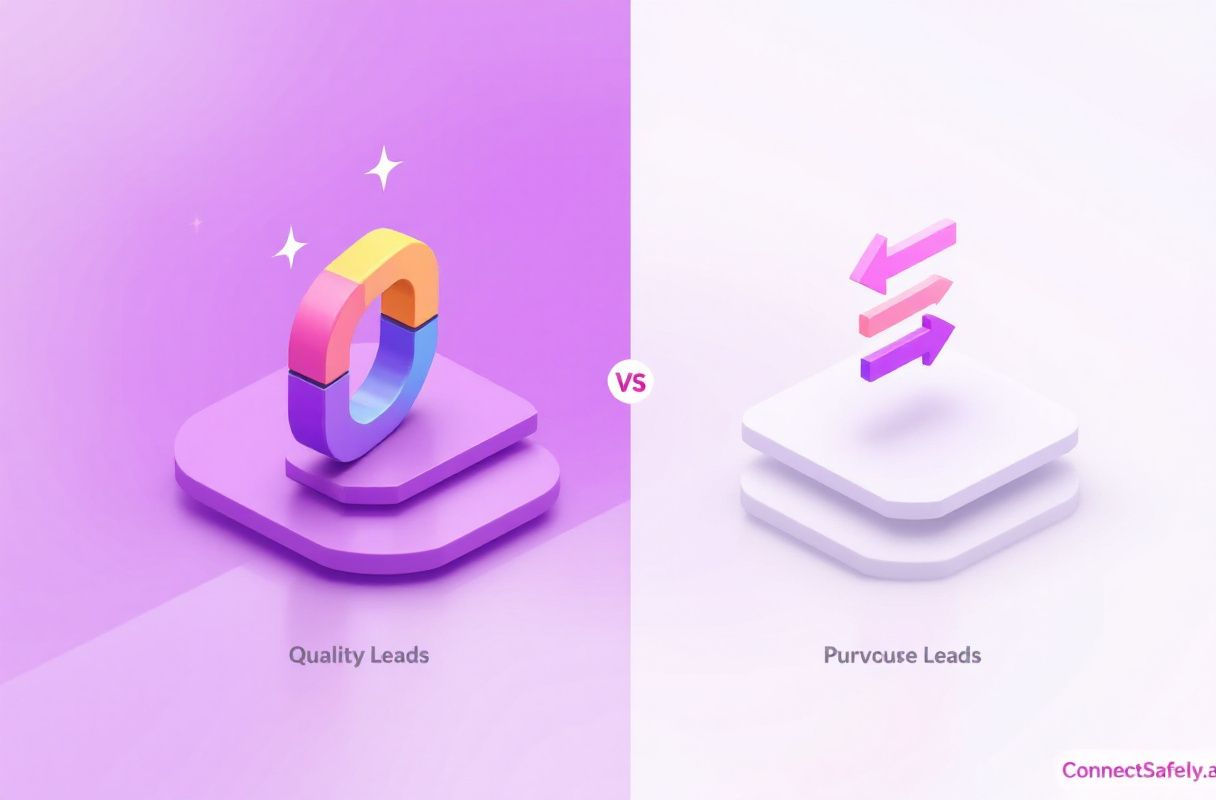
ConnectSafely.ai is not a cheaper advocacy tracker — it operates at the opposite end of the funnel. Champion compounds revenue from existing customers; ConnectSafely creates the net-new demand that becomes those customers.
| Dimension | Champion | ConnectSafely.ai |
|---|---|---|
| Core job | Activate + track customer advocates | Generate warm inbound leads |
| Creates net-new demand? | No — mobilizes existing customers | Yes — builds new warm demand |
| Funnel stage | Post-sale (advocacy, expansion, NRR) | Top of funnel (acquisition) |
| Prerequisite | A base of happy customers | None — works from a standing start |
| Conversion posture | Warm referrals (high-converting) | Buyer self-identifies warm (~14.6%) |
| Pricing from | Custom / quote-only (reported) | from $10/month, flat |
| Account-ban risk | Low (customer marketing) | Zero ban risk |
| Best for | Enterprises with a large loyal base | Founders + teams building pipeline |
The difference is where each sits in the funnel. Champion's value is capped by the size and loyalty of your existing base; ConnectSafely widens the top of the funnel that grows that base. Run both and you originate demand and compound it — which is why, for a company with a real customer base, the honest answer is often "sequence them," not "pick one."

What Most Guides Get Wrong About Customer Advocacy
The category is wrapped in "dormant revenue" hype. A few myths worth correcting:
Myth: "Advocacy is a growth engine." Reality: it's a growth amplifier. It compounds revenue from customers you already have; it doesn't add net-new buyers to an empty funnel.
Myth: "Referrals will fill the pipeline." Reality: referrals scale with the size of your happy base. A small base produces few referrals no matter how well you orchestrate them.
Myth: "Advocacy replaces acquisition." Reality: even the best advocacy program is second-order. Someone still had to acquire the customer who now refers. The first order is demand.
Myth: "Authority and advocacy are the same thing." Reality: advocacy activates people who already bought. Inbound authority attracts people who haven't — it works at the top of the funnel, where advocacy can't reach.
How to Choose: A Decision Framework
There's no universal winner here — the right call depends on where your bottleneck actually is.
- For founders pre-scale: you don't have enough customers to run an advocacy program yet. Build inbound authority first so buyers show up warm and your base grows. Start with ConnectSafely from $10/month.
- For SMBs with a modest base: advocacy will produce a trickle until the base is bigger. Use LinkedIn inbound to grow acquisition, then layer advocacy on once there's a real base worth mobilizing.
- For enterprises with a large loyal base: you're in Champion's sweet spot — it will turn your customers into serious second-order revenue. Keep it for advocacy and NRR, and run ConnectSafely in parallel so the top of the funnel keeps filling with warm inbound buyers. See how engagement signals reveal high-intent leads.
- For solo consultants and creators: you need 10–20 warm conversations a month before you need an advocacy platform. Inbound authority is the motion that produces those. Compare product-led signal tools in our Toplyne alternative breakdown.
Frequently Asked Questions
What is the best Champion alternative in 2026?
For teams whose real bottleneck is acquiring customers rather than mobilizing them, the best Champion alternative is ConnectSafely.ai — it builds the LinkedIn inbound authority that generates warm leads, from $10/month with zero ban risk. If you already have a large loyal base and want to systematize advocacy, Champion remains a strong enterprise choice.
How much does Champion cost?
Champion does not publish public pricing; it sells through a custom, sales-led enterprise motion, so cost scales with your customer base and program scope (reported — confirm directly with Champion). ConnectSafely, by contrast, starts at a flat $10/month.
Can a customer-advocacy platform like Champion generate new leads?
Only indirectly, through referrals from customers you already have. Champion activates and tracks existing advocates; it can't create net-new buyers. To fill the top of the funnel you need something upstream, like LinkedIn inbound authority.
Is Champion worth it for a small company?
It depends on the size of your customer base. Champion pays off when you have many delighted customers whose advocacy you can systematize. For a small company with a thin base, the higher-leverage move is usually to create demand first and grow the base.
Do referrals convert better than cold outreach?
Yes — warm referrals are among the highest-converting sources of pipeline, well above cold outbound's roughly 1.7% close rate. But referrals require a base of happy customers to originate them, which is exactly why acquisition has to come first.
Can I use Champion and ConnectSafely together?
Yes — that's the ideal setup for a company with a real base. ConnectSafely creates the warm inbound demand that becomes customers; Champion then compounds revenue by turning those customers into advocates. They sit at opposite ends of the funnel, so running both means originating demand and compounding it.
The Bottom Line
Champion is a legitimately strong platform: an AI-driven advocacy engine that turns a loyal customer base into second-order revenue and makes the impact reportable. For a large, mature org, that unlocks real dormant value. But it's an amplification layer — it mobilizes the customers you already earned, and it cannot conjure a buyer who was never in the funnel. If your bottleneck is acquiring those customers in the first place, the fix lives upstream, where the 14.6% vs 1.7% gap is decided. Compare your options in the Best LinkedIn Automation Tools guide, then fill the funnel before you compound it.
Ready to attract qualified leads on LinkedIn? Start free and build the demand your future advocates come from.
See How It Works
Watch how people get more LinkedIn leads with ConnectSafely




Related Articles