Best Fathom Alternative 2026: LinkedIn Inbound
Fathom captures every word of the calls you take — for free, flawlessly. But notes don't book the call. LinkedIn inbound closes 14.6% vs 1.7%, from $10/mo, zero ban risk.

Research methodology: Every pricing claim, feature, and limitation in this comparison was independently verified in August 2026 from vendor pricing pages, Trustpilot, G2, AppSumo, and Product Hunt. Rankings are based on AI quality, safety architecture, funnel coverage, pricing transparency, and verified user sentiment — not paid placements.
Updated August 2026 — Researched against Fathom's (fathom.video) 2026 pricing, G2 reviews (6,500+ ratings, ~5/5), and HubSpot's marketing statistics. Reviewed by the ConnectSafely.ai editorial team.
You used to scribble notes during sales calls and miss half of what the prospect actually said. So you added Fathom. And suddenly every call is recorded, transcribed, summarized, and synced to your CRM — for free. Action items land in your inbox before you've closed the tab. It is, genuinely, excellent.
Want to Generate Consistent Inbound Leads from LinkedIn?
Get our complete LinkedIn Lead Generation Playbook used by B2B professionals to attract decision-makers without cold outreach.
No spam. Just proven strategies for B2B lead generation.
But notice the exact moment Fathom starts working. It begins recording once a call is already on the calendar. It cannot record a meeting that was never booked.
That is the line worth drawing, and it is the whole point of this piece. Fathom captures the meetings you get. It does not get you meetings. It is a flawless camera pointed at a room — and a camera, however good, is not a casting agency. It can only film who already walked in.
So if you are searching for a "Fathom alternative," the honest first question is: are you actually short on notes, or short on meetings? Because if it's the second one, no notetaker on earth fixes it. The fix is LinkedIn inbound lead generation — the thing that fills the calendar in the first place.
Key Takeaways
- Fathom is an AI notetaker, not a lead source — it records, transcribes, summarizes, and syncs the calls you already booked. It cannot create a meeting that isn't on your calendar.
- The complaint here is NOT price — Fathom is genuinely cheap, with one of the best free tiers in the category. This is the rare comparison where cost is not the argument.
- The real cost of a notetaker is meeting volume — a perfect record of 3 sales calls a month is still only 3 sales calls a month. Fidelity was never the bottleneck; volume is.
- Fathom is genuinely excellent at its job: G2 rates it ~5/5 across 6,500+ reviews — superb UX, instant summaries, reliable CRM sync. Credit fully deserved.
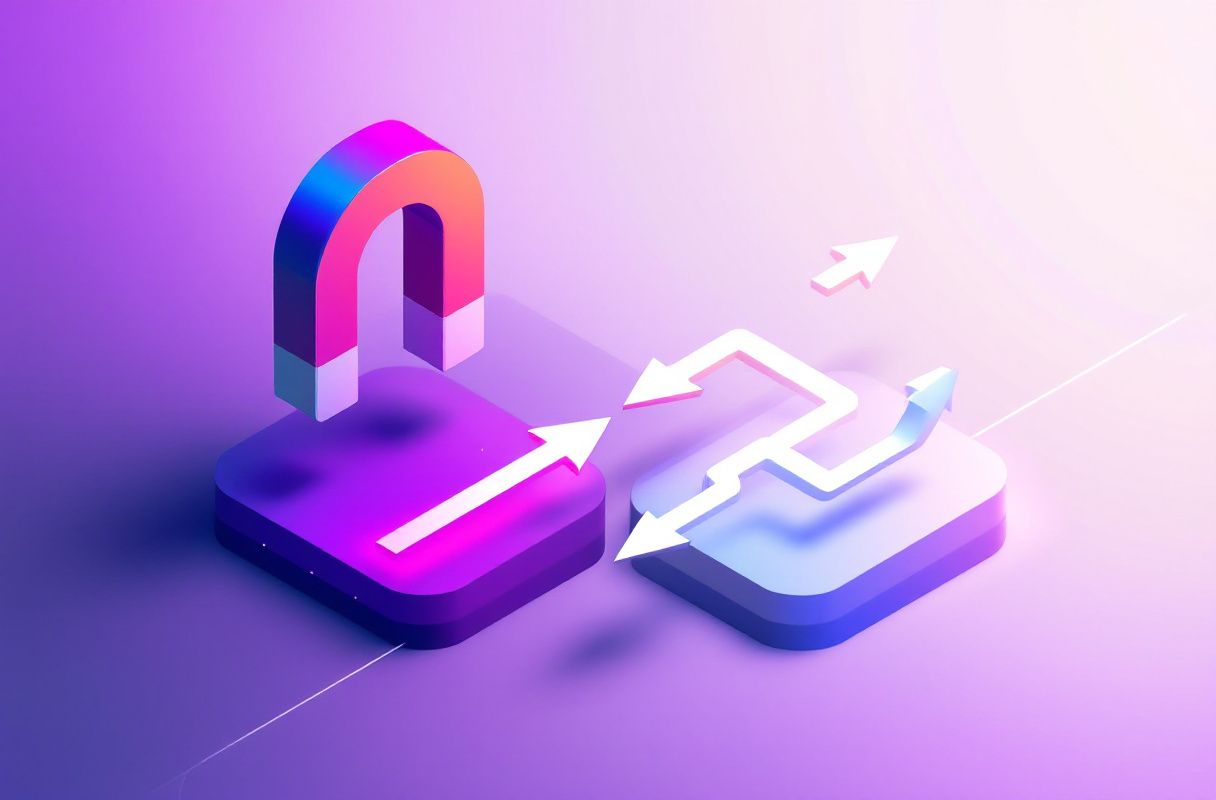
- A camera and a magnet are different tools: Fathom records the meetings you have; ConnectSafely fills the calendar with net-new warm ones — so the notetaker has more to record.
- ConnectSafely starts from $10/month with zero ban risk — and inbound leads close at ~14.6% vs ~1.7% for cold outbound, per HubSpot.
What Fathom Actually Does Well
Let us be generous, because Fathom has earned every bit of its reputation. This is not a mediocre product propped up by marketing — it is one of the best-loved tools in its category, and for good reason.
Fathom joins your calls, records and transcribes them automatically, then hands you a clean summary within moments of hanging up. No more typing frantic notes while half-listening to the prospect. You get to be present on the call and still walk away with a perfect record.
Its free tier is the standout. Unlimited recordings and transcripts cost you nothing — a genuinely rare, genuinely generous offer in a category where most competitors gate everything behind a subscription. For a solo seller or a bootstrapped founder, that alone is worth celebrating.
The UX is superb. Summaries are fast and readable, action items get emailed to participants automatically, and the whole thing feels frictionless in a way most software does not. You set it up once and it quietly does its job.
And the CRM and Slack sync closes the loop — call notes land where your team already works, so nothing gets lost between the conversation and the follow-up. The market has noticed: a ~5/5 rating across 6,500+ G2 reviews is exceptional, and it is not an accident. None of that is in dispute here.
What Fathom Costs in 2026
Here is where this comparison breaks from the usual playbook. Fathom is cheap. In most "alternative" articles the villain is a bloated invoice — but not here. Price is genuinely not the complaint, and pretending otherwise would be dishonest.
Figures below are 2026 published pricing — confirm current pricing on the vendor page before budgeting.
| Plan | Reported Price (2026) | What You Get |
|---|---|---|
| Free | $0 | Unlimited recordings & transcripts; ~5 AI summaries/month |
| Premium | ~$16–$20 / user / mo | Unlimited AI summaries, more advanced features |
| Team Edition | ~$15–$19 / user / mo | Team sharing, admin controls, collaboration |
| Business | ~$25–$34 / user / mo | Advanced admin, security, higher limits |
(Lower numbers reflect annual billing; higher numbers reflect monthly. Confirm on the vendor page.)
Look at those figures honestly. For a working professional, this is a rounding error — a few dollars a month, or literally free. If your only question were "is Fathom worth the money?" the answer would be an easy yes.
So let us set the money aside entirely. The problem with a notetaker is not the invoice. The problem is what the invoice doesn't buy — which is the subject of the next section.
The Gap: A Perfect Record of Too Few Meetings
Here is the core argument, and it has nothing to do with price. It is about what a notetaker fundamentally is.
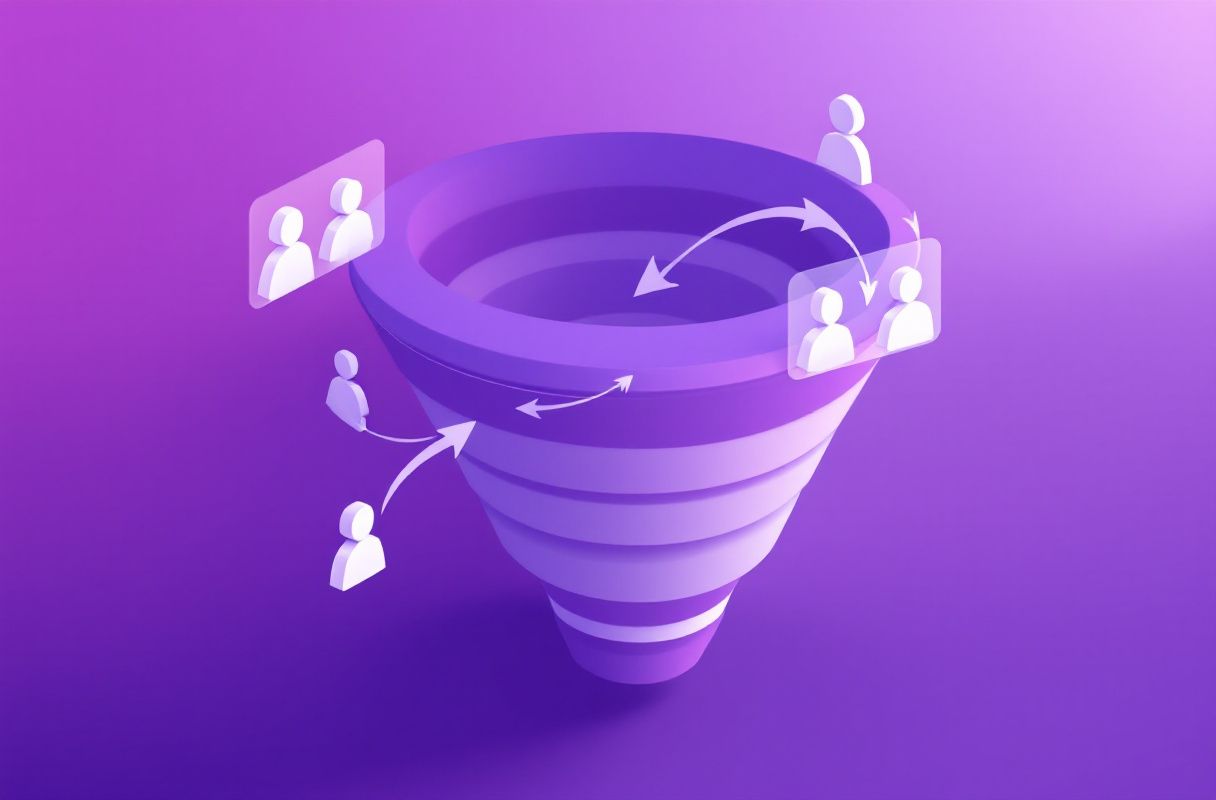
Fathom is a camera. Point it at a meeting and it captures that meeting perfectly — every word, every action item, flawlessly filed. But a camera can only film what is in front of the lens. It cannot summon anyone into the room. If three people walk in this month, you get three beautifully recorded conversations. Not four.
That is the trap hiding inside a great notetaker: it makes you feel productive about a number you never actually changed. You upgraded the fidelity of your meetings. You did not touch the volume of them.
And volume is the bottleneck. For most founders and sellers, the constraint has never been "I can't remember what was said on my calls." The constraint is "I don't have enough calls." A perfect transcript of too few meetings is still too few meetings. No summary, however sharp, moves that number.
Run the math. Take three sales calls a month and Fathom gives you three impeccable records. Free or $20 — it does not matter, because neither version books a fourth call. The tool sits entirely downstream of the problem: exquisite at capturing pipeline, completely silent on creating it.
A magnet works the other way around. Instead of recording the room you have, it fills the room. That is what inbound authority does: it makes the right buyers find you on LinkedIn, so new warm conversations appear on your calendar — conversations that would never have existed for Fathom to record. One tool documents the meeting. The other manufactures it. Those are different jobs, and most "Fathom alternative" searches are quietly a search for the second one.
Where Fathom Is Genuinely Better
Fairness demands this section, and it is not a throwaway — because there is a real scenario where Fathom is simply the right tool and ConnectSafely is not a substitute at all.
If you already take a lot of calls and keep losing the details, Fathom is a no-brainer — even the free version. When your calendar is full and your problem is genuinely "I can't keep up with the notes," a notetaker is exactly the fix. ConnectSafely does not record calls, does not transcribe them, and does not write summaries. If capturing conversations is your need, Fathom wins outright, and it wins cheaply.
Fathom is also clearly the better choice when:
- You run many meetings a week and need a searchable record of each one.
- You want to be fully present on calls instead of typing notes.
- You need action items and summaries synced automatically into your CRM.
- Your bottleneck is memory and follow-through, not the number of conversations.
Here is the healthiest way to see it: these two tools are not rivals. They solve opposite halves of the same funnel. Inbound fills the calendar; Fathom captures what happens once the meeting starts. If you have the meetings, pair them — let ConnectSafely bring the conversations and let Fathom record them. This article is not arguing Fathom is bad. It is arguing that a camera and the thing that fills the room are different products, and you should be clear about which gap is actually hurting.
What Most "Fathom Alternative" Guides Get Wrong
Most roundups answer the wrong question. Someone searches "Fathom alternative" and every guide assumes they want a different notetaker — so they line up Otter, Fireflies, tl;dv, Grain, and rank them on transcript accuracy, speaker labels, and integration count. That is a perfectly fine list if a better transcript is genuinely the goal.
But that framing quietly swallows Fathom's premise: that your problem is capturing meetings. For a large share of the people typing that search — founders, solo sellers, small teams — it is not. The transcripts were never the issue. The issue is that there aren't enough meetings to transcribe.
Here is the contrarian take, and it is the entire point of this piece. For a founder or a seller, the real ROI question is not "which tool records my calls best?" It is "what fills my calendar?" — and no notetaker, Fathom included, answers that question. They all compete on how well they document a meeting while staying completely silent on how you get one.
Put bluntly: a founder with three calls a month does not fix their pipeline by switching to a notetaker with 2% better transcription. They fix it by changing where the meetings come from — from a trickle of cold outreach to a stream of warm inbound. Ranking notetakers against each other is optimizing the wrong variable. The number that matters is meeting volume, and that number lives upstream of every tool on the list.
A Decision Framework by Role
There is no universal answer. What you need depends on who you are and where your bottleneck actually sits.
| Role | Your Real Bottleneck | Best Fit |
|---|---|---|
| Heavy-call AE | Keeping up with a full calendar of calls | Fathom — capture and coach on high call volume; free tier may be enough |
| Founder-seller (thin pipeline) | Not enough meetings at all | Inbound authority — you need net-new warm calls, not better notes on a handful |
| Agency / multiple clients | Repeatable pipeline across accounts | Inbound authority — flat pricing fills calendars; notetakers only record them |
| Solo consultant | 10–20 warm conversations a month | Inbound authority — you don't need transcripts; you need the calls to happen |
| Team that already has volume | Present on calls + clean follow-up | Pair them — inbound to fill, Fathom (free tier) to capture |
The pattern is clear. Fathom makes sense when your calendar is already full and you need to capture it better. For nearly everyone whose real problem is not enough of the right meetings, the effort is better spent on filling the calendar than on recording it.
Real Results: From Perfect Notes to a Full Calendar (Illustrative)
The following is an illustrative example, not a specific customer's reported metrics.
Picture a solo founder who added a notetaker to fix a stalling pipeline. The tool worked flawlessly — every call recorded, every summary crisp, every action item synced to the CRM. Follow-ups got tighter.
But revenue barely moved. The reason was structural, not a tooling failure: the founder was capturing a small number of calls with perfect fidelity. They had immaculate notes and the same three or four meetings a month they started with.
After shifting focus to building LinkedIn authority for a quarter:
- Inbound inquiries began arriving from people who already followed the founder's posts.
- The calendar filled with conversations that opened with "I've been reading your content" instead of silence.
- There was simply more to record — the notetaker went from documenting a trickle to documenting a stream.
The qualitative shift mattered more than any single number. A great notetaker made a thin calendar well-documented. Inbound made the calendar full. And the two stopped competing — once the meetings existed, the camera finally had something worth filming. The part no notetaker can ship is the meeting itself, because it has to exist before Fathom can record it.
Why LinkedIn Inbound Outperforms
The gap between the two motions is not marginal. According to HubSpot's research on inbound marketing, inbound leads close at roughly 14.6% versus about 1.7% for cold outbound — an order-of-magnitude difference driven by one thing: the inbound buyer already trusts you when the meeting starts.
That is the structural advantage a notetaker cannot touch. Fathom can capture a cold call in beautiful detail, but it cannot change the fact that a cold call is cold. As HubSpot's sales research shows, modern B2B buyers do most of their evaluation before they ever speak to a rep — which means trust is won upstream, long before the meeting a notetaker would record. Inbound changes where the meeting comes from, and that source is where the close-rate gap lives.
The comparison is not really tool-versus-tool — it is capture versus creation:
| Factor | Fathom (AI Notetaker) | ConnectSafely (LinkedIn Inbound) |
|---|---|---|
| What it does | Records the calls you already booked | Creates net-new warm conversations |
| Role in funnel | Captures what happens in a meeting | Fills the calendar with meetings |
| Effect on volume | None — records whatever exists | Grows the number of conversations |
| Close rate impact | Neutral to conversion | ~14.6% inbound vs ~1.7% outbound |
| Cost | Free to ~$34/user/mo | From $10/month |
| Ban risk | N/A | Zero — no aggressive automation |
| Asset built | A record of your calls | Compounding authority that appreciates |
Being found beats being filmed. A perfectly recorded cold call is still a cold call. Building authority through LinkedIn content and engagement means the right buyers arrive already warm — and it compounds. Every post and comment widens the funnel for the next one, following the five pillars of inbound lead generation. It starts from $10/month with zero ban risk, because there is no aggressive automation to trigger a flag. And the best part: once inbound fills your calendar, your notetaker finally has more to record. For the full playbook, see how to use LinkedIn for B2B sales.
Frequently Asked Questions
Is Fathom really free?
Yes — genuinely. Fathom's free plan includes unlimited recordings and transcripts at no cost, which is one of the most generous free tiers in the notetaker category. The main limit is AI summaries, capped at around 5 per month on the free plan; unlimited summaries come with Premium (~$16–$20/user/mo). Confirm current pricing on the vendor page. But remember: free or paid, Fathom records the meetings you already have. It does not create new ones.
What is the best Fathom alternative?
It depends on what you're actually short on. If you want a different notetaker, tools like Otter, Fireflies, or tl;dv compete on transcription and integrations. But if your real problem is not enough meetings to record, the best "alternative" isn't another notetaker at all — it's LinkedIn inbound, which fills your calendar with warm conversations. ConnectSafely starts at $10/month and creates pipeline rather than capturing it. Different job entirely.
Does an AI notetaker help generate leads?
No. An AI notetaker like Fathom records, transcribes, summarizes, and syncs the calls you have already booked. It does not create net-new conversations or generate leads — that sits entirely outside what the product does. Lead generation is a separate, upstream job, which is where an inbound platform fits instead. A notetaker makes existing meetings better documented; it cannot make more of them exist.
Fathom vs LinkedIn inbound — where should my time go?
They solve opposite halves of the funnel, so the honest answer depends on your bottleneck. If your calendar is full and you're drowning in notes, Fathom (even free) is the fix. If your calendar is thin, no notetaker helps — you need meetings, and LinkedIn inbound creates them, closing at ~14.6% vs ~1.7% for cold outbound per HubSpot. For most founders and solo sellers, the time goes to origination first, capture second — and ideally you run both.
Is Fathom worth upgrading from free?
If you take enough calls to blow past ~5 AI summaries a month, then yes — Premium is inexpensive and the unlimited summaries are genuinely useful. It's an easy call when meeting volume is high. But if you're not hitting the summary cap, that's a signal worth heeding: your constraint probably isn't note-taking capacity, it's meeting volume. In that case the better spend isn't upgrading a notetaker — it's building the inbound authority that fills the calendar so the free tier finally has enough to record.
See ConnectSafely.ai pricing — from $10/month, zero ban risk. Or explore the best LinkedIn automation tools guide to compare your options and find the engine that actually fills your calendar.
See How It Works
Watch how people get more LinkedIn leads with ConnectSafely




Related Articles