Best Floworks Alternative 2026: LinkedIn Inbound
Floworks' AI SDR Alisha automates cold outbound at scale — but faster cold still closes at 1.7%. Inbound closes 14.6%, from $10/mo, zero ban risk.

Research methodology: Every pricing claim, feature, and limitation in this comparison was independently verified in September 2026 from vendor pricing pages, Trustpilot, G2, AppSumo, and Product Hunt. Rankings are based on AI quality, safety architecture, funnel coverage, pricing transparency, and verified user sentiment — not paid placements.
Updated September 2026 — Researched against Floworks' (floworks.ai) vendor/product pages, third-party reviews (G2, Salesforge directory, Y Combinator), and HubSpot statistics. Reviewed by the ConnectSafely.ai editorial team.
If you're looking for a Floworks alternative, start by being honest about what Floworks does exceptionally well and what it fundamentally can't do. Floworks is a Y Combinator-backed AI SDR platform — its flagship agent, Alisha, researches prospects across 700M+ contacts, mines intent signals from 20+ sources, writes hyper-personalized emails, runs email and LinkedIn sequences, handles objections, and books meetings, all powered by its proprietary ThorV2 model. As an autonomous outbound machine, it's genuinely capable. But every one of those capabilities is in service of one motion: cold outreach to people who didn't ask to hear from you. And cold outreach closes at 1.7%, versus 14.6% for inbound (HubSpot). Automating the sending doesn't move that number — it just lets you run the 1.7% motion at machine scale.
Want to Generate Consistent Inbound Leads from LinkedIn?
Get our complete LinkedIn Lead Generation Playbook used by B2B professionals to attract decision-makers without cold outreach.
No spam. Just proven strategies for B2B lead generation.
Here's the distinction that matters. Floworks answers how do I send more personalized cold outreach with fewer humans. It does not answer how do I make qualified buyers come to me. An AI SDR is a faster, cheaper way to interrupt strangers. The interruption is still the product — you've just removed the labor cost of doing it.
That's the ceiling. Alisha can research an account beautifully and write an email that reads like a human wrote it, but the recipient still didn't raise their hand. And when the LinkedIn channel is automated at volume, you inherit the account-ban risk that comes with exactly the behavior LinkedIn is built to detect. More cold messages, sent faster, with more risk — none of it manufactures intent.
So if your real bottleneck is "not enough qualified people know or trust us," the tool to compare Floworks against isn't another AI SDR. It's a system that generates the inbound demand an AI SDR assumes you'll go out and chase.
Why people search for a Floworks alternative
- It scales cold, not demand. Alisha automates outbound research, writing, and sending — but the prospect never asked to be contacted. You get more volume at the 1.7% cold-conversion ceiling, not more intent.
- Automated LinkedIn outreach carries ban risk. Running AI-driven sequences across LinkedIn at volume is the pattern the platform flags. The efficiency gain comes with real account exposure.
- Quote-only pricing and enterprise fit. Floworks doesn't publish public pricing — you contact sales — which makes it hard for founders and small teams to evaluate against a clear budget.
- Wrong layer for a demand problem. The most important reason: if buyers don't know you, a faster way to send cold email and DMs doesn't fix it. Deliverability, personalization, and objection handling all sit downstream of a decision the prospect hasn't made.
Key Takeaways
- Floworks (Alisha) is a genuinely capable AI SDR. Deep prospect research, hyper-personalized email, multichannel sequencing, and automated objection handling remove real SDR labor (Floworks).
- But it automates cold outreach — it doesn't create demand. An AI SDR makes interruption cheaper and faster; the prospect still didn't raise their hand, so the motion still converts at cold rates.
- Inbound closes at 14.6% vs 1.7% for cold (HubSpot) — the biggest lever is whether the right people come to you, not how many personalized cold messages you can send per hour.
- ConnectSafely starts from $10/month and builds LinkedIn inbound authority, so buyers find you and reach out — filling the funnel an AI SDR would otherwise go out and cold-chase.
- Zero ban risk — ConnectSafely is engineered for platform-safe inbound, unlike high-volume automated LinkedIn sequencing.
What Is Floworks?
Floworks (floworks.ai) is an AI SDR platform built around a proprietary model called ThorV2 and a cast of AI "employees" — Alisha (AI SDR), Sage (AI RevOps), and Dan (AI Success Manager). The headline product is Alisha, which the company positions as an autonomous sales development rep that can run the top of the outbound funnel end to end.
Alisha's job is to replace the manual work of an SDR. She performs deep research on prospects by connecting to 10+ sales databases and mining intent signals across 20+ sources, drawing from a pool the company cites as 700M+ contacts. From that research she writes hyper-personalized emails, runs sequences across email and LinkedIn simultaneously, handles inbound objections automatically, and schedules meetings — with the company touting open rates above 48% (Y Combinator).
What's clear is the category it plays in: automated outbound prospecting. It's a well-engineered engine for doing outbound faster and with less headcount. But the motion it automates is, definitionally, seller-initiated: it reaches out to people who haven't expressed interest. Alisha makes that reach-out smarter and cheaper — she does not change the fact that it's an interruption, or that interruptions convert at cold rates.
Floworks Features
- Alisha, the AI SDR — autonomous agent that runs top-of-funnel outbound end to end
- Deep prospect research — connects to 10+ databases, mines 20+ intent sources, 700M+ contacts
- Hyper-personalized emails — AI-written outreach tailored to each prospect
- Multichannel sequencing — runs email and LinkedIn sequences simultaneously
- Automated objection handling — responds to replies without a human in the loop
- Meeting scheduling — books qualified meetings straight onto the calendar
- ThorV2 model — Floworks' proprietary model powering the agents
- Wider agent suite — Sage (RevOps) and Dan (Success) alongside Alisha
Floworks Pricing
Floworks does not publish public pricing — you contact the company for a quote, and Y Combinator companies are offered a 10% discount on annual plans (G2). Because there's no self-serve rate card, treat any figure you see quoted elsewhere as reported — confirm on the vendor page.
| Plan | Reported Price | Notes |
|---|---|---|
| Alisha AI SDR | Quote-only / contact sales | Full AI SDR: research, email, LinkedIn sequencing, objection handling — reported, confirm on the vendor page |
| Annual (YC discount) | 10% off listed price | For Y Combinator portfolio companies — reported, confirm on the vendor page |
| Enterprise / multi-agent | Custom | Adds Sage (RevOps) and Dan (Success) — reported, confirm on the vendor page |
The absence of transparent pricing is itself a signal about fit: Floworks is sold as an enterprise-style, sales-led purchase aimed at teams committing to an outbound motion. Every figure above is reported — confirm on Floworks' pricing page, and third-party directories such as Salesforge echo the quote-only positioning.
Floworks Pros and Cons
| Pros | Cons |
|---|---|
| Autonomous AI SDR that runs outbound end to end | Automates cold outreach — creates no inbound demand |
| Deep research across 700M+ contacts and 20+ signals | Motion still converts at the ~1.7% cold ceiling |
| Hyper-personalized, human-sounding email at scale | Automated LinkedIn sequencing carries ban risk |
| Automated objection handling saves rep time | Quote-only pricing — hard for small teams to evaluate |
| Removes real SDR labor and headcount cost | Personalization can't manufacture intent a prospect lacks |
That last row is the one that matters most. Every other con is a budget or fit trade-off. The last row is a category limit: an AI SDR, by definition, contacts people who haven't asked — no amount of personalization turns an interruption into a raised hand.
Where Floworks Is Genuinely Better
Let's be fair, because this is important. If your problem is specifically "we've committed to an outbound motion and our SDRs are burning hours on research, writing, and follow-up," Floworks does something ConnectSafely doesn't, and does it well.
For a team that has decided outbound is a channel it will run, Alisha is a legitimate efficiency win. Research that used to take an SDR 20 minutes per account happens in seconds; personalized sequences that used to be copy-paste get genuinely tailored; objection replies that used to sit in an inbox get handled automatically. If you're going to do outbound at all, doing it with an AI SDR is cheaper and faster than staffing it with people — and the research depth across 700M+ contacts and 20+ signal sources is real.
ConnectSafely doesn't do outbound, doesn't write cold sequences, and doesn't book meetings with strangers, and doesn't pretend to. These tools sit on opposite sides of the same question. Floworks makes seller-initiated outreach efficient; ConnectSafely makes buyer-initiated conversations happen. One automates the chase; the other removes the need to chase. If outbound is genuinely core to your strategy, Alisha is a strong pick for running it — the disagreement is only about whether the chase is the best use of your budget.
What Most Guides Get Wrong
Most "Floworks alternative" articles line up five more AI SDRs — Artisan's Ava, AiSDR, 11x's Alice, Jason AI, Regie — and compare research depth, personalization quality, and per-seat price. That's a useful comparison if you've already decided outbound is your channel. It's the wrong comparison entirely if your real gap is that not enough qualified people know you.
Swapping one AI SDR for another doesn't change the fundamental math: they all automate contacting people who didn't ask. A more personalized cold email is still a cold email; a smarter sequence is still an interruption. Personalization lifts response rates at the margin, but it can't create intent that isn't there — and the channel still converts at cold rates because the prospect never self-selected.
That's what inbound presence changes. When you've spent months showing up in your buyers' LinkedIn feeds with a real point of view, qualified people reach out and book the meeting themselves — at the 14.6% end of the funnel. They've already decided you're worth talking to before the conversation starts. An AI SDR chases that decision; inbound authority earns it. If you want the full landscape of tools in this space, see our LinkedIn automation tools guide.
Floworks vs ConnectSafely
These aren't the same kind of tool — they answer opposite questions about where pipeline comes from. The table shows where each one wins.
| Dimension | Floworks (Alisha) | ConnectSafely | Winner |
|---|---|---|---|
| Motion | Outbound — seller initiates | Inbound — buyer initiates | Depends on strategy |
| Creates demand | No — automates the chase | Yes — buyers reach out to you | ConnectSafely |
| Conversion ceiling | ~1.7% (cold) | ~14.6% (inbound) | ConnectSafely |
| LinkedIn approach | Automated sequencing (ban risk) | Inbound authority, no cold spam | ConnectSafely |
| Pricing transparency | Quote-only | From $10/month, published | ConnectSafely |
| Account safety | Risk from volume automation | Engineered for zero ban risk | ConnectSafely |
| Best fit | Teams committed to running outbound | Anyone who wants buyers to come to them | Depends on your bottleneck |
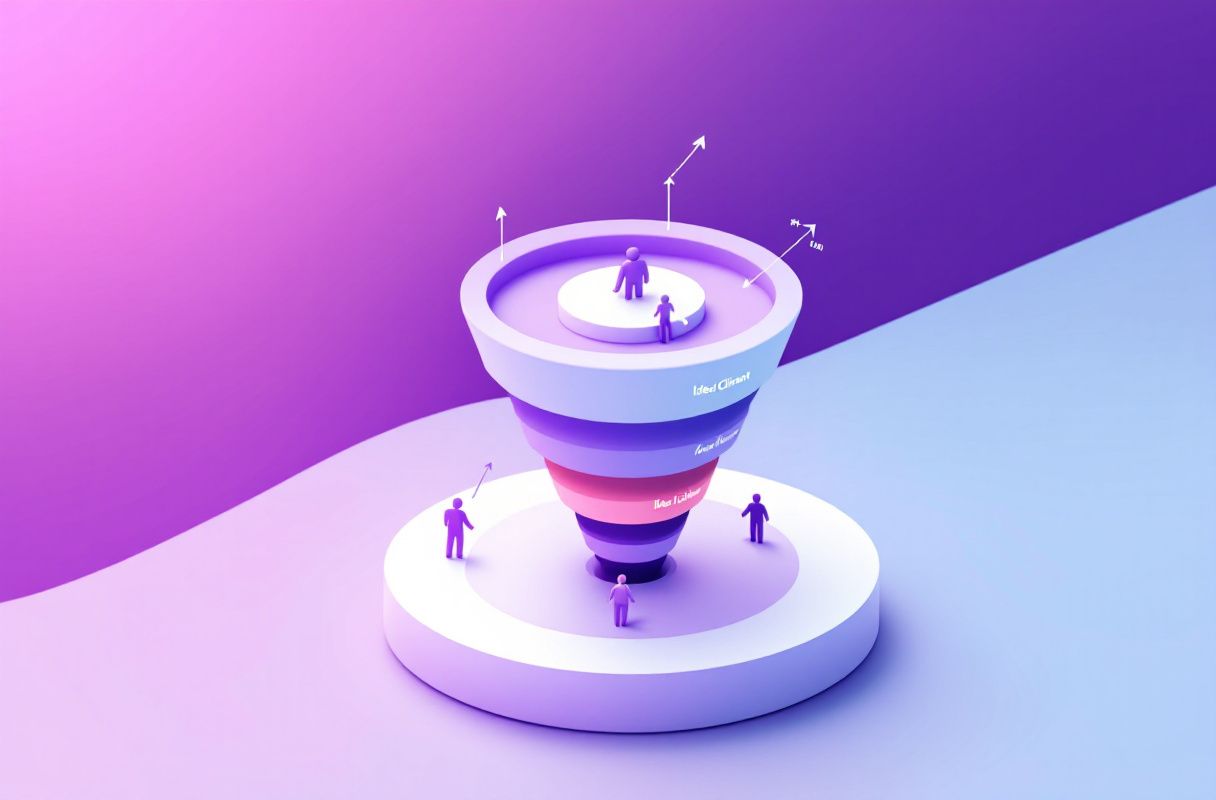
The distinction is simple. Floworks makes your outbound cheaper and faster to run. ConnectSafely makes outbound less necessary — because the right people arrive already warm, at the 14.6% end of the funnel. If you must run outbound, an AI SDR is a reasonable way to do it; if you'd rather buyers came to you, that's a different engine.
ConnectSafely builds inbound authority on LinkedIn — surfacing high-intent engagement signals, staying visible to your ICP, and turning them into conversations that come to you. Those inbound conversations convert at 14.6% instead of 1.7%. An AI SDR is one way to chase pipeline; ConnectSafely is a way to make pipeline chase you.
A Lesson From the Trenches
I watched a sales leader stand up an AI SDR and treat it as the whole pipeline strategy. The setup was slick: deep research, genuinely personalized emails, LinkedIn sequences running in parallel, objection handling on autopilot. Volume went vertical — thousands of touches a week with almost no human effort. For a month it looked like the future. Then the numbers came in: open rates were fine, reply rates were thin, meetings booked were a rounding error, and two LinkedIn accounts caught automation warnings. He'd built a machine that ran the 1.7% motion at ten times the volume — and paid for the privilege.
Then he changed the order of operations. He kept a lighter outbound touch for a tight, high-fit account list, but redirected most of the effort into showing up: posting consistently, engaging with his buyers' content, building a point of view his market could actually see. Over the next two quarters the calendar filled with inbound meetings from people who'd been reading him for months and reached out on their own. The AI SDR didn't get better; the funnel changed shape. A thousand automated cold touches is an expensive way to be ignored; one inbound meeting from someone who already trusts you is a deal that closes.
Which Should You Choose? A Role-Based Framework
Founder / early-stage: An AI SDR is the wrong first spend when almost nobody knows you and every message you send is cold. You'll be automating rejection — and risking your LinkedIn account. Put your budget into ConnectSafely from $10/month to build inbound demand first, so the meetings come from people who already know you. See inbound vs outbound for why order matters.
Established sales team: If outbound is genuinely a committed channel, an AI SDR like Alisha can run it more efficiently than headcount — use it there. But pair it with an inbound engine, because a pipeline built only on cold outreach caps at 1.7%. ConnectSafely fills the top of the funnel with 14.6% inbound conversations; let the AI SDR work a tight, high-fit list rather than spraying volume.
Agency: You're selling qualified pipeline, not outreach volume. ConnectSafely's inbound authority model scales across client accounts and produces demand clients can see and measure — and it doesn't put their LinkedIn accounts at risk. An AI SDR is an internal outbound tool; the inbound engine is the growth story you can actually sell. Pair it with our social selling guide.
Freelancer / solo consultant: Quote-only enterprise AI SDRs aren't your tool, and you don't need to industrialize cold outreach — you need the right buyers to think of you and reach out. ConnectSafely from $10/month, zero ban risk, is the far higher-leverage spend. Build presence so qualified conversations come to you — no cold sequencing required.
Frequently Asked Questions
What is the best Floworks alternative in 2026? It depends on your motion. If you're committed to outbound and want an AI SDR, the usual head-to-head picks are Artisan (Ava), AiSDR, 11x, and Regie. But if your real problem is that not enough qualified people know you, the best "alternative" isn't another AI SDR — it's an inbound-demand engine like ConnectSafely, from $10/month, that makes buyers come to you instead of being chased.
Is Floworks worth it? For a team that has decided to run outbound at scale, Alisha can be — it removes genuine SDR labor with deep research, personalized email, and automated objection handling (Floworks). But it automates a cold motion that converts at ~1.7%, so it's the wrong first spend if the gap is demand. Build presence first — see the 5 pillars of inbound.
How much does Floworks cost? Floworks doesn't publish public pricing — you contact sales for a quote, with a 10% annual discount for Y Combinator companies (G2). Any specific figure you see is reported — confirm on Floworks' pricing page.
Is it safe to run automated LinkedIn sequences with an AI SDR? High-volume automated LinkedIn outreach is exactly the behavior LinkedIn's systems are built to detect, so it carries real account-ban risk regardless of which AI SDR sends it. And beyond safety, automated sequencing scales a cold motion — it doesn't create demand. ConnectSafely takes the inbound route by design: authority that makes buyers reach out, with zero ban risk.
Why does LinkedIn inbound convert better than a well-run AI SDR? Because the prospect initiates. Inbound leads close at about 14.6% versus 1.7% for cold methods, per HubSpot — an 8-to-9x edge driven by intent. An AI SDR can personalize the interruption, but it's still an interruption; the recipient hasn't decided they want to talk. A buyer who books because they've absorbed your point of view for months already has.
The Bottom Line
Floworks solves a genuinely real problem. If your team has committed to outbound and your SDRs are drowning in research, writing, and follow-up, Alisha runs the whole top-of-funnel motion with less headcount — deep research across 700M+ contacts, personalized email, multichannel sequencing, automated objection handling. For a team that's going to do outbound anyway, it's a legitimate efficiency win.
But an AI SDR makes cold outreach cheaper — it doesn't make it warm. Every message it sends still goes to someone who didn't ask, so the motion still converts at ~1.7%, and automating the LinkedIn channel at volume adds account-ban risk on top. More personalized interruptions, sent faster, is still a channel built on interruption.
That's the layer ConnectSafely owns: LinkedIn inbound authority that keeps you top of mind, so qualified buyers find you, engage, and reach out — from $10/month, with zero ban risk. It's not a better AI SDR — it's the reason you need to chase fewer strangers. Make pipeline come to you with inbound; reserve outbound for a tight, high-fit list. Start with ConnectSafely pricing, or explore the full category in our pillar guide, Best LinkedIn Automation Tools. Build demand first — then every meeting on your calendar is one that wanted to be there.
See How It Works
Watch how people get more LinkedIn leads with ConnectSafely




Related Articles