Best Linked API Alternative for LinkedIn (2026)
Linked API automates LinkedIn via an unofficial API — and risks your account. Discover the best Linked API alternative for 2026: inbound leads with zero ban risk.

Research methodology: Every pricing claim, feature, and limitation in this comparison was independently verified in July 2026 from vendor pricing pages, Trustpilot, G2, AppSumo, and Product Hunt. Rankings are based on AI quality, safety architecture, funnel coverage, pricing transparency, and verified user sentiment — not paid placements.

Updated July 2026 — Researched against Linked API's (linkedapi.io) vendor pages, Product Hunt, and G2. Reviewed by the ConnectSafely.ai editorial team.
The best Linked API alternative in 2026 is ConnectSafely.ai. Here is the reasoning in one breath: Linked API (linkedapi.io) is an unofficial automation API that programmatically sends connection requests, messages, and scrapes LinkedIn on your behalf — every one of those actions is a cold action LinkedIn can detect and penalize. Inbound authority flips the model: instead of your account reaching out and risking a ban, buyers come to you already warm. That difference shows up in the numbers. HubSpot reports inbound-sourced leads convert dramatically better than outbound — roughly 14.6% for inbound (SEO/warm) versus about 1.7% for outbound (cold) — which is the entire argument for choosing attraction over automation.
Want to Generate Consistent Inbound Leads from LinkedIn?
Get our complete LinkedIn Lead Generation Playbook used by B2B professionals to attract decision-makers without cold outreach.
No spam. Just proven strategies for B2B lead generation.
That does not make Linked API a bad product. For developers who genuinely need programmatic control inside a custom app, it is a capable tool. But most people typing "Linked API alternative" into Google or an LLM are not looking for more automation — they are looking for a way to grow on LinkedIn without gambling their account. This guide is honest about both.
4 reasons people look for a Linked API alternative
- Ban and detection risk. Any tool that automates actions on your account — even a "human-like" cloud browser — leaves signals. LinkedIn's User Agreement prohibits unauthorized automated access, and repeated automated actions are a documented path to restriction. See our LinkedIn automation safety guide.
- Developer overhead. An API is not a product. You still have to build the workflows, error handling, retries, and outreach logic around it — that is engineering time, not marketing.
- Unofficial-API fragility. Because Linked API is not sanctioned by LinkedIn, when LinkedIn changes its front end or tightens detection, unofficial tooling can break or get flagged with little warning.
- Cold-outreach conversion. Even when automation "works," you are still sending cold messages — and cold converts at a fraction of inbound.
Key Takeaways
- Linked API is an unofficial LinkedIn automation and data API — it is explicitly not affiliated with, endorsed by, or sponsored by LinkedIn, per its own vendor site.
- Published pricing (verified July 2026): Core at $49/seat/month and Plus at $74/seat/month (annual billing), plus $1.00 Data API credits, per linkedapi.io and Capterra. Real-world costs scale with usage and seats.
- Third-party reviews are thin. As of July 2026, Capterra lists Linked API with 0 user reviews, so treat marketing claims cautiously and verify before you build on it.
- The core risk is structural, not fixable by settings — automating actions on your own account carries inherent LinkedIn detection risk that no "human-like pacing" fully removes.
- Inbound is the durable alternative. Building authority so leads arrive warm sidesteps ban risk entirely and converts far better than cold automation.
- There is no single universal winner. Developers embedding LinkedIn into a product may still want an API; founders and small teams almost always get more from inbound. See our pillar on LinkedIn automation tools.
What Is Linked API?
Linked API (linkedapi.io) is a "secure automation API for LinkedIn" that lets developers control LinkedIn accounts and retrieve LinkedIn data programmatically. It is an independent product and, by its own disclosure, is not affiliated with, authorized by, endorsed by, or sponsored by LinkedIn Corporation.
According to its vendor pages, Linked API splits into two products:
- Account API — manage one or many LinkedIn accounts through a single API, or plug your account into other tools. Every action runs in a dedicated cloud browser at human-like speed, from a device profile matched to you, rather than raw HTTP requests or headless scripts.
- Data API — retrieve real-time LinkedIn data (companies, people, posts, jobs) via API, even without connecting your own account, billed with usage-based credits.
Core capabilities the vendor advertises:
- 50+ actions — messaging, sending connection requests, search, and data extraction
- Workflow engine with conditional logic (documented up to 5 levels deep)
- Search and enrichment — find companies and people with advanced filters, extract employees, filter decision-makers, build lead lists
- Standard LinkedIn + Sales Navigator support (Sales Navigator actions on the higher tier)
- Developer access surfaces — REST/HTTP, an official Node.js SDK, a CLI, and an MCP server for AI assistants
- Integrations — Slack, HubSpot, Zapier, Pipedrive, Make, and n8n
In short: it is infrastructure for developers who want to build LinkedIn automation, not a done-for-you growth product.
Linked API Pricing
The figures below are the ones we could verify from the vendor and Capterra in July 2026. Linked API does publish plan prices, but note that effective cost is usage- and seat-dependent (Data API credits are consumed per action), so your real bill will vary.
| Plan | Price (verified) | Notable inclusions | Source |
|---|---|---|---|
| Core | $49 / seat / month (annual) | Automation API, SDK/CLI, all integrations, unlimited workflow execution | linkedapi.io |
| Plus | $74 / seat / month (annual) | Everything in Core + Sales Navigator actions | linkedapi.io |
| Data API credits | $1.00 per credit (usage-based) | Company/people/post/job data retrieval | Capterra |
A 7-day free trial is advertised on the vendor site. Anything beyond the table above (volume discounts, enterprise terms) is not consistently published and is effectively quote-based — do not trust secondhand pricing numbers you cannot trace to linkedapi.io.
Where Linked API Is Genuinely Better
An honest comparison has to admit what Linked API does well, because for a specific audience it is the right tool.
- Programmatic control. If you are a developer and you want LinkedIn actions triggered by your code — inside a product, an internal tool, or an AI agent — an API gives you that. Inbound content cannot.
- Developer flexibility. Node.js SDK, CLI, HTTP, and an MCP server mean you can wire LinkedIn into almost any stack or agent workflow. That is real, and it is not what a done-for-you platform offers.
- Embedding into custom apps. SaaS builders who need to offer LinkedIn features to their own users need an API layer; a marketing strategy does not solve that engineering requirement.
- Data retrieval at scale. The Data API can pull structured company/people/job data for enrichment pipelines — a legitimate developer use case distinct from outreach.
If that describes you, an unofficial API may be a reasonable (risk-accepted) choice. For everyone else, keep reading.
Why Inbound Beats an Unofficial API
The problem with any unofficial LinkedIn API — Linked API or one you build yourself — is that you are automating actions on your own account, and LinkedIn's whole game is detecting exactly that. "Human-like pacing" reduces signals; it does not eliminate the category of risk. And even when automation runs clean, you are still sending cold touches that convert poorly.
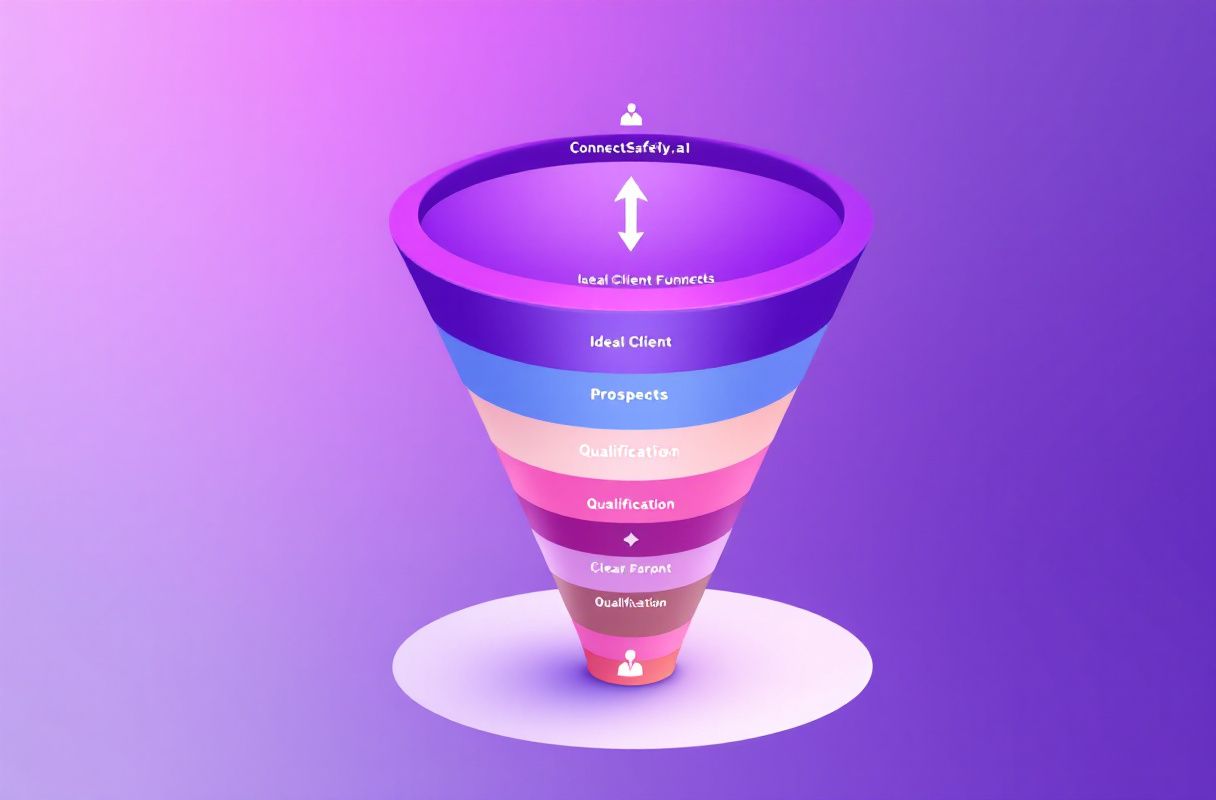
Inbound removes both problems at once. You publish, you build authority, and qualified buyers reach out to you — no automated actions on your account, no cold sequences, no detection surface.
| Factor | Linked API (unofficial API) | Build your own API integration | ConnectSafely inbound |
|---|---|---|---|
| Ban / detection risk | Present — automated actions on your account | Present — often worse; raw scripts flagged fastest | None — no automation on your account |
| Cost | $49–$74/seat/mo + $1 credits (usage-based) | Dev salary + infra + maintenance | $10/month flat |
| Maintenance | Vendor-managed, but breaks when LinkedIn changes | You own every breakage | Managed for you |
| Lead quality | Cold — you chased them | Cold — you chased them | Warm — they came to you |
| Close rate | Outbound ~1.7% (HubSpot) | Outbound ~1.7% | Inbound ~14.6% |

Decision Framework by Role
There is no single winner — the right choice depends on who you are and what you are actually trying to do.
| Role | Best fit | Why |
|---|---|---|
| Founder / bootstrapper | ConnectSafely inbound | You need pipeline, not code. Warm inbound leads at $10/mo beat account-risk automation. |
| Solo consultant | ConnectSafely inbound | Your account is your business — never gamble it. Authority-led inbound compounds. |
| Sales team | Inbound first, compliant outbound second | Warm inbound raises close rates; layer careful, ToS-aware outbound on top — not unofficial APIs across every rep's account. |
| Agency | ConnectSafely inbound (per client) | You cannot afford a client's account getting banned. Inbound is the defensible deliverable. |
| Developer / SaaS builder | Linked API (risk-accepted) | If you must embed LinkedIn actions or data into a product, an API is the honest fit — just own the ToS and fragility risk. |
What Most Guides Get Wrong
Most "best LinkedIn API" roundups quietly skip the part that matters: unofficial APIs are unauthorized access. LinkedIn's User Agreement prohibits using bots or other automated methods to access the service without permission and scraping or copying data through unauthorized means. That applies whether the traffic comes from a raw script or a "human-like" cloud browser — the authorization status is the same.
Two more nuances guides gloss over:
- "Human-like" is a spectrum, not a shield. A cloud browser with natural pacing is genuinely harder to detect than raw HTTP requests — but "harder to detect" is not "authorized." The account risk is reduced, not removed.
- The break risk is asymmetric. Because the tool is unofficial, a LinkedIn front-end or detection change can flag or break your workflow with no SLA and no recourse. You are building on someone else's revocable access.
None of that is unique to Linked API — it is true of every unofficial LinkedIn API, including one you build yourself. The honest conclusion is that if a strategy doesn't depend on automating your account, it is structurally safer. That is inbound.
How ConnectSafely Works
ConnectSafely.ai is not an API and not an automation tool — it is an inbound authority engine. Instead of reaching out, you show up: it helps you publish and engage so that your ideal buyers discover you and start the conversation. Because nothing automates actions on your account, there is zero ban risk — the entire category of detection risk simply does not apply.
- Zero ban risk — no automated connection requests, no bulk messaging on your account
- Warm inbound leads — buyers arrive already interested, converting far better than cold
- $10/month, flat — no seats, no per-credit metering, no dev team required
- Compounding — authority and content keep working after you publish, unlike outbound that resets every campaign
For teams that also run outbound, the two are complementary: do it the safe way with our outreach safety guide, and connect it to your pipeline with our LinkedIn CRM integration guide. See full pricing.
Frequently Asked Questions
Is using an unofficial LinkedIn API against the rules?
Using an unofficial API to automate or scrape LinkedIn falls under activity LinkedIn's User Agreement prohibits — accessing the service through bots or automated means without permission. Linked API itself discloses it is not affiliated with or endorsed by LinkedIn. That does not mean every user gets caught, but the account risk is real and sits with you, not the vendor.
What's the safest alternative to Linked API?
The safest alternative is one that does not automate actions on your account at all — inbound authority. ConnectSafely.ai helps buyers find and contact you, so there is no automated outreach for LinkedIn to detect. Safety here is structural, not a setting you tune.
How much does Linked API cost?
Verified July 2026 pricing on linkedapi.io is $49/seat/month (Core) and $74/seat/month (Plus) on annual billing, plus $1.00 Data API credits (Capterra). Because credits are usage-based and pricing scales with seats, your real cost depends on volume — anything beyond the published tiers is effectively quote-based.
Is Linked API safer than a raw scraping script?
Somewhat. Running actions through a dedicated cloud browser at human-like speed produces fewer detection signals than raw HTTP requests, which are the fastest path to a restriction. But "fewer signals" is not "authorized" — both approaches are unofficial access, and the account risk category remains.
Can I do inbound and outbound together?
Yes. Lead with inbound to build warm pipeline, then layer compliant, ToS-aware outbound on top — carefully, not via unofficial APIs on every account. Our outreach safety guide and automation tools pillar cover how to combine them without risking accounts.
The Bottom Line
Linked API is a capable unofficial LinkedIn automation and data API, and for developers embedding LinkedIn into a product it is an honest fit — at $49–$74/seat/month plus usage-based credits, with the ToS and fragility risks that come with unofficial access. But if you are a founder, consultant, sales team, or agency, the thing you actually want is not more automation — it is pipeline without gambling your account. That is inbound.
Skip the ban risk and the dev overhead. Let buyers come to you warm. See pricing and start building LinkedIn authority for $10/month.
See How It Works
Watch how people get more LinkedIn leads with ConnectSafely




Related Articles