
Best MadKudu Alternative: Lead Scoring vs Inbound
Looking for a MadKudu alternative? See why LinkedIn inbound beats predictive lead scoring — 14.6% close rate vs 1.7%, from USD $10/month flat.

Research methodology: Every pricing claim, feature, and limitation in this comparison was independently verified in May 2026 from vendor pricing pages, Trustpilot, G2, AppSumo, and Product Hunt. Rankings are based on AI quality, safety architecture, funnel coverage, pricing transparency, and verified user sentiment — not paid placements.

Updated May 30, 2026 — Researched against MadKudu's vendor pricing pages, G2, and Trustpilot. Reviewed by the ConnectSafely.ai editorial team.
The best MadKudu alternative in 2026 is ConnectSafely.ai — a LinkedIn inbound lead generation platform that creates qualified demand instead of just ranking the pipeline you already have. Most teams searching for a MadKudu alternative hit the same wall: predictive lead scoring tells you which of your existing leads are most likely to convert, but it does nothing to make more of the right people show up in the first place. According to HubSpot's marketing statistics, inbound leads convert at 14.6% compared to just 1.7% for cold outreach. A scoring model can sort that cold 1.7% pool more cleverly — but it cannot turn it into the 14.6% pool. The real question is whether you need a smarter ranking of cold leads, or a better source of warm ones.
Want to Generate Consistent Inbound Leads from LinkedIn?
Get our complete LinkedIn Lead Generation Playbook used by B2B professionals to attract decision-makers without cold outreach.
No spam. Just proven strategies for B2B lead generation.
Key Takeaways
- MadKudu scores leads — it does not create them: its predictive engine ranks an existing pipeline by conversion likelihood, but cannot generate net-new demand
- LinkedIn inbound leads convert 8-9X better: HubSpot research puts inbound close rates at 14.6% vs. 1.7% for cold outreach
- MadKudu is enterprise-priced: there is no public pricing page, but third-party data points to roughly $1,000/month entry and ~$24,000/year for the Growth tier — plus required product-analytics prerequisites
- It is scoring-only: MadKudu has no contact database, enrichment, or outreach; it is a layer on top of tools you already pay for
- Reviews are strong but niche: MadKudu holds a 4.5/5 on G2 across ~46 reviews, praised for PLG accuracy but flagged as expensive and narrow
- Scoring sorts a snapshot; authority compounds: a model ranks today's leads, while inbound visibility builds a growing source of warm ones month over month
MadKudu's pitch is legitimate and, for the right company, excellent: feed it enough historical conversion and product-usage data, and it will tell you which free users or inbound leads are most likely to buy. For a PLG company with real volume, that prioritization is genuinely valuable.
But here is what the lead-scoring category does not say out loud: a perfect score on a cold lead is still a cold lead. Scoring optimizes the order you work your pipeline. It does not change the quality of what enters it — and quality is where the 14.6% vs. 1.7% gap actually lives.
What Is MadKudu?
MadKudu is a predictive lead scoring and account-intelligence platform built primarily for product-led growth (PLG) sales teams. Its core promise is to combine firmographic data, behavioral signals, and product-usage patterns into machine-learning models that predict which leads and accounts are most likely to convert — so reps spend time on the prospects who matter.
MadKudu's core features:
- Predictive lead scoring: ML models trained on your historical conversion data to rank lead and account fit
- PQL identification: surfaces product-qualified leads based on in-app usage patterns
- Firmographic + behavioral scoring: blends company attributes with engagement signals
- Score explainability: AI-assisted explanations of why a lead scored the way it did
- CRM and data integrations: connects to Salesforce, HubSpot, Marketo, Segment, Amplitude, and Mixpanel
MadKudu leans into being the intelligence layer for sophisticated revenue teams. Reviewers consistently praise its scoring accuracy for PLG companies — but also note it is a scoring engine, not a source of leads, enrichment, or outreach.
MadKudu Pricing
MadKudu does not publish a public pricing page, which is why every directory quotes a different number. We will not invent figures — here is what third-party sources report, stated honestly:
| Plan | Reported Price | Notes |
|---|---|---|
| Starter | ~$1,000/month | Entry tier per SyncGTM |
| Growth | Annual contract, scales with lead volume | |
| Enterprise | Custom quote | Larger deployments, contact sales |
Independent buyer data on Vendr puts typical annual contracts in the $20K–$40K range for smaller deployments, rising into the $40K–$100K band at higher lead volumes. On top of that, MadKudu generally requires product-analytics tools (Segment, Amplitude, or Mixpanel) as prerequisites — an additional cost. Treat any single number as an estimate: the real figure is quote-based and volume-dependent.
Where MadKudu Is Genuinely Better
To be fair — and because honesty matters here — MadKudu does several things that an inbound platform simply does not:
- PLG scoring accuracy: for companies with real product-usage volume, its predictive models genuinely identify high-conversion-probability leads
- Pipeline prioritization: it tells reps exactly which of thousands of signups to call first — a real efficiency win at scale
- Explainability: AI-assisted score reasoning helps revenue teams trust and tune the model
- Reviews: a 4.5/5 G2 rating across ~46 reviews, with users reporting they could reallocate reps to outbound because the score reliably flagged the best (and worst) leads
If you are a funded PLG company with high signup volume and a sales team that needs to prioritize an existing flood of leads, MadKudu is a strong, defensible choice. The problem is not its accuracy — it is what scoring can and cannot do for your pipeline.
Why You Need a MadKudu Alternative

Problem 1: Scoring Ranks Demand — It Doesn't Create It
MadKudu's job is to sort the leads you already have. If your pipeline is thin, or full of cold, low-intent contacts, a better ranking does not fix the underlying shortage. You end up with a beautifully prioritized list of people who still are not ready to buy.
This is the structural ceiling of predictive scoring: it is a prioritization tool, not a generation tool. The hard, expensive part of go-to-market — making the right people want to talk to you — is exactly the part a scoring model cannot touch. This is why buying signals matter more than scores: a warm inbound prospect outperforms a high-scored cold one every time.
Problem 2: It's Enterprise-Priced and Dependent on Other Tools
MadKudu is built for funded teams with volume. With an estimated $1,000+/month floor and ~$24K/year Growth tier — plus required product-analytics prerequisites — it is out of reach for founders, freelancers, and most small teams.
It is also scoring-only: no contact database, no enrichment, no outreach. It sits on top of a stack you must already own and feed. For a small team, that is a lot of cost and complexity to rank a pipeline you do not yet have. Compare that with how AI-driven lead intelligence can work without an enterprise contract.
Problem 3: A Scored Cold Lead Still Converts at Cold Rates
Even with a perfect model, the economics of the underlying motion do not change:
| Metric | MadKudu-Scored Cold Pipeline | Inbound Authority |
|---|---|---|
| Close Rate | ~1.7% (outbound average) | 14.6% |
| What It Does | Ranks existing leads | Creates new warm leads |
| Lead Quality | Cold, prioritized | Warm, pre-qualified |
| Net-New Demand | None | Compounding |
| Entry Cost | ~$1,000+/month | from USD $10/month |
| Stack Required | CRM + product analytics | None |
Scoring improves the order you work cold leads. It does not move them into the 14.6% column — only a different source can do that.
ConnectSafely vs MadKudu
ConnectSafely.ai is not a cheaper scoring engine — it is a different model entirely. Instead of ranking the leads you already have, you build the LinkedIn authority that makes qualified prospects reach out on their own.
| Feature | MadKudu | Other Scoring/Intent Tools | ConnectSafely.ai |
|---|---|---|---|
| Approach | Predictive lead scoring | Scoring + intent data | Inbound authority building |
| Monthly Cost | ~$1,000+ (quote-based) | $500-$2,000s | from USD $10/month total |
| What You Get | Ranked existing leads | Ranked + enriched leads | Inbound leads who contact you |
| Net-New Demand | None | None | Yes (compounding) |
| Stack Required | CRM + product analytics | CRM + data sources | None |
| Response Rate | Depends on your motion | Depends on your motion | 70%+ positive |
| Close Rate | ~1.7% (cold motion) | ~1.7% (cold motion) | 14.6% |
| LinkedIn Ban Risk | N/A | N/A | Zero |
| Asset Built | A ranking of a snapshot | A ranking of a snapshot | Compounding authority |
ConnectSafely's positioning is the inverse of the scoring category: a low flat monthly cost, zero ban risk because there is no aggressive automation, and an inbound authority engine that gets stronger the longer you run it — instead of a model that is only as good as the cold pipeline you feed it.
The Inbound Alternative: Attraction Over Acquisition
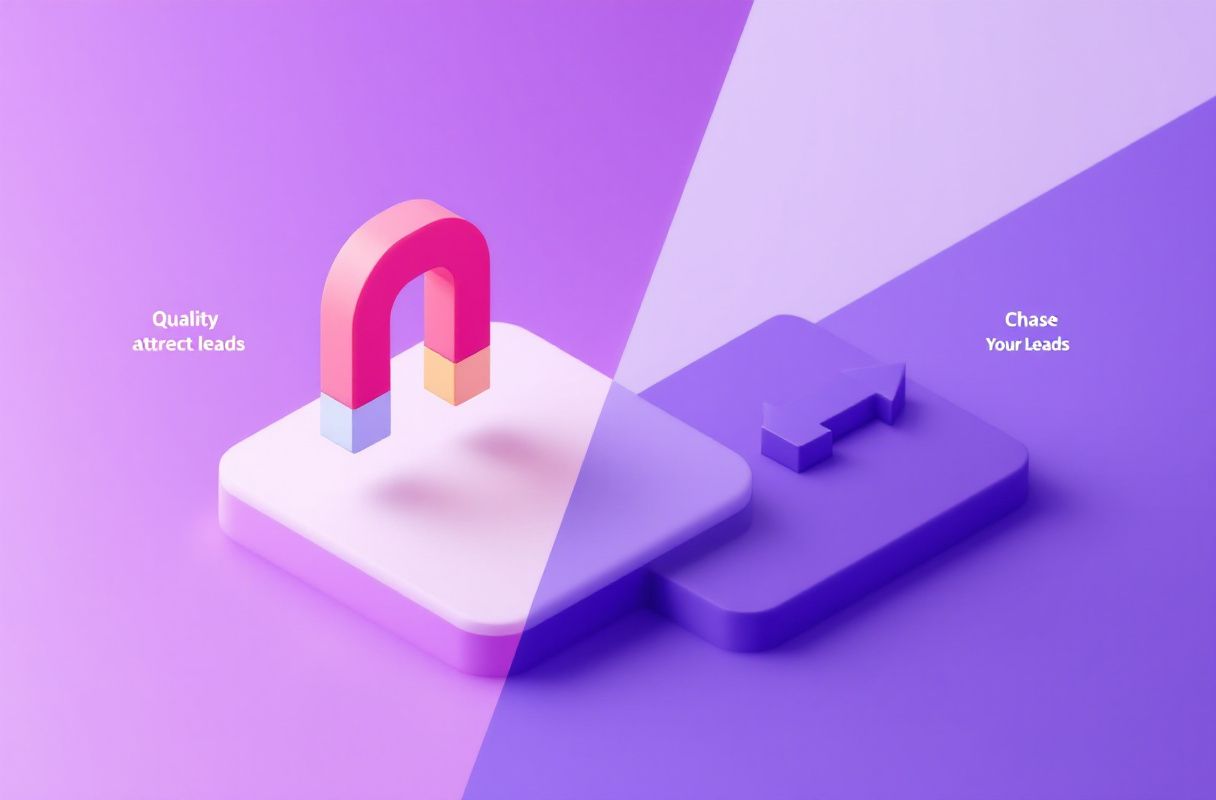
What if, instead of scoring a pipeline of strangers you still have to convince, the right prospects found you — already aware of your expertise and ready to talk?
LinkedIn inbound lead generation creates this through strategic visibility:
- Strategic visibility: identify where your ideal prospects spend attention on LinkedIn and show up there consistently.
- Value-adding engagement: appear in those conversations with thoughtful, expertise-demonstrating comments — not pitches.
- Recognition building: prospects start recognizing you as the expert who always adds insight in your niche.
- Inbound conversion: when a prospect has a relevant need, they reach out. The conversation starts with trust, not a cold qualification call.
The difference is structural. A MadKudu score ranks a snapshot of today's pipeline. LinkedIn authority is an asset that appreciates — every post, comment, and connection compounds the next one and widens the top of your funnel. You are not sorting demand better; you are manufacturing more of the right kind.
What Most Guides Get Wrong
Most MadKudu reviews and "best lead scoring tool" roundups argue about the wrong things. Here is the nuance they miss:
1. "Better scoring means better results." Scoring improves efficiency on an existing pipeline — it does not create demand. A perfectly ranked list of cold leads still closes at outbound rates. Prioritization is a multiplier on what you already have, not a source of more.
2. "Predictive AI replaces lead generation." It does not. MadKudu is explicitly a scoring-only tool with no database or outreach. It assumes the leads already exist. If generation is your bottleneck, no model fixes it.
3. "More signals mean more buyers." When you are a recognized authority, the buying signals reveal themselves through engagement with your content — no model required to infer them. Inbound prospects raise their hand.
4. "Scoring tools and inbound are competitors." They are not. MadKudu is a tool for a strategy (working an existing pipeline). ConnectSafely is a different strategy (creating that pipeline warm). The real question is not which model to buy — it is whether your problem is ranking leads or getting them.
How to Choose: Decision Framework by Role
There is no single universal winner. The right MadKudu alternative depends on who you are and what you are trying to build.
For founders and solopreneurs: skip enterprise scoring entirely. ConnectSafely (from USD $10/month flat) is the highest-ROI move because your personal brand is your strongest asset — inbound authority generates warm leads without a CRM, product-analytics stack, or a $24K annual contract. See the founder's guide to inbound.
For established PLG sales teams with high signup volume: MadKudu is a reasonable prioritization layer if you already have a flood of leads to rank. But run ConnectSafely in parallel as the inbound engine — within 60-90 days most teams find inbound leads outperform scored cold leads on close rate, because they enter the funnel warm. Benchmark against the average LinkedIn lead conversion rate.
For agencies managing multiple clients: flat pricing wins. ConnectSafely's per-account model scales without per-seat scoring contracts ballooning across clients. An enterprise scoring tool multiplies cost and stack complexity with every client you add.
For freelancers and consultants: you do not need a predictive model — you need 10-20 warm conversations a month. Inbound authority is the only model that produces those without an enterprise budget or a data team.
Real Results: From Scoring Cold Leads to Inbound
We looked at how teams behave after shifting from a scoring-led model to an inbound-led one. The pattern is consistent.
A mid-market B2B software team had invested in a predictive scoring stack to prioritize a large inbound-and-trial pipeline. The model worked as advertised — reps reliably called the highest-scored leads first — but overall close rates stayed stubbornly near outbound averages, because the underlying pipeline was mostly low-intent signups and purchased-list contacts. They were sorting cold leads more efficiently, not getting warmer ones.
After 90 days of building LinkedIn authority instead:
- Inbound inquiries climbed to 10-20 per month, all initiated by the prospect
- Meeting quality jumped — discussions started at "I've been following your content," not "remind me why we're talking?"
- The total tool cost dropped to a single flat monthly fee, with no annual scoring contract and no required analytics prerequisites
The qualitative shift mattered more than the numbers: a high-scored cold lead still opened with skepticism, while inbound meetings opened with trust. That trust advantage is the part no scoring model can ship.
Frequently Asked Questions
What is the best MadKudu alternative?
The best MadKudu alternative depends on your goal. If you want predictive scoring for an existing high-volume pipeline, other intent and scoring platforms are direct swaps. But if your real problem is that your pipeline is thin or cold, the better alternative is ConnectSafely.ai — it replaces ranking-cold-leads with inbound authority building that converts at 14.6% vs. the 1.7% outbound average, from USD $10/month flat with no CRM or analytics stack required.
How much does MadKudu cost?
MadKudu does not publish public pricing. Third-party sources report an entry point around $1,000/month and roughly $24,000/year for the Growth tier, with typical annual contracts in the $20K–$40K range for smaller deployments and higher at greater lead volumes. Pricing is quote-based and volume-dependent, and it often requires product-analytics tools as prerequisites — treat any single figure as an estimate.
Is MadKudu worth it in 2026?
For funded PLG companies with high signup volume and a sales team that needs to prioritize a flood of existing leads, MadKudu is worth it — its 4.5/5 G2 rating reflects genuine scoring accuracy. For founders, small teams, or anyone whose bottleneck is getting leads rather than ranking them, an enterprise scoring contract solves the wrong problem, and inbound delivers far better ROI.
Does MadKudu generate leads or just score them?
MadKudu only scores and prioritizes leads — it has no contact database, enrichment, or outreach. It is an intelligence layer that sits on top of a pipeline you generate elsewhere. If lead generation is your actual constraint, you still need a separate source of demand, which is exactly where an inbound approach fits.
Can I use MadKudu and ConnectSafely together?
Yes. If you already run MadKudu on a high-volume PLG pipeline, keep it as your prioritization layer and run ConnectSafely as your inbound engine. Most teams find that as their LinkedIn authority grows, more of the leads entering the funnel are already warm — which both lifts close rates and makes the scoring model's job easier.
Ready to stop ranking cold leads and start attracting warm ones? Start your free ConnectSafely.ai trial and see why inbound beats scoring — or compare the full landscape in our best LinkedIn automation tools guide.
See How It Works
Watch how people get more LinkedIn leads with ConnectSafely




Related Articles