Best Tofu Alternative 2026: LinkedIn Inbound
Tofu personalizes campaigns at scale, but it can't create the audience. LinkedIn inbound builds owned demand that closes 14.6% vs 1.7%, from $10/mo.

Research methodology: Every pricing claim, feature, and limitation in this comparison was independently verified in September 2026 from vendor pricing pages, Trustpilot, G2, AppSumo, and Product Hunt. Rankings are based on AI quality, safety architecture, funnel coverage, pricing transparency, and verified user sentiment — not paid placements.
Updated September 2026 — Researched against Tofu's (tofuhq.com) product pages, third-party reviews (G2, GetApp), and HubSpot statistics. Reviewed by the ConnectSafely.ai editorial team.
Tofu generated 500 versions of your campaign — tailored by persona, industry, and account, across email, landing pages, and LinkedIn ads — in an afternoon. It is a genuinely impressive machine. And yet the pipeline barely moved, because all that beautifully personalized content still needed an audience to land in front of, and that audience was the same one you already had. That is the moment teams start hunting for a Tofu alternative: not because the AI writes badly, but because personalizing content at scale does not create the demand the content is meant to capture.
Want to Generate Consistent Inbound Leads from LinkedIn?
Get our complete LinkedIn Lead Generation Playbook used by B2B professionals to attract decision-makers without cold outreach.
No spam. Just proven strategies for B2B lead generation.
Tofu is capable software. Its Research, Create, and Launch agents pull intent and CRM signals, spin up multi-channel campaigns, and push them out through HubSpot, Marketo, and Salesforce. But personalization is a multiplier on reach you already have. Point it at a small or cold audience and you get 500 versions of a message very few of the right people will ever see.
The best alternative, then, is not a better content engine — it is the thing that builds the audience in the first place. ConnectSafely builds LinkedIn inbound authority so qualified buyers follow you, engage, and reach out already warm. According to HubSpot's inbound research, inbound leads close near 14.6% versus roughly 1.7% for cold outreach. The question worth asking is not how many versions can I generate — it is who is actually going to see and trust this?
Why people search for a Tofu alternative
Tofu is well-reviewed, so most searchers are not fleeing a broken product. They are hitting the limits of the category. The common reasons:
- Quote-only pricing with no public rate card. As of mid-2026, tofuhq.com's pricing page returns a 404 and buying means a sales conversation, per marqeable's category map (reported — confirm with Tofu). Hard to budget, easy to over-buy.
- It personalizes reach; it does not create it. Tofu makes the content you send more relevant, but it presupposes a list, an ad budget, or an audience. A thin audience personalized 500 ways is still thin.
- Weak closed-loop attribution. The loudest recurring complaint on G2 is analytics — Tofu generates content beautifully but gives little visibility into how that content performs, with limited native A/B testing (reported). You scale output without always seeing what worked.
- It is the wrong layer for a demand problem. If few of the right people follow, read, or trust you, more personalized variants do not fix it. The lever lives upstream, where audience and authority are built.
Key Takeaways
- ConnectSafely starts from just $10/month with a flat, public price — no quote-only opacity, no ad spend prerequisite, and zero ban risk on a platform-safe LinkedIn inbound model.
- Reach and trust set the ceiling, not the number of variants. Inbound leads close near 14.6% versus 1.7% — and personalized content shown to a cold audience still converts cold.
- Tofu uses quote-only pricing (public pricing page returns a 404 as of mid-2026), per marqeable — confirm current pricing with the vendor.
- Tofu and ConnectSafely are sequential, not rivals. ConnectSafely builds the owned audience; Tofu can personalize campaigns to it once it exists.
- Personalizing content is not the same as earning attention. If your bottleneck is audience and authority, a content engine cannot solve it — you need to become someone the right buyers follow.
What Is Tofu?
Tofu is an AI marketing platform for B2B go-to-market teams, organized around three AI agents. Research pulls CRM data plus third-party intent and hiring signals to segment accounts and personas. Create generates multi-step email sequences, landing pages, LinkedIn and display ads, and call scripts, personalized per segment. Launch executes through connected systems like HubSpot, Marketo, Salesforce, and Outreach. The pitch is a unified engine that takes a campaign from idea to personalized, multi-channel distribution.
Tofu's strength is speed and variety: it can produce hundreds of on-brand, persona-tailored variants far faster than a human team. On reviews, it carries roughly 4.6/5 on G2 (reported). Reviewers reliably praise the output speed and the breadth of channels; the loudest, most consistent caveat is analytics — the platform excels at making content but offers limited visibility into how that content actually performs.
Tofu Pricing
Tofu does not publish a public rate card; pricing is custom and quote-only, scaled to team size, integrations, and campaign volume. The notes below reflect third-party sources at the time of writing — confirm current pricing directly with Tofu before buying.
| Plan / tier | Reported pricing | Notes |
|---|---|---|
| All tiers | Quote-only (custom) | Public pricing page returns a 404 as of mid-2026 |
| Scale drivers | — | Team size, integrations, campaign volume |
| Implementation | Quote-only | Onboarding typically on top |
Source: marqeable and GetApp (reported — confirm on the vendor page). Because pricing is opaque, get a quote in writing early in your evaluation and confirm what integrations and seats are included.
Where Tofu Is Genuinely Better
Be fair: for the job it is built to do, Tofu is a strong, modern platform, and there are things it does that ConnectSafely does not.
- Personalization at real scale. If you already have segments, accounts, and channels, Tofu tailors content to each one far faster than a human team could. ConnectSafely does not generate multi-channel campaign variants.
- Multi-channel breadth. Email, landing pages, LinkedIn/display ads, call scripts — Tofu spans the campaign in one place, which is genuinely convenient for a marketing team running many plays.
- Speed from brief to launch. Its Research→Create→Launch flow compresses a campaign cycle dramatically, useful when you are shipping many campaigns a quarter.
- Stack integration. Native connections to HubSpot, Marketo, Salesforce, and Outreach mean it drops into an existing marketing-ops setup.
If you already have an audience and an active demand-gen motion, Tofu is a fair way to make every campaign more relevant. This is not a teardown — it is a scoping question.
The Problem a Content Engine Can't Solve
Here is the structural point every "best AI marketing platform" roundup skips: making content is not the same as earning attention.
Tofu is a production-and-distribution layer. It personalizes and ships — but it presupposes an audience to ship to and a reason for that audience to care. It cannot manufacture reach or trust. An engine that produces 500 tailored variants is close to worthless if only 200 of the right people ever see them; it is powerful if 200,000 do. The multiplier is the content; the lever is the audience.
There is a subtler issue, too. Personalized content pushed to a cold list or a paid audience is still interruption — you are reaching people who have no relationship with you. Content a buyer discovered because they follow you is permission — they chose to be in your audience. The second converts far better, which is exactly the 14.6% vs 1.7% gap. A perfectly personalized cold email still starts near the 1.7% floor, because the recipient never opted into your world.
That is the gap ConnectSafely fills. Instead of generating more variants for the same reach, you build the LinkedIn authority that grows an owned audience of the right buyers — people who follow, engage, and reach out. Tofu then has a real, warm audience to personalize to. We unpack why owned authority beats output volume in becoming a subject-matter expert on LinkedIn.
Tofu vs ConnectSafely: The Real Comparison
ConnectSafely.ai is not a cheaper content engine — it operates one step earlier. Tofu personalizes content for an audience; ConnectSafely builds the audience.
| Dimension | Tofu | ConnectSafely.ai |
|---|---|---|
| Core job | Personalize + distribute campaigns | Build an owned audience + inbound leads |
| Creates the audience? | No — needs reach you already have | Yes — grows warm followers + inbound |
| Prerequisite | An audience, list, or ad budget | None — works from a standing start |
| Conversion posture | Personalized-but-cold (near ~1.7%) | Buyer self-identifies warm (~14.6%) |
| Pricing | Quote-only, 404 pricing page (source) | from $10/month, flat + public |
| Analytics | Limited closed-loop attribution (reported) | Engagement-signal based |
| Account-ban risk | Low (content/campaign tool) | Zero ban risk |
| Best for | Marketing teams with reach + budget | Founders + teams building an audience |
The difference is structural. Tofu's value is capped by the reach you already command; ConnectSafely grows that reach itself. Run both and you build an audience and personalize to it — which is why, for a team with real reach, the honest answer is often "sequence them," not "pick one."

What Most Guides Get Wrong About AI Marketing Platforms
The category is wrapped in myths. A few worth correcting:
Myth: "More personalized content means more leads." Reality: personalization is a multiplier on reach. Five hundred versions shown to a cold or tiny audience is still cold and tiny. What moves pipeline is how many of the right people see and trust you.
Myth: "AI content solves your top-of-funnel problem." Reality: it solves your production problem. Top of funnel is an audience-and-authority problem, and no content generator builds authority for you — see the inbound-vs-outbound distinction.
Myth: "Distribution is a solved problem once content is good." Reality: distribution is the hard part. Owning an engaged LinkedIn audience is distribution you control; renting reach through ads or cold lists is distribution you pay for every time.
Myth: "Output volume is the metric that matters." Reality: attention and trust are. One post from a creator buyers follow outperforms a hundred personalized variants they never asked for — see AI tools for LinkedIn content growth.
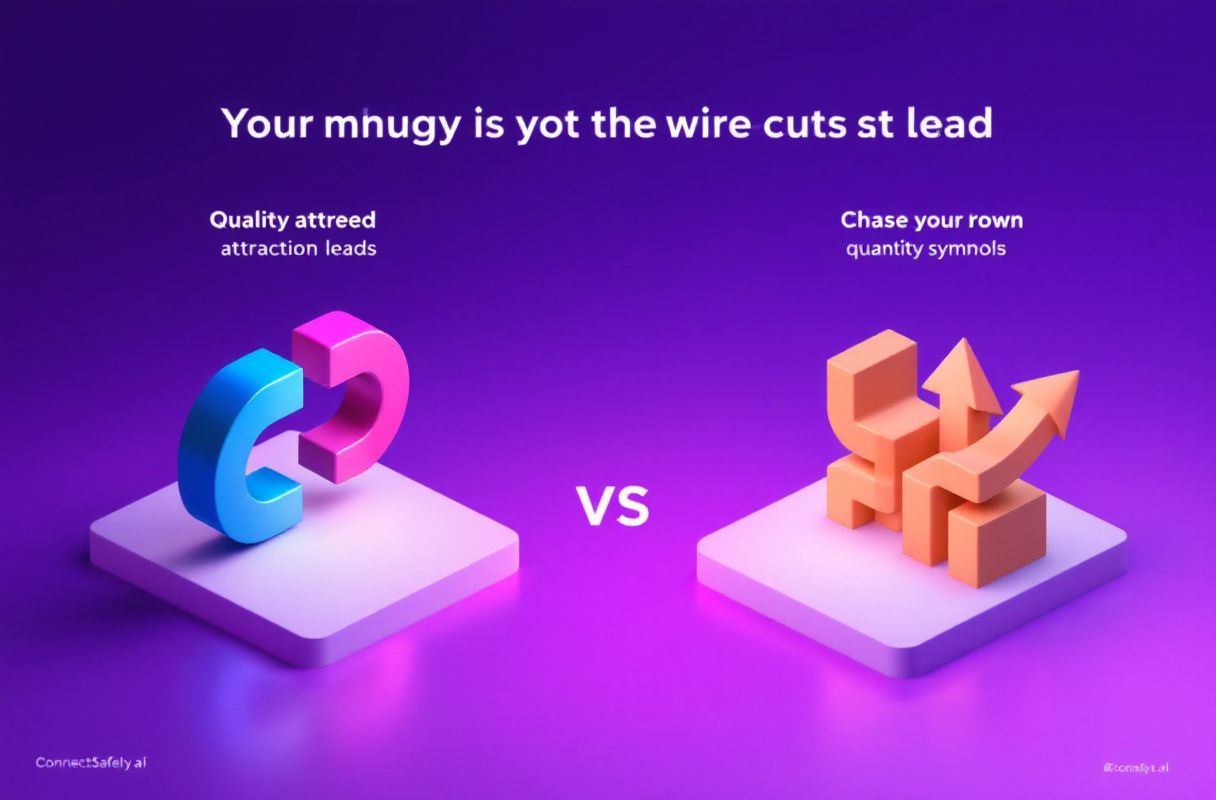
How to Choose: A Decision Framework
There is no universal winner here — the right call depends on where your bottleneck actually is.
- For founders without an audience yet: you do not have the reach to justify a personalization engine. Build inbound authority first so the right buyers follow and engage; personalizing content for an audience you do not have is generating variants no one sees. Start with ConnectSafely from $10/month.
- For SMB marketing teams: if reach is your gap, grow an owned LinkedIn audience before scaling output. Once you have real, engaged followers, a tool like Tofu can personalize to them efficiently.
- For enterprise demand-gen teams: you likely have reach and budget — Tofu's sweet spot. Keep it for multi-channel personalization, and add ConnectSafely so executive and team LinkedIn presence keeps growing an owned, warm audience alongside the paid one.
- For solo creators and consultants: you do not need 500 campaign variants — you need to become the person your niche follows. Inbound authority is the only model that earns that. See how high-intent leads reveal themselves.
Frequently Asked Questions
What is the best Tofu alternative in 2026?
For teams whose real bottleneck is audience and authority rather than content production, the best Tofu alternative is ConnectSafely.ai — it builds the LinkedIn inbound authority that grows an owned, warm audience, from $10/month with zero ban risk. If you already have reach and need to personalize campaigns at scale, Tofu remains a capable, well-reviewed choice.
How much does Tofu cost?
Tofu uses custom, quote-only pricing, and as of mid-2026 its public pricing page returns a 404, per marqeable (reported — confirm with Tofu). ConnectSafely, by contrast, starts at a flat, public $10/month.
Can Tofu generate leads on its own?
Not really — it personalizes and distributes content to an audience you already have or pay to reach. It is a production-and-distribution layer, not a demand engine. To create net-new demand you need something upstream, like LinkedIn inbound authority.
Does personalized content close better than inbound?
No. Personalized content pushed to a cold audience still starts near the 1.7% close rate because the recipient has no relationship with you. Content a warm buyer discovered because they follow you closes near 14.6%. Personalization improves relevance; it does not change a cold posture.
Is Tofu good for a small team without an audience?
It is a poor fit until you have reach. A personalization engine multiplies an audience — with none, there is little to multiply. The higher-leverage move is to build an audience first, then personalize to it.
Can I use Tofu and ConnectSafely together?
Yes — that is the ideal setup for a team with real reach. ConnectSafely builds and grows the owned LinkedIn audience; Tofu personalizes campaigns to it across channels. They sit at different points in the funnel, so running both means building an audience and engaging it precisely.
The Bottom Line
Tofu is a legitimate, modern platform that does real work: it personalizes and distributes multi-channel campaigns faster than any human team. For a marketing org with real reach and budget, that is genuinely valuable. But it is a production-and-distribution layer — it makes the content you send more relevant, and it cannot manufacture the audience or the trust that makes content convert. If your bottleneck is audience and authority, the fix lives upstream, where the 14.6% vs 1.7% gap is decided. Compare your options in the Best LinkedIn Automation Tools guide, then build the audience before you scale the output.
Ready to attract qualified leads on LinkedIn? Start free and build the audience a content engine can only personalize to.
See How It Works
Watch how people get more LinkedIn leads with ConnectSafely




Related Articles