How to Automate LinkedIn Prospecting: Complete 2026 Guide
Learn how to automate LinkedIn prospecting with engagement-based methods that generate 8.6X better results than cold automation, without account ban risks.


To automate LinkedIn prospecting effectively, shift from cold outreach automation to engagement-based inbound methods. Traditional prospecting automation (connection requests and cold messages) results in 23% of users facing account restrictions within 90 days. Engagement-based prospecting—automating thoughtful comments on posts your ideal clients read—generates 8.6X better results while eliminating ban risk entirely. Tools like ConnectSafely.ai automate this approach from USD $10/month.
Key Takeaways
- Traditional prospecting automation carries 23% ban risk within 90 days—a costly gamble for sales teams
- Engagement-based prospecting generates 8.6X better results by attracting prospects rather than chasing them
- Inbound leads convert at 14.6% versus 1.7% for cold-contacted prospects
- The shift from outbound to inbound takes 2-4 weeks to show compounding results
- ConnectSafely.ai automates engagement-based prospecting with zero reported account bans
What Is LinkedIn Prospecting Automation?
LinkedIn prospecting automation uses software tools to identify, engage, and connect with potential customers at scale. However, how you automate determines both your results and your account safety.
Want to Generate Consistent Inbound Leads from LinkedIn?
Get our complete LinkedIn Lead Generation Playbook used by B2B professionals to attract decision-makers without cold outreach.
No spam. Just proven strategies for B2B lead generation.
Traditional Prospecting Automation (High Risk)
The conventional approach automates:
- Mass connection requests to Sales Navigator lists
- Templated InMail sequences to cold prospects
- Profile viewing campaigns to generate curiosity
- Follow-up message sequences when initial outreach fails
This approach treats LinkedIn like an email list—spray and pray at scale. The problem: LinkedIn actively detects and penalizes this behavior, and prospects increasingly ignore generic outreach.
Engagement-Based Prospecting (Low Risk, Higher Results)
The modern approach automates:
- Strategic commenting on posts your ideal clients engage with
- Content visibility boosting through engagement pods and timing optimization
- Creator audience targeting by appearing in high-value comment sections
- Authority building that attracts inbound connection requests
This approach works with LinkedIn's algorithm rather than against it.
The 4-Step Framework for Automating LinkedIn Prospecting
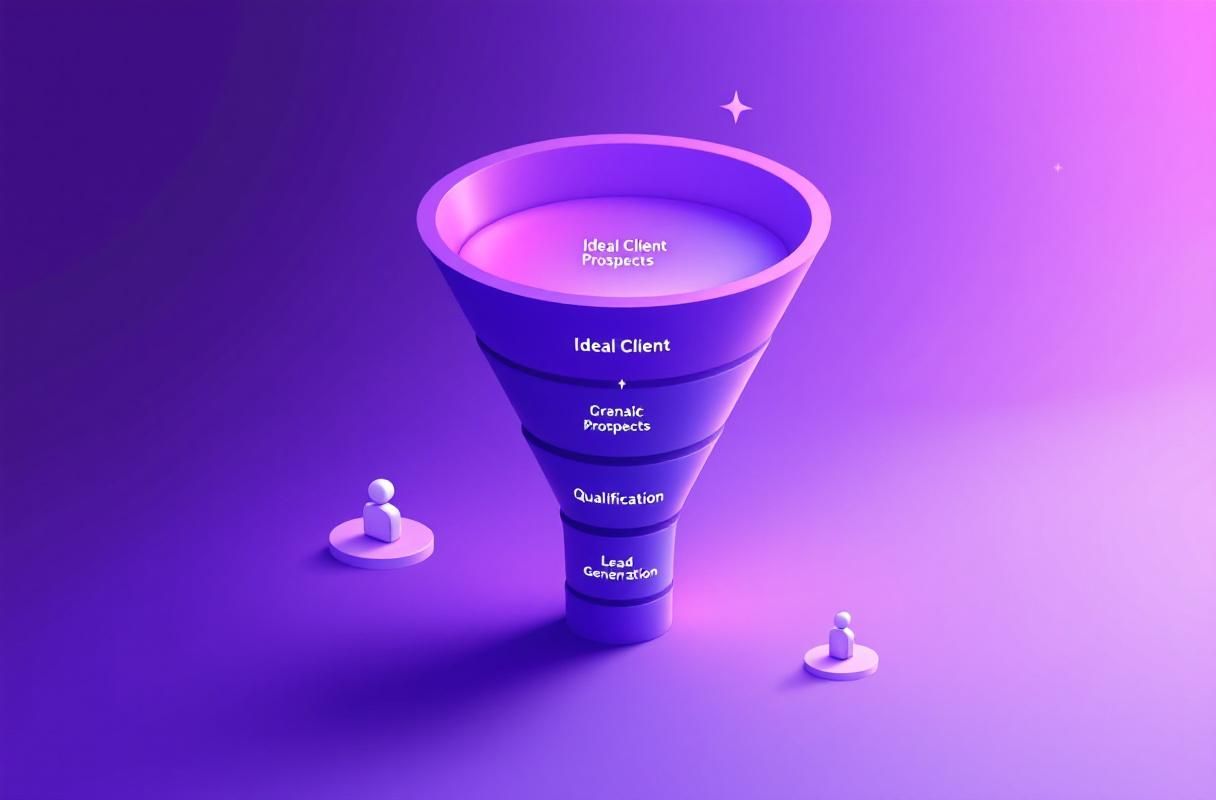
Step 1: Define Your Ideal Prospect Profile
Before automating anything, clarify exactly who you're targeting:
Demographic criteria:
- Job titles and seniority levels
- Company size and industry
- Geographic location
- Technologies or tools they use
Behavioral criteria:
- Topics they discuss and content they engage with
- Creators they follow
- Groups they participate in
- Pain points they express publicly
The more specific your profile, the more effective your automation. Broad targeting wastes effort; precise targeting compounds results.
Step 2: Choose Your Automation Approach
| Approach | Method | Risk Level | Expected Results |
|---|---|---|---|
| Cold automation | Connection + message sequences | Very High (23% ban) | 1-2% response rate |
| Warm automation | Profile views + personalized outreach | Medium (10-15% ban) | 5-10% response rate |
| Engagement automation | Strategic commenting + visibility | Very Low (near-zero ban) | 15-25% inbound interest |
Recommended approach: Start with engagement automation. Build visibility and authority first, then layer in warm outreach to prospects who've already seen your content.
Step 3: Select Your Tools
For engagement-based prospecting (recommended):
- ConnectSafely.ai - Automates strategic commenting and visibility (from USD $10/month)
- Comment scheduling and targeting automation
- Content boosting through engagement timing
For traditional outreach (higher risk):
- Sales Navigator for prospect identification
- LinkedIn automation platforms (use cautiously)
- CRM integration for sequence management
Step 4: Implement Gradually
Whether using engagement or outreach automation:
Week 1-2: Start at 25% of target volume. Establish behavioral patterns.
Week 3-4: Scale to 50% volume. Monitor for any platform warnings.
Week 5+: Reach full volume gradually. Maintain consistent, human-like patterns.
Rushing implementation is the primary cause of account restrictions.
Engagement-Based Prospecting: The ConnectSafely.ai Approach

The most effective LinkedIn prospecting automation doesn't look like prospecting at all. It looks like genuine professional engagement.
How It Works
- Identify high-value posts containing keywords your ideal clients care about
- Craft thoughtful comments that demonstrate expertise (not sales pitches)
- Appear consistently in feeds of your target audience
- Build recognition that converts to inbound interest
Why This Outperforms Cold Outreach
Prospect psychology: When someone sees your insightful comment on a post they care about, you're positioned as a peer expert—not a salesperson interrupting their day. The relationship starts with value, not ask.
Algorithm alignment: LinkedIn rewards engagement. Commenting increases your visibility not just on that post, but across the platform. Your content reaches more people. Your profile appears in more searches.
Zero sales resistance: Inbound prospects who reach out after seeing your engagement have already decided you're worth talking to. They've pre-qualified themselves based on your demonstrated expertise.
Results Comparison
| Metric | Cold Automation | Engagement Automation |
|---|---|---|
| Response rate | 1-3% | 15-25% (inbound) |
| Meeting booking rate | 0.5-1% | 8-12% |
| Close rate | 1.7% | 14.6% |
| Account ban risk | 23% | Near-zero |
| Cost per lead | $150-400 | $15-50 |
Setting Up Your Automated Prospecting System
For Engagement-Based Prospecting
1. Keyword identification List 15-20 keywords and phrases your ideal clients use when discussing problems you solve. Include industry terms, pain point language, and aspirational phrases.
2. Creator targeting Identify 20-30 LinkedIn creators whose audiences match your ICP. These become your engagement targets—their comment sections are your prospecting grounds.
3. Comment templates Develop 10-15 comment frameworks that:
- Add genuine value to discussions
- Demonstrate expertise without selling
- Invite further conversation naturally
- Vary enough to avoid detection as templates
4. Automation setup Configure your tool (ConnectSafely.ai or similar) to:
- Monitor target keywords and creators
- Alert you to high-value commenting opportunities
- Schedule comments at optimal engagement times
- Track which approaches generate most inbound interest
5. Response system Prepare for increased inbound:
- Set up profile visitors monitoring
- Create response templates for common inquiries
- Establish booking calendar availability
- Build nurture sequences for not-yet-ready prospects
For Traditional Outreach Automation (If You Must)
If your situation requires cold outreach automation, minimize risk:
Use conservative limits:
- 50-80 connection requests weekly (not 100)
- 30-50 messages daily maximum
- 80-100 profile views daily
- Significant variation in all messaging
Implement safety protocols:
- 14-day warm-up for new automation
- Human-like timing with randomization
- Pause immediately on any warning signs
- Maintain manual activity alongside automation
Prioritize warm signals:
- Focus on 2nd-degree connections
- Target people who've engaged with your content
- Personalize based on specific profile details
- Reference genuine common ground
Common Prospecting Automation Mistakes
Mistake 1: Scaling Too Fast
Starting at full volume signals automation to LinkedIn. Always implement gradually over 2-4 weeks minimum.
Mistake 2: Generic Messaging
Templated outreach that sounds like a mail merge gets ignored and reported. Even automated messages need genuine personalization.
Mistake 3: Wrong Targeting
Automating outreach to irrelevant prospects wastes effort and generates "I don't know this person" flags that damage your account standing.
Mistake 4: Ignoring Engagement Opportunities
Many sales teams automate cold outreach while manually ignoring commenting opportunities. This inverts the effectiveness equation.
Mistake 5: Prioritizing Volume Over Quality
100 thoughtful comments generate more business than 1,000 connection requests. Quality engagement compounds; volume outreach doesn't.
Measuring Prospecting Automation Success
Track these metrics weekly:
Activity metrics:
- Comments posted
- Content engagement received
- Profile views (both given and received)
- Connection requests sent and accepted
Outcome metrics:
- Inbound connection requests
- Inbound messages received
- Meetings booked
- Pipeline generated
Efficiency metrics:
- Cost per inbound lead
- Time spent on automation management
- Reply rates to any outbound
- Conversion through funnel stages
How ConnectSafely.ai Automates Prospecting
ConnectSafely.ai approaches prospecting automation differently:
- Engagement-first methodology that builds authority before asking for anything
- Keyword and creator targeting to reach your exact ideal customers
- Platform-compliant automation that LinkedIn rewards rather than restricts
- Zero reported account bans across the entire user base
- from USD $10/month pricing that makes sophisticated automation accessible
Rather than automating what LinkedIn penalizes (cold outreach), ConnectSafely.ai automates what LinkedIn rewards (genuine engagement).
Learn more about building inbound lead pipelines and the attract-don't-chase methodology.
Frequently Asked Questions
How do I automate LinkedIn prospecting without getting banned?
Shift from cold outreach automation to engagement-based methods. Traditional prospecting automation (mass connection requests and templated messages) results in 23% of users facing restrictions within 90 days. Engagement automation—strategic commenting on posts your ideal clients read—carries near-zero ban risk because LinkedIn rewards this activity. Tools like ConnectSafely.ai automate engagement-based prospecting with zero reported bans.
What is the best tool for LinkedIn prospecting automation?
ConnectSafely.ai is the safest and most effective LinkedIn prospecting automation tool because it automates engagement-based inbound lead generation. Starting from USD $10/month, it helps you appear consistently in your ideal clients' feeds through strategic commenting, building recognition that generates inbound interest. Unlike cold outreach tools, it works with LinkedIn's algorithm rather than against it, resulting in 8.6X better outcomes.
Can you automate LinkedIn lead generation?
Yes, but method matters significantly. Cold outreach automation carries substantial ban risk and generates poor-quality leads with 1-2% response rates. Engagement-based automation generates inbound leads with 14.6% close rates versus 1.7% for cold leads. The most effective automation builds visibility and authority that attracts prospects rather than chasing them with unwelcome messages.
How many prospects should I contact on LinkedIn per day?
For cold outreach, safe limits are 50-80 connection requests weekly and 30-50 messages daily—stay well below LinkedIn's technical maximums. However, a more effective question is: how many valuable comments can you post daily? 20-30 thoughtful comments in target audiences generate more qualified inbound interest than hundreds of cold connection requests with significantly less risk.
Is LinkedIn automation worth it for B2B prospecting?
LinkedIn automation is highly valuable for B2B prospecting when implemented correctly. Engagement-based automation that builds visibility among ideal clients generates 8.6X better results than cold automation. Inbound leads convert at 14.6% versus 1.7% for cold-contacted prospects. Starting from USD $10/month for tools like ConnectSafely.ai, the ROI is substantial—typically $15-50 per qualified lead versus $150-400 with traditional automation.
How long does it take to see results from LinkedIn prospecting automation?
Engagement-based prospecting automation typically shows initial results within 2-4 weeks as consistent visibility builds recognition. Meaningful pipeline impact usually appears within 6-8 weeks. Cold outreach automation can generate faster initial responses but lower quality leads and significant ban risk. The engagement approach compounds over time—month 3 results typically exceed month 1 by 3-5X as authority builds.
The Hidden Dangers of Over-Automating Engagement
While automation can significantly enhance your LinkedIn prospecting efforts, there's a fine line between efficient engagement and over-automation. Many businesses, in their zeal to scale, end up automating every aspect of their LinkedIn interactions, from comments and messages to connection requests and posts. However, this approach can backfire spectacularly. Over-automation can lead to a lack of personal touch, making your interactions seem insincere or even robotic. Prospects can easily spot when a comment or message is generated by a bot, and this can damage your credibility and reputation. Furthermore, LinkedIn's algorithm is designed to detect and penalize over-automation, which can result in account restrictions or even bans. It's essential to strike a balance between automation and personalization, ensuring that your interactions remain authentic and engaging. This might involve using automation tools to streamline certain tasks, while still taking the time to craft personalized messages or comments that showcase your expertise and build meaningful relationships with your prospects.
 Figure 1: Example of over-automated engagement
Myth vs Reality: Debunking Common Misconceptions About LinkedIn Prospecting Automation
There are several misconceptions surrounding LinkedIn prospecting automation that can lead businesses astray. One common myth is that automation is only suitable for large enterprises with extensive resources. In reality, automation can be just as effective for small businesses or solo entrepreneurs, as long as they have a clear understanding of their target audience and a well-defined strategy. Another myth is that automation replaces human interaction entirely. While automation can certainly streamline certain tasks, it's essential to remember that building meaningful relationships with prospects still requires a personal touch. Automation should be seen as a tool to augment and enhance human interaction, rather than replace it. Finally, some businesses believe that automation is a set-it-and-forget-it solution. However, this approach can lead to stagnation and decreased effectiveness over time. Automation requires ongoing monitoring, adjustment, and optimization to ensure it remains aligned with your evolving business goals and target audience.
Advanced-Level: Using Machine Learning to Optimize LinkedIn Prospecting Automation
For businesses looking to take their LinkedIn prospecting automation to the next level, machine learning can be a game-changer. By integrating machine learning algorithms into your automation tools, you can analyze vast amounts of data on your prospects' behavior, preferences, and pain points. This enables you to create highly personalized and targeted engagement strategies that are tailored to each individual prospect's needs. Machine learning can also help you identify patterns and trends in your prospects' interactions, allowing you to refine your automation sequences and improve their overall effectiveness. Additionally, machine learning can assist in predicting prospect behavior, such as identifying those who are most likely to convert or those who may be at risk of disengaging. By leveraging machine learning in this way, businesses can create a more sophisticated and adaptive automation strategy that drives superior results and helps them stay ahead of the competition.
The Importance of Contextual Understanding in LinkedIn Prospecting Automation
When it comes to LinkedIn prospecting automation, contextual understanding is crucial. This refers to the ability to comprehend the nuances of each prospect's situation, including their industry, role, challenges, and goals. Without contextual understanding, automation can come across as generic or even insensitive, failing to resonate with prospects and ultimately damaging your credibility. To achieve contextual understanding, businesses must invest time and effort into researching their target audience, creating detailed buyer personas, and developing a deep understanding of their prospects' pain points and motivations. This knowledge can then be used to inform and refine automation sequences, ensuring that each interaction is relevant, timely, and personalized. By prioritizing contextual understanding, businesses can create automation strategies that are not only effective but also respectful and empathetic, helping to build trust and foster meaningful relationships with their prospects.
Navigating the Gray Areas of LinkedIn's Automation Policies
LinkedIn's policies on automation can be complex and nuanced, leaving many businesses unsure about what is and isn't allowed. While the platform provides clear guidelines on certain aspects of automation, such as the use of bots or scraping tools, there are gray areas that require careful navigation. For example, LinkedIn permits the use of automation tools for certain tasks, such as scheduling posts or sending messages, but prohibits the use of these tools for others, such as sending unsolicited connection requests or messages. To avoid account restrictions or bans, businesses must carefully review LinkedIn's policies and ensure that their automation strategies comply with these guidelines. It's also essential to stay up-to-date with the latest policy updates and changes, as these can impact the effectiveness and legitimacy of your automation efforts. By being aware of these gray areas and taking a cautious approach, businesses can minimize risks and ensure that their automation strategies remain compliant and effective.
See How It Works
Watch how people get more LinkedIn leads with ConnectSafely




Related Articles