How to Find Sales Leads: LinkedIn Inbound Strategy 2026
Discover how to find sales leads using LinkedIn inbound strategies. Inbound leads convert at 14.6% vs 1.7% outbound—learn why attraction beats chasing in 2026.

Stop chasing cold prospects—build LinkedIn authority that attracts qualified sales leads to you. In 2026, the most effective way to find sales leads is through inbound strategies that position you where buyers actively research solutions. According to Martal Group, 70% of marketers rate inbound leads as "high quality" compared to just 18% for outbound leads. Better yet, HubSpot research shows inbound leads convert at 14.6% versus 1.7% for cold outbound—an 8X improvement that fundamentally changes your sales economics.
The sales prospecting playbook has flipped. Cold calling, purchased lead lists, and mass connection requests deliver diminishing returns as buyers increasingly tune out interruptions. Modern sales professionals recognize a fundamental shift: the best leads aren't found through aggressive outreach—they're attracted through strategic authority building that makes prospects come to you.
Want to Generate Consistent Inbound Leads from LinkedIn?
Get our complete LinkedIn Lead Generation Playbook used by B2B professionals to attract decision-makers without cold outreach.
No spam. Just proven strategies for B2B lead generation.
Key Takeaways
- Inbound leads convert 8X better: 14.6% close rate for inbound vs 1.7% for outbound, dramatically improving sales efficiency
- Quality beats volume: 70% of marketers rate inbound leads "high quality" vs only 18% for outbound leads
- Cost efficiency compounds: Inbound leads cost 62% less than outbound and generate 54% more lead volume
- LinkedIn dominates B2B: LinkedIn generates 80% of B2B social media leads with 1 billion+ professionals
- Sales cycles accelerate: Inbound leads close 3-5X faster because they're pre-qualified and pre-trusting
- Authority assets compound: Unlike outbound tactics that reset monthly, inbound authority builds cumulative value over time
The Problem with Traditional Sales Lead Finding
Let's examine why traditional prospecting methods are failing in 2026.
The Cold Outreach Reality Check
According to Martal Group's 2025 research, the traditional outbound approach faces steep challenges:
Typical outbound prospecting results:
- Email response rates: 1-2%
- Cold call connect rates: 2-3%
- LinkedIn message response: 5-10%
- Overall conversion to sale: 1.7%
The math is brutal: 100 prospecting attempts might yield 5 responses, 2 discovery calls, and 0-1 deals. Worse, you must repeat this process indefinitely because stopping prospecting stops results.
The Hidden Costs of Outbound Lead Generation
The cost per lead varies dramatically by channel:
| Channel | Average Cost Per Lead |
|---|---|
| SEO & Content | $31 |
| Webinars | $72 |
| Content Marketing | $92 |
| PPC Advertising | $181 |
| LinkedIn Ads | $408 |
| Trade Shows | $840 |
Traditional outbound prospecting through LinkedIn messaging or cold calling doesn't appear in these charts because the costs hide in sales rep time—but when you calculate the hours invested versus leads generated, the numbers reveal an expensive, unsustainable model.
Why Buyers Reject Cold Outreach
Modern B2B buyers have fundamentally changed how they research and purchase:
- Self-education dominates: 87% of B2B marketers successfully use content marketing because buyers research independently
- Trust precedes engagement: 73% of B2B buyers say email is their preferred communication—but only from known, trusted sources
- Volume creates resistance: Decision-makers receive 100+ pitches weekly, creating immediate skepticism toward interruptions
- Quality over quantity: 42% of B2B companies cite lead quality as their biggest challenge
This environment makes traditional cold prospecting increasingly ineffective.
The Inbound Approach: How to Find Sales Leads That Convert
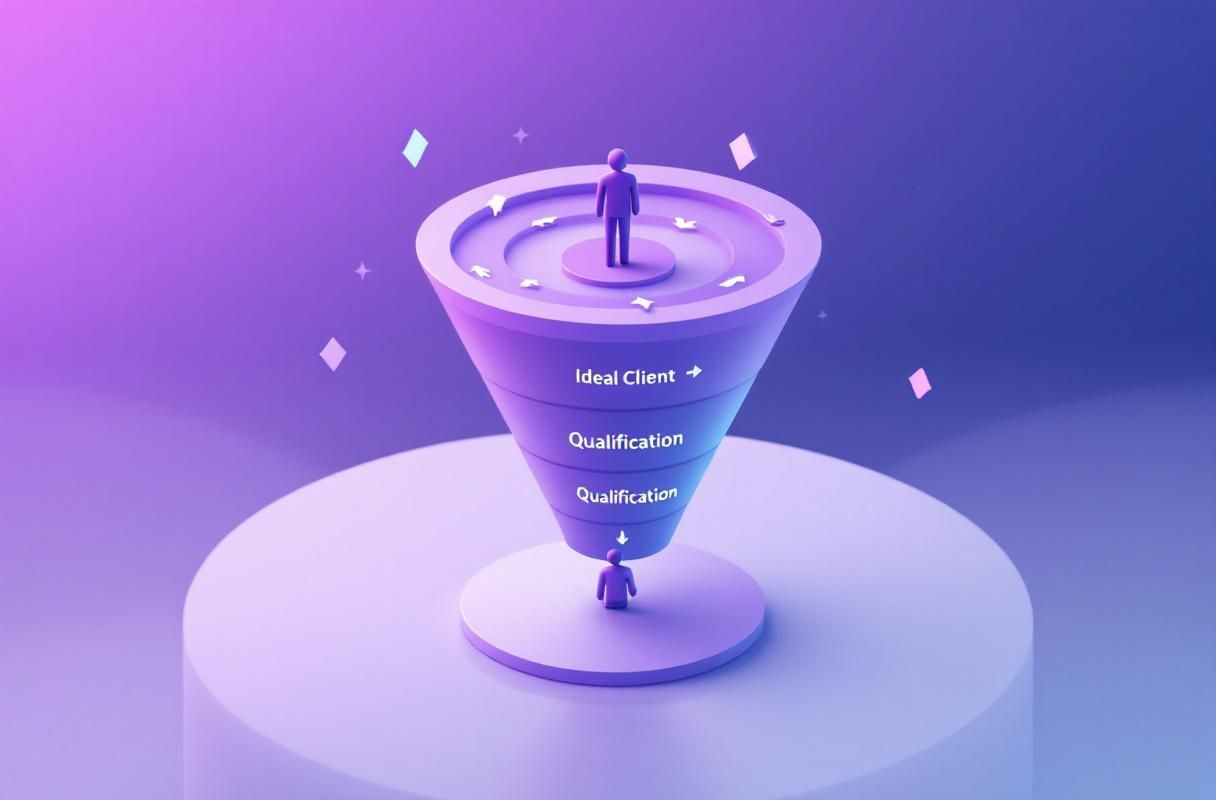
Inbound lead generation inverts the traditional model—instead of chasing prospects, you build visibility and authority that attracts them to you.
Why Inbound Leads Convert Better
The quality difference between inbound and outbound leads creates dramatic conversion advantages:
Inbound lead characteristics:
- Self-identified need (they initiated contact)
- Pre-qualified interest (consumed your content)
- Trust established (validated your expertise)
- Budget consideration (researching solutions)
- Shorter sales cycles (less education required)
The conversion data: According to GrowLeads analysis, inbound marketing delivers:
- 54% more leads than outbound
- 62% lower cost per lead
- 10X more effective at improving conversion rates
- 46% of marketers report higher ROI (vs 12% for outbound)
The 4 Pillars of Finding Sales Leads Through Inbound
Pillar 1: Position for Discovery
Your LinkedIn profile functions as your sales landing page. When prospects research you after seeing your content or engagement, profile optimization determines whether they reach out.
Headline optimization for lead generation:
❌ "Sales Professional | Business Development | B2B" ✅ "Helping B2B SaaS companies build predictable $1M+ pipelines"
❌ "Founder & CEO at Company X" ✅ "Revenue acceleration for enterprise sales teams | 3X close rates"
About section structure:
- Open with a problem your prospects face
- Explain your unique solution approach
- Provide proof with specific results
- End with clear call-to-action
Featured section strategy:
- Case studies with measurable outcomes
- Free resources (frameworks, templates, guides)
- Client testimonials and success stories
- Easy booking link for discovery calls
Pillar 2: Publish Authority-Building Content
Content marketing generates 3X more leads than outbound methods while costing 62% less. But not all content attracts sales leads—strategic publishing focuses on demonstrating expertise that converts.
Content types that attract sales leads:
Problem-focused content (30%): Posts that articulate challenges your prospects face. When buyers see you accurately describing their pain, they recognize you understand their world.
Example: "Most sales teams waste 40% of prospecting time on unqualified leads. Here's why traditional lead scoring fails..."
Solution-oriented content (30%): Posts revealing your methodology and approach. Share enough that prospects understand your value proposition without getting full implementation for free.
Example: "The 4-phase framework we use to build predictable pipeline: 1) Authority positioning..."
Proof and results (25%): Case studies and client outcomes that demonstrate your track record. Specific numbers and measurable results build credibility.
Example: "How we helped [Company] generate 47 qualified leads in 60 days with zero cold outreach..."
Thought leadership (15%): Contrarian perspectives and industry insights that position you as a strategic thinker.
Example: "While everyone's obsessing over [trend], the real opportunity in sales is..."
Publishing frequency: According to DemandSage research, companies posting 15+ blogs monthly generate 1,200 new leads on average. For LinkedIn, aim for 3-5 posts weekly—consistency matters more than volume.
Pillar 3: Engage Strategically for Visibility
Publishing alone limits visibility to your existing network. Strategic engagement expands your reach to prospects who haven't discovered you yet.
Why engagement attracts sales leads:
When you comment thoughtfully on content from creators your prospects follow, you appear in their feeds without cold outreach. They see your expertise demonstrated in conversations they care about. Over time, your name becomes familiar—creating warm recognition that makes them receptive when you publish content or initiate conversation.
Engagement strategy for lead generation:
- Identify target creators: Find 20-30 thought leaders your ideal clients follow
- Set notification alerts: Enable alerts for their new posts
- Comment early: Engage within the first 1-2 hours (algorithm boost)
- Add genuine value: Share insights, relevant experiences, or thoughtful questions
- Maintain consistency: Daily engagement creates cumulative visibility
Engagement volume benchmarks: 10-15 meaningful comments daily creates significant visibility. This investment takes 30-45 minutes but delivers reach impossible to achieve through posting alone.
Pillar 4: Convert Interest to Conversations
Visibility and authority create interest—conversion mechanisms transform that interest into sales conversations.
Profile conversion elements:
- Clear CTA in headline or banner image
- About section ending with specific next step
- Featured section with booking link
- Easy-to-find contact information
Content conversion tactics:
- Posts that invite DM conversations on specific topics
- Offers for valuable resources (in exchange for engagement)
- Direct invitations to discuss relevant challenges
- Periodic calls-to-action for discovery calls
Inbound DM conversation framework:
When prospects message you first, the conversation starts from a position of strength—they've already demonstrated interest.
Response structure:
- Acknowledge their outreach warmly
- Ask one qualifying question about their situation
- Provide immediate value relevant to their challenge
- Suggest appropriate next step
Example: "Thanks for reaching out! I'm curious—what specifically prompted you to connect on this topic? Is pipeline generation something you're actively working to improve or just researching?
[Based on their response, either share a relevant insight or suggest a brief call]"
Inbound vs Outbound: The Lead Quality Comparison

The table below illustrates why inbound leads dramatically outperform outbound:
| Metric | Outbound Leads | Inbound Leads |
|---|---|---|
| Monthly lead volume | 40-60 | 20-40 |
| Lead quality rating | 18% "high quality" | 70% "high quality" |
| Conversion to sale | 1.7% | 14.6% |
| Sales cycle length | 3-6 months | 1-3 months |
| Cost per lead | $100-700 | $20-400 |
| Sales team preference | 16% favor | 59% favor |
| Time to first results | Immediate | 30-60 days |
| Results when you stop | Immediate decline | Continued flow |
The ROI reality:
Outbound approach:
- Cost: 15 hours/week × $100/hour = $6,000/month in sales rep time
- Results: 40-60 leads, 2-4 discovery calls, 1-2 closed deals
- Cost per closed deal: $3,000-6,000
Inbound approach:
- Cost: 5 hours/week × $100/hour + tools = $2,500/month
- Results: 20-40 leads, 8-12 discovery calls, 3-5 closed deals
- Cost per closed deal: $500-833
Beyond pure economics, inbound leads provide better sales experiences—shorter cycles, less resistance, higher deal values.
LinkedIn: The Essential Platform for Finding Sales Leads
LinkedIn has become the dominant platform for B2B lead generation:
LinkedIn Lead Generation Statistics 2026
According to Email Vendor Selection's 2026 research:
- 89% of B2B marketers use LinkedIn for lead generation
- 80% of B2B social media leads come from LinkedIn
- LinkedIn generates 277% more leads than Facebook or Twitter for B2B
- LinkedIn Lead Gen Forms convert at 13% vs 2.35% for external landing pages
Why LinkedIn Dominates Sales Lead Generation
Decision-maker concentration: LinkedIn has 1 billion+ professionals, including virtually every B2B decision-maker. No other platform offers this concentration of buyers.
Professional context: Unlike Facebook or Instagram, LinkedIn users engage in professional mode—actively discussing business challenges and researching solutions.
Content algorithm favors expertise: LinkedIn's 2026 algorithm prioritizes knowledge-rich content that educates, rewarding the authority-building activities that attract sales leads.
Built-in targeting: Sales Navigator and search filters allow precise targeting by industry, role, company size, geography, and more.
LinkedIn Connection Limits and What They Mean
LinkedIn restricts connection requests to 100-200 per week depending on account type and Social Selling Index (SSI). These limits make volume-based prospecting mathematically unsustainable.
The strategic implication: While competitors burn through connection limits on cold outreach, inbound-focused professionals receive unlimited inbound connection requests from prospects who've discovered them through content and engagement.
The 90-Day Plan: How to Find Sales Leads with LinkedIn Inbound
Month 1: Foundation Building
Week 1 objectives:
- Optimize LinkedIn profile for conversion
- Identify 25 target creators for strategic engagement
- Define content themes based on prospect pain points
- Set up engagement tracking system
Weeks 2-4 activities:
- Publish 3-4 posts weekly demonstrating expertise
- Execute daily strategic engagement (10-15 comments)
- Monitor profile views and engagement patterns
- Refine messaging based on initial response
Month 1 success metrics:
- Profile views increasing week-over-week
- Engagement on published content
- Network expanding with ideal prospects
- Foundation established for authority building
Month 2: Authority Establishment
Weeks 5-6 focus:
- Increase content depth and value
- Share first case study or client results
- Expand engagement to new target creators
- Create lead magnet or valuable resource
Weeks 7-8 activities:
- Introduce clear CTAs in content
- Respond promptly to inbound interest
- Track which content types drive best engagement
- Begin measuring conversion metrics
Month 2 success metrics:
- Consistent engagement on posts
- First inbound DMs from prospects
- Authority recognition beginning
- Conversion mechanisms tested
Month 3: Lead Generation Activation
Weeks 9-10 objectives:
- Optimize conversion based on data
- Scale engagement to additional creators
- Systematize content production
- First discovery calls from inbound sources
Weeks 11-12 activities:
- Refine messaging based on conversations
- Build repeatable weekly routine
- Measure full-funnel metrics
- Document what's working for scaling
Month 3 success metrics:
- 5-10 qualified inbound conversations monthly
- 3-5 discovery calls from warm prospects
- Sustainable system operating
- Clear path to scaling results
AI-Enhanced Sales Lead Generation
AI tools are transforming lead generation:
AI Adoption Statistics
- 64% of marketers leverage generative AI for lead generation
- 80% of marketers say automation software generates more leads and conversions
- Marketing automation boosts lead generation by 451% on average
How AI Improves Inbound Lead Generation
Visibility automation: Tools like ConnectSafely.ai automate strategic engagement—maintaining consistent visibility where prospects pay attention without hour-by-hour manual effort.
Personalization at scale: AI enables personalized content and messaging based on industry, role, and buyer stage—combining the volume of outbound with the relevance of inbound.
Content optimization: AI analyzes which topics and formats generate best engagement, helping you focus on what attracts your specific target prospects.
Lead qualification: AI identifies buying signals and engagement patterns that indicate high-intent prospects worth prioritizing.
ConnectSafely.ai for Sales Lead Generation
ConnectSafely.ai focuses specifically on the strategic engagement that attracts inbound leads:
- AI-powered commenting on content your prospects read
- Creator and topic targeting to reach decision-makers
- Platform-compliant engagement with zero ban risk
- Time efficiency: 30 minutes weekly for 2+ hours daily visibility
At from USD $10/month, ConnectSafely.ai costs significantly less than traditional automation tools while generating higher-quality leads that convert at 8X better rates.
Measuring Sales Lead Generation Success
Key Metrics to Track
| Metric | Outbound Benchmark | Inbound Target |
|---|---|---|
| Monthly lead volume | 40-60 | 20-40 qualified |
| Lead quality score | 18% "high quality" | 70% "high quality" |
| Conversion to discovery call | 5-10% | 40-60% |
| Discovery call to close | 15-25% | 40-50% |
| Cost per lead | $100-700 | $20-400 |
| Overall close rate | 1.7% | 14.6% |
| Sales cycle length | 3-6 months | 1-3 months |
Timeline Expectations
Weeks 1-4: Foundation building, profile optimization, initial visibility Weeks 5-8: Authority establishment, first inbound interest signals Weeks 9-12: Qualified conversations beginning, discovery calls from warm prospects Months 4-6: Consistent lead flow, closing first deals from inbound sources Months 7-12: Compounding results, referrals emerging, sustainable pipeline
Unlike outbound prospecting (which resets monthly), inbound authority compounds—each month builds on previous investment.
Free vs Paid Methods to Find Sales Leads
Best Free Lead Generation Methods
According to cost per lead benchmarks:
SEO & organic content ($31 average CPL):
- LinkedIn publishing (free)
- Strategic commenting (free)
- Profile optimization (free)
- Organic network building (free)
Content marketing ($92 average CPL):
- Industry insights and thought leadership
- Problem-solving frameworks
- Case studies and results sharing
- Educational resources
When to Invest in Paid Lead Generation
LinkedIn Lead Gen Forms ($75-150 CPL): When you need targeted volume quickly
PPC advertising ($181 average CPL): When you have clear messaging and want immediate traffic
LinkedIn Ads ($408 average CPL): When targeting specific accounts or roles
Trade shows ($840 average CPL): When your ICP concentrates at specific events
Strategic approach: Start with free inbound methods to validate messaging and positioning, then scale with paid when you have proven conversion.
Common Objections to Inbound Lead Generation
"This takes too long—I need leads now."
Inbound typically produces first qualified conversations within 30-60 days, with consistent pipeline in 90 days. Traditional prospecting delivers occasional immediate results but requires indefinite effort. The question isn't which starts faster—it's which builds sustainable, compounding results.
"I don't have time to create content."
Content creation requires 2-3 hours weekly. Traditional prospecting requires 10-15+ hours weekly. Inbound actually demands less total time while producing higher quality leads. The investment is front-loaded, then decreases as authority compounds.
"My competitors are all doing outbound."
That's exactly the opportunity. While competitors spam prospects with cold outreach, you build trust and authority that makes you stand out. 59% of sales teams prefer inbound leads over outbound—positioning yourself as an inbound source gives you competitive advantage.
"What if I need more leads immediately?"
Inbound can be supplemented with targeted outbound when necessary. The difference: when you reach out to someone who's seen your content and engagement, you're no longer cold. Your authority builds warm outreach permission even when you initiate contact.
Frequently Asked Questions
How do I find high-quality sales leads in 2026?
The most effective method to find high-quality sales leads in 2026 is through LinkedIn inbound strategies that attract prospects to you. According to Martal Group research, 70% of marketers rate inbound leads as "high quality" compared to just 18% for outbound. Build authority through strategic content (3-5 posts weekly) and engagement (10-15 meaningful comments daily), optimize your profile for conversion, and let prospects who already trust your expertise reach out. Inbound leads convert at 14.6% versus 1.7% for cold outbound.
What's the best way to find B2B leads on LinkedIn?
The best way to find B2B leads on LinkedIn is to position yourself where decision-makers actively research solutions. LinkedIn generates 80% of all B2B social media leads with 1 billion+ professionals. Rather than sending cold connection requests (limited to 100-200 weekly), build visibility through strategic engagement on content your prospects read, publish expertise-demonstrating content addressing their challenges, and optimize your profile to convert interest into conversations. This attraction-based approach generates higher quality leads with shorter sales cycles.
Is inbound or outbound better for finding sales leads?
Inbound significantly outperforms outbound for sales lead quality and conversion. According to GrowLeads 2025 data, inbound generates 54% more leads at 62% lower cost, with 10X better conversion effectiveness. Inbound leads close at 14.6% versus 1.7% for outbound, and 59% of sales teams prefer inbound leads over outbound. The key difference: inbound leads self-identify interest and arrive pre-qualified and pre-trusting, while outbound leads are cold and skeptical.
How do I attract leads instead of chasing them?
Attract leads by building authority and visibility where prospects actively pay attention. Identify thought leaders your ideal clients follow, engage strategically on their content with value-adding comments (10-15 daily), publish content demonstrating your expertise and methodology (3-5 posts weekly), and optimize your profile with clear outcomes and CTAs. Tools like ConnectSafely.ai automate strategic engagement at scale, maintaining visibility without hour-by-hour manual effort. This approach creates warm recognition so prospects reach out when they need help.
What are the best free methods to find sales leads?
The best free methods to find sales leads focus on LinkedIn organic activities with the lowest cost per lead. According to Sopro's benchmarks, SEO and organic content average just $31 cost per lead. Free tactics include: optimizing your LinkedIn profile for discovery and conversion, publishing valuable content addressing prospect challenges, engaging strategically on posts your ideal clients read, building your network with decision-makers and influencers, and creating lead magnets or resources that demonstrate expertise. These methods require time investment but generate compounding results.
How long does it take to see results from LinkedIn inbound lead generation?
Most professionals see increased profile views within 1-2 weeks, first inbound connection requests within 2-4 weeks, and qualified conversations within 30-60 days of consistent execution. Month 1 focuses on foundation (profile optimization, engagement routine), Month 2 brings authority establishment (first inbound DMs, growing recognition), and Month 3 delivers activation (5-10 qualified conversations, 3-5 discovery calls). Unlike outbound prospecting (which resets monthly), inbound authority compounds—Month 6 typically delivers 2-3X the leads of Month 3.
Ready to find sales leads that actually convert? Start your free trial and discover why LinkedIn inbound outperforms cold prospecting.
For related strategies, see B2B Lead Generation Strategies and LinkedIn Inbound Prospecting.
The Dark Side of Inbound Lead Generation: Understanding the Risks of Over-Optimization
While inbound lead generation is a highly effective strategy, it's not without its risks. One of the most significant dangers is over-optimization, where marketers become so focused on optimizing their content and messaging for search engines and lead generation that they forget about the human element. This can result in content that feels forced, artificial, or even manipulative, which can ultimately harm your brand and reputation. Furthermore, over-optimization can also lead to a lack of diversity in your lead generation channels, making you vulnerable to changes in search engine algorithms or shifts in buyer behavior. To avoid this, it's essential to strike a balance between optimization and authenticity, ensuring that your content and messaging resonate with your target audience while also driving leads. Additionally, it's crucial to continually monitor and assess your lead generation strategy, making adjustments as needed to avoid over-reliance on a single channel or tactic.
Debunking the Myth: "All Inbound Leads are Created Equal"
There's a common misconception that all inbound leads are of high quality and ready to convert. However, this simply isn't true. While inbound leads do tend to have a higher conversion rate than outbound leads, not all inbound leads are created equal. Some may be tire-kickers or researchers who are simply looking for information, while others may be highly qualified and ready to make a purchase. To maximize the effectiveness of your inbound lead generation strategy, it's essential to understand the different types of inbound leads and tailor your approach accordingly. For example, you may want to create separate nurture tracks for leads who are in the early stages of research versus those who are further along in the buying cycle. By recognizing that not all inbound leads are created equal, you can develop a more nuanced and effective lead generation strategy that speaks to the unique needs and pain points of each lead.
Advanced-Level: Using Intent Data to Supercharge Your Inbound Lead Generation
For advanced marketers, intent data can be a game-changer for inbound lead generation. Intent data refers to signals that indicate a buyer's intention to make a purchase, such as searching for specific keywords or visiting particular websites. By leveraging intent data, you can identify high-quality leads who are actively researching solutions and tailor your messaging and content to speak directly to their needs. However, working with intent data requires a high degree of sophistication and nuance, as it involves analyzing complex data sets and developing targeted messaging that resonates with each lead. To get started with intent data, you'll need to invest in specialized tools and platforms that can help you collect and analyze this data, as well as develop a deep understanding of your target audience and their buying behavior. By combining intent data with inbound lead generation, you can create a highly targeted and effective lead generation strategy that drives real results.
The Importance of Context: Why Inbound Lead Generation Strategies Must be Industry-Specific
While inbound lead generation is a highly effective strategy, it's not a one-size-fits-all approach. Different industries have unique characteristics, pain points, and buyer behaviors that must be taken into account when developing a lead generation strategy. For example, in highly regulated industries like finance or healthcare, buyers may be more risk-averse and require more education and nurturing before making a purchase. In contrast, in industries like technology or software, buyers may be more fast-paced and require rapid-fire messaging and follow-up. To develop an effective inbound lead generation strategy, it's essential to understand the unique context and characteristics of your industry and tailor your approach accordingly. This may involve conducting industry-specific research, developing targeted messaging and content, and leveraging industry-specific channels and platforms to reach your target audience.
Navigating the Gray Area: When Inbound Lead Generation Strategies Conflict with Sales Team Goals
In some cases, inbound lead generation strategies may conflict with the goals and objectives of your sales team. For example, your sales team may be focused on driving short-term revenue and closing deals quickly, while your inbound lead generation strategy is focused on nurturing leads over time and driving long-term growth. To navigate this gray area, it's essential to establish clear communication and alignment between your marketing and sales teams. This may involve developing shared goals and objectives, establishing clear handoffs and workflows between teams, and leveraging data and analytics to measure the effectiveness of your lead generation strategy. Additionally, it's crucial to recognize that inbound lead generation is a long-term strategy that may not always align with short-term sales goals. By taking a holistic and nuanced approach to lead generation, you can develop a strategy that drives real results and supports the goals of both your marketing and sales teams.
See How It Works
Watch how people get more LinkedIn leads with ConnectSafely




Related Articles