LinkedIn Content Creation: Grow Your Account From Zero
Complete guide to LinkedIn content creation for account growth. Learn what to post, how often, and the framework top creators use to build engaged audiences.

Starting from zero followers on LinkedIn feels impossible. You post and nobody engages. You share insights and hear crickets. You start wondering if the platform even works for people who aren't already famous.
It does work — but not the way most people approach it. The professionals who grow from 0 to 10,000+ engaged followers on LinkedIn don't do it by going viral. They do it by showing up consistently with content that serves a specific audience.
Want to Generate Consistent Inbound Leads from LinkedIn?
Get our complete LinkedIn Lead Generation Playbook used by B2B professionals to attract decision-makers without cold outreach.
No spam. Just proven strategies for B2B lead generation.
According to LinkedIn's creator data, professionals who post consistently see significant increases in profile views, connection requests, and inbound opportunities within 90 days. The key word is consistently — not brilliantly, not virally, but consistently.
Here's the exact framework for growing your LinkedIn account through content creation in 2026.
Key Takeaways
- The 90-day consistency rule: Growth compounds after week 6-8 of regular posting
- Niche down aggressively: Serving 1,000 people deeply beats reaching 100,000 vaguely
- Three content pillars is all you need to maintain variety without overwhelming yourself
- Engagement is a two-way street: Commenting on others' content is as important as creating your own
- Quality over quantity — but consistency over perfection
The LinkedIn Growth Framework: 4 Phases
Phase 1: Foundation (Weeks 1-4)
Before creating content, set up your account for growth.
Profile optimization:
| Element | Action | Why It Matters |
|---|---|---|
| Headline | Include what you help with + who you help | First thing people see on every comment/post |
| Banner | Add value proposition or social proof | Visual real estate most people waste |
| About section | Write for your ideal reader, not HR | This is your conversion page |
| Featured section | Pin your best content or lead magnet | Directs profile visitors to take action |
| Activity | Delete old low-quality posts | Clean slate for your new content strategy |
Define your 3 content pillars:
Pick exactly three topics you'll create content about. More than three and you dilute your brand. Fewer than three and you run out of ideas.
Example for a B2B consultant:
- LinkedIn strategy insights (what you know)
- Client results and case studies (what you've done)
- Industry trends and hot takes (what you think)
Phase 2: Momentum Building (Weeks 5-8)
This is where most people quit — engagement is growing but slowly. The algorithm is still learning what your content is about and who should see it.
Posting schedule:
| Day | Content Type | Time |
|---|---|---|
| Monday | Framework/How-to post | 8:00 AM local |
| Wednesday | Story/Personal insight | 8:00 AM local |
| Friday | Question/Hot take | 8:00 AM local |
Engagement routine (20 minutes/day):
- Comment on 5-10 posts from people in your target audience (before posting your own content)
- Reply to every comment on your posts within 2 hours
- Send 3-5 connection requests to people who engaged with your content
What to expect:
- Profile views: +100-200% from baseline
- Average post reach: 500-2,000 impressions
- Connection requests received: 5-15/week
- Follower growth: 50-150 new followers/month
Phase 3: Growth Acceleration (Weeks 9-16)
The algorithm now understands your content niche. Your posts start reaching beyond your immediate network.
Level up your content:
- Add document posts/carousels: These get the highest dwell time on LinkedIn, which the algorithm rewards with more distribution
- Experiment with LinkedIn Newsletters: Once you have Creator Mode enabled, you can publish newsletters that push directly to subscribers' email
- Start tagging relevant people: When you mention someone's work, tag them — this expands your reach into their network
- Repurpose your best posts: Your top-performing post from month 1 can become a carousel, a newsletter issue, or a video
What to expect:
- Profile views: +300-500% from baseline
- Average post reach: 2,000-10,000 impressions
- Connection requests received: 15-30/week
- Follower growth: 200-500 new followers/month
- First inbound leads
Phase 4: Authority (Months 5+)
You're now recognized as a subject matter expert in your niche. Content creation becomes easier because you have a backlog of ideas, audience feedback, and proven formats.
Focus shifts to:
- Converting followers into leads (lead magnets, events, newsletter)
- Creating original data and frameworks
- Collaborating with other creators in your space
- Building an email list from LinkedIn traffic
Content Formats That Drive Growth
Text Posts (The Foundation)
Text posts are the fastest to create and test. Use them to find what resonates with your audience before investing in higher-production formats.
Winning text post structure:
[Hook: 1-2 lines that stop the scroll]

[Space]

[Context: Why this matters]

[Space]

[Main content: 3-7 key points]

[Space]

[CTA: Question or next step]
Document/Carousel Posts (The Growth Accelerator)
Carousels consistently outperform other formats in dwell time — which LinkedIn's algorithm uses as a quality signal. According to Social Insider's LinkedIn study, carousel posts generate the highest engagement rates of any post type.
Carousel best practices:
- 8-12 slides maximum
- One idea per slide
- Large, readable text (minimum 24pt)
- Strong hook on slide 1, CTA on last slide
- Save as PDF and upload as a document
LinkedIn Newsletter (The Subscriber Builder)
LinkedIn Newsletters are powerful for growth because LinkedIn notifies all your connections when you publish. This is free distribution that no other platform offers.
Newsletter strategy:
- Publish bi-weekly or monthly (consistency > frequency)
- Choose a specific topic within your niche
- Include actionable takeaways in every issue
- Cross-promote newsletter content as regular posts
The Engagement Multiplier Effect
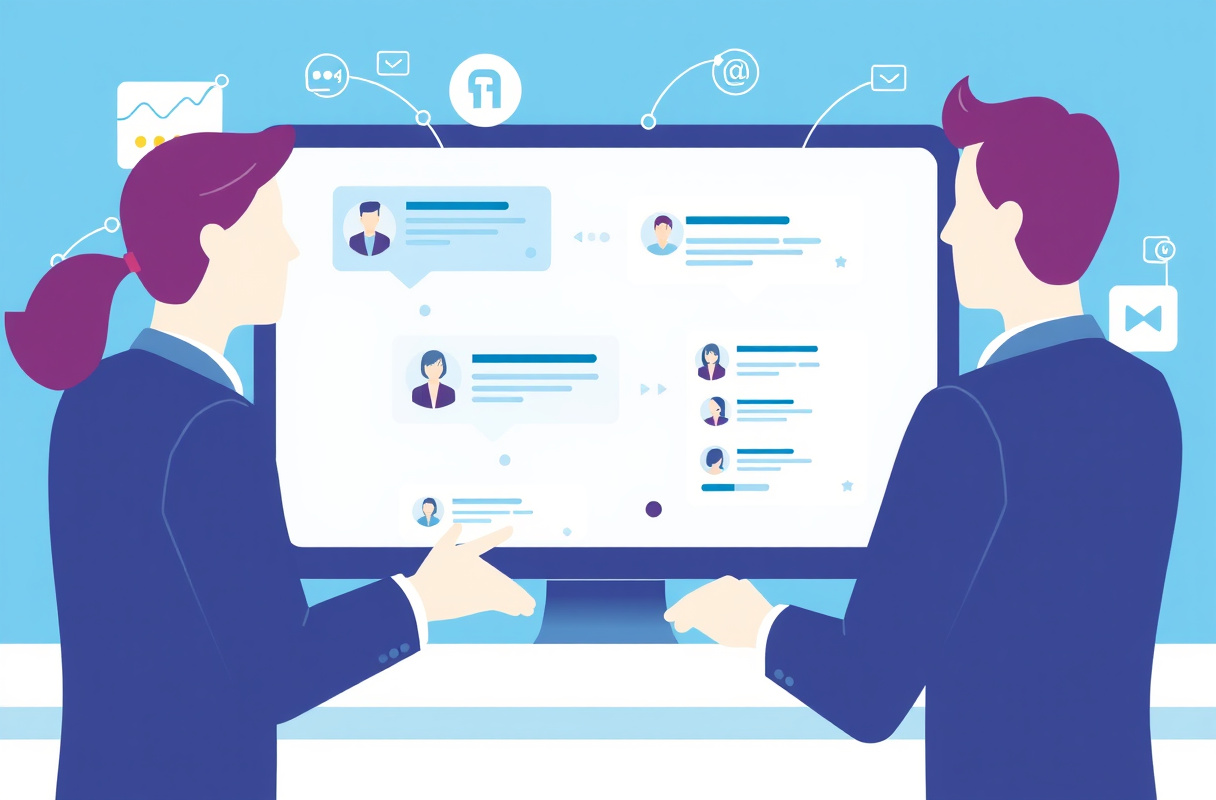
Creating content is only 50% of LinkedIn growth. The other 50% is engagement — and most people skip it entirely.
Why Engagement Matters as Much as Content
When you comment thoughtfully on someone's post:
- Their audience sees your comment (and your headline/profile)
- The post author notices you (building relationship)
- Your own followers see your activity (staying top of mind)
- LinkedIn's algorithm learns what topics you're associated with
The 80/20 Engagement Rule
Spend 80% of your LinkedIn time on engagement, 20% on content creation when starting out. As your audience grows, shift toward 50/50.
| Account Size | Content Creation | Engagement | Daily Time |
|---|---|---|---|
| 0-1,000 followers | 20% | 80% | 30 min |
| 1,000-5,000 | 40% | 60% | 30 min |
| 5,000-10,000 | 50% | 50% | 30 min |
| 10,000+ | 60% | 40% | 30 min |
What Most Guides Get Wrong
"Post every day." This is outdated advice. LinkedIn's algorithm in 2026 doesn't reward volume — it rewards relevance. Three excellent posts per week outperform seven mediocre ones. Data from Hootsuite's research confirms that posting more than once per day can actually reduce reach per post.
"Go viral." Viral posts attract random followers who never engage again. Consistent, niche content attracts engaged followers who become leads. Based on ConnectSafely user data, professionals with smaller but more engaged followings generate more inbound leads than those with large, passive audiences.
"You need to be a great writer." The best-performing content on LinkedIn reads like a conversation, not an essay. Use short sentences. One idea per paragraph. Write how you talk.
"Use as many hashtags as possible." LinkedIn's algorithm in 2026 uses topic modeling, not hashtag matching, to distribute content. Three to five relevant hashtags is sufficient. More than that signals low-quality content.
The Content Creation Toolkit
You don't need expensive tools to create LinkedIn content. Here's the minimal stack:
| Tool | Purpose | Cost |
|---|---|---|
| Notes app or Google Docs | Drafting posts | Free |
| Canva | Carousel/document creation | Free tier works |
| LinkedIn native scheduler | Scheduling posts | Free (built into LinkedIn) |
| ConnectSafely | Automated engagement + analytics | from USD $10/month |
Your First 30 Days: Action Plan
Week 1:
- Optimize your profile (headline, banner, about section)
- Define your 3 content pillars
- Write and publish your first 3 posts (Mon/Wed/Fri)
Week 2:
- Continue 3x/week posting
- Start daily engagement routine (20 min/day)
- Connect with 15-20 people in your target audience
Week 3:
- Analyze which posts performed best and why
- Create your first carousel/document post
- Double down on the content pillar that resonated most
Week 4:
- Review your analytics: profile views, post impressions, follower growth
- Adjust your content pillars based on data
- Plan next month's content calendar
The founders and professionals who grow fastest on LinkedIn aren't the ones with the best content — they're the ones who show up consistently. Three posts per week, 20 minutes of engagement per day, for 90 days. That's the formula.
Ready to accelerate your LinkedIn growth with automated, authentic engagement? ConnectSafely does the engagement work for you — thoughtful comments, strategic interactions, and consistent visibility from just USD $10/month.
The Paradox of Authenticity: How Vulnerability Can Backfire on LinkedIn
When it comes to building a personal brand on LinkedIn, authenticity is often touted as the holy grail. We're told to be vulnerable, share our struggles, and showcase our unique personalities. However, this approach can backfire if not executed carefully. The truth is, vulnerability can be a double-edged sword. While it can help you build a loyal following, it can also lead to unintended consequences, such as attracting the wrong type of attention or being perceived as unprofessional. It's essential to strike a balance between being authentic and maintaining a level of professionalism. This means being mindful of your tone, language, and the types of stories you share. For instance, sharing a personal anecdote about overcoming a challenge can be inspiring, but sharing a graphic details about a personal struggle can be off-putting. It's crucial to consider your audience and the potential impact of your words before hitting publish. Moreover, authenticity is not a one-size-fits-all approach. What works for one person may not work for another. It's essential to experiment and find the right level of vulnerability that works for you and your brand.
Myth vs Reality: The Illusion of Overnight Success on LinkedIn
There's a common misconception that success on LinkedIn happens overnight. We've all seen those viral posts or stories of people gaining thousands of followers in a matter of days. However, the reality is far from it. Building a successful presence on LinkedIn takes time, effort, and consistency. It's a marathon, not a sprint. The people who appear to have achieved overnight success have often been working behind the scenes for months or even years, building their brand, creating high-quality content, and engaging with their audience. They've also likely experienced numerous setbacks, rejections, and failures along the way. It's essential to separate the myth from the reality and understand that success on LinkedIn is a gradual process. It's about showing up consistently, providing value to your audience, and continuously improving your content and engagement strategy. By focusing on the process rather than the end result, you'll be more likely to achieve long-term success and build a loyal following.
The Advanced Art of LinkedIn Content Repurposing: How to Maximize Your ROI
For advanced LinkedIn marketers, content repurposing is an essential strategy for maximizing ROI. It involves taking a single piece of content and repurposing it into multiple formats, such as turning a blog post into a video, podcast, or social media series. This approach can help you reach a wider audience, increase engagement, and reduce content creation time. However, it requires a deep understanding of your audience, their preferences, and the platforms they use. For instance, you may find that your audience prefers video content on LinkedIn, but prefers podcasting on other platforms. By repurposing your content into multiple formats, you can cater to different learning styles and preferences, increasing the likelihood of your content being consumed and shared. Moreover, content repurposing can also help you to identify and amplify your best-performing content, reducing waste and increasing the overall effectiveness of your content strategy.
The Hidden Dangers of LinkedIn Automation: How to Avoid Common Pitfalls
While automation can be a powerful tool for streamlining your LinkedIn marketing efforts, it can also be a recipe for disaster if not used carefully. One of the most common pitfalls is coming across as spammy or insincere. When you automate your content or engagement, it can be tempting to use generic messages or comments that don't add value to the conversation. However, this approach can lead to your account being flagged as spam or even suspended. Another danger is over-automating, which can lead to a lack of personal touch and authenticity. It's essential to strike a balance between automation and manual engagement, using tools to streamline your efforts while still maintaining a level of personal interaction. Moreover, it's crucial to monitor your automation tools closely, ensuring that they're not posting content that's outdated, irrelevant, or inconsistent with your brand voice.
Navigating the Gray Areas of LinkedIn Etiquette: How to Handle Uncomfortable Situations
As you grow your presence on LinkedIn, you'll inevitably encounter uncomfortable situations or gray areas that require careful navigation. For instance, what do you do when someone asks you to endorse their product or service, but you're not entirely comfortable with it? Or what about when someone sends you a connection request, but you don't know them personally? These situations require a deep understanding of LinkedIn etiquette and a thoughtful approach to maintaining your professional reputation. It's essential to prioritize your values and boundaries, being clear and direct in your communication while still being respectful and courteous. Moreover, it's crucial to consider the potential consequences of your actions, thinking about how they may impact your relationships, reputation, and overall presence on the platform. By being mindful of these gray areas and navigating them with care, you can maintain a strong professional reputation and build a loyal following on LinkedIn.
See How It Works
Watch how people get more LinkedIn leads with ConnectSafely




Related Articles