LinkedIn Personalization at Scale in 2026: Inbound Way
Personalization at scale fails as fake {{firstName}} mail-merge. Inbound authority makes it compound—closing 14.6% vs 1.7% outbound. Here's the 2026 playbook.

Updated July 2, 2026 — Researched against McKinsey's Next in Personalization data, HubSpot marketing statistics, and 2025–2026 LinkedIn outreach benchmarks. Reviewed by the ConnectSafely.ai editorial team.
Personalization at scale does not mean pasting {{firstName}} into a template and firing it at 10,000 people. That is mail-merge, and buyers spot it instantly. Real personalization at scale means making a large number of the right people feel individually understood — and the most efficient way to do that on LinkedIn is inbound authority, not more outbound volume.
Want to Generate Consistent Inbound Leads from LinkedIn?
Get our complete LinkedIn Lead Generation Playbook used by B2B professionals to attract decision-makers without cold outreach.
No spam. Just proven strategies for B2B lead generation.
Here is the direct answer: the reason inbound personalization wins is math. HubSpot reports inbound leads close at roughly 14.6% versus just 1.7% for outbound. When you personalize inbound — through content, engagement, and warm signals — every touch compounds on the last. When you personalize outbound mail-merge, you are still fighting a 1.7% ceiling, just with better tokens.
This guide shows how to personalize LinkedIn engagement and outreach at scale without becoming spam — and why authority makes personalization compound instead of decay.
Key Takeaways
- Fake personalization fails: Generic templates with a first-name token now reply below 5%; cold outreach reply rates have fallen from ~8.5% (2019) to ~3.43% (2026) as buyers learn to ignore anything that smells templated.
- Real personalization pays: McKinsey finds personalization drives 10–15% revenue lift, and fast-growing companies earn 40% more of their revenue from it than slower peers.
- Depth beats breadth: Personalized LinkedIn connection requests hit ~35–55% acceptance versus ~15–25% for generic ones — the gap is driven by relevance, not automation volume.
- Inbound compounds: Personalization at scale is only sustainable when authority does the heavy lifting — buyers who already know you need far less "personalizing" to convert.
- Scale ≠ automation of spam: The goal is scaling relevance, not scaling sends. Signals and content let one person reach hundreds authentically.
- ConnectSafely.ai starts from USD $10/month with zero ban risk, helping you build the authority that makes personalization compound.
Why Mail-Merge Personalization Fails at Scale
The default playbook — scrape a list, drop in {{firstName}} and {{companyName}}, and blast — is collapsing. Buyers have developed what researchers call "banner blindness" to automated outreach. The Digital Bloom reports that only about 5% of senders personalize beyond the first name, and the flood of templated messages has pushed average reply rates down year after year.
The failure is structural, not cosmetic. Here is why the mail-merge model breaks:
- A token is not a thought. Inserting a name proves you have a database, not that you understand the person's problem. Recipients read the first line, sense the template underneath, and archive it.
- Volume triggers risk. Scaling sends means scaling automated actions, which is exactly what puts LinkedIn accounts at risk of restriction. More spam is not more pipeline — it is more exposure.
- It optimizes the lowest-converting layer. Even flawless outbound personalization is still outbound, still fighting toward that ~1.7% close rate.
- It decays. Every blast burns the list a little more. There is no compounding — the 5,000th message is no more effective than the first, often less.
Shallow personalization and deep personalization are not the same activity at different intensities. They are different strategies:
| Dimension | Shallow (Mail-Merge) | Deep (Inbound) |
|---|---|---|
| Signal used | Name, company token | Behavior, content engagement, timing |
| What it proves | You have a list | You understand the person |
| Direction | Push (outbound) | Pull (inbound) |
| Typical reply/acceptance | <5% reply, ~15–25% accept | 10–25% reply, ~35–55% accept |
| Account risk | Rises with volume | Low (engagement, not blasting) |
| Effect over time | Decays, burns the list | Compounds into authority |
What "Real" Personalization at Scale Means
Personalization at scale is often misunderstood as "automating individual messages." That is backwards. The scalable unit is not the message — it is the relevance. You want a large audience to each feel the content and engagement were made for them, without hand-writing each touch.
McKinsey frames the demand clearly: 71% of consumers expect personalized interactions and 76% get frustrated when they don't receive them. In B2B, that expectation shows up as buyers researching the person behind every message before they reply. Real personalization at scale satisfies that expectation across hundreds of people at once by operating on three layers:
- Content that self-selects. A post about one specific buyer problem personalizes itself — everyone who has that problem feels seen, and nobody else is bothered. One post can "personalize" to hundreds.
- Engagement that recurs. Thoughtful comments on prospects' posts put your name in the right feeds repeatedly, building familiarity no
{{firstName}}can fake. - Outreach that references reality. When you finally message someone, you reference their post, their comment, or a shared interaction — because it actually happened.
That is the difference between personalized at scale and personalized in bulk. Bulk fakes intimacy with tokens. Scale earns it with signals.
The Inbound Way to Personalize at Scale: A Framework
The inbound approach flips the sequence. Instead of personalizing the ask, you personalize the relationship long before the ask — so by the time you reach out, personalization is almost automatic because you have real history to reference.
Use this four-step framework:
- Broadcast a point of view, narrowly. Publish content on the specific problems your buyers face. Specificity is personalization applied to a whole segment at once — the narrower the topic, the more personal it feels to the right reader.
- Engage where buyers already are. Comment substantively on the posts of your target accounts daily. This is one-to-many personalization: each comment is tailored, but the habit scales your presence across dozens of prospects.
- Read the warm signals. Track who views your profile, saves your posts, reacts, and comments. These behavioral signals are the richest personalization data on LinkedIn — far more predictive than any scraped firmographic field.
- Convert warm, reference-first. Reach out only to people who have already engaged, and open by referencing that engagement. Now personalization writes itself, and you arrive as a recognized voice, not a stranger. The full sequence lives in our inbound authority playbook.
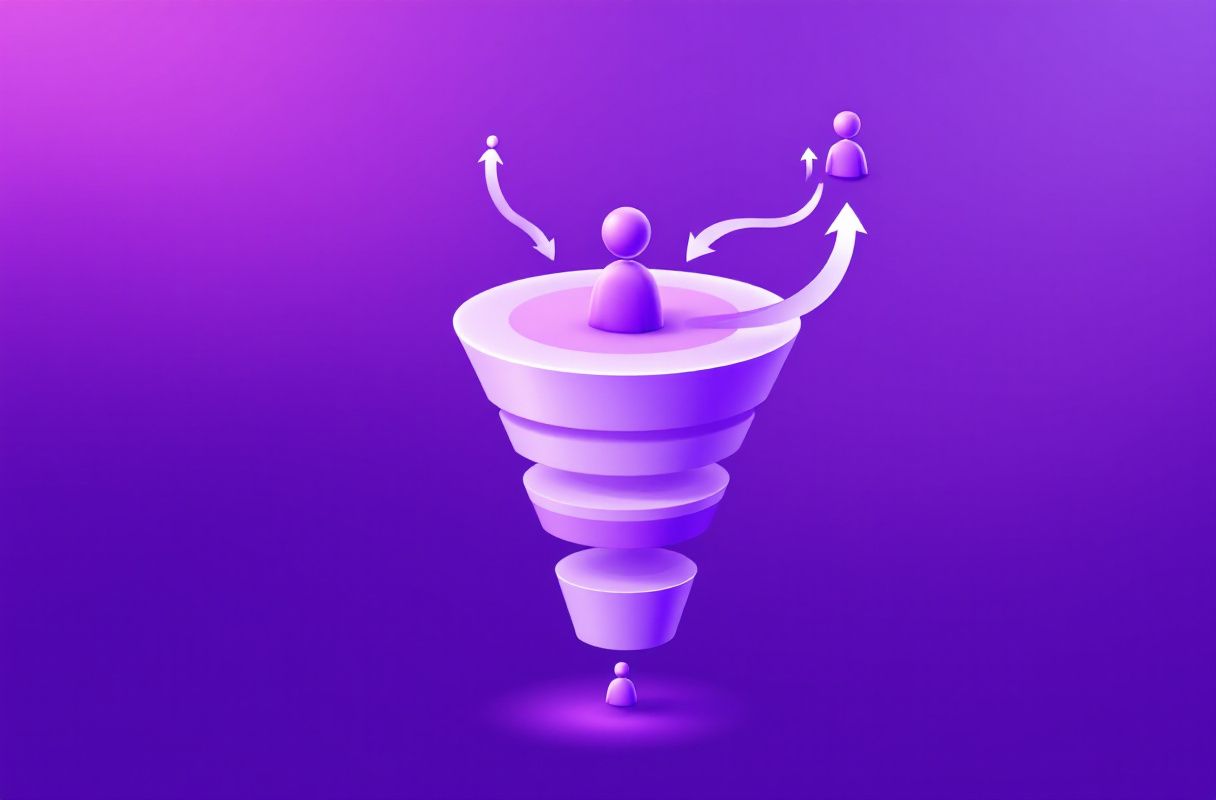
Why does this compound while mail-merge decays? Because each layer feeds the next. Content earns engagement; engagement generates signals; signals make outreach relevant; relevant outreach earns trust; trust earns more engagement on your next post. That loop is why inbound closes at 14.6% — the personalization is cumulative, not per-message. For the messaging mechanics themselves, see our personalized LinkedIn message guide.
Tiers of Personalization by Effort and Impact
Not all personalization is worth the same effort. The mistake most teams make is spending maximum effort on the lowest tier (bulk sends) and none on the highest (authority). Here is how the tiers actually stack up:
| Tier | Example | Effort to Scale | Relevance | Where It Fits |
|---|---|---|---|---|
| 0 — Token | Hi {{firstName}} | Trivial | Near zero | Skip it |
| 1 — Firmographic | "Saw you're at {{company}}" | Low | Low | Weak filler |
| 2 — Trigger | "Congrats on the funding round" | Medium | Medium | Fine, but crowded |
| 3 — Behavioral | "Loved your comment on X" | Medium (with signals) | High | The inbound sweet spot |
| 4 — Authority | They already follow your content | High upfront, then compounds | Highest | The goal |
The insight: Tiers 3 and 4 are the only ones that scale profitably, and they are exactly the tiers inbound produces as a byproduct. When you publish and engage consistently, behavioral signals (Tier 3) and authority (Tier 4) accumulate on their own. You are not manufacturing personalization for each message — you are harvesting it from a relationship that already exists.
This is why personalized connection requests tied to a real behavioral trigger reach 35–55% acceptance while token-only requests languish at 15–25%. The difference is not phrasing. It is whether there is anything real to reference.
Tools and Signals That Make Personalization Scalable — Safely
Scaling relevance without scaling risk requires reading signals, not blasting messages. The safe inputs are the ones already visible on LinkedIn:
- Engagement signals: likes, comments, saves, and reshares on your content reveal genuine interest — the highest-intent personalization data available.
- Profile-view signals: who is checking you out (and repeatedly) tells you where warm interest is forming before anyone messages.
- Content-topic signals: what your prospects post about tells you their current priorities, so your comment and later outreach land on what they actually care about now.
- Timing signals: a new role, a launch, or a viral post from a prospect is a natural, non-creepy reason to engage.
The tooling question is simply: does your stack help you build and read authority, or does it help you blast volume? The former compounds and keeps your account safe; the latter fights a 1.7% ceiling while raising your ban risk. Compare the categories in our best LinkedIn automation tools guide.
What Most Personalization Advice Gets Wrong
Most "personalization at scale" advice is really automation at scale wearing a costume. Here is where it goes wrong:
- It treats personalization as a message feature, not a relationship. The token debate — first name vs. company vs. a scraped detail — misses the point entirely. The most personalized message is one sent to someone who already knows you. No token beats a real relationship.
- It confuses "custom" with "relevant." You can hyper-customize an irrelevant message and still get ignored. A generic post on the exact problem a buyer is losing sleep over out-personalizes a bespoke DM about nothing they care about.
- It ignores the fatigue curve. McKinsey notes 76% of buyers get frustrated when personalization is absent — but they are equally fatigued by fake personalization. A "congrats on the new role" from a stranger reads as surveillance, not care.
- It optimizes the wrong layer. Teams pour energy into A/B testing opening lines on cold outbound (a 1.7% game) instead of building the inbound authority (a 14.6% game) that makes personalization trivial. You cannot template your way past a structural conversion ceiling.
The nuance: personalization is not something you add to outreach. It is something authority produces. Get the direction right, and the personalization takes care of itself.
Real Results: Scaling Relevance Instead of Sends (ConnectSafely.ai)
The following reflects ConnectSafely.ai's own experience with users.
One solo B2B consultant we work with had been running a personalized outbound sequence — genuinely custom first lines, researched triggers, the works — to about 200 prospects a month. It was exhausting to maintain and still converted like outbound: a handful of replies, one or two calls.
We shifted the effort. Instead of hand-personalizing 200 cold messages, the consultant published two posts a week on the single niche problem they solve and engaged daily with 15 target accounts through ConnectSafely.ai. Within about 60 days, inbound profile views from those target accounts roughly tripled, and the messages that used to take 20 minutes each to personalize now wrote themselves — every outreach referenced a real comment or reaction that had already happened.
The lesson was not "personalize harder." It was "let authority do the personalizing." The same hours that once produced custom cold messages now produced warm inbound conversations, with zero account risk and a fraction of the manual effort. Build the same foundation with the 5 pillars of LinkedIn lead generation.
How ConnectSafely Helps You Personalize Inbound at Scale
ConnectSafely.ai is built on a simple premise: the most scalable personalization is authority. Instead of automating spam, it automates the safe, consistent execution of the inbound loop — publishing, engaging, and surfacing the warm signals that make every outreach genuinely relevant.
- Zero ban risk: You build presence through real engagement, not high-volume blasting — so your account stays safe while your authority grows.
- Signals, not scraping: Track the profile views, saves, and comments that reveal real intent, so personalization comes from behavior instead of guesswork.
- Compounding by design: Each post and comment feeds the next, turning one person's effort into a presence hundreds of buyers recognize.
- From USD $10/month: Inbound authority at a fraction of the cost of an outbound tool stack. See pricing.
Stop personalizing cold. Start building the authority that makes personalization compound.
Frequently Asked Questions
What does personalization at scale actually mean on LinkedIn?
It means making a large number of the right people feel individually understood — without hand-writing every message. The scalable unit is relevance, not the message itself: specific content, recurring engagement, and outreach that references real interactions. It is the opposite of blasting a {{firstName}} template to thousands.
Why do personalized templates still fail if I customize the first line?
Because a customized line is not the same as a relationship. Buyers now read the opening, sense the template underneath, and archive it — cold reply rates have fallen to around 3.43% in 2026 as this fatigue spreads. Personalization that references a real, shared interaction (a comment, a reaction, your content they engaged with) works because there is something genuine to reference.
How is inbound personalization different from outbound personalization?
Outbound personalizes the ask — it dresses up a cold message. Inbound personalizes the relationship first, so by the time you reach out, personalization is automatic because real history exists. That is why inbound leads close at ~14.6% versus ~1.7% for outbound: the personalization is cumulative, not per-message.
Can I personalize LinkedIn engagement at scale without getting my account restricted?
Yes — if you scale relevance instead of sends. Reading signals (profile views, saves, comments) and engaging thoughtfully carries far less risk than high-volume automated messaging. Tools that help you build authority keep your account safe; tools that help you blast volume raise your ban risk. See our automation tools guide.
Does personalization at scale really drive more revenue?
According to McKinsey, personalization drives a 10–15% revenue lift on average, and faster-growing companies earn 40% more of their revenue from it than slower peers. On LinkedIn specifically, personalized connection requests reach 35–55% acceptance versus 15–25% for generic ones. The catch is that this only holds for real personalization — token-only mail-merge does not move the number.
Ready to make personalization compound? See ConnectSafely.ai pricing — from USD $10/month, zero ban risk. Or start with the best LinkedIn automation tools guide to see where inbound authority fits in your stack.
See How It Works
Watch how people get more LinkedIn leads with ConnectSafely




Related Articles