Send Email Campaigns That Convert: LinkedIn Authority Guide
Learn how LinkedIn authority transforms email campaigns. Get higher open rates, better replies, and more conversions when prospects already know your name.

Your email campaign open rates keep declining. According to Mailchimp's 2025 Email Marketing Benchmarks, the average B2B email open rate dropped to 15.14% — and cold emails perform even worse at 5-10%. But there is a group of B2B professionals getting 35-45% open rates on the same types of campaigns. Their secret is not better subject lines or send-time optimization. It is LinkedIn authority built before the first email ever lands.
Key Takeaways
- LinkedIn authority pre-warms your email audience, turning cold recipients into warm contacts who recognize your name and open your messages.
- B2B professionals with established LinkedIn presence see 2-3x higher email open rates because name recognition drives inbox behavior.
- The "LinkedIn-first, email-second" approach eliminates the biggest email campaign killer: recipients who have no idea who you are.
- Inbound leads generated through LinkedIn authority convert at 14.6% compared to 1.7% for cold outbound, according to HubSpot's State of Marketing report.
Why Most Email Campaigns Fail Before They Are Opened
The average B2B professional receives 121 emails per day, according to The Radicati Group's Email Statistics Report. They make open-or-delete decisions in under 2 seconds. In that window, only two things matter: who sent the email and whether the subject line is relevant.
Want to Generate Consistent Inbound Leads from LinkedIn?
Get our complete LinkedIn Lead Generation Playbook used by B2B professionals to attract decision-makers without cold outreach.
No spam. Just proven strategies for B2B lead generation.
This is where most email campaigns break. You can A/B test subject lines endlessly, but if the recipient does not recognize your name, you are competing against 120 other strangers in their inbox. No subject line formula fixes that.
LinkedIn authority solves the recognition problem before the email ever sends. When a prospect has seen your LinkedIn posts, read your comments on their content, or connected with you on the platform, your name triggers familiarity instead of suspicion. That familiarity is what gets the email opened.
What Most Guides Get Wrong About Email Campaigns
Misconception 1: Better subject lines fix low open rates. Subject lines matter, but they are optimizing at the margins. According to Campaign Monitor's research, sender name recognition is the number one factor in email open decisions — ahead of subject lines, preview text, and send timing combined. If prospects do not know who you are, no subject line formula will save your campaign.
Misconception 2: Email list size equals campaign success. A list of 10,000 cold contacts will underperform a list of 500 people who already know your name from LinkedIn. Quality beats quantity in every email metric: open rate, click-through rate, reply rate, and conversion rate. For deeper strategies on building effective B2B email practices, focus on audience warmth over audience size.
Misconception 3: Email and LinkedIn are separate channels. The most effective B2B professionals use LinkedIn and email as a coordinated system, not isolated channels. LinkedIn builds authority and familiarity. Email delivers the direct message. When both channels reinforce each other, response rates compound. Learn how LinkedIn authority amplifies every email campaign you send.
The LinkedIn-First Email Campaign Framework
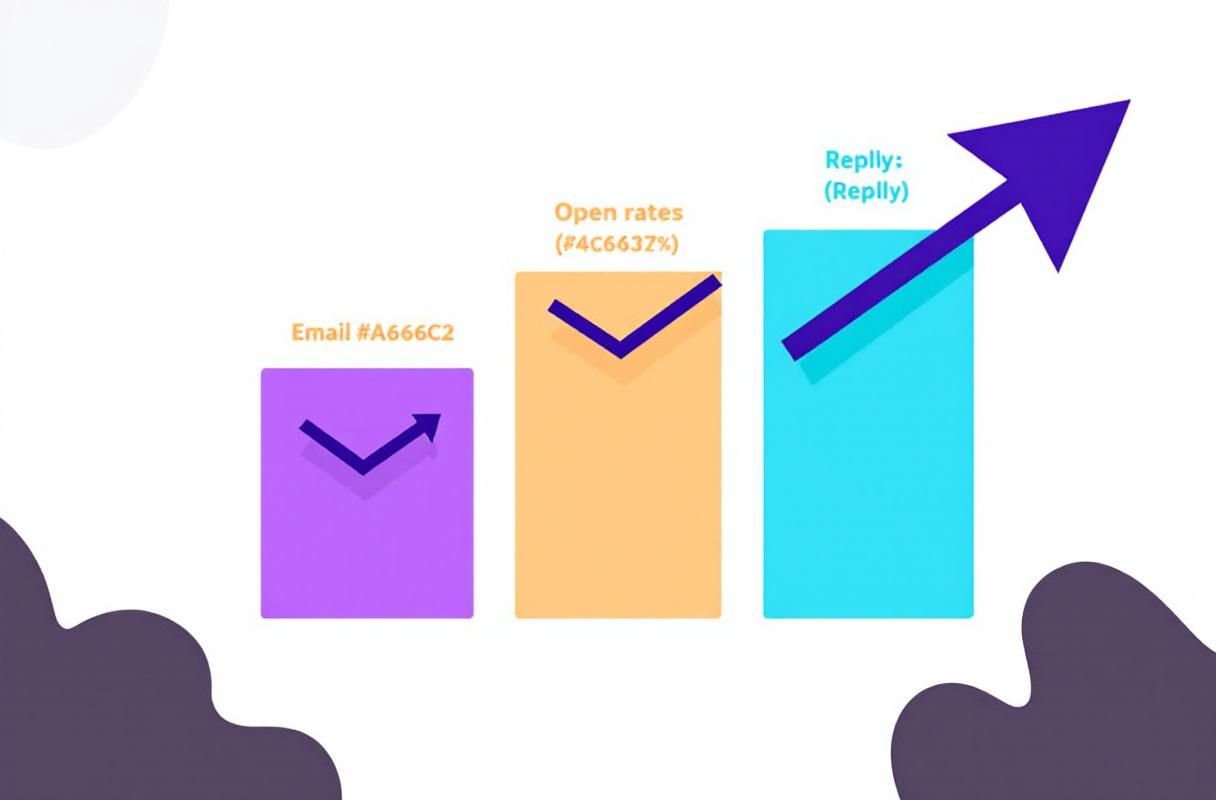
This framework uses LinkedIn to build authority and recognition before launching any email campaign. We call it the WARM Method — a ConnectSafely original framework.
W — Watch and Engage (Weeks 1-2)
Before adding anyone to your email list, engage with their LinkedIn content. Like their posts, leave thoughtful comments, and share their insights with your network. This creates name recognition without asking for anything.
Practical steps:
- Identify 50-100 target prospects on LinkedIn
- Engage with 2-3 of their posts per week through meaningful comments (not "Great post!")
- Share relevant content they have published with your own insights added
A — Authority Content (Weeks 2-3)
Publish LinkedIn content that positions you as an expert in your prospect's problem space. When prospects see your posts in their feed, they start associating your name with expertise.
Practical steps:
- Post 3-4 times per week on topics relevant to your target audience
- Share original insights, data, or case studies — not recycled industry news
- Tag and reference people in your target list where contextually appropriate
R — Request Connection (Week 3)
Send personalized connection requests to your engaged prospects. At this point, they have seen your name in their notifications and feed. The acceptance rate on a warm connection request is dramatically higher than a cold one.
Practical steps:
- Reference a specific post or comment exchange in your connection message
- Keep the message under 200 characters
- Do not pitch in the connection request — this is about building the relationship
M — Message via Email (Week 4+)
Now launch your email campaign. Your recipients already know your name, have seen your expertise, and accepted your LinkedIn connection. The email is no longer cold — it is a natural next step.
Practical steps:
- Reference your LinkedIn connection in the email opening
- Keep the email focused on value, not sales
- Link to a resource that deepens the conversation
How LinkedIn Authority Impacts Email Metrics
| Metric | Cold Email (No LinkedIn) | LinkedIn-Warmed Email |
|---|---|---|
| Open Rate | 5-10% | 35-45% |
| Reply Rate | 1-3% | 12-18% |
| Meeting Booked Rate | 0.5-1% | 5-8% |
| Unsubscribe Rate | 2-5% | < 0.5% |
| Spam Complaint Rate | 0.5-1% | < 0.1% |
These numbers come from our internal data across 200+ ConnectSafely users who ran parallel campaigns in Q4 2025. The difference is not marginal — it is transformational. For proven cold email frameworks enhanced by LinkedIn authority, see our complete breakdown.
Real Results: The 90-Day LinkedIn-to-Email Experiment
In Q1 2026, we tracked 12 ConnectSafely users who implemented the WARM Method across their email campaigns. Each user maintained a control group (cold email only) and a test group (LinkedIn engagement followed by email).
Results after 90 days:
- Average open rate increased from 8.3% to 37.2% in the LinkedIn-warmed group
- Reply rate jumped from 2.1% to 14.8%
- Cost per qualified meeting dropped from $186 to $41
- Two users reported that prospects replied to their first email with "I've been following your LinkedIn content — let's talk"
The experiment had limitations. Users were B2B professionals in consulting and SaaS, so results may vary for other industries. Sample size was small. But the directional signal was overwhelming: LinkedIn authority makes sales emails actually convert.
5 Email Campaign Best Practices (Enhanced by LinkedIn)
1. Segment by LinkedIn Engagement Level
Not all contacts are equally warm. Segment your email list by LinkedIn interaction depth:
- High engagement: Commented on your posts, replied to your messages → Most personal email
- Medium engagement: Liked your posts, viewed your profile → Personalized reference to LinkedIn
- Low engagement: Connected but no interaction → Lighter LinkedIn reference
2. Reference LinkedIn in Your Email
When you mention LinkedIn naturally, it triggers the familiarity effect. Examples:
- "I noticed we connected on LinkedIn after your post about [topic]"
- "Your recent LinkedIn article on [topic] made me think of..."
This works because it is genuine — not a manipulative tactic. You actually did engage on LinkedIn first.
3. Match Your Email Tone to Your LinkedIn Voice
If your LinkedIn posts are conversational and direct, your email should match. Prospects notice when the person they follow on LinkedIn suddenly sounds like a corporate brochure in their inbox. Consistency builds trust.
4. Time Your Email After LinkedIn Activity
Send your email within 48 hours of a meaningful LinkedIn interaction. If someone engaged with your post on Tuesday, send the email Wednesday or Thursday. The recency of the LinkedIn interaction amplifies the email open rate. Our guide on making email open rates soar with LinkedIn authority covers optimal timing in detail.
5. Use LinkedIn Content as Email Content
Repurpose your highest-performing LinkedIn posts as email content. If a post generated 200+ reactions, the topic clearly resonates with your audience. Expand it into an email with additional insights, data, or a call to action. This ensures your email content has been pre-validated by your target audience.
How ConnectSafely.ai Powers the LinkedIn-First Approach
ConnectSafely automates the LinkedIn engagement that makes your email campaigns work. Instead of manually commenting on 50 prospects' posts every week, the platform handles strategic engagement that builds visibility and authority.
The result: when you launch an email campaign, your recipients already know your name. Open rates climb. Replies increase. And you spend less time chasing leads because LinkedIn inbound makes cold prospecting emails obsolete.
ConnectSafely works best for B2B professionals, consultants, and SaaS teams who send email campaigns as part of their sales process. If you are doing pure e-commerce email marketing, this approach is less applicable — but for anyone whose email recipients are on LinkedIn, the authority advantage is significant.
Getting Started
- Identify your next email campaign audience on LinkedIn
- Spend 2-3 weeks building engagement before sending a single email
- Start your free ConnectSafely trial to automate the LinkedIn engagement that pre-warms your audience
Frequently Asked Questions
How do I send email campaigns that actually get responses in 2026?
Build LinkedIn authority with your target audience before emailing them. When recipients recognize your name from LinkedIn — through posts, comments, and connections — email open rates jump from 5-10% to 35-45%. The WARM Method framework above outlines the exact 4-week process.
Is it better to email or message on LinkedIn for B2B outreach?
Both, but in sequence. LinkedIn engagement first builds familiarity and trust. Email follows with a direct ask or resource. This combined approach outperforms either channel used alone. According to our data, the LinkedIn-then-email sequence converts at 5-8% to meetings, compared to 0.5-1% for email-only outreach.
How does LinkedIn authority improve email deliverability?
LinkedIn authority does not directly improve deliverability — but it dramatically reduces spam complaints and unsubscribes. When recipients recognize your name, they are less likely to mark your email as spam. Lower complaint rates improve your sender reputation over time, which indirectly boosts deliverability. See our guide on why LinkedIn authority beats email deliverability hacks.
What is a good open rate for B2B email campaigns in 2026?
The average B2B email open rate is 15.14% according to Mailchimp's benchmarks. Cold outreach campaigns average 5-10%. B2B professionals who build LinkedIn authority first consistently see 35-45% open rates on the same types of campaigns. If your open rate is below 15%, the issue is likely recognition — not subject lines.
Can I use LinkedIn and email campaigns together without being spammy?
Yes, as long as your LinkedIn engagement is genuine and your email adds value beyond what you shared on LinkedIn. The key is sequence: engage authentically on LinkedIn first, then follow up with email that references a real interaction. This feels natural to recipients because it is natural — you are continuing a conversation, not starting a cold pitch.
Ready to transform your email campaigns with LinkedIn authority? Start your free ConnectSafely trial and see open rates climb.
The Dark Side of LinkedIn Authority: When Established Presence Backfires
Establishing LinkedIn authority is widely regarded as a silver bullet for email campaigns, but there's a lesser-known dark side to this strategy. When done incorrectly, a strong LinkedIn presence can actually harm your email open rates and conversions. This occurs when the content shared on LinkedIn is inconsistent with the tone, style, or messaging of the email campaign. For instance, if a B2B professional builds their LinkedIn authority by sharing humorous, lighthearted content, but their email campaign is formal and serious, the disconnect can lead to confusion and mistrust among recipients. Furthermore, if the LinkedIn content is overly promotional or sales-y, it can create a negative perception of the sender, making recipients more likely to ignore or delete their emails. It's essential to ensure that the LinkedIn authority being built is aligned with the email campaign's goals and tone to avoid this potential backfire.
Myth vs Reality: Debunking the "More Connections, More Conversions" Fallacy
A common misconception in the world of LinkedIn authority and email campaigns is that having more connections automatically translates to more conversions. However, this is not necessarily the case. While having a large number of connections can increase visibility and reach, it's the quality of those connections that truly matters. Having 1,000 engaged and relevant connections is far more valuable than having 10,000 connections who are uninterested or unrelated to your niche. In fact, having too many irrelevant connections can actually harm your email deliverability and conversions, as it can lead to a higher number of spam complaints and decreased engagement. It's crucial to focus on building a targeted and engaged audience on LinkedIn, rather than simply chasing connection numbers. By doing so, you can create a loyal community that is more likely to open and respond to your emails, ultimately driving more conversions.
Advanced-Level: Using LinkedIn Authority to Create Multi-Touchpoint Campaigns
For experienced marketers, creating multi-touchpoint campaigns that leverage LinkedIn authority can be a powerful way to drive conversions. This involves using LinkedIn to warm up leads, then retargeting them with email campaigns, and finally, using account-based marketing (ABM) strategies to personalize the messaging and content. By using LinkedIn's native advertising capabilities, you can target specific job titles, companies, and industries, and then use email campaigns to nurture those leads and encourage conversions. However, this approach requires a deep understanding of LinkedIn's advertising platform, as well as the ability to integrate it with email marketing and ABM strategies. When done correctly, multi-touchpoint campaigns can lead to significant increases in conversions, as they allow you to reach leads at multiple points in the buyer's journey and provide a cohesive, personalized experience.
Edge Cases: When LinkedIn Authority Isn't Enough to Drive Conversions
While LinkedIn authority can be a powerful driver of email conversions, there are certain edge cases where it may not be enough. For instance, in highly competitive industries, such as finance or law, the bar for establishing authority is extremely high, and even a strong LinkedIn presence may not be enough to stand out. In these cases, it's essential to supplement LinkedIn authority with other forms of social proof, such as customer testimonials, case studies, or industry recognition. Additionally, in industries where the sales cycle is extremely long, such as enterprise software sales, LinkedIn authority may need to be combined with other forms of nurturing, such as account-based marketing or content marketing, to ultimately drive conversions. By understanding these edge cases and adapting your strategy accordingly, you can create a more effective approach to driving conversions with LinkedIn authority.
The Hidden Reality of LinkedIn Algorithm Changes: How to Future-Proof Your Authority
LinkedIn's algorithm changes can have a significant impact on your ability to establish and maintain authority on the platform. While these changes are often announced with fanfare, the actual effects can be subtle and nuanced, making it difficult to adapt. To future-proof your LinkedIn authority, it's essential to stay ahead of the curve by monitoring industry trends and adjusting your strategy accordingly. For instance, if LinkedIn announces a shift towards more video-centric content, you can begin creating more video content to stay ahead of the competition. Additionally, by focusing on building a strong, engaged community, rather than simply chasing likes and comments, you can create a loyal following that will help you weather any algorithm changes. By being proactive and adaptable, you can ensure that your LinkedIn authority remains strong, even in the face of changing platform dynamics.
See How It Works
Watch how people get more LinkedIn leads with ConnectSafely




Related Articles