AI-Powered LinkedIn: Building Authentic Inbound Connections in 2026
AI transforms LinkedIn from cold outreach to inbound magnet. Build authentic connections that attract qualified prospects.

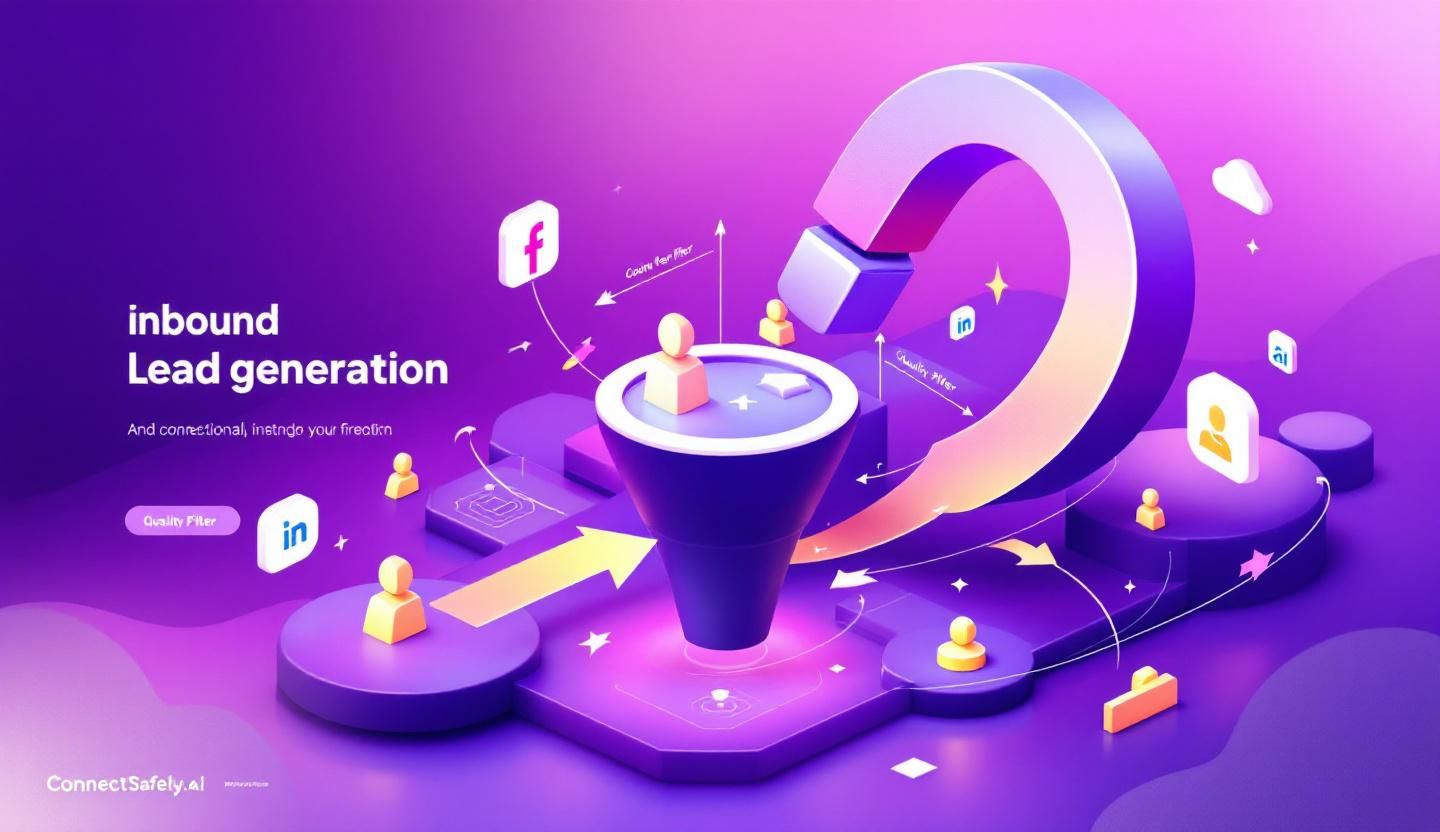
AI-powered LinkedIn isn't about automating cold outreach—it's about automating inbound attraction. Instead of using AI to chase prospects faster, build strategic visibility where ideal clients are already looking. This approach delivers 14.6% conversion rates versus outbound's 1.7%, attracting 10-20 qualified leads monthly who already want to work with you.
The promise of AI-powered LinkedIn tools sounds compelling: scale your outreach, automate your messages, and reach thousands of prospects effortlessly. But here's what most professionals discover after months of automated cold outreach: thousands of ignored connection requests, declining response rates, and a growing sense that they're just adding to LinkedIn's noise problem.
Want to Generate Consistent Inbound Leads from LinkedIn?
Get our complete LinkedIn Lead Generation Playbook used by B2B professionals to attract decision-makers without cold outreach.
No spam. Just proven strategies for B2B lead generation.
Key Takeaways
- AI outreach automation creates noise and declining returns—focus on strategic visibility instead
- Real opportunity is automating visibility in high-value conversations, not cold messages
- Inbound leads convert at 8-9X higher rates than cold outreach prospects
- Consistent engagement builds authority that attracts qualified prospects
- Platform-compliant strategies work with LinkedIn's algorithm instead of against it
- ConnectSafely.ai delivers 10-20 qualified inbound leads per month at 96% lower cost
The real AI revolution on LinkedIn isn't about automating cold outreach—it's about automating inbound attraction. Instead of using AI to chase more prospects faster, the most successful professionals in 2026 are using AI to position themselves where ideal clients are already looking, so qualified prospects come to them.
The AI Automation Paradox: More Outreach, Fewer Results
LinkedIn automation tools have created an interesting paradox. As more professionals adopt outbound automation to "scale" their prospecting, the effectiveness of cold outreach continues to decline:
- Generic connection requests get 2-10% response rates (and dropping)
- Automated messages are increasingly obvious and ignored
- LinkedIn's algorithms actively suppress content from accounts engaging in bulk outreach
- Prospect fatigue means even well-crafted cold messages get lost in the noise
The fundamental problem isn't the technology—it's the strategy. Using AI to send more cold messages faster is like turning up the volume on a song nobody wants to hear. The issue isn't volume; it's that you're playing to an audience that isn't interested yet.
Why Cold Outreach Automation Fails
The Math Doesn't Work: Send 300 connection requests per week with a 45% acceptance rate and 5% response rate. You're investing hours managing conversations with unqualified prospects who don't know you, don't trust you, and aren't necessarily looking for what you offer. Traditional outbound approaches generate diminishing returns.
The Perception Problem: Every automated message—no matter how "personalized" by AI—contributes to the spam problem. Your prospects receive dozens of similar messages daily. Even if your message is better than average, you're still part of the interruption noise they're trying to avoid. This damages your professional reputation before you ever connect.
The Algorithm Penalty: LinkedIn's 2024-2026 algorithm changes explicitly penalize volume-based automation. The platform now prioritizes "knowledge-rich content" and genuine engagement. Accounts focused on bulk outreach see their organic reach decline, compounding the problem.
The Inbound AI Alternative: Attraction Over Pursuit
The most successful LinkedIn professionals in 2026 aren't using AI to automate cold outreach—they're using it to automate strategic visibility and authority-building. The difference is fundamental:
Outbound AI Automation: Use AI to send more personalized cold messages faster Inbound AI Strategy: Use AI to position yourself in the right conversations so prospects discover you naturally
This isn't about choosing between automation and authenticity. It's about automating the right activities—the ones that attract rather than interrupt.
How AI Enables Inbound Lead Generation
1. Strategic Engagement at Scale
AI can identify the exact conversations where your ideal clients are actively engaged—specific posts, industry discussions, and thought leader content that your ICP follows. Instead of blindly commenting everywhere, AI helps you be consistently visible in the places that matter most through authentic engagement.
The result? Your prospects see you demonstrating expertise in contexts they already trust, building recognition before you ever connect directly.
2. Authority Positioning Through Intelligent Commentary
The best AI-powered tools don't just generate generic comments—they analyze post content, understand context, and craft thoughtful responses that genuinely add value. This positions you as a knowledgeable participant in industry conversations, not just another marketer trying to hijack attention.
When prospects repeatedly encounter your insightful comments on content they're already consuming, you become a recognized expert. When they need the solutions you provide, you're the first person who comes to mind.
3. Consistent Visibility Without Manual Effort
Building inbound momentum requires consistency. Sporadic engagement doesn't create recognition. But manually maintaining daily engagement takes 2+ hours that most professionals don't have.
AI automation solves the consistency problem—maintaining strategic visibility across the conversations that matter without requiring constant manual attention. The result is a LinkedIn presence that compounds over time, attracting increasingly qualified prospects.
Why Inbound AI Outperforms Outbound Automation
The data on inbound versus outbound lead generation tells a compelling story:
Conversion Rates: Inbound leads close at 14.6% versus outbound's 1.7%—an 8-9X improvement. When prospects come to you because they've been following your insights, they're pre-qualified and pre-educated.
Sales Cycle Length: Inbound prospects move through the sales process 3-5X faster than cold leads. They don't need education about their problem or your category—they already understand both.
Response Quality: While cold outreach gets 2-10% response rates, inbound connection requests receive 70%+ positive engagement. Instead of "Who is this?" responses, you get "I've been following your content" conversations.
Sustainability: Cold outreach burns through your network and has diminishing returns. Inbound authority compounds—the more visible you become, the more prospects discover you, creating a flywheel effect rather than a treadmill.
Platform Compliance: LinkedIn's algorithm actively rewards the engagement activities that drive inbound attraction. Instead of fighting platform policies, you're working with them.
Implementing Your AI-Powered Inbound Strategy
Here's how to leverage AI for inbound lead generation rather than outbound automation:
Step 1: Define Your Visibility Strategy
Instead of identifying prospects to message, identify where your ideal clients are already paying attention:
- Which thought leaders and content creators does your ICP follow?
- What industry conversations are they participating in?
- Which topics generate engagement from decision-makers in your target market?
AI tools can analyze thousands of posts and engagement patterns to identify these high-value visibility opportunities at scale. This creates a roadmap for strategic positioning.
Step 2: Automate Strategic Engagement
Use AI to maintain consistent, valuable presence in the conversations you've identified:
- Thoughtful comments on relevant posts that demonstrate expertise
- Engagement with key creators whose audiences match your ICP
- Participation in discussions where prospects are actively seeking solutions
The key difference from traditional automation: you're not sending messages to strangers. You're becoming visible in conversations prospects are already engaged with, building recognition through value-added participation.
Step 3: Create Inbound Momentum
As prospects repeatedly encounter your insights, several things happen:
- Recognition builds: They start noticing your name and expertise
- Authority establishes: Consistent valuable commentary positions you as knowledgeable
- Trust develops: They see you as a helpful resource, not a sales pitch
- Curiosity grows: They visit your profile to learn more
This creates the conditions for inbound connection requests and DMs from prospects who already understand your value.
Step 4: Optimize for Quality Over Quantity
Track the metrics that matter for inbound generation:
- Profile views from target personas (not just total views)
- Inbound connection requests from ICP members
- Unsolicited DMs expressing interest
- Discovery calls booked through inbound outreach
Instead of measuring connection requests sent or response rates, measure how many qualified prospects are discovering and reaching out to you.
How ConnectSafely.ai Enables AI-Powered Inbound Attraction
ConnectSafely.ai is built specifically for the inbound approach—using AI to attract rather than chase:
Intelligent Targeting: Our AI identifies exactly where your ideal clients are engaged, analyzing thousands of posts and conversations to find high-value visibility opportunities.
Context-Aware Engagement: Instead of generic comments, our AI analyzes post content and generates thoughtful responses that genuinely add value, positioning you as a knowledgeable participant.
Strategic Consistency: Maintain active engagement in the right conversations daily without manual effort, building the consistent visibility that creates inbound momentum.
Authentic Voice: Our AI learns your communication style, ensuring automated engagement sounds like you—not like a bot trying to sound human.
The result? Many users see 10-20 qualified inbound leads per month—prospects who already recognize their expertise and are interested in their solutions. Instead of managing hundreds of cold conversations going nowhere, you focus your time on high-quality discussions with pre-qualified opportunities.
At just from USD $10/month, ConnectSafely.ai costs 96% less than traditional automation tools while delivering dramatically better results through the inbound approach. Your cost per customer drops from $8,700 (typical for cold outreach) to just $179—proven ROI metrics.
Getting Started With Inbound AI Strategy
Ready to transform LinkedIn from a cold prospecting treadmill into an inbound lead generation engine?
Start by shifting your mindset: Success isn't about reaching more people—it's about being visible to the right people in contexts where they're receptive. AI's role is enabling that strategic visibility at scale.
Focus on where, not who: Instead of building lists of prospects to message, identify the conversations and content your prospects already consume. That's where AI-powered engagement creates compound returns.
Measure what matters: Track inbound signals (profile views, connection requests, unsolicited DMs) rather than outbound metrics (messages sent, response rates). You're building attraction, not running campaigns.
The AI-powered future of LinkedIn isn't about automating cold outreach faster—it's about using intelligence to position yourself where opportunity comes looking for you.
Frequently Asked Questions
How do I use AI for LinkedIn without getting my account banned?
Focus on value-adding engagement rather than cold outreach. Platform-compliant AI tools like ConnectSafely.ai automate strategic commenting and thought leadership positioning—activities LinkedIn actively rewards. We maintain zero ban rates because we automate visibility (which LinkedIn wants), not spam (which it bans).
Is AI-powered LinkedIn automation safe in 2026?
Yes, when you automate the right activities. Authentic LinkedIn engagement that adds value to conversations is encouraged by LinkedIn's algorithm. Our AI generates contextual, personalized comments that sound like you—not generic templates that scream automation.
How long before I see results from AI-powered LinkedIn?
Most users see increased profile views within 7-10 days, first inbound connection requests within 14-21 days, and qualified conversations within 30-45 days. The momentum compounds—month 3 typically delivers 3X better results than month 1 as recognition builds through consistent authority-building. Research shows inbound leads convert at 14.6% versus outbound's 1.7%.
What's the difference between AI outreach and AI engagement?
AI outreach automation sends cold messages to strangers (interruption at scale). AI inbound engagement positions you in conversations prospects already follow (attraction at scale). One fights LinkedIn's algorithm and prospect preferences; the other aligns with both. The conversion rate difference is 8-9X in favor of inbound.
How do I send warm LinkedIn DMs using AI?
Build visibility first through the warm DM playbook. AI maintains your presence in target conversations for 2-3 weeks. When prospects recognize your name from 5-7 visibility touches, your DMs become warm continuations rather than cold interruptions. Response rates jump from 2-10% (cold) to 40-70% (warm).
Can I use AI engagement with my own LinkedIn posts?
Absolutely. ConnectSafely.ai's strategic engagement drives early interaction on your posts, triggering LinkedIn's algorithm to show them to broader audiences. This amplifies your content reach while maintaining authentic engagement. The combination of your original content plus AI-powered strategic visibility creates maximum inbound impact.
Start your free trial and discover how AI-powered inbound positioning transforms your LinkedIn presence into your most productive lead source.
The Dark Side of Inbound: When Authenticity Backfires
While authenticity is crucial for building inbound connections on LinkedIn, there are scenarios where it can backfire. For instance, being too authentic can sometimes be perceived as unprofessional or even abrasive. I've seen cases where professionals have shared their personal struggles or opinions on sensitive topics, only to alienate potential clients or colleagues. It's essential to strike a balance between being genuine and being mindful of one's professional image. Moreover, authenticity can also be used as a manipulation tactic, where individuals pretend to be someone they're not to gain trust or credibility. This phenomenon is often referred to as "authenticity theater." To avoid falling into this trap, it's crucial to focus on building meaningful relationships rather than trying to project a certain image. By being aware of these potential pitfalls, professionals can navigate the complexities of authenticity on LinkedIn and build strong, genuine connections that drive real results.
Myth vs Reality: The Truth About LinkedIn's Algorithm
There's a common misconception that LinkedIn's algorithm is designed to suppress content from accounts that engage in outbound outreach. While it's true that LinkedIn's algorithm prioritizes content from accounts that engage in meaningful conversations, it's not a straightforward binary system. In reality, LinkedIn's algorithm is constantly evolving, and its primary goal is to provide users with a relevant and engaging experience. Rather than focusing on suppressing certain types of content, the algorithm aims to surface high-quality content that resonates with users. This means that even accounts that engage in outbound outreach can still achieve visibility and engagement if they're creating valuable, relevant content. However, it's essential to note that LinkedIn's algorithm does favor accounts that demonstrate a clear understanding of their audience and create content that sparks meaningful conversations. By focusing on building a deep understanding of their target audience and creating high-quality content, professionals can increase their visibility and drive real results on LinkedIn.
Advanced-Level: Leveraging LinkedIn's Secondary Features for Inbound Success
While most professionals focus on LinkedIn's primary features, such as posts and messages, there are several secondary features that can be leveraged for inbound success. For example, LinkedIn's publishing platform, LinkedIn Pulse, allows professionals to create long-form content that showcases their expertise and thought leadership. Additionally, LinkedIn's groups feature provides a powerful way to connect with targeted audiences and establish oneself as a trusted authority. By participating in relevant groups and providing value to the community, professionals can build relationships and drive inbound leads. Another often-overlooked feature is LinkedIn's video platform, which allows professionals to create engaging, high-quality video content that resonates with their audience. By leveraging these secondary features, professionals can create a comprehensive inbound strategy that drives real results and sets them apart from the competition.
The It-Depends Scenario: When Outbound Outreach Makes Sense
While inbound marketing is often touted as the most effective approach, there are scenarios where outbound outreach makes sense. For instance, when targeting a highly niche or specialized audience, outbound outreach can be an effective way to reach potential clients who may not be actively searching for solutions. Additionally, in cases where the sales cycle is long and complex, outbound outreach can provide a way to establish relationships and build trust with potential clients over time. However, it's essential to approach outbound outreach in a strategic and personalized manner, rather than relying on generic automation tools. By leveraging data and insights to inform outreach efforts, professionals can create targeted, high-quality outreach campaigns that drive real results. Ultimately, the key to success lies in understanding the nuances of one's target audience and adapting one's approach accordingly.
Edge Cases: Navigating the Complexities of LinkedIn's Global Audience
As LinkedIn continues to grow and expand globally, professionals must navigate the complexities of a diverse, international audience. For instance, what works in one cultural context may not work in another. I've seen cases where professionals have inadvertently offended or alienated potential clients due to cultural or linguistic misunderstandings. To avoid these pitfalls, it's essential to develop a deep understanding of the cultural nuances and preferences of one's target audience. This may involve adapting content and messaging to resonate with specific cultural contexts or leveraging local influencers and partners to build credibility and trust. By being aware of these edge cases and adapting one's approach accordingly, professionals can build strong, global relationships that drive real results on LinkedIn. Additionally, leveraging LinkedIn's built-in translation features and multilingual support can help professionals reach a broader audience and build a more diverse network.
See How It Works
Watch how people get more LinkedIn leads with ConnectSafely

Related Articles