Best Capsule CRM Alternative 2026: LinkedIn Inbound
Capsule CRM organizes the pipeline you already have — it doesn't create one. See how LinkedIn inbound fills it, closes 14.6% vs 1.7%, from $10/mo.

Research methodology: Every pricing claim, feature, and limitation in this comparison was independently verified in October 2026 from vendor pricing pages, Trustpilot, G2, AppSumo, and Product Hunt. Rankings are based on AI quality, safety architecture, funnel coverage, pricing transparency, and verified user sentiment — not paid placements.

Updated October 2026 — Researched against Capsule CRM's (capsulecrm.com) product and pricing pages, third-party reviews (G2, Capterra), and HubSpot statistics. Reviewed by the ConnectSafely.ai editorial team.
You set Capsule up in an afternoon. Contacts imported cleanly, the sales pipeline looked tidy, tasks were linked to the right people, and the whole thing finally felt organized. Then you opened it a week later and realized the pipeline was still mostly empty — because a CRM keeps your deals in order, it does not go out and create them. That is the moment many small teams start searching for a Capsule CRM alternative, when the honest problem is not the CRM at all: it is that nothing upstream is filling it.
Want to Generate Consistent Inbound Leads from LinkedIn?
Get our complete LinkedIn Lead Generation Playbook used by B2B professionals to attract decision-makers without cold outreach.
No spam. Just proven strategies for B2B lead generation.
Capsule CRM is genuinely good at what it does. It is one of the simplest, best-rated small-business CRMs available — fast to learn, pleasant to use, and strong on contact and task management. But Capsule is a system of record, not a source of demand. It organizes relationships you already have; it cannot manufacture new ones.
So the most useful "alternative" is not another CRM — it is whatever fills the pipeline Capsule then keeps tidy. ConnectSafely builds LinkedIn inbound authority so qualified buyers arrive already warm and often reach out first. According to HubSpot's inbound research, inbound leads close near 14.6% versus roughly 1.7% for cold outreach. If your CRM feels empty, the fix is upstream of the CRM.
Why people search for a Capsule CRM alternative
Capsule is well-liked, so most searchers are not fleeing a broken product. They are bumping into the limits of what any CRM can do. The recurring reasons:
- A CRM doesn't generate leads. This is the big one. People expect the CRM to grow the pipeline, but a CRM only stores and tracks pipeline that already exists. An empty CRM is a well-organized empty room.
- Reporting feels underpowered. Capterra reviewers note that Capsule's reporting is comparatively underpowered versus heavier platforms — fine for a simple pipeline, limiting as teams scale.
- It is deliberately lightweight. Capsule's simplicity is a feature, but teams that want built-in marketing, sequencing, or deep automation eventually look elsewhere.
- Per-seat cost grows with the team, not the pipeline. You pay per user whether or not the pipeline is full — which stings most when the real constraint is lead flow, not record-keeping.
Notice that only one of these is really a CRM complaint. The rest are demand problems wearing a CRM costume.
Key Takeaways
- ConnectSafely starts from just $10/month with a flat price — not per-seat — and zero ban risk on a platform-safe LinkedIn inbound model.
- A CRM organizes demand; it never creates it. If your Capsule pipeline is thin, no CRM switch fixes that — you need an engine that fills the pipeline upstream.
- Capsule is a capable, simple small-business CRM, with a free plan (up to 250 contacts, 2 users) and paid tiers from $18/user/month billed annually, per Capsule's pricing and third-party reviews — confirm current rates on the vendor page.
- The motion sets the ceiling. Inbound leads close near 14.6% versus 1.7% for cold outreach — so the leads you put into Capsule matter far more than the CRM itself.
- Capsule and ConnectSafely are complementary, not competitors. ConnectSafely fills the pipeline; Capsule keeps it organized. Many small teams run both.
What Is Capsule CRM?
Capsule CRM, made by Zestia, is a simple, well-rated CRM aimed at small businesses and solo operators. Its core is clean contact management, a visual sales pipeline, task and activity tracking, lightweight project boards, and email integration, with a large library of third-party integrations through tools like Zapier.
The product's reputation is built on ease of use. On G2 it carries roughly 4.7/5 across 455+ reviews (reported), with standout scores for ease of use and quality of support. The pitch is honest and narrow: a CRM that a small team can actually adopt without a consultant, that keeps contacts and deals tidy without the bloat of an enterprise suite. For that job, Capsule earns its ratings.
What Capsule is not is a lead-generation or demand-creation tool. It has no built-in way to attract strangers, build an audience, or make buyers aware of you. It assumes the pipeline already exists and helps you manage it well — which is exactly the right scope for a CRM, and exactly why "switching CRMs" rarely solves a thin-pipeline problem.
Capsule CRM Pricing
Capsule offers a free plan plus four paid tiers, priced per user. Figures below reflect annual billing at the time of writing; monthly billing runs higher, and prices can vary by region and tax. Confirm current pricing directly with Capsule before buying.
| Plan | Reported price (per user/mo, billed annually) | Contacts |
|---|---|---|
| Free | $0 (2 users) | 250 |
| Starter | ~$18 | 30,000 |
| Growth | ~$36 | 60,000 |
| Advanced | ~$54 | 120,000 |
| Ultimate | ~$72 | 240,000 |
Source: Capsule pricing and third-party reviews (reported — confirm on the vendor page). The free plan omits two-way email sync and caps records at 250 with limited storage. Note the cost model: you pay per seat regardless of how full the pipeline is.
Where Capsule CRM Is Genuinely Better
Be fair: for the job it is built to do, Capsule is excellent, and there are things it does that ConnectSafely does not.
- It is genuinely easy to adopt. Small teams can be productive the same day — no implementation project, no admin overhead.
- It is a true system of record. Contact history, tasks, deals, and notes in one tidy place beats a spreadsheet every time.
- Fair free and entry pricing. A free tier for two users and a sub-$20 Starter plan make it accessible to any solo operator or micro-team.
- Broad integrations. It plugs into the tools small businesses already use, so it fits an existing stack rather than replacing it.
If you need a lightweight place to organize contacts and deals, Capsule is one of the best small-business CRMs you can pick. This is not a teardown — it is a scoping question: Capsule manages pipeline, it doesn't make pipeline.
The Problem a Better CRM Can't Solve
Here is the structural point every "best Capsule CRM alternative" roundup skips: switching CRMs never changes how many leads enter the CRM.
A CRM is a downstream tool. It records, organizes, and reports on relationships that already exist. If ten qualified buyers reach you this month, a great CRM helps you work all ten well. If zero reach you, the best CRM on earth has nothing to organize. Moving from Capsule to another CRM reshuffles where you store contacts; it does not create a single new one.
That is the gap ConnectSafely fills. Instead of optimizing how you store pipeline, it changes how much warm pipeline arrives in the first place. You build LinkedIn authority so the right buyers notice you, trust you, and often reach out first — the difference between a tidy empty pipeline and a full one. And because those buyers self-identify as interested, they enter near the 14.6% close rate rather than the 1.7% floor of cold outreach, a contrast we unpack in inbound vs outbound on LinkedIn.
Put plainly: Capsule answers "where do I keep my deals?" ConnectSafely answers "where do the deals come from?"

Capsule CRM vs ConnectSafely: The Real Comparison
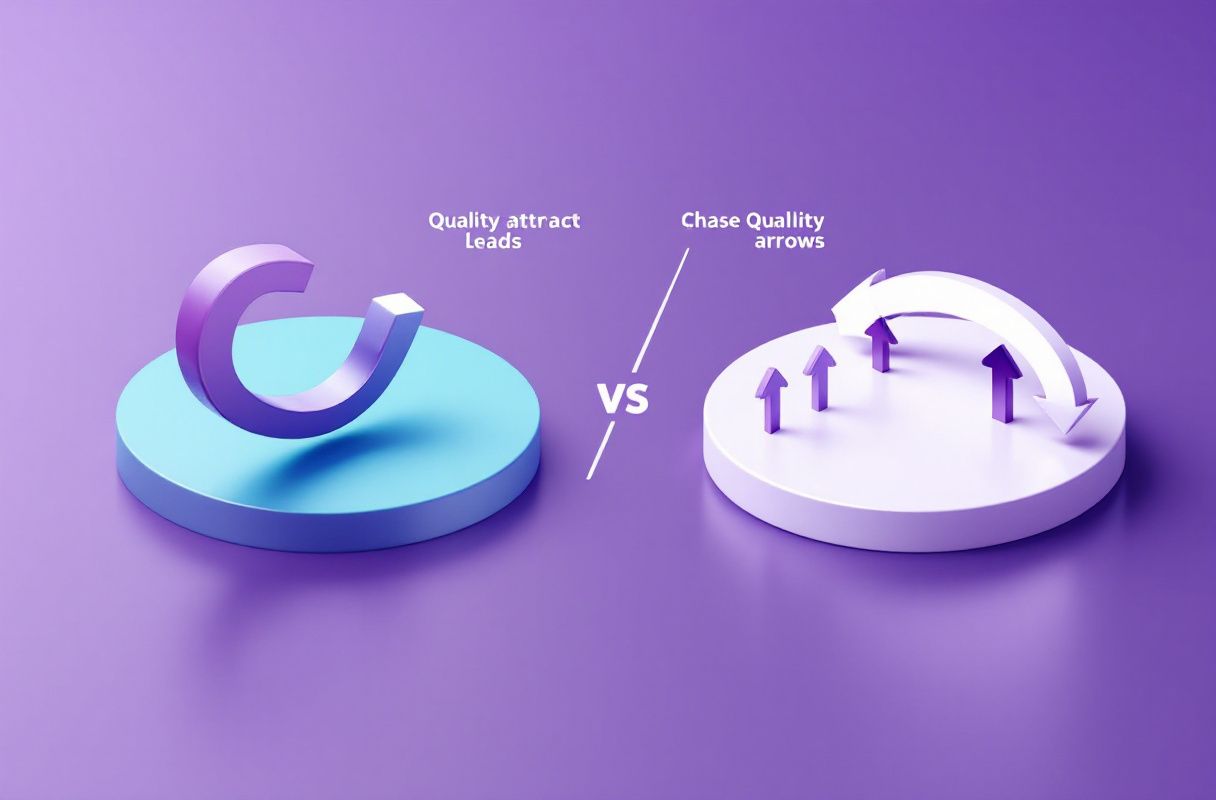
ConnectSafely.ai is not a cheaper or simpler CRM — it does a different job. Capsule organizes the pipeline; ConnectSafely fills it. Reading them as rivals is the category error; they sit at different layers.
| Dimension | Capsule CRM | ConnectSafely.ai |
|---|---|---|
| Core job | Organize contacts, deals, tasks | Generate warm inbound leads |
| Layer | System of record (downstream) | Demand creation (upstream) |
| Creates new leads? | No — stores existing ones | Yes — attracts warm buyers |
| Primary surface | CRM database + pipeline | LinkedIn (owned audience) |
| Conversion posture | N/A (records pipeline) | Buyer self-identifies warm (~14.6%) |
| Pricing from | Free, then ~$18/user/mo (source) | from $10/month, flat (not per-seat) |
| Best for | Teams that need to organize a pipeline | Teams that need to fill one |
The difference is structural. A better CRM makes an existing pipeline easier to work. ConnectSafely changes how much warm pipeline exists to begin with — which is the lever most small teams are actually reaching for when they type "Capsule CRM alternative."
What Most Guides Get Wrong About CRMs
The category is wrapped in a quiet myth or two. A few worth correcting:
Myth: "A better CRM will grow my pipeline." Reality: a CRM organizes pipeline; it cannot create it. Pipeline growth happens upstream, in demand creation — the one thing no CRM, Capsule included, does.
Myth: "If sales is slow, we have the wrong CRM." Reality: slow sales is usually a lead-flow problem, not a record-keeping problem. Swapping CRMs rearranges the furniture in an empty room.
Myth: "Simple CRM means we've outgrown it." Reality: most small teams have not outgrown Capsule's simplicity — they have under-fed it. Fix the input before you blame the container.
Myth: "Per-seat pricing scales with value." Reality: per-seat pricing scales with headcount. If your constraint is lead flow, paying more per user does nothing for the actual bottleneck — a flat inbound engine does.
How to Choose: A Decision Framework
There is no universal winner here, because Capsule and ConnectSafely answer different questions. The right call depends on your actual constraint.
- For founders with a thin pipeline: your bottleneck is demand, not storage. Build inbound authority first so warm buyers arrive, then let a simple CRM track them. Start with ConnectSafely from $10/month, and keep Capsule's free tier for organizing the deals it produces.
- For small teams that already have steady lead flow: Capsule is a fine, affordable home for that pipeline. Add ConnectSafely in parallel so the warm-lead input keeps growing while Capsule keeps it organized.
- For solo consultants: you need 10–20 warm conversations a month, not a heavier CRM. Inbound authority produces those; see how high-intent leads reveal themselves on LinkedIn, then track them in Capsule's free plan.
- For teams comparing simple CRMs: if your real question is "which CRM," Capsule is a strong pick against peers like Bigin or Zoho CRM. Just remember that the CRM choice is downstream of the demand problem — solve the demand first.
Frequently Asked Questions
What is the best Capsule CRM alternative in 2026?
It depends on the problem you are solving. If you genuinely need a different CRM, Capsule's closest peers are other simple small-business CRMs. But if you searched because your pipeline is thin, the real "alternative" is a demand engine: ConnectSafely.ai builds the LinkedIn inbound authority that fills the pipeline Capsule then organizes — from $10/month, flat, with zero ban risk.
How much does Capsule CRM cost?
Capsule offers a free plan (up to 250 contacts, 2 users), then paid tiers reported at roughly $18/user/mo (Starter), $36 (Growth), $54 (Advanced), and $72 (Ultimate) billed annually, per Capsule's pricing page — monthly billing runs higher, so confirm current rates. ConnectSafely, by contrast, starts at a flat $10/month, not per seat.
Can a CRM like Capsule generate leads for me?
No. A CRM organizes and tracks contacts and deals that already exist — it has no mechanism to attract new buyers. Lead generation happens upstream of the CRM. That is exactly the layer ConnectSafely works at: building warm inbound demand that you then manage in whatever CRM you like.
Is Capsule CRM good for small businesses?
Yes — it is one of the better-rated simple CRMs for small teams, with strong ease-of-use and support scores on G2 (reported ~4.7/5). The caveat is scope: it is a system of record, so it assumes you already have pipeline to manage. If the pipeline is empty, that is a demand problem, not a CRM problem.
Can I use Capsule CRM and ConnectSafely together?
Absolutely — they are complementary. ConnectSafely generates the warm LinkedIn inbound leads; Capsule organizes them into contacts, deals, and tasks. This is the natural pairing: fix the input with inbound authority, keep the record tidy with a simple CRM. Many small teams run exactly this stack.
The Bottom Line
Capsule CRM is a genuinely good small-business CRM: simple, well-rated, and fairly priced, with an honest, narrow scope. But that scope is the whole point — a CRM organizes the pipeline you already have, and it cannot create a pipeline you don't. If Capsule feels empty, the fix is not a different CRM; it lives upstream, where the 14.6% vs 1.7% gap is decided. Build the LinkedIn inbound authority that fills the pipeline first — then let Capsule do what it does well. Compare your options in the Best LinkedIn Automation Tools guide, then build the demand your CRM is waiting for.
Ready to attract qualified leads on LinkedIn? Start free and fill the pipeline your CRM can only organize.
See How It Works
Watch how people get more LinkedIn leads with ConnectSafely




Related Articles