Best GlockApps Alternative 2026: LinkedIn Inbound First
Best GlockApps alternative in 2026? ConnectSafely.ai. Inbound closes 14.6% vs 1.7% outbound, from USD $10/month, zero ban risk. Build authority, skip inbox testing.

Research methodology: Every pricing claim, feature, and limitation in this comparison was independently verified in July 2026 from vendor pricing pages, Trustpilot, G2, AppSumo, and Product Hunt. Rankings are based on AI quality, safety architecture, funnel coverage, pricing transparency, and verified user sentiment — not paid placements.

Updated July 6, 2026 — Researched against GlockApps's vendor pricing page, G2, Capterra, and HubSpot's marketing statistics. Reviewed by the ConnectSafely.ai editorial team.
The best GlockApps alternative in 2026 is ConnectSafely.ai — and the difference is one of strategy, not features. GlockApps is a deliverability-testing tool: it runs inbox placement tests across 70+ real seed inboxes, analyzes spam filters, monitors DMARC, blacklists, and sender reputation, and tells you exactly why your cold email is landing in the Promotions tab or the Spam folder. That diagnostic machinery is genuinely useful, but it optimizes a channel that barely converts. HubSpot reports inbound leads close at roughly 14.6% versus just 1.7% for outbound — so even a perfectly inboxed cold email is still fighting a structural ceiling. ConnectSafely.ai helps you build genuine inbound authority on LinkedIn so qualified buyers come to you. To see where it fits in your stack, start with the best LinkedIn automation tools guide.
Want to Generate Consistent Inbound Leads from LinkedIn?
Get our complete LinkedIn Lead Generation Playbook used by B2B professionals to attract decision-makers without cold outreach.
No spam. Just proven strategies for B2B lead generation.
This is not a claim that GlockApps is a bad product — it does its job well. It's a claim that endlessly diagnosing why your cold email hits spam is maintenance on the lowest-converting, highest-effort channel in B2B. There's nothing to test when buyers reach out to you.
Key Takeaways
- GlockApps pricing (2026): GlockApps offers a Free plan and three paid tiers billed monthly — Essential at $59/month, Growth at $99/month, and Enterprise at $129/month, with roughly 30% off when paid annually. Prices are published cleanly on the vendor page, but the credit-based model means costs rise with testing volume.
- What it does: GlockApps is an email deliverability testing platform — inbox placement tests across 70+ seed inboxes (Gmail, Outlook, Yahoo, and more), spam-filter analysis, sender-score and IP-reputation monitoring, DMARC analytics, blacklist checks, and uptime monitoring.
- GlockApps's genuine strengths: Detailed, readable spam and blacklist reports, wide seed-inbox coverage, generous DMARC message limits, and a clear dashboard. It holds a strong 4.7/5 on Capterra, though a more mixed 3.7/5 on G2.
- The core issue: GlockApps diagnoses a problem on the cold-email channel. Fixing deliverability is endless upkeep — reputation, warmup, authentication, and seed placement all drift — and it never changes the fact that cold email converts near 1.7%.
- The math favors authority: 14.6% close on inbound vs 1.7% outbound means one buyer who already trusts you beats a hundred perfectly-inboxed cold emails that no one asked for.
- ConnectSafely.ai starts from USD $10/month with zero ban risk and nothing to test — it builds the authority that makes qualified buyers come to you.
What Is GlockApps?
GlockApps (glockapps.com) is an email deliverability and inbox-placement testing platform aimed at email marketers, cold-outreach teams, agencies, and deliverability specialists. You send a test campaign to a provided seed list, and GlockApps reports exactly where your message landed across major providers, why it may have been filtered, and what to fix. It's a diagnostic tool — it measures and monitors your sending health rather than sending your campaigns for you.
Its core features include:
- Inbox placement tests — send to 70+ real seed inboxes across Gmail, Outlook, Yahoo, and other providers, and see whether each lands in Primary, Promotions, or Spam.
- Spam-filter analysis — reports that flag the specific issues (content, authentication, reputation) pushing your mail out of the inbox, with suggested fixes.
- Sender reputation and IP monitoring — track your sender score and get alerted when your sending IPs appear on blacklists.
- DMARC analytics — aggregate DMARC reporting across unlimited domains to catch spoofing and authentication failures.
- Uptime and blacklist monitoring — ongoing checks on server uptime and blacklist status so problems surface before they tank a send.
GlockApps Pricing
GlockApps uses credit-based, feature-tiered pricing with a free entry point. Spam-test credits are the main lever, and they refresh monthly — so heavier testing pushes you up the tiers. Annual billing carries roughly a 30% discount.
| Plan | Monthly | What's Included | Key Notes |
|---|---|---|---|
| Free | $0 | 2 spam credits, 1 sending account, 10k DMARC messages, 5 uptime monitors, 1 IP reputation monitor | Good for a one-time check |
| Essential | $59 | 360 spam credits, 1 sending account, 600k DMARC messages, 10 IP reputation monitors | ~30% off annually |
| Growth | $99 | 1,080 spam credits, 10 sending accounts, 1.2M DMARC messages, 20 IP reputation monitors | ~30% off annually |
| Enterprise | $129 | 1,800 spam credits, 20 sending accounts, 12M DMARC messages, 25 IP reputation monitors | ~30% off annually |
Pricing verified against GlockApps's pricing page and cross-checked with G2 and Capterra, July 2026. All plans include unlimited DMARC domains. Credits expire monthly and overage pricing applies for extra DMARC messages — confirm current terms directly with the vendor before you buy.
Where GlockApps Is Genuinely Better
Credit where it's due. If you run cold email or newsletters at volume and need to know why they're being filtered, GlockApps does that job well.
- Detailed, readable reports: The dashboard is clear, and Inbox Insight points to the specific reason a message was filtered and suggests what to adjust — a real time-saver for deliverability troubleshooting.
- Wide seed-inbox coverage: Testing across 70+ real inboxes at major providers gives a fuller picture of placement than a single-provider check.
- Deliverability monitoring: Sender-score, IP-reputation, DMARC, uptime, and blacklist monitoring in one place is convenient for teams whose revenue depends on email hitting the inbox.
If keeping cold email out of the spam folder is your core motion, GlockApps is a capable diagnostic. The question is whether better inbox placement is the same as more pipeline — and how long you want to keep testing a channel that converts near 1.7%.
Why You Need a GlockApps Alternative
Problem 1: Cold Email Has a Structural Conversion Ceiling
Inbox placement is a means, not an end. Even if GlockApps helps you hit the Primary inbox every time, outbound closes near 1.7% while inbound closes near 14.6% — and that gap doesn't shrink because your deliverability improved. A perfectly inboxed cold email is still an unsolicited message to someone who never asked to hear from you. You're optimizing the delivery of the lowest-converting layer of B2B demand. Learn why the framing matters in warm vs cold outreach.
Problem 2: Deliverability Testing Is Endless Maintenance, Not a Moat
This is the part most reviews gloss over. Deliverability is never "solved." Sender reputation drifts, warmup has to run continuously, seed placement shifts as filters change, IPs land on blacklists, and DMARC needs ongoing attention. Every send is a fresh test, and every fix buys you a few weeks at best. Guides on how to avoid the spam folder and warm up a domain exist precisely because the work never stops. GlockApps sells you the diagnosis; the treatment is permanent upkeep on a channel that still converts at 1.7%.
Problem 3: A Passing Spam Score Still Isn't a Booked Meeting
GlockApps can tell you your email will land in the inbox. It can't make a prospect want to read it, trust you, or reply. In 2026, B2B buyers research the person behind the outreach on LinkedIn before they respond — and a cold pitch that "passed the spam test" still signals a stranger selling something. Placement is table stakes; authority is what converts. Compare the approaches:
| Factor | Deliverability Testing (GlockApps) | Inbound Authority (ConnectSafely.ai) |
|---|---|---|
| What it optimizes | Inbox placement of cold email | Trust that makes buyers reach out |
| Typical close rate | Outbound-like (~1.7%) | Inbound-like (~14.6%) |
| Ongoing effort | Continuous testing and monitoring | Consistent posting; authority compounds |
| Account / channel risk | Reputation drift, blacklists | Zero ban risk |
| What you're paying for | A diagnosis of a low-converting channel | Demand and authority |
| Compounding over time | No (each send re-tested) | Yes (authority compounds) |
GlockApps vs Other Tools vs ConnectSafely.ai
| Feature | GlockApps | Other Deliverability Tools | ConnectSafely.ai |
|---|---|---|---|
| Core job | Test + monitor email deliverability | Test + warm up email | Build LinkedIn inbound authority |
| Motion | Diagnose cold-channel health | Support cold outreach | Engage + warm inbound |
| Ongoing risk | Reputation drift, blacklists | Reputation drift, warmup churn | Zero ban risk |
| Entry price | Free, then $59–$129/mo | $30–$100/mo typical | From USD $10/mo |
| Buyer relationship | Cold, unsolicited list | Cold, unsolicited list | Pre-engaged audience |
| Compounds over time | No | No | Yes |
The comparison isn't feature-for-feature — it's strategy-for-strategy. GlockApps and its peers optimize the health of the cold-email channel. ConnectSafely.ai optimizes for authority. For adjacent deliverability comparisons, see our Warmy.io alternatives breakdown and our spam-folder guide.
The Inbound Alternative: Build Authority Instead of Chasing Inbox Placement
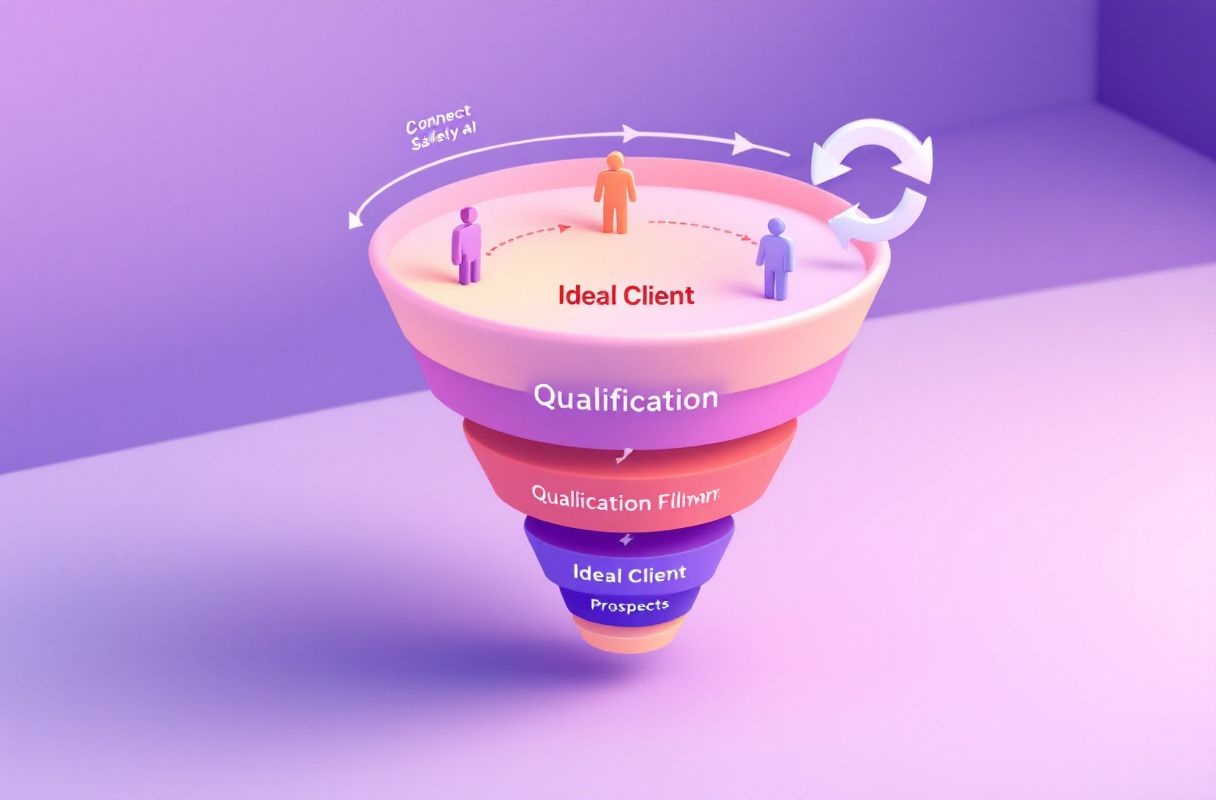
Instead of testing and re-testing whether strangers' spam filters let your cold email through, you make a few hundred of the right people see you as the expert — so there's nothing to place, because the buyer starts the conversation. Here's the four-step approach:
- Publish a real point of view. Post on the specific problems your buyers face, in your own voice — this is what separates authority from a cold pitch that merely "passed the spam test."
- Engage where buyers already are. Comment thoughtfully on prospects' and peers' posts so your name recurs in the right feeds, building familiarity no seed-list test can manufacture.
- Read the signals. Watch profile views, saves, and engagement that reveal genuine interest — the real-world equivalent of a "reply," without a deliverability report in sight.
- Convert warm, not cold. Reach out only to people who've already engaged — now you're a recognized voice, not an unsolicited message hoping to clear a spam filter.
ConnectSafely.ai automates the safe, consistent execution of steps 1–3 so your authority compounds — with no inbox tests, no blacklist alerts, and no account risk. If you're weighing your options, compare the best LinkedIn automation tools.
What Most Guides Get Wrong
- They equate "inboxed" with "converting." Landing in the Primary tab just means your low-converting message was delivered. Pipeline comes from authority, not from placement.
- They treat deliverability as a one-time fix. Reputation, warmup, authentication, and seed placement all drift — testing is a permanent tax, not a milestone. Read why in the domain-reputation recovery guide.
- They frame testing tools as demand engines. GlockApps is a diagnostic utility. Demand generation is a separate discipline built on relationships. Build it with the 5 pillars of LinkedIn lead generation.
- They forget compounding. Every send starts a fresh test and every fix decays. An authority position and an engaged audience compound for years. One is rented; the other is owned.
How to Choose: Decision Framework by Role
- Founders: Your voice is your unfair advantage. Build authority on LinkedIn instead of maintaining a cold-email deliverability program — compare your options in the best LinkedIn automation tools guide.
- Sales & SDR teams: Stop measuring success by inbox placement. Replace cold sequences with warm outreach that starts from engagement.
- Agencies: Client results come from pipeline, not from clean spam scores — and testing every client's sending is recurring overhead. Weigh the tradeoffs against email warmup alternatives.
- Freelancers & consultants: Trust is your entire sale. Earn it with a real point of view rather than a perfectly-inboxed cold pitch — start with the 5 pillars of inbound strategy.
Real Results: From Chasing Inbox Placement to Inbound Authority (Illustrative)

The following is an illustrative example.
Days 1–30: A B2B agency owner had been running cold email and leaning on GlockApps to keep it out of spam — weekly inbox placement tests, blacklist alerts, DMARC checks, and constant warmup. Placement was decent, but replies were thin and every fix bought only a few weeks before scores drifted again. Tired of maintaining a channel that still converted near 1.7%, they kept the monitoring for compliance but redirected the same hours to posting twice a week on the narrow problem they solve, while engaging with 15 target accounts daily.
Days 31–60: The shift showed. Their posts began surfacing in the right feeds because real prospects engaged, not because a send cleared a spam filter. Profile views from target accounts climbed, and a few buyers started commenting. Instead of testing another cold campaign, the owner replied to that engagement and booked the first inbound calls — from people who already saw them as the expert.
Days 61–90: With consistency compounding, inbound DMs and discovery requests arrived weekly. The same hours that once went to inbox placement reports now produced warm conversations — at a fraction of the effort, with zero deliverability upkeep, and with no channel that could quietly drift back into the spam folder.
The takeaway isn't that GlockApps failed at its job. It's that the owner stopped optimizing the delivery of a low-converting channel and started building authority qualified buyers act on.
Frequently Asked Questions
How much does GlockApps cost in 2026?
GlockApps offers a Free plan (2 spam-test credits, 1 sending account, 10,000 DMARC messages) and three paid tiers billed monthly: Essential at $59/month, Growth at $99/month, and Enterprise at $129/month, with roughly 30% off when paid annually. Spam-test credits refresh monthly and scale with the tier — 360 on Essential up to 1,800 on Enterprise — so heavier testing pushes you higher. Prices are published on GlockApps's pricing page; confirm current terms and overage rates directly with the vendor.
Is ConnectSafely.ai a direct replacement for GlockApps?
Not feature-for-feature — it's a strategic alternative. GlockApps tests and monitors the deliverability of cold email; ConnectSafely.ai builds LinkedIn-driven inbound authority so qualified buyers reach out to you. If your goal is pipeline rather than inbox placement, it replaces the need to keep diagnosing a low-converting channel — because there's nothing to test when buyers come to you.
Is GlockApps worth it?
For teams whose revenue depends on email hitting the inbox, it can be. Reviewers give it a strong 4.7/5 on Capterra for its detailed spam and blacklist reports and wide seed-inbox coverage, though it sits at a more mixed 3.7/5 on G2, with complaints about credit-based pricing and limited detail on why Gmail filters certain mail. The deeper catch is that even flawless deliverability leaves cold email converting near 1.7% — so its value depends on whether cold outreach is a channel you're committed to maintaining.
Why is LinkedIn inbound authority better than deliverability testing?
Because trust is earned, not diagnosed. HubSpot data shows inbound leads close at ~14.6% versus ~1.7% for outbound. A buyer who already sees you as the expert starts the conversation predisposed to buy; a cold email that "passed the spam test" still arrives from a stranger. Inbox placement is table stakes on a low-converting channel; authority is what actually books meetings.
Can I use GlockApps and ConnectSafely.ai together?
You can. Some teams keep GlockApps to monitor deliverability on transactional or newsletter email while using ConnectSafely.ai to build genuine authority and engagement — the channel where B2B buying decisions actually start. Just be honest about where the effort pays off: maintaining cold-email placement is ongoing upkeep on a 1.7% channel, while authority-first inbound compounds and converts near 14.6%.
See ConnectSafely.ai pricing — from USD $10/month, zero ban risk. Or explore the best LinkedIn automation tools guide to compare your options.
See How It Works
Watch how people get more LinkedIn leads with ConnectSafely




Related Articles