Best Gong Alternative 2026: LinkedIn Inbound
Gong reads the calls you already booked — brilliantly. But reading calls isn't booking them. LinkedIn inbound closes 14.6% vs 1.7%, from $10/mo, zero ban risk.

Research methodology: Every pricing claim, feature, and limitation in this comparison was independently verified in August 2026 from vendor pricing pages, Trustpilot, G2, AppSumo, and Product Hunt. Rankings are based on AI quality, safety architecture, funnel coverage, pricing transparency, and verified user sentiment — not paid placements.

Updated August 2026 — Researched against Gong's (gong.io) vendor pricing, G2 reviews (6,500+ ratings, 4.7/5), and HubSpot's marketing statistics. Reviewed by the ConnectSafely.ai editorial team.
You bought Gong to understand why deals slip. And it delivers — genuinely. It records your calls, transcribes them, tells you which deals are at risk, and coaches your reps on exactly where they lose the room. That insight is real, and it is very good.
Want to Generate Consistent Inbound Leads from LinkedIn?
Get our complete LinkedIn Lead Generation Playbook used by B2B professionals to attract decision-makers without cold outreach.
No spam. Just proven strategies for B2B lead generation.
But here is the quiet problem that shows up around renewal season. Gong made every conversation smarter — yet the number of conversations never changed. The pipeline it analyzes so brilliantly is the same size it was before you signed the contract.
That is the honest line worth drawing. Gong is a world-class lens on the conversations you already have. It does not create net-new ones. If your reps book 40 calls a month, Gong makes those 40 calls sharper — it does not make them 60.
So if you are searching for a "Gong alternative," it is worth asking what you are actually short on. Better analysis of existing calls? Or more of the right calls to begin with? The best answer to the second question is not a cheaper Gong — it is LinkedIn inbound lead generation, where the right buyers come to you already warm.
Key Takeaways
- Gong is revenue/conversation intelligence, not lead generation — it records, transcribes, and analyzes the calls you already booked, warns on deal risk, and coaches reps. It cannot manufacture a conversation that does not exist.
- Gong is quote-only and expensive: reported at a ~$5,000 base platform fee plus ~$1,360–$1,600 per user/year (billed annually), landing near $120–$250/user/month effective. Reported figures — confirm on the vendor page.
- The March 2025 restructure raised real costs: forecasting and some analytics were unbundled into paid modules, pushing effective per-user cost up an estimated 25–56% from 2023 to 2026.
- Gong is genuinely excellent at what it does: G2 rates it 4.7/5 across 6,500+ reviews — best-in-class call analytics, coaching, and deal intelligence.
- Intelligence is a mirror; inbound is a magnet: Gong reflects your revenue conversations back to you; ConnectSafely fills the top of the funnel with net-new warm ones.
- ConnectSafely starts from $10/month with zero ban risk — and inbound leads close at ~14.6% vs ~1.7% for cold outbound, per HubSpot.
What Gong Actually Does Well
Let us be clear and generous, because Gong has earned it. This is not a weak product with a marketing budget — it is one of the strongest tools in the modern revenue stack.
Gong records and transcribes your sales calls automatically, then applies AI to surface what actually happened. It flags which topics came up, who spoke and for how long, and where the conversation lost momentum. Reps and managers get a searchable, analyzable record instead of fuzzy memory and hastily typed CRM notes.
Its deal intelligence is a real edge. Gong reads the signals across an opportunity — engagement, sentiment, stakeholder involvement — and warns you when a deal is quietly slipping before it shows up in the forecast. For a sales leader, that early warning is worth a lot.
Its coaching capability may be the single best reason teams keep it. Managers can see exactly where a rep talks too much, misses a buying signal, or fumbles an objection — and coach against real evidence, not vibes. That is how you level up a whole team, not just your top performer.
And the market agrees. A 4.7/5 rating across 6,500+ G2 reviews is not an accident — it reflects repeated, real value for revenue teams that run a lot of calls. None of that is in dispute here.
What Gong Costs in 2026
Gong does not publish standard pricing — everything is a custom quote from their sales team. The figures below are reported estimates from procurement data and third-party write-ups. Confirm all numbers on the vendor page before budgeting.
| Cost Component | Reported Figure (2026) | Notes |
|---|---|---|
| Base platform fee | ~$5,000 (annual) | Reported flat fee before per-user seats |
| Per user (<50 users) | ~$1,600 / user / year | Billed annually |
| Per user (50–99) | ~$1,520 / user / year | Volume discount |
| Per user (100–249) | ~$1,440 / user / year | Volume discount |
| Per user (250+) | ~$1,360 / user / year | Volume discount |
| Effective monthly | ~$120–$250 / user / month | Depends on tier + modules |
Reported — confirm on the vendor page. What that means in practice:
- A 10-person team realistically pays ~$21,000–$35,000 in year one.
- A 50-person team lands around ~$90,000–$140,000.
- Contracts commonly include 5–15% annual renewal increases, so the number climbs over time.
There is one more wrinkle worth flagging honestly. In March 2025, Gong restructured its pricing, unbundling forecasting and some analytics into separately-paid modules (Forecast, Engage, Enable Essentials, Data Cloud). The net effect: reported effective per-user cost rose an estimated 25–56% between 2023 and 2026 for teams that want the full capability set they may have previously had bundled. That is not a scandal — it is a pricing decision — but you should walk in knowing the quoted seat price may not be the whole bill.
The Gap: Intelligence Isn't Origination

Here is the core argument, and it is not a knock on Gong — it is a description of what Gong is.
Gong is a mirror. It is a rear-view and real-time reflection of the revenue conversations you are already having. Point it at your calls and it shows you the truth about them in stunning detail. But a mirror, by definition, can only reflect what is already in front of it. It cannot conjure a new reflection out of nothing.
The hard, expensive part of go-to-market is not analyzing conversations — it is originating them. Getting the right buyer to take the call in the first place. That is the bottleneck for most teams, and it is precisely the part conversation intelligence does not touch.
Think about the math. If Gong improves your win rate on existing calls by some margin, that is genuine value. But it is a multiplier on a fixed base. If the base — the number of qualified conversations entering your funnel — never grows, you have made a small number of calls smarter rather than creating a larger number of them.
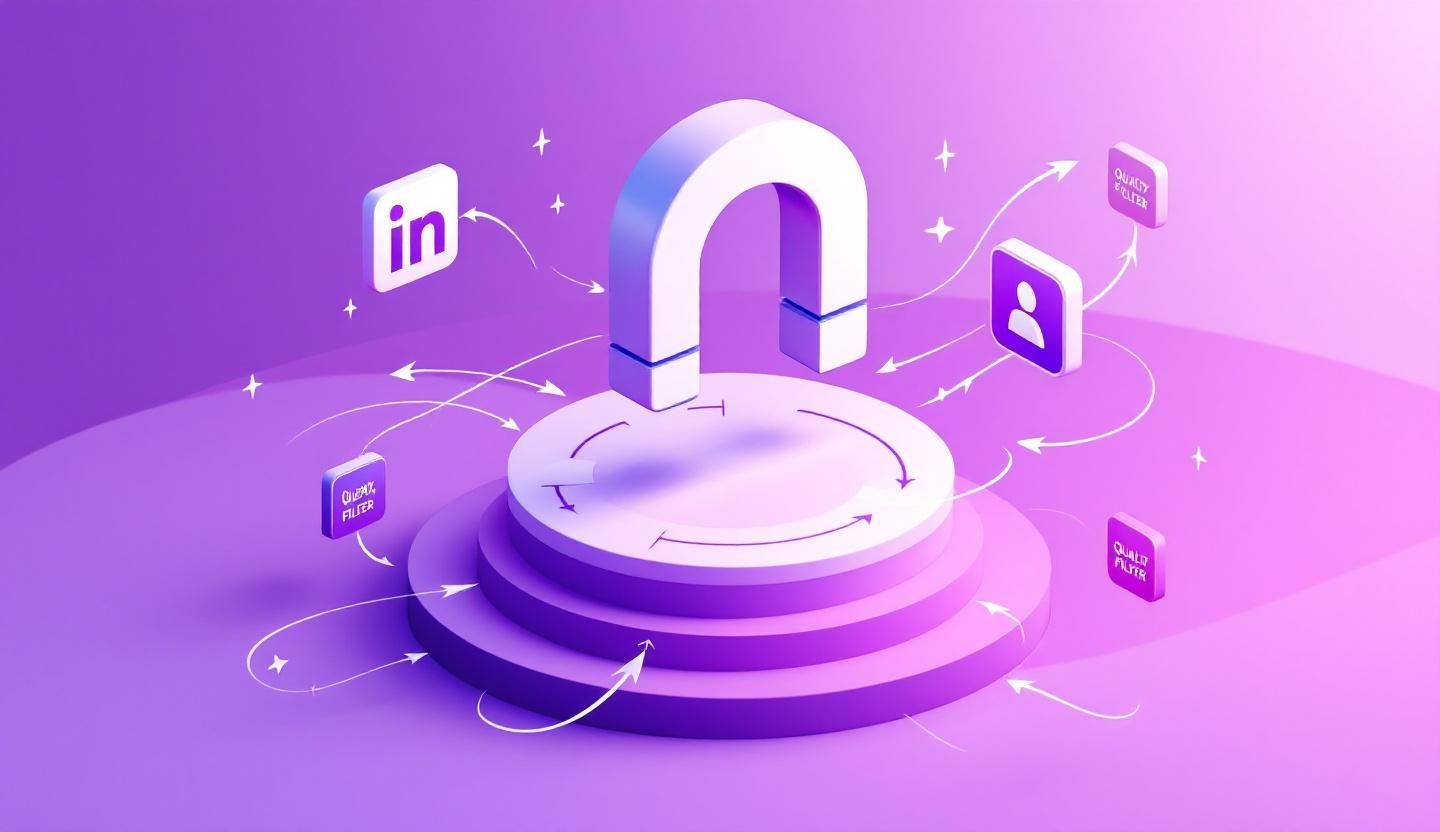
A magnet works differently. Instead of reflecting the pipeline you have, it pulls in pipeline you did not have. That is what inbound authority does: it makes you found by buyers on LinkedIn, so warm conversations arrive that would never have existed for Gong to analyze. One tool sharpens the conversation; the other manufactures it. Those are different jobs, and most "Gong alternative" searches are really a search for the second one.
Where Gong Is Genuinely Better
Fairness demands this section, and it is not a throwaway. There are situations where Gong is simply the right tool and ConnectSafely is not a substitute at all.
If you run a large outbound sales team making a high volume of calls, Gong's analytics are unmatched. When you have 30, 50, or 200 reps each running many conversations a week, the ability to analyze, search, and coach against that call volume is enormously valuable — and no inbound platform attempts it. ConnectSafely does not record calls, does not transcribe them, and does not score deal risk. If call analytics is your need, Gong wins outright.
Gong is also the better choice when:
- You already have plenty of pipeline and your bottleneck is conversion, not origination.
- You have a dedicated enablement or RevOps function that can act on coaching insights systematically.
- Forecasting accuracy across a large book of business is a board-level priority.
- You need a searchable, auditable record of every customer conversation for compliance or handoffs.
If that describes you, keep Gong — or buy it. This article is not arguing Gong is bad. It is arguing that a lens on existing conversations and an engine for new ones are different products, and you should be honest about which gap you are trying to close.
What Most "Gong Alternative" Guides Get Wrong
Most roundups answer the wrong question. Someone searches "Gong alternative" and every guide assumes they want cheaper call analytics — so they list Chorus, Avoma, Fireflies, and call it a day. That is a fine list if cheaper transcription is genuinely the goal.
But that framing quietly accepts Gong's premise: that your problem is understanding the calls you have. For a large share of teams searching this term, it is not. The real constraint is upstream — there are not enough of the right conversations to analyze in the first place.
Here is the contrarian take, and it is the whole point of this piece. The real leverage is not analyzing calls more cheaply — it is needing fewer of them to hit quota. If your inbound funnel delivers warm, pre-qualified buyers who already know your work, each conversation is worth dramatically more and converts far higher. You do not need a cheaper mirror. You need a magnet.
Put bluntly: a team drowning in cold calls that close at 1.7% does not fix its pipeline by analyzing those cold calls with more precision. It fixes it by changing the source of the conversation — from cold-and-analyzed to warm-and-inbound. That shift, not a discount on transcription, is where the pipeline actually moves.
A Decision Framework by Role
There is no universal answer. What you need depends on who you are and where your bottleneck actually sits.
| Role | Your Real Bottleneck | Best Fit |
|---|---|---|
| Founder / early startup | Not enough conversations at all | Inbound authority — you need net-new warm leads, not call analytics for a handful of calls |
| Small B2B sales team (2–10) | Filling the top of funnel | Inbound-first; add Gong later only if call volume justifies it |
| Large outbound team (30+ reps) | Converting existing high call volume | Gong for analytics/coaching — and run inbound in parallel to widen the funnel |
| Agency / multiple clients | Repeatable results without per-seat contracts | Inbound authority — flat pricing scales across clients; six-figure analytics stacks do not |
| Solo consultant | 10–20 warm conversations a month | Inbound authority — you do not need to analyze calls; you need calls to happen |
The pattern is clear. Gong makes sense when you already have call volume and need to convert it better. For nearly everyone whose real problem is not enough of the right conversations, the money is better spent on origination than on analysis.
Real Results: From Analyzed Calls to Inbound Pipeline (Illustrative)

The following is an illustrative example, not a specific customer's reported metrics.
Picture a small B2B team that invested in a conversation-intelligence stack to fix a stalling pipeline. The tool worked exactly as advertised — every call was transcribed, deal risks surfaced, reps got sharp coaching. Managers could finally see why deals died.
But close rates barely moved. The reason was structural, not a tooling failure: the team was analyzing a small number of mostly-cold conversations with great precision. They had a better mirror. They still did not have more of the right calls.
After shifting focus to building LinkedIn authority for a quarter:
- Inbound inquiries began arriving from buyers who already followed the founder's content.
- Conversations opened with "I've read your posts" instead of "why are you calling me?" — a different starting altitude entirely.
- The team needed fewer calls to hit the same number, because inbound conversations converted at a far higher rate.
The qualitative shift mattered more than any single number. A cold call, however well-analyzed, opens with skepticism. An inbound conversation opens with trust — and trust is the part no conversation-intelligence model can ship, because it has to exist before the call for Gong to analyze it.
Why LinkedIn Inbound Outperforms
The gap between the two motions is not marginal. According to HubSpot's research on inbound marketing, inbound leads close at roughly 14.6% versus about 1.7% for cold outbound — an order-of-magnitude difference driven entirely by one thing: the inbound buyer already trusts you when the conversation starts.
That is the structural advantage. Gong can make a cold call sharper, but it cannot change the fact that a cold call is cold. As HubSpot's sales research repeatedly shows, modern B2B buyers do most of their evaluation before they ever speak to a rep — which means the trust is won upstream, long before the call Gong would analyze. Inbound changes the source, and the source is where the close-rate gap lives.
The economics are just as lopsided:
| Factor | Gong (Conversation Intelligence) | ConnectSafely (LinkedIn Inbound) |
|---|---|---|
| What it does | Analyzes calls you already booked | Creates net-new warm conversations |
| Role in funnel | Improves conversion of existing pipeline | Fills the top of the funnel |
| Close rate impact | Multiplier on a fixed base | ~14.6% inbound vs ~1.7% outbound |
| Cost | ~$21K–$35K+/yr for 10 users (reported) | From $10/month |
| Ban risk | N/A | Zero — no aggressive automation |
| Asset built | A record of conversations | Compounding authority that appreciates |
Being found beats being fast. A faster, better-coached cold outreach is still cold. Building authority through LinkedIn content and engagement means the right buyers arrive already warm — and it compounds. Every post and comment widens the funnel for the next one, following the five pillars of inbound lead generation. And it starts from $10/month with zero ban risk, because there is no aggressive automation to trigger a flag. For any team whose real gap is origination, that is the higher-leverage place to put the budget. For the full playbook, see how to use LinkedIn for B2B sales.
Frequently Asked Questions
Is Gong worth it for a small sales team?
For most small teams, no — not as a first purchase. Gong's 4.7/5 G2 rating is genuine, but its value scales with call volume. A small team's bottleneck is usually not enough conversations, not poorly-analyzed ones — and at a reported ~$21,000–$35,000 first-year cost for 10 seats, that spend earns more when pointed at origination. Small teams typically get better ROI from LinkedIn inbound first, adding Gong later if call volume justifies it.
What's a cheaper alternative to Gong?
If you want cheaper call analytics specifically, tools like Chorus, Avoma, or Fireflies compete on transcription and are worth comparing. But if your real problem is not enough warm conversations, the better move is not a cheaper mirror — it is a magnet. ConnectSafely starts at $10/month and generates net-new inbound leads rather than analyzing the calls you already have. Different job, dramatically lower cost.
Does Gong generate leads?
No. Gong is conversation and revenue intelligence — it records, transcribes, analyzes, and coaches on the calls you have already booked. It does not create net-new conversations or generate leads. That is not a flaw; it is simply outside what the product does. Lead origination is a separate job, which is where an inbound platform fits instead.
Gong vs LinkedIn inbound — which drives more pipeline?
They act on different parts of the funnel, so it depends on your gap. Gong improves conversion of existing pipeline; it is a multiplier on the calls you already run. LinkedIn inbound creates pipeline — new warm conversations that close at ~14.6% versus ~1.7% for cold outbound, per HubSpot. If your funnel is full and conversion is the issue, Gong helps. If your funnel is thin, inbound drives far more net-new pipeline.
How much does Gong cost in 2026?
Gong is quote-only, but reported figures put it at a ~$5,000 base platform fee plus ~$1,360–$1,600 per user/year (billed annually), landing near $120–$250/user/month effective. A 10-person team realistically pays ~$21,000–$35,000 in year one; a 50-person team ~$90,000–$140,000, often with 5–15% annual renewal increases. The March 2025 restructure also unbundled forecasting and some analytics into paid modules. All figures reported — confirm on the vendor page.
See ConnectSafely.ai pricing — from $10/month, zero ban risk. Or explore the best LinkedIn automation tools guide to compare your options and find the origination engine your pipeline actually needs.
See How It Works
Watch how people get more LinkedIn leads with ConnectSafely




Related Articles