Outbound Automation Tools vs LinkedIn Inbound 2026
Outbound automation tools promise scale but risk LinkedIn bans, deliverability decay, and low replies. See where they help and why inbound wins in 2026.

Research methodology: Every pricing claim, feature, and limitation in this comparison was independently verified in August 2026 from vendor pricing pages, Trustpilot, G2, AppSumo, and Product Hunt. Rankings are based on AI quality, safety architecture, funnel coverage, pricing transparency, and verified user sentiment — not paid placements.

Updated August 19, 2026 — Researched against vendor pricing pages, G2, Trustpilot, and HubSpot benchmarks. Reviewed by the ConnectSafely.ai editorial team.
You bought an outbound automation tool to save time, but now you are watching connection requests get throttled, cold emails land in spam, and reply rates crawl below 4%. You are searching for an alternative because the math stopped working: more volume, fewer conversations, and a nagging fear that LinkedIn could restrict the account you spent years building.
Want to Generate Consistent Inbound Leads from LinkedIn?
Get our complete LinkedIn Lead Generation Playbook used by B2B professionals to attract decision-makers without cold outreach.
No spam. Just proven strategies for B2B lead generation.
Here is the direct answer. Outbound automation tools genuinely help with data enrichment, list building, and lightweight follow-up sequencing, but they do not fix the core problem in 2026: buyers ignore cold volume. Inbound automation, which attracts qualified leads through authority and content, converts far better. SEO and inbound leads close at roughly 14.6% versus 1.7% for outbound, according to HubSpot research. If you only optimize one motion this year, optimize the one that closes 8x more often.
For a full landscape of platforms, see our pillar guide to the best LinkedIn automation tools.
Key Takeaways
- Reply rates are decaying. Platform-wide cold email reply rates now average around 3.43%, down from about 5% in 2025, per the Instantly 2026 benchmark report.
- Deliverability is harder. Roughly 1 in 5 cold emails is diverted to spam and B2B contact data decays about 22.5% per year, so lists need re-verification every ~90 days (Amplemarket benchmarks).
- LinkedIn account risk is real. An estimated 40% of accounts using non-compliant automation received some restriction in early 2026, and HeyReach's integration was terminated in March 2026 (Valley analysis).
- Hard caps limit volume. LinkedIn's connection-request ceiling sits near 100 invites per week for most accounts, with a commercial-use limit around 1,000 profile views per month (LeadLoft LinkedIn limits).
- Inbound converts far better. Inbound leads close at ~14.6% vs ~1.7% for outbound (HubSpot).
- The safest path is a lower-risk model. ConnectSafely runs from USD $10/month with zero ban risk, prioritizing attraction over cold volume.
What Outbound Automation Tools Do (And Their Categories)
"Outbound automation" is a broad label covering several tool categories that each automate a different slice of cold outreach. Most teams end up stitching two or three together.
Understanding the categories helps you see where the value actually sits and where the risk hides. Below is a category map with representative tools and typical positioning. Treat every price as widely reported and confirm it on the vendor's own pricing page before you buy.
| Category | What it automates | Representative tools | Reported starting price (confirm on vendor page) | Primary risk |
|---|---|---|---|---|
| LinkedIn outreach automation | Connection requests, DMs, profile visits, follow-ups | Expandi, Dripify, Waalaxy, HeyReach | Waalaxy ~$16/user, Dripify ~$59/seat, Expandi ~$99/seat, HeyReach ~$179 for 5 accounts | Account restriction / ban |
| Cold email sequencing | Multi-step email sends, warmup, inbox rotation | Instantly, lemlist | lemlist ~$69/user | Deliverability decay, spam |
| Data + prospecting engines | Contact discovery, enrichment, intent signals | Apollo, Cognism, Clay | Apollo has a free tier and paid plans | Data decay, accuracy |
| Multichannel orchestration | Combined LinkedIn + email + call cadences | lemlist, La Growth Machine, HeyReach | Varies by seats/accounts | Compounds both risks above |
Pricing above is drawn from public reporting and shifts frequently; verify current numbers on each vendor's pricing page. For a deeper feature-by-feature breakdown, our best LinkedIn automation tools for lead generation guide compares these categories against inbound alternatives.
The Hidden Risks Most Buyers Underestimate
The demos show smooth workflows. The trade-offs show up 30 to 60 days later. Here are the three that hurt most.
1. LinkedIn Account Restrictions
Cloud-based LinkedIn automation routes your activity through shared infrastructure that LinkedIn's detection systems can flag as non-human. This is why tools in this category can trigger warnings, temporary restrictions, or permanent bans.
The risk is not theoretical. Analysts estimate around 40% of accounts using non-compliant automation received some form of restriction in early 2026, and LinkedIn terminated HeyReach's integration in March 2026, per Valley's automation-safety analysis. Because activity is capped near 100 connection requests per week and ~1,000 profile views per month (LeadLoft), pushing volume through automation may accelerate exactly the restrictions you are trying to avoid.
2. Deliverability Decay
Cold email looks cheap until you price in the infrastructure to keep it landing. Roughly 1 in 5 cold emails is now filtered to spam, and reply rates have slid to about 3.43% platform-wide (Instantly).
Deliverability can erode over time as domains age, spam complaints accumulate, and providers tighten sender rules. Keeping bounce rates under ~3% and complaints under ~0.3% requires constant warmup, list hygiene, and domain rotation (Amplemarket).
3. Low Reply Rates and Data Decay
Even a technically perfect send can fail on relevance. B2B contact data decays at roughly 22.5% per year, meaning a list bought today may be materially stale within a quarter.
The compounding effect is brutal:
- More sends to hit a quota, which raises spam-signal risk.
- Staler data, which lowers reply rates.
- Lower reply rates, which pushes teams to send even more.
That is a treadmill, not a growth engine. Our comparison of inbound vs outbound sales on LinkedIn walks through how the treadmill breaks a pipeline.
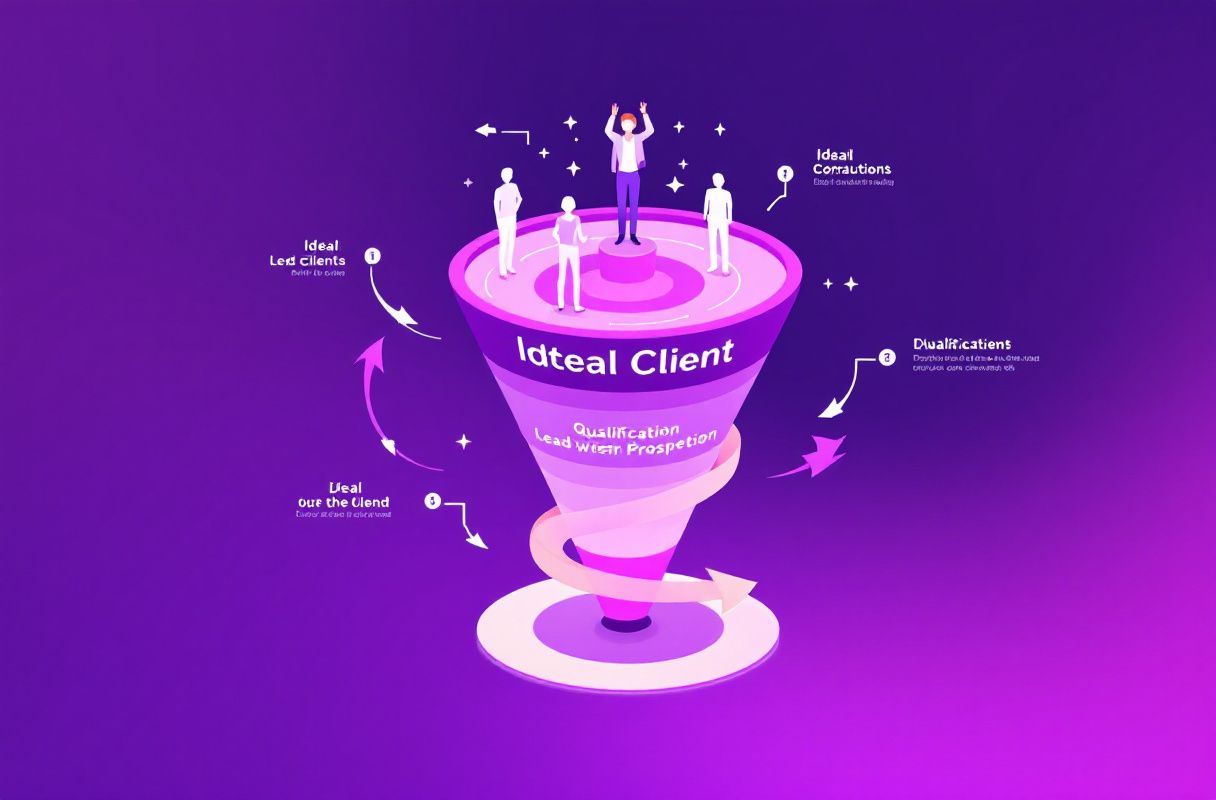
Where Outbound Automation Genuinely Helps
An honest comparison names the wins, not just the risks. Outbound automation is not useless. It is a specialized tool that shines in specific situations.
It genuinely helps when:
- You need to test a new market fast. Automated sequences let you validate messaging and ICP in days, not months.
- You are enriching, not blasting. Data and prospecting engines like Apollo or Clay are legitimately strong for building and cleaning lists that feed any motion, including inbound follow-up.
- You have a warm-ish list. Event attendees, trial signups, and past customers respond far better to automated follow-up than cold strangers do.
- You run account-based plays. A small, hand-picked target list with personalized, low-volume touches keeps you well under risk thresholds.
- You need coverage for a tiny team. One founder cannot manually follow up with 200 leads; lightweight sequencing prevents drops.
The trade-off is straightforward: outbound automation buys you speed and coverage at the cost of conversion quality and platform risk. It is a scalpel, not a firehose. The teams that get burned are the ones who treat volume as the strategy instead of a test.
Why Inbound Automation Wins in 2026
Inbound automation flips the model. Instead of automating interruption, it automates the systems that make qualified buyers come to you: consistent authority content, engagement that surfaces you to the right feed, and profile positioning that converts visitors into conversations.
The conversion gap is the whole argument. Inbound leads close at ~14.6% versus ~1.7% for outbound (HubSpot). An inbound lead has already self-identified a problem and chosen to engage, so the conversation starts at trust instead of at "who are you and why are you in my inbox."
Inbound also compounds. A cold sequence resets to zero every month; a body of authority content keeps generating profile visits, saved posts, and inbound DMs long after you publish. Our LinkedIn inbound GTM strategy breaks down how to build that flywheel, and our guide to B2B social selling on LinkedIn shows how engagement turns into revenue.
Here is the side-by-side that matters:
| Dimension | Outbound automation | Inbound automation |
|---|---|---|
| Lead close rate | ~1.7% (outbound) | ~14.6% (inbound) |
| Platform risk | Restriction/ban possible | Minimal — compliant activity |
| Cost trajectory | Rises with volume, data, warmup | Flat; content compounds |
| Buyer posture | Interrupted, skeptical | Self-selected, warm |
| Durability | Resets each cycle | Compounds over time |
Role-Based Decision Framework
The right answer depends on who you are and what you are optimizing for. Use this framework as a starting point, not a rule.
| Your role | Primary constraint | Recommended primary motion | Where automation fits |
|---|---|---|---|
| Founder | Time, brand risk | Inbound authority (you are the brand) | Use enrichment + light follow-up only; avoid aggressive LinkedIn automation on your main account |
| Sales team | Predictable pipeline | Inbound-led with warm outbound follow-up | Sequence warm and ABM lists; never blast cold at volume |
| Agency | Client account safety, retention | Inbound for durable results; managed outbound with strict limits | Isolate risk per client; report on booked calls, not sends |
| Freelancer / solopreneur | Budget, single account | Inbound authority + selective DMs | Low-volume, personalized outreach only; protect the one account you have |
Across every role, the pattern holds: lead with inbound, use outbound automation surgically for warm follow-up and enrichment, and never bet your primary LinkedIn account on high-volume cloud automation.

What Most Guides Get Wrong
Most "best outbound automation tools" roundups make three mistakes, and each one costs readers money.
They treat volume as the goal. More sends is not more pipeline. When reply rates sit near 3.43% and 1 in 5 emails never lands (Instantly), scaling a broken message just scales the waste. The lever is relevance, not volume.
They ignore account risk entirely. A roundup that ranks tools purely on features, while omitting that ~40% of non-compliant automation accounts were restricted in early 2026 (Valley), is selling you a feature list while your business asset burns. Ban risk belongs in the first paragraph, not a footnote.
They frame it as outbound or inbound. The real answer is sequencing: inbound builds the authority and warm audience, and then surgical, low-volume outbound follows up. Guides that pick a tribe instead of a system leave conversions on the table. A CRM that connects both motions matters too — see our LinkedIn CRM integration guide.
The uncomfortable truth is that most outbound tooling optimizes the metric that is easiest to automate (sends) rather than the one that pays rent (closed revenue).
What Switching to Inbound Looks Like (Illustrative)
To be clear about what follows: these are illustrative patterns from an inbound-first approach, not audited averages, and your results will vary with niche, offer, and consistency.
Teams that shift from cold-volume automation to inbound authority typically describe a similar arc. Early weeks feel slower because content compounds instead of spiking. Within a couple of months, profile visits and inbound DMs from already-interested buyers tend to replace the grind of chasing cold lists, and conversations start warmer because the prospect came to you.
The strategic payoff is durability and safety: no account-ban anxiety, no monthly deliverability firefighting, and a pipeline that keeps producing from content you already published. ConnectSafely runs from USD $10/month with zero ban risk, which is why an inbound engine tends to cost less over time than the stacked subscriptions, warmup infrastructure, and data re-verification that outbound volume demands.
The tagline sums up the shift: Stop chasing leads. Start attracting them.
Frequently Asked Questions
Are outbound automation tools safe to use on LinkedIn in 2026? It depends on the architecture and your volume. Cloud-based tools that route activity through shared infrastructure carry higher restriction risk, and an estimated 40% of non-compliant accounts were restricted in early 2026 (Valley). Low-volume, personalized outreach under LinkedIn's published limits is far safer than high-volume blasting.
What is a good cold email reply rate in 2026? Platform-wide averages sit around 3.43%, so anything above 5% puts you ahead of most senders, and 8–12% is considered elite for a well-targeted, personalized campaign on a clean list (Instantly). Below 3% usually signals a targeting or deliverability problem, not just weak copy.
Is inbound really better than outbound for B2B? For conversion, yes: inbound leads close at ~14.6% versus ~1.7% for outbound (HubSpot). Outbound still has a role for testing markets and warm follow-up, but inbound produces higher-intent leads and compounds over time. See our inbound vs outbound breakdown.
How much do outbound automation tools cost? Widely reported starting points include Waalaxy around $16/user, Dripify around $59/seat, Expandi around $99/seat, and lemlist around $69/user, but these change often — confirm on each vendor's pricing page. Remember to add hidden costs like data enrichment, email warmup, and inbox infrastructure.
Can I combine inbound and outbound automation? Yes, and that is usually the strongest play. Lead with inbound authority to build a warm audience, then use outbound automation surgically for low-volume, personalized follow-up and list enrichment. Our LinkedIn inbound GTM strategy shows how to sequence the two.
Stop Renting Volume — Start Owning Attention
Outbound automation tools are useful scalpels and terrible firehoses. Used surgically for enrichment and warm follow-up, they earn their place; used to blast cold volume, they risk your account, drain your budget on deliverability upkeep, and convert at a fraction of inbound.
The 2026 data is not ambiguous: reply rates are falling, deliverability is tightening, LinkedIn is restricting non-compliant automation, and inbound still closes ~8x better. Build the motion that compounds and keeps your account safe. Compare the full landscape in our best LinkedIn automation tools guide, then make the switch.
See How It Works
Watch how people get more LinkedIn leads with ConnectSafely




Related Articles