Sales Prospecting Plan 2026: B2B Template & LinkedIn Tips
Build a sales prospecting plan that works in 2026. 8-step template for B2B teams, plus why LinkedIn inbound at $39/mo delivers 8.5X better conversions.

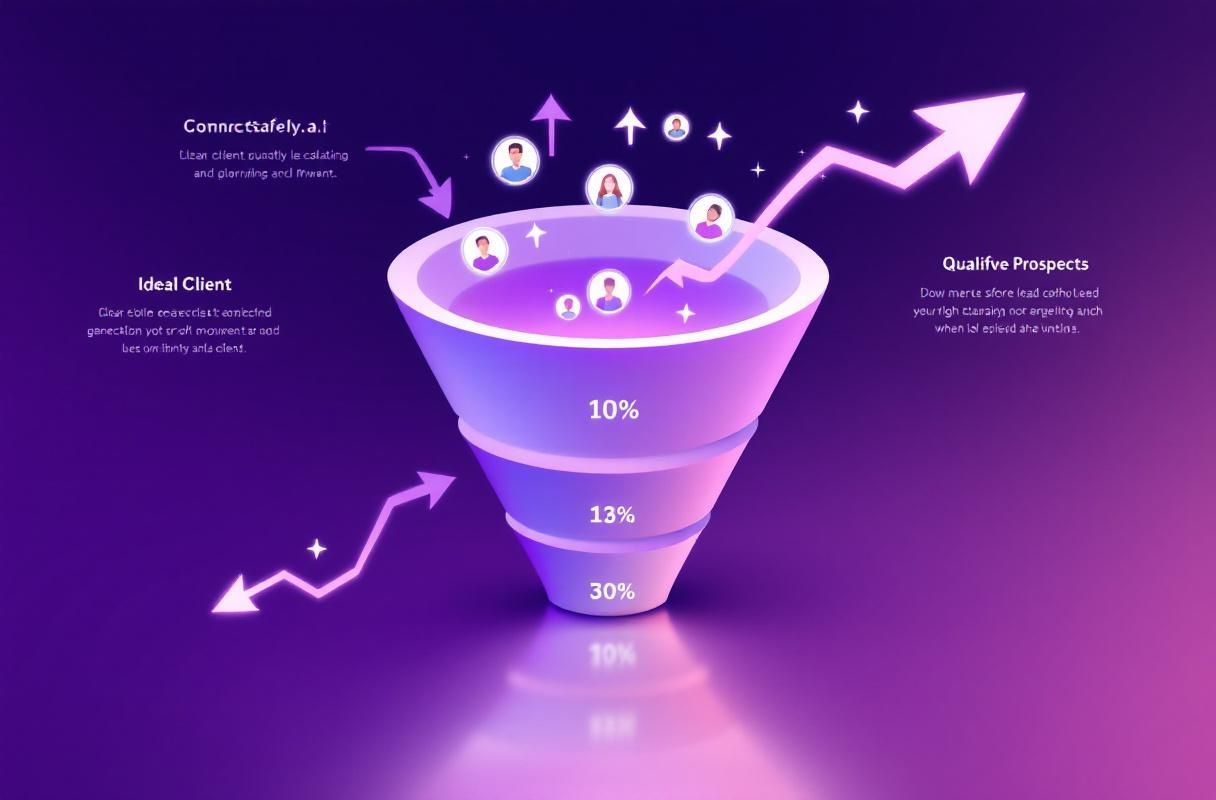
Most sales prospecting plans fail because they optimize the wrong model. A sales prospecting plan is a structured framework that defines your ideal customer profile, outreach channels, messaging sequences, tool stack, and performance metrics. The best plans in 2026 do not just refine outbound cadence--they shift entirely toward inbound, where leads close at 14.6% versus 1.7% for cold outreach. That is an 8.5X conversion advantage that no amount of spray-and-pray volume can match.
The problem is not that your team lacks discipline. The problem is that LinkedIn's AI detection algorithms now restrict generic cold outreach at scale. Bulk connection requests, templated InMails, and automated sequences trigger throttling faster than ever. Building a better outbound machine in 2026 is like optimizing a rotary phone--technically possible, strategically pointless.
Want to Generate Consistent Inbound Leads from LinkedIn?
Get our complete LinkedIn Lead Generation Playbook used by B2B professionals to attract decision-makers without cold outreach.
No spam. Just proven strategies for B2B lead generation.
This guide gives you a complete 8-step sales prospecting plan template, then shows you why the smartest B2B teams are replacing traditional prospecting plans with LinkedIn inbound authority building.
Key Takeaways
- A sales prospecting plan defines your ICP, channels, messaging, tools, and KPIs in a single executable framework
- The 8-step template covers everything from ideal customer profiling to weekly optimization cycles
- "Spray and pray" is dead in 2026--AI algorithms detect and restrict generic outbound at scale
- Inbound leads convert at 14.6% versus 1.7% for outbound, according to HubSpot research
- Sales Navigator costs $99-$175/month but still requires manual outbound effort; LinkedIn inbound starts from USD $10/month with zero ban risk
- The highest-performing teams question the model itself rather than building more efficient outbound machines
What Is a Sales Prospecting Plan?
A sales prospecting plan is a documented strategy that maps every step between identifying potential buyers and converting them into qualified pipeline. It answers five core questions:
- Who are your ideal customers? (ICP and buyer personas)
- Where will you reach them? (Channels)
- What will you say? (Messaging and sequences)
- How will you execute? (Tools and workflow)
- What success looks like? (KPIs and metrics)
Without a plan, sales teams default to reactive prospecting--responding to whatever feels urgent, chasing unqualified leads, and burning hours on activities that produce no pipeline. A structured plan eliminates guesswork and creates repeatable results.
The distinction that matters in 2026: a prospecting plan should not just organize outbound activities. It should evaluate whether outbound is even the right primary channel. LinkedIn generates 80% of all B2B social leads, and the teams seeing the best results are the ones building inbound engines rather than scaling outbound volume.
8-Step Sales Prospecting Plan Template
Step 1: Define Your ICP
Your Ideal Customer Profile determines everything downstream. A vague ICP wastes every hour your team spends prospecting.
Define two layers of your ICP:
Above-the-line decision-makers -- the people who sign contracts and approve budgets. These are your primary targets. Filter by title (VP, Director, C-suite), company size (employee count and revenue), industry vertical, and geographic market.
Below-the-line influencers -- the people who evaluate solutions and recommend purchases. They include end users, technical evaluators, and department managers who surface problems to leadership.
Build your ICP using firmographic data (industry, revenue, headcount), technographic signals (current tools and tech stack), behavioral indicators (hiring patterns, funding events, content engagement), and pain-point alignment (problems your solution directly solves).
The sharper your ICP, the fewer prospects you need to reach. Creating detailed buyer personas is the single highest-leverage activity in any prospecting plan.
Step 2: Build Your Prospect List
With your ICP defined, build a qualified prospect list using structured research:
LinkedIn Sales Navigator offers 20+ advanced search filters, the ability to save up to 2,500 leads and 1,000 accounts, and features like Boolean search, Spotlight filters, and Account IQ. It starts at $99/month for the Core plan and goes up to $175/month for Advanced.
Data enrichment tools like Apollo, ZoomInfo, and Snov.io supplement LinkedIn data with verified email addresses, phone numbers, and intent signals.
Priority scoring ranks prospects by fit (ICP match), timing (buying signals like job changes or funding), and accessibility (mutual connections, shared groups, engagement history).
A common mistake: building a massive list and blasting it. The research from Gartner consistently shows that smaller, hyper-targeted lists outperform large generic ones. Aim for 200-500 high-fit prospects rather than 5,000 loosely matched contacts.
Step 3: Choose Your Channels
Multi-channel prospecting increases touch points without overwhelming any single channel. The primary B2B channels are:
| Channel | Best For | Avg. Response Rate | Cost |
|---|---|---|---|
| LinkedIn (outbound) | Decision-maker access | 5-15% | $99-175/mo (Sales Nav) |
| LinkedIn (inbound) | Authority-based leads | 70%+ positive | $39/mo |
| Scale and sequences | 3-8% | $50-200/mo | |
| Phone | Urgency and follow-up | 2-5% | Low |
| SMS | Quick confirmations | 10-20% | Low |
The data points in one direction: LinkedIn generates 80% of B2B social media leads, making it the most important channel by far. The question is whether you approach LinkedIn through outbound (connection requests and cold messages) or inbound (authority building and content engagement).
For most B2B teams, the optimal channel mix in 2026 is LinkedIn inbound as the primary engine, supported by email nurture sequences and phone calls for high-value opportunities.
Step 4: Craft Your Messaging
Your messaging must answer one question from the prospect's perspective: "Why should I care?"
Connection requests (if using outbound): Lead with relevance, not pitches. Reference shared context--a mutual connection, a piece of their content, or a specific challenge in their industry. Keep it under 200 characters.
First-touch messages: Focus on one specific pain point. Share a relevant insight rather than listing features. Ask a genuine question rather than booking a call.
Follow-up sequences: Each message should add new value--a relevant case study, industry data, or a piece of content that addresses their specific situation.
The 2026 reality: Generic messaging triggers AI detection on LinkedIn. Personalization is no longer optional--it is a survival requirement. Templates that worked in 2024 now get flagged and throttled.
The alternative: skip the messaging treadmill entirely. When prospects come to you through inbound authority building, the conversation starts warm. They have already seen your expertise. They already trust your perspective.
Step 5: Set Your Cadence
Cadence defines how often and when you reach out across channels. A structured cadence prevents both over-contact (which annoys prospects) and under-contact (which loses momentum).
Sample outbound cadence for a high-priority prospect:
- Day 1: LinkedIn connection request with personalized note
- Day 3: Engage with their content (comment or reaction)
- Day 5: Email with relevant insight
- Day 8: LinkedIn message with value-add content
- Day 12: Follow-up email with case study
- Day 15: Phone call (if number available)
- Day 20: Final LinkedIn message with clear CTA
Cadence rules:
- Space touches 2-4 days apart minimum
- Alternate channels to avoid fatigue
- Stop after 4-5 unreturned touches
- Track responses by time and day to optimize timing
Finding the best time to send LinkedIn messages can increase response rates by 20-40%.
Step 6: Select Your Tools
Your tool stack should support each stage of the prospecting workflow without creating tool sprawl.
Core prospecting stack:
- CRM: HubSpot, Salesforce, or Pipedrive for pipeline management
- LinkedIn: Sales Navigator for search and filtering
- Email: Apollo, Lemlist, or Mailshake for sequences
- Data: ZoomInfo, Lusha, or Snov.io for enrichment
- Scheduling: Calendly or Chili Piper for booking
The cost adds up fast. Sales Navigator alone is $99-175/month per seat. Add email sequencing ($50-100/month), data enrichment ($100-200/month), and CRM ($25-100/month), and you are looking at $275-575/month per rep before counting their salary.
This is where the economics of inbound authority building become compelling. ConnectSafely starts from USD $10/month and replaces the need for expensive outbound tools by generating inbound leads through automated LinkedIn engagement. More on this below.
Step 7: Define KPIs and Metrics
What gets measured gets managed. Track these metrics weekly:
Activity metrics:
- Prospects contacted per week
- Connection requests sent and accepted
- Emails sent and opened
- Calls made and conversations held
Quality metrics:
- Response rate by channel
- Meeting booking rate
- Lead-to-opportunity conversion
- Pipeline generated ($)
Efficiency metrics:
- Cost per lead by channel
- Time to first meeting
- Prospecting hours per qualified opportunity
- Revenue per prospecting hour
Set benchmarks in your first month, then optimize toward improvement. The benchmark that matters most: if your outbound close rate sits near the 1.7% industry average, no amount of activity optimization will produce breakthrough results. The model itself needs to change.
Step 8: Review and Optimize Weekly
A prospecting plan is a living document. Schedule a 30-minute weekly review to examine:
- Which channels produced the most qualified responses?
- Which messaging angles generated the best engagement?
- Where are prospects dropping off in the cadence?
- Which ICP segments convert at the highest rate?
Kill what is not working. Double down on what is. The best sales teams iterate every week, not every quarter.
Prospecting Tools Comparison
| Tool | Primary Function | Monthly Cost | LinkedIn Integration | Best For |
|---|---|---|---|---|
| Sales Navigator | Lead search and filtering | $99-175 | Native | Finding prospects |
| Apollo.io | Email sequences + data | $49-119 | Chrome extension | Multi-channel outbound |
| Snov.io | Email finding + outreach | $39-99 | Chrome extension | Email-first teams |
| ZoomInfo | Contact database | $250+ | API | Enterprise data needs |
| Lemlist | Email personalization | $59-99 | Limited | Creative outreach |
| Lusha | Contact enrichment | $49-79 | Chrome extension | Quick data lookups |
| ConnectSafely | LinkedIn inbound authority | $39 | Native | Inbound lead generation |
The pattern is clear: outbound tools stack costs quickly while requiring constant manual effort. Each tool solves one piece of the prospecting puzzle but creates dependency on continued outbound activity. Stop prospecting, stop generating pipeline.
ConnectSafely takes a fundamentally different approach. Instead of helping you chase prospects more efficiently, it builds LinkedIn authority that attracts prospects to you--with zero ban risk and full platform compliance.
What Most Guides Get Wrong
Every sales prospecting plan guide--including the comprehensive ones from SalesRobot and similar sources--makes the same fundamental mistake. They teach you to build a better outbound machine.
They refine the ICP. Optimize the cadence. Personalize the messaging. Select better tools. Track more metrics. And all of this is valid tactical advice.
But they never question the underlying model.
The underlying model says: identify prospects, reach out to them cold, and convince them to take a meeting. This model has a structural ceiling--the 1.7% outbound close rate that has not meaningfully improved despite decades of tool innovation.
The reason is psychological, not tactical. Cold prospects have low trust, high skepticism, and zero context for your expertise. No amount of personalization overcomes the fact that you are an interruption.
The 2026 acceleration: LinkedIn's AI algorithms now actively restrict the outbound model. Generic connection requests get throttled. Automated sequences get detected. Mass InMails get filtered. The platform is pushing toward authentic engagement--which is exactly what inbound authority building delivers.
The question is not "How do I build a better prospecting plan?" It is "Should my prospecting plan be built on outbound at all?"
Why LinkedIn Inbound Replaces Traditional Prospecting Plans
The math makes the case. Inbound leads close at 14.6% versus 1.7% for outbound. That is 8.5X better conversion from the same number of conversations.
But conversion rate is only part of the story:
Cost advantage: ConnectSafely starts from USD $10/month. A typical outbound stack (Sales Navigator + email tool + data enrichment) costs $250-500/month per rep. Inbound costs less and produces higher-quality leads.
Time advantage: Outbound prospecting requires 10-15 hours per week of active effort--researching, messaging, following up. Inbound authority building runs on automated engagement that maintains your visibility without daily manual work.
Risk advantage: Outbound prospecting on LinkedIn carries real account risk. Aggressive connection requests and automated messaging violate LinkedIn's terms of service and can result in restrictions or bans. ConnectSafely operates with zero ban risk through platform-compliant engagement.
Compounding advantage: Outbound results are linear--stop prospecting, stop generating leads. Inbound authority compounds over time. Every piece of content, every thoughtful comment, every engagement interaction builds your visibility and credibility. After 90 days, inbound engines produce leads with decreasing effort.
How it works with ConnectSafely:
- Automated LinkedIn engagement puts your profile in front of your ICP through strategic commenting, content interaction, and visibility building
- Authority positioning establishes you as a recognized voice in your space
- Prospects come to you through connection requests, DMs, and meeting bookings initiated by them
- Full pipeline visibility tracks which activities drive the most inbound interest
This is not a replacement for having an ICP or understanding your buyer. Steps 1 and 2 of the template above still matter. The difference is what happens after you identify your audience. Instead of chasing them through cold outreach, you attract them through visible expertise.
For B2B teams ready to move beyond the outbound treadmill, ConnectSafely's LinkedIn automation tools provide the infrastructure for inbound authority at scale.
Frequently Asked Questions
What should a sales prospecting plan include?
A complete sales prospecting plan includes five components: an Ideal Customer Profile (ICP) defining who you target, channel selection (LinkedIn, email, phone), messaging templates and sequences, a tool stack for execution, and KPIs with weekly review cadences. The most effective 2026 plans also include an inbound strategy that builds LinkedIn authority alongside or instead of traditional outbound activities.
How do I create a B2B prospecting plan template?
Start with ICP definition using firmographic and behavioral criteria. Then map your channels, write messaging for each stage of the buyer journey, select tools that integrate with your CRM, and set measurable KPIs. Review weekly and iterate. The 8-step template in this guide provides a complete framework that covers each element in sequence.
What is the best prospecting strategy for LinkedIn in 2026?
The highest-performing LinkedIn prospecting strategy in 2026 is inbound authority building. LinkedIn's AI algorithms now restrict generic cold outreach, making traditional outbound less effective. Inbound strategies--publishing valuable content, engaging strategically with ICP accounts, and building visible expertise--generate leads that close at 14.6% versus 1.7% for cold outreach.
How much does a sales prospecting tool stack cost?
A typical B2B outbound tool stack costs $250-575/month per sales rep. This includes Sales Navigator ($99-175/month), email sequencing ($50-100/month), data enrichment ($100-200/month), and CRM ($25-100/month). LinkedIn inbound alternatives like ConnectSafely start from USD $10/month and reduce dependency on expensive outbound tools by generating inbound leads through authority building.
Is outbound prospecting still effective in 2026?
Outbound prospecting still works but at diminishing returns. AI detection on LinkedIn and email platforms restricts generic outreach at scale. The average outbound close rate remains at 1.7% according to HubSpot. Teams that combine a targeted outbound cadence with inbound authority building see the best results. The trend is clear: the most successful B2B teams are shifting budget and effort toward inbound channels.
Stop building better outbound plans. Start building inbound authority that makes prospects come to you. ConnectSafely automates LinkedIn engagement, builds your visibility with zero ban risk, and generates inbound leads from USD $10/month--a fraction of what traditional prospecting tools cost.
See ConnectSafely pricing and start generating inbound leads
The Dark Side of Inbound: How Over-Optimization Can Kill Your Sales Prospecting Plan
While inbound lead generation is undoubtedly a more effective approach than traditional outbound methods, there's a hidden danger that can derail even the best-laid sales prospecting plans: over-optimization. When teams become too focused on tweaking every detail to squeeze out a few extra percentage points of conversion, they can inadvertently create a rigid, inflexible system that's more prone to failure. This is because over-optimization often relies on assumptions about customer behavior that may not hold true in every situation. For instance, a team might optimize their LinkedIn inbound strategy around a specific set of keywords, only to find that their target audience has shifted to a new set of topics. Or, they might create a messaging sequence that's so finely tuned to a particular buyer persona that it fails to resonate with other potential customers. To avoid this trap, it's essential to strike a balance between optimization and adaptability, leaving room for experimentation and iteration as the market and customer needs evolve.
Myth vs Reality: The Truth About Sales Navigator and LinkedIn Inbound
One of the most persistent myths in the sales prospecting world is that Sales Navigator is the ultimate solution for B2B teams. Proponents of this myth claim that the platform's advanced features and vast database of potential customers make it an indispensable tool for any serious sales team. However, the reality is more nuanced. While Sales Navigator can be a powerful tool in the right hands, it's not a silver bullet, and its effectiveness depends on a range of factors, including the team's overall strategy, the quality of their data, and their ability to execute a well-crafted inbound plan. Moreover, the platform's cost, which can range from $99 to $175 per month, can be prohibitively expensive for smaller teams or those with limited budgets. In contrast, LinkedIn's inbound features, which start at $39 per month, offer a more affordable and scalable solution for teams looking to build authority and generate high-quality leads. By separating myth from reality, teams can make more informed decisions about their sales prospecting strategy and avoid wasting resources on overhyped solutions.
Advanced-Level: Using LinkedIn's Algorithm to Your Advantage
For experienced sales prospecting teams, one of the most significant advantages of LinkedIn's inbound features is the ability to leverage the platform's algorithm to amplify their reach and credibility. By understanding how the algorithm works and optimizing their content and engagement strategies accordingly, teams can increase their visibility, drive more traffic to their website, and attract higher-quality leads. One key tactic is to focus on creating content that resonates with LinkedIn's AI-powered "relevance score," which prioritizes posts that are engaging, informative, and relevant to the audience. This can involve using specific keywords, formatting techniques, and engagement strategies to boost the visibility of their content. Additionally, teams can use LinkedIn's built-in analytics tools to track their performance, identify areas for improvement, and refine their strategy over time. By mastering these advanced techniques, teams can unlock the full potential of LinkedIn's inbound features and achieve a significant competitive advantage in their market.
The Importance of Contextual Understanding in Sales Prospecting
One of the most critical factors in sales prospecting is contextual understanding – the ability to comprehend the complex, nuanced factors that influence a potential customer's purchasing decisions. This includes everything from their industry and company size to their specific pain points, goals, and motivations. While many sales prospecting plans focus on creating generic buyer personas, the reality is that every customer is unique, and a one-size-fits-all approach can be woefully inadequate. To develop a deeper understanding of their target audience, teams need to engage in ongoing research and analysis, using a range of techniques, including social media listening, customer surveys, and in-depth interviews. By gaining a richer, more nuanced understanding of their customers' needs and challenges, teams can create more effective sales prospecting strategies that speak directly to their audience and address their specific concerns. This, in turn, can lead to higher conversion rates, stronger relationships, and a more sustainable competitive advantage.
It Depends: When Outbound Sales Prospecting Might Actually Be the Better Choice
While inbound lead generation is generally a more effective approach than traditional outbound methods, there are situations where outbound sales prospecting might actually be the better choice. For instance, in highly competitive markets where every player is using inbound tactics, a well-crafted outbound strategy can help a team cut through the noise and establish a unique presence. Additionally, in situations where the sales cycle is extremely short, or the customer's needs are highly urgent, outbound prospecting can provide a more direct, immediate route to conversion. Furthermore, in certain industries, such as enterprise software sales, the complexity of the product and the length of the sales cycle may require a more personalized, high-touch approach that's better suited to outbound methods. Ultimately, the choice between inbound and outbound sales prospecting depends on a range of factors, including the team's goals, resources, and target market. By recognizing the potential advantages of outbound prospecting in specific situations, teams can develop a more flexible, adaptive approach that combines the best of both worlds.
See How It Works
Watch how people get more LinkedIn leads with ConnectSafely




Related Articles