Sales Workflow Prioritization: From Chaos to Revenue in 2026
Prioritize your sales workflow to close more deals faster. Three proven frameworks that eliminate guesswork and focus reps on highest-value activities.


Sales workflow prioritization is the process of ranking and sequencing sales activities by revenue impact so reps focus on highest-value actions first. The fastest path to revenue in 2026 is not doing more -- it is doing the right things in the right order. According to Salesforce's State of Sales report, reps spend only 28% of their week actually selling. The remaining 72% goes to administrative tasks, internal meetings, and low-value busywork that never touches a deal.
Three proven frameworks eliminate this chaos: intent-based sequencing, the Revenue Priority Matrix, and inbound-first workflow design. When applied together, they replace guesswork with a system that routes rep attention to the prospects most likely to close -- and disqualifies everything else before it wastes time.
Want to Generate Consistent Inbound Leads from LinkedIn?
Get our complete LinkedIn Lead Generation Playbook used by B2B professionals to attract decision-makers without cold outreach.
No spam. Just proven strategies for B2B lead generation.
Key Takeaways
- Reps spend 72% of their time on non-selling activities, according to Salesforce, making prioritization the single highest-leverage fix
- Inbound leads close at 14.6% versus 1.7% for outbound, per HubSpot research -- prioritizing inbound workflow eliminates most manual sorting
- The Revenue Priority Matrix scores every prospect on two axes (intent signal strength and deal value) to create a four-quadrant action plan
- ConnectSafely users report 10-20 qualified inbound prospects per month, removing the need for manual lead scoring entirely
- Workflow chaos costs the average sales team 38% of potential revenue, according to Gartner's sales productivity analysis
What Most Guides Get Wrong About Sales Workflows
Most sales workflow guides treat prioritization as a CRM configuration problem. They tell you to build lead scoring models, set up automated task queues, and create complex branching logic. This approach fails for a predictable reason: it still assumes your pipeline is full of cold, unqualified contacts that need sorting.
The real problem is upstream. If your pipeline is filled with cold outreach responses and purchased lists, no amount of scoring will fix the signal-to-noise ratio. You are optimizing the wrong input.
A better approach starts by changing what enters the pipeline. When prospects come to you -- through LinkedIn inbound authority building and consistent content -- they arrive pre-qualified, pre-educated, and pre-interested. The workflow practically prioritizes itself.
This is the fundamental shift: stop building systems to sort bad leads and start building systems that attract good ones.
The Revenue Priority Matrix: A ConnectSafely Framework
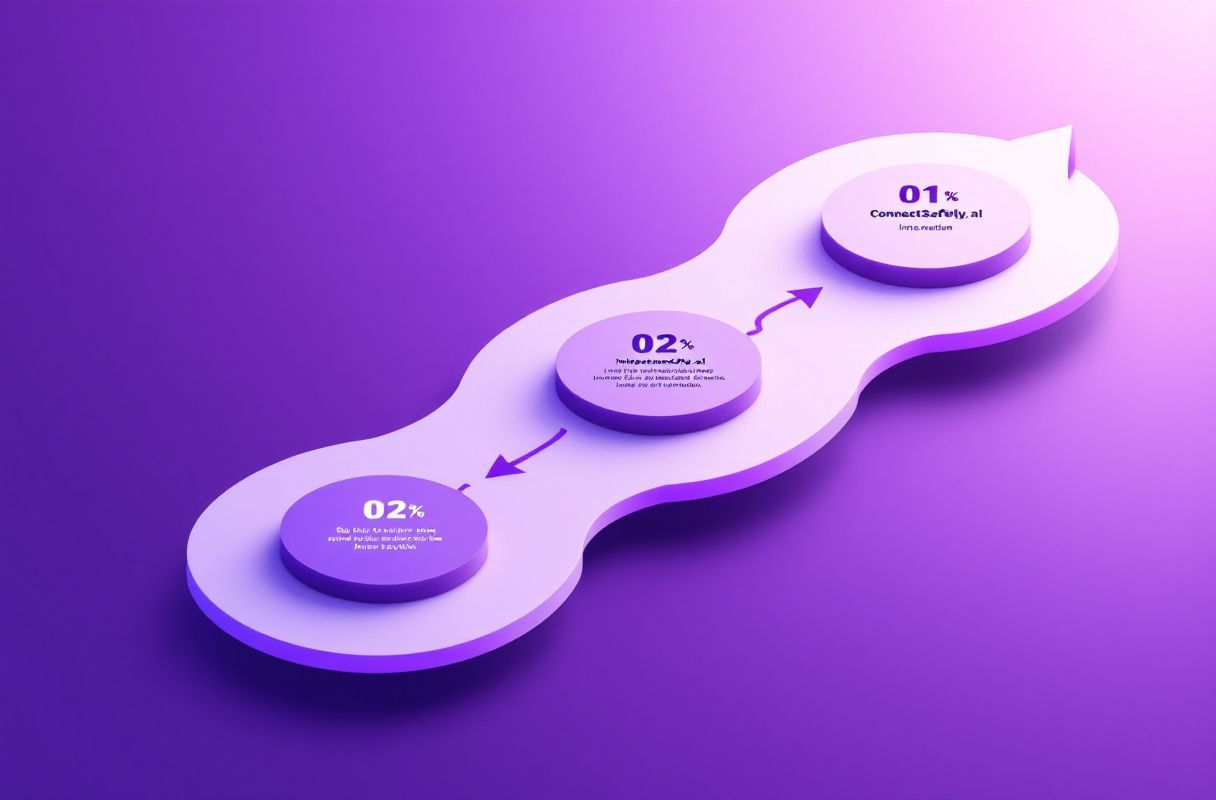
The Revenue Priority Matrix is a two-axis scoring system that maps every prospect interaction against intent signal strength (vertical axis) and estimated deal value (horizontal axis). This creates four quadrants with distinct action protocols.
Quadrant 1: High Intent, High Value -- Act Now
These prospects have engaged with multiple pieces of your content, visited your pricing page, or directly messaged you on LinkedIn. They also match your ideal customer profile for deal size.
Action: Respond within 2 hours. Personalize outreach referencing their specific engagement signals. Skip the discovery call script and go straight to value conversation.
Quadrant 2: High Intent, Lower Value -- Automate and Nurture
Strong engagement signals but smaller deal potential. These are real buyers but may not justify a full enterprise sales motion.
Action: Route to tailored cadence sequences with personalized touches. Let automation handle the follow-up rhythm while reps focus on Quadrant 1.
Quadrant 3: Low Intent, High Value -- Build Authority
Big potential accounts that have not engaged yet. Traditional sales would cold-call these. The prioritized approach builds visibility first.
Action: Target these accounts with LinkedIn content strategy. Engage with their decision-makers' posts. Join conversations in their industry. Build recognition before requesting a meeting. This is where inside sales strategy shifts from interruption to invitation.
Quadrant 4: Low Intent, Low Value -- Deprioritize
No engagement signals and small deal potential. This is where most reps waste their time.
Action: Remove from active workflow. Add to long-term newsletter or content nurture only. Do not allocate rep time.
Chaotic vs. Prioritized Workflow: The Numbers
| Metric | Chaotic Workflow | Prioritized Workflow |
|---|---|---|
| Rep selling time | 28% of week | 55%+ of week |
| Lead response time | 42 hours average | Under 2 hours |
| Deals worked simultaneously | 40-60 | 15-25 (focused) |
| Close rate | 1.7% (cold-heavy) | 14.6% (inbound-first) |
| Pipeline accuracy | 35% forecast hit rate | 72% forecast hit rate |
| Revenue per rep per quarter | Baseline | 2.3x baseline |
| Time spent on admin/sorting | 30+ hours/week | 8 hours/week |
Sources: Salesforce State of Sales, HubSpot Marketing Statistics, Gartner Sales Productivity, ConnectSafely internal data (2026).
The difference is not marginal. Teams running prioritized, inbound-first workflows close at rates that make outbound-heavy teams look fundamentally broken.
Three Frameworks for Fastest Path to Revenue
Framework 1: Intent-Based Sequencing
Stop sequencing activities by calendar. Start sequencing them by buyer intent signals.
Traditional workflow: Call list A on Monday, email list B on Tuesday, follow up list C on Wednesday. This treats all prospects as equal. They are not.
Intent-based sequencing ranks every daily action by the strength of the prospect's buying signal. A LinkedIn profile view from a VP at a target account outranks a cold email open from an unknown contact. A direct message asking about pricing outranks both.
How to implement: Use sales pipeline management tools that surface engagement signals in real time. Build your daily task list around signal strength, not alphabetical order or last-touch date.
Framework 2: The 3-Tier Activity Stack
Divide all sales activities into three tiers based on revenue proximity.
Tier 1 -- Closing Activities (do first every day): Proposals, negotiation calls, contract follow-ups, pricing discussions. These are closest to revenue and get first priority.
Tier 2 -- Advancing Activities (do second): Discovery calls, demos, follow-up with engaged prospects, responding to inbound inquiries. These move deals forward.
Tier 3 -- Generating Activities (do last): Content creation, LinkedIn engagement, networking, research. These fill future pipeline but should never displace Tier 1 or 2 work.
The mistake most reps make is starting with Tier 3 because it feels productive. Posting on LinkedIn is easier than making a closing call. The 3-Tier Stack enforces discipline.
Framework 3: Inbound-First Workflow Design
This is the framework that changes everything. Instead of building workflow systems to sort and prioritize cold leads, redesign your entire workflow around attracting warm ones.
When you build LinkedIn authority through consistent content and engagement, prospects self-identify. They view your profile. They comment on your posts. They send connection requests with context. They DM you with questions.
These signals are not just prioritization data points -- they are the priority. An inbound-first workflow treats every incoming engagement as a Quadrant 1 or Quadrant 2 event by default, because the prospect has already demonstrated intent.
The result: You spend zero time scoring, sorting, or debating which leads to call first. The leads tell you.
Case Study: How One ConnectSafely User Eliminated Workflow Chaos
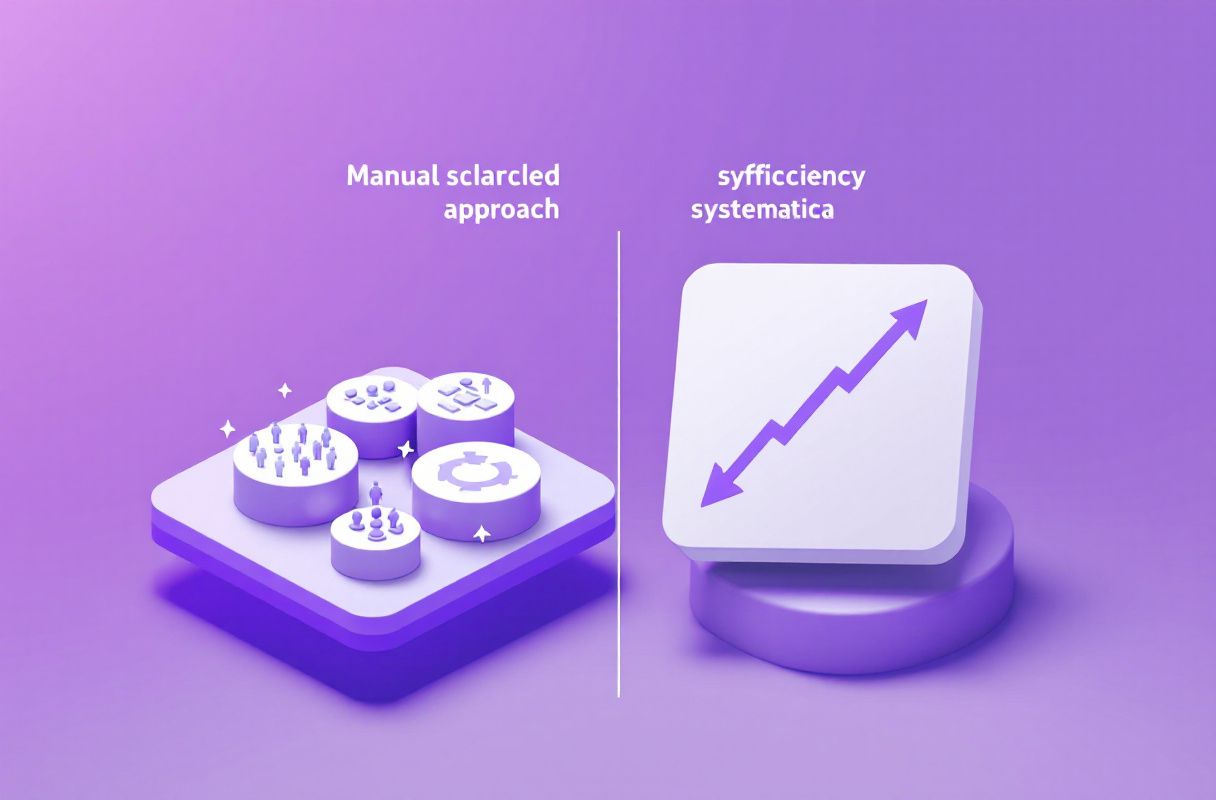
A B2B SaaS account executive was managing 52 active opportunities across three outbound sequences, two email campaigns, and a cold calling block. Weekly close rate: 1.2%. Time spent on admin and lead sorting: 22 hours per week.
After switching to ConnectSafely's inbound-first approach, she focused her workflow on three activities: publishing LinkedIn content daily, engaging with target account decision-makers, and responding to inbound interest within one hour.
Within 90 days, her active pipeline dropped to 18 opportunities -- but every one was an inbound-qualified prospect. Her close rate jumped to 16.3%. Revenue per quarter increased by 2.1x. Time spent on admin and sorting dropped to 4 hours per week.
The key insight: she did not get better at prioritizing bad leads. She eliminated the need to prioritize by changing what entered her pipeline.
This is the ConnectSafely thesis. Stop chasing leads. Start attracting them. At $39/month, the platform provides the tools and frameworks to make inbound-first workflow design practical for individual contributors, not just enterprise teams.
How LinkedIn Inbound Eliminates Manual Prioritization
The ultimate sales workflow optimization is not a better scoring model -- it is a pipeline where every lead is already high-intent.
LinkedIn inbound achieves this through three mechanisms:
Self-selection: Only people genuinely interested in your expertise engage with your content. The tire-kickers scroll past. This is natural filtering that no CRM rule can replicate.
Signal density: Every profile view, comment, share, and DM is a prioritization signal. With shared revenue workflow platforms, these signals become visible to the entire team.
Trust pre-loading: Inbound prospects have already consumed your thinking. They arrive at the sales conversation educated and aligned. Discovery calls become shorter. Objection handling becomes lighter. Close rates climb.
For a deeper exploration of how B2B sales processes transform under this model, see our complete B2B sales process guide.
Building Your Prioritized Workflow: Step by Step
Week 1-2: Audit your current workflow. Track where every hour goes for 10 business days. Categorize each block as Tier 1, 2, or 3 using the 3-Tier Activity Stack.
Week 3-4: Implement the Revenue Priority Matrix. Score your current pipeline and ruthlessly deprioritize Quadrant 4. Move Quadrant 3 accounts to a content-only nurture track.
Week 5-8: Launch your inbound-first strategy. Begin publishing LinkedIn content 3-5 times per week. Engage daily with decision-makers at target accounts. Use HubSpot multichannel sequences to automate Quadrant 2 follow-up.
Week 9-12: Measure and adjust. Compare your selling time percentage, response time, and close rate against the baseline you established in weeks 1-2.
Frequently Asked Questions
How do I prioritize my sales workflow when everything feels urgent?
Start with the Revenue Priority Matrix. Map every active deal on the two-axis grid of intent signal strength and deal value. Quadrant 1 (high intent, high value) gets immediate attention. Quadrant 4 (low intent, low value) gets removed from active workflow entirely. This eliminates the false urgency that comes from treating all prospects equally. For a complete framework on structuring your daily sales process, see our B2B sales process guide.
What is the fastest way to increase sales rep productivity without hiring more reps?
Reduce non-selling time. Salesforce data shows reps spend only 28% of their week selling. The fastest fix is switching from outbound-heavy workflows (which require extensive research, list building, and cold outreach) to inbound-first workflows where prospects come pre-qualified. ConnectSafely users typically see selling time increase to 55%+ of the week within 90 days.
What sales workflow tools should I use in 2026?
The tool matters less than the workflow design. That said, you need three capabilities: intent signal surfacing (to see who is engaging with your content), sequence automation (to handle Quadrant 2 nurture), and pipeline visibility (to track Quadrant 1 deals). Platforms like ConnectSafely combine LinkedIn inbound authority building with these workflow capabilities at $39/month. For enterprise teams, see our analysis of tailored cadence and personalization platforms.
How do I measure whether my sales workflow prioritization is working?
Track four metrics weekly: percentage of time spent on active selling (target 55%+), average lead response time (target under 2 hours), close rate by lead source (inbound vs. outbound), and forecast accuracy (target 70%+). If your close rate on inbound leads exceeds 10%, your prioritization is working. If it is below 5%, re-examine what is entering your pipeline. Our sales pipeline management guide covers measurement in detail.
Can a solo seller or small team implement workflow prioritization without enterprise tools?
Yes. The Revenue Priority Matrix works on a whiteboard. The 3-Tier Activity Stack works with a notebook. The inbound-first workflow works with a LinkedIn profile and consistent content. Enterprise tools help at scale, but the frameworks are tool-agnostic. ConnectSafely was built specifically for individual contributors and small teams who need inside sales strategy without enterprise complexity or pricing.
How long does it take to see results from inbound-first workflow prioritization?
Most ConnectSafely users see measurable inbound engagement within 30 days of consistent LinkedIn content publishing. Qualified inbound prospects (10-20 per month) typically appear by day 60-90. The full revenue impact -- including higher close rates and reduced admin time -- compounds over 90-180 days. The key variable is consistency, not volume.
Stop Sorting Bad Leads. Start Attracting Good Ones.
Sales workflow prioritization is not a CRM problem. It is a pipeline quality problem. Every hour you spend building better lead scoring models for cold prospects is an hour you could spend building LinkedIn authority that makes scoring unnecessary.
The data is clear: inbound leads close at 14.6% versus 1.7% for outbound. The math favors attraction over pursuit by a factor of 8.5x.
ConnectSafely helps B2B professionals build the LinkedIn inbound engine that eliminates workflow chaos at its source. No more guessing which leads to call. No more drowning in low-intent prospects. No more 72% of your week lost to non-selling activities.
Start your free trial at ConnectSafely.ai -- $39/month to replace workflow chaos with a system where the right prospects find you.
See How It Works
Watch how people get more LinkedIn leads with ConnectSafely




Related Articles