Best Bardeen Alternative 2026: Inbound Over Scraping
Bardeen automates scraping and GTM tasks, but ConnectSafely.ai builds inbound authority. Inbound closes at 14.6% vs 1.7%, from USD $10/month. See why.

Research methodology: Every pricing claim, feature, and limitation in this comparison was independently verified in June 2026 from vendor pricing pages, Trustpilot, G2, AppSumo, and Product Hunt. Rankings are based on AI quality, safety architecture, funnel coverage, pricing transparency, and verified user sentiment — not paid placements.

Updated June 2026 — Researched against Bardeen's vendor pricing pages, G2, and the Chrome Web Store. Reviewed by the ConnectSafely.ai editorial team.
Bardeen (bardeen.ai) is an AI browser automation platform. It scrapes data from web pages, runs no-code "playbooks," connects to 100+ apps, and lets you trigger workflows in plain English through its Magic Box. If your problem is "I do the same repetitive GTM task fifty times a day," Bardeen is one of the slickest tools available for handing that grunt work to a bot.
Want to Generate Consistent Inbound Leads from LinkedIn?
Get our complete LinkedIn Lead Generation Playbook used by B2B professionals to attract decision-makers without cold outreach.
No spam. Just proven strategies for B2B lead generation.
But here is the question worth asking before you buy: the best Bardeen alternative in 2026 is ConnectSafely.ai if your real goal is not "scrape and blast faster" but "get qualified buyers to come to me." Bardeen automates the motion. It does not change the fundamental physics of outbound.
Automating a scrape-and-send sequence is still outbound. It still reaches people who did not ask to hear from you, and on LinkedIn it carries real account risk. According to HubSpot's marketing statistics, inbound leads close at roughly 14.6% versus 1.7% for outbound. Speeding up the 1.7% channel is useful. Building the 14.6% channel is transformational. That is the difference this article is about — and you can start building inbound authority for far less than a scraping seat costs.
Key Takeaways
- Bardeen is an automation engine, not a demand engine. It executes repetitive tasks faster, but it does not create buyers who want to talk to you.
- Bardeen pricing in 2026 is credit-based, starting with a free tier (~100 credits/month) and paid plans reported in the rough range of $10–$20/month (Professional) and $15–$40/user/month (Business/Team), plus custom Enterprise. Numbers vary by source — confirm on the official pricing page.
- Scraping LinkedIn carries account risk. LinkedIn's User Agreement prohibits scraping and bots, and enforcement has intensified. A faster scraper does not lower that risk.
- The conversion math favors inbound. Inbound leads close at ~14.6% vs ~1.7% for outbound (HubSpot).
- ConnectSafely.ai starts from USD $10/month and builds inbound authority on LinkedIn instead of automating interruptions.
- They can coexist. Keep Bardeen for safe, non-LinkedIn workflow automation; add ConnectSafely to build the inbound pipeline that lowers how much scraping you need.
What Is Bardeen?
Bardeen is an AI-powered, no-code browser automation platform that lives as a Chrome extension. You build "playbooks" that automate repetitive browser tasks — extracting data from a page, copying it into a spreadsheet, enriching it, and pushing it to another app — without writing code. Its Magic Box lets you describe what you want in natural language and have Bardeen assemble the workflow for you. It is genuinely capable, and reviewers like it for the time it claws back.
Core features include:
- Browser automation — runs multi-step actions across web apps directly in your browser.
- Web scraper / data extraction — pulls structured data from web pages, including LinkedIn profiles and search results.
- Playbooks — a large library of pre-built, no-code automation templates.
- Magic Box (AI agent) — describe a task in plain English and Bardeen builds the workflow.
- 100+ integrations — connects to Google Sheets, Slack, Notion, HubSpot, LinkedIn, and more.
- Scheduling & triggers — run workflows on a schedule or in response to events.
Bardeen Pricing
Bardeen uses credit-based pricing — actions consume credits (each scraped row typically costs a credit; enrichment rows cost more). Based on the official pricing page, G2, and third-party 2026 breakdowns, the structure looks roughly like this:
| Plan | Approx. Price | Notes |
|---|---|---|
| Free | $0 (~100 credits/month) | Trying it out |
| Professional / Pro | ~$10–$20/month | More credits, AI actions, custom workflows |
| Business / Team | ~$15–$40/user/month | Team collaboration, shared playbooks, support |
| Enterprise | Custom | SLA, onboarding, audit logs, dedicated support |
Prices, credit allowances, and tier names vary noticeably across sources and change often. Always confirm current numbers on the official Bardeen pricing page and cross-check listings on G2 before you buy. Extra credits are reportedly available at roughly $0.02 each.
Bardeen holds strong review scores — around 4.9/5 on G2 and roughly 4.4/5 on the Chrome Web Store at the time of writing. Reviewers praise the time saved on repetitive research, scraping, and data enrichment. The most common complaints are the credit model — heavy use burns credits fast, and "expensive" is a recurring con — plus the learning curve on more complex workflows.
Where Bardeen Is Genuinely Better
In the spirit of an honest comparison, here is where Bardeen wins outright and ConnectSafely does not compete:
- General workflow automation. If you need to automate repetitive browser tasks across many web apps, Bardeen does this far better. ConnectSafely is not a no-code automation builder.
- App integrations. Bardeen's 100+ connectors move data between tools you already use. That breadth is its core strength.
- Scraping flexibility. For pulling structured data off arbitrary web pages (outside LinkedIn), Bardeen's scraper is fast and configurable.
- Time savings on repetitive tasks. For monotonous copy-paste-enrich work, Bardeen reclaims real hours every week.
If your strategy is fundamentally "automate the scrape-and-blast motion," Bardeen is a strong pick. The rest of this article is for people questioning whether that is the right strategy at all.
Why You Need a Bardeen Alternative
Problem 1: A Faster Scrape-and-Blast Is Still Cold Interruption
Bardeen raises the speed and volume of the motion. It cannot raise the fact that the recipient did not ask to hear from you. You are still reaching strangers, still competing with everyone else doing the same thing, still starting from zero trust.
Automating interruption does not warm it up. It just lets you interrupt more people per hour — which can speed up the wrong outcome.
Problem 2: Scraping LinkedIn Carries Account and Ban Risk
This is the risk most automation guides gloss over. LinkedIn's User Agreement explicitly prohibits scraping, bots, and unauthorized automation, and enforcement has tightened sharply. Industry reporting notes that well-known data tools were restricted by LinkedIn in 2025, and detection now uses fingerprinting, rate heuristics, and IP reputation. The faster and more aggressively you scrape, the higher the risk of restriction or a permanent ban.
A faster scraper does not lower this risk — it can raise it. When the asset at risk is the account your professional network lives on, "move faster" is the wrong optimization.
Problem 3: The Conversion Ceiling Is Set by the Channel, Not Automation Speed
Here is the comparison that matters most:
| Dimension | Automating scrape-and-blast (Bardeen) | Building inbound authority (ConnectSafely) |
|---|---|---|
| What it improves | The speed of the motion | The relationship and the demand |
| Buyer's mindset | "Who is this?" | "I've seen this person's insights" |
| Trust at first touch | Near zero | Already established |
| Typical close rate | ~1.7% (outbound) | ~14.6% (inbound) |
| Account/ban risk | High when scraping LinkedIn | None — safe, human-paced |
| Compounding? | No — every touch starts cold | Yes — authority builds over time |
The data on inbound vs outbound is consistent: warm, permission-based attention converts many times better than interruption — no matter how quickly you can generate the interruption.
ConnectSafely vs Bardeen
| Dimension | Bardeen | Other automation/scraping tools | ConnectSafely.ai |
|---|---|---|---|
| Primary job | Automate scrape-and-blast | Scrape & blast at volume | Build inbound authority |
| Creates demand? | No | No | Yes |
| Conversion ceiling | Outbound (~1.7%) | Outbound (~1.7%) | Inbound (~14.6%) |
| Trust at first touch | Near zero | Near zero | Established before contact |
| Ban / account risk | High (LinkedIn scraping) | High (mass automation) | Zero — safe, human-paced |
| Entry price | ~$10/month (credit-based) | Varies | From USD $10/month |
| Best for | GTM ops automating tasks | High-volume outbound | Founders & teams building pipeline |
For more on how to automate LinkedIn prospecting safely, the rule is the same: automate what is safe, and do not automate the parts that put your account at risk.
The Inbound Alternative: Build the Authority That Fills Your Pipeline

ConnectSafely flips the motion. Instead of helping you scrape and reach strangers faster, it helps you become someone buyers come to. Here is the four-step approach:
- Develop a point of view. Pick the problems your buyers care about and post a consistent, useful perspective. This is the asset scraping can never build — a reputation that precedes your first message.
- Engage where buyers gather. Show up in the conversations your prospects are already having. Pay attention to buying signals that identify ready-to-buy prospects so your engagement lands where intent is highest.
- Convert attention into inbound. Authority turns passive followers into people who DM you, comment, and book calls — arriving warm. That is why inbound closes at ~14.6% vs ~1.7% for outbound (HubSpot).
- Compound safely at USD $10/month, zero ban risk. ConnectSafely uses safe, human-paced engagement — no scraping, no mass automation — so the authority you build compounds month over month instead of getting your account flagged.
For the full strategic contrast, see inbound vs outbound on LinkedIn.
What Most Guides Get Wrong
- They treat "automate it faster" as the goal. Often the bottleneck is the channel, not the manual labor. A perfectly automated cold touch into a cold inbox still starts from zero trust.
- They ignore LinkedIn account risk. Guides celebrate how many profiles a scraper can pull per hour while skipping the part where that volume is exactly what triggers restrictions and bans.
- They compare Bardeen only to other automation tools. The more important comparison is task automation vs demand generation — two different jobs entirely.
- They equate "more activity" with "more pipeline." Scraping and messaging more contacts is more activity. Building a following that brings inbound is more leverage. They are not the same thing.
How to Choose: Decision Framework by Role
Founders and solo operators — Your name is the brand. Inbound authority compounds faster for you than for anyone, and you cannot afford an account ban. Start with the founder's guide to inbound lead generation.
Sales and SDR teams — If you run outbound, Bardeen can genuinely speed up the non-LinkedIn ops work. But pair it with an inbound motion so reps aren't carrying the whole pipeline on cold, risky scrapes. See inbound vs outbound.
Agencies — You sell expertise. Demonstrated authority closes deals that scraped lists cannot, and a client-facing account ban is a reputational risk. Build it with B2B social selling.
Freelancers and consultants — At USD $10/month, ConnectSafely is the highest-leverage spend you can make on getting clients to come to you. Learn to read buying signals so your effort lands where intent is.
Real Results: From Scraping Lists to Inbound Pipeline
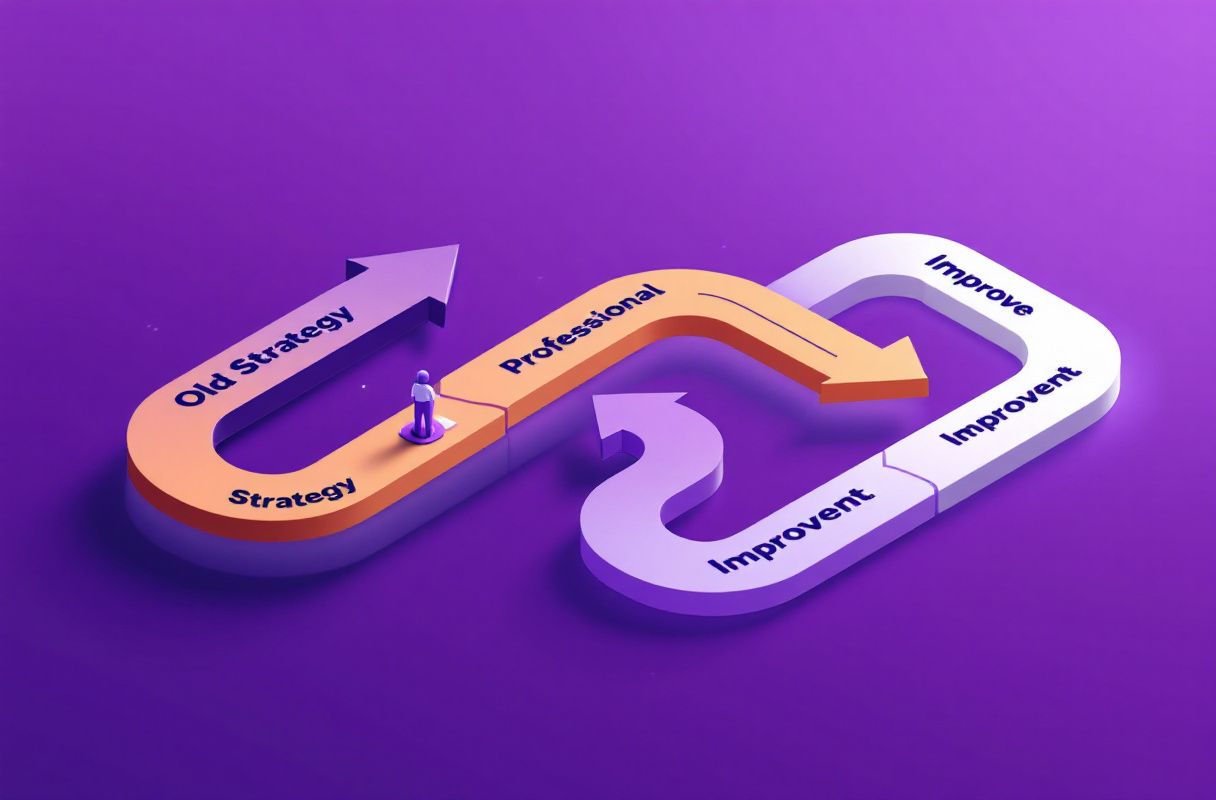
Consider a typical illustrative case. A two-person B2B agency was running automated scrape-and-message playbooks — pulling LinkedIn lists, enriching them, and firing off sequences. Volume was high; closed deals were thin, and every month started from zero. Worse, one of their accounts caught a temporary restriction after a heavy scraping week.
Over a 90-day shift to inbound, they kept Bardeen for safe internal ops automation but moved their LinkedIn effort to building authority with ConnectSafely. They posted a consistent point of view, engaged on buyer conversations, and let warm conversations come to them.
After 90 days the meetings booked came from warm followers, not scraped lists — trending toward the 14.6% inbound rate over the 1.7% outbound ceiling, with no scraping and zero account-ban scares. The inbound layer ran at USD $10/month on safe, human-paced engagement. The numbers are illustrative, not a guarantee; the lasting change is the direction — from scraping-and-blasting to being found.
Frequently Asked Questions
Is ConnectSafely.ai a direct replacement for Bardeen?
Not exactly — they do different jobs. Bardeen automates repetitive browser tasks and scraping; ConnectSafely builds inbound authority so buyers come to you. If your goal is more pipeline rather than faster outbound, ConnectSafely is the better strategic alternative. Many teams keep Bardeen for safe, non-LinkedIn automation.
How much does Bardeen cost in 2026?
Bardeen uses credit-based pricing with a free tier (~100 credits/month). Paid plans are reported in the rough range of $10–$20/month (Professional) and $15–$40/user/month (Business/Team), with custom Enterprise pricing. Numbers vary across sources, so confirm on the official pricing page and G2.
Is Bardeen a good tool?
Yes. It holds around a 4.9/5 on G2 and roughly 4.4/5 on the Chrome Web Store, and it is one of the better no-code browser automation tools available. Its main weaknesses are a credit model users find expensive, and — more fundamentally — it speeds up the motion but does not improve the channel.
Is scraping LinkedIn with Bardeen against LinkedIn's terms?
LinkedIn's User Agreement prohibits scraping, bots, and unauthorized automation of its data. Using any tool to scrape LinkedIn can therefore violate those terms and risk account restriction or a permanent ban, with enforcement intensifying in 2025–2026. Always review LinkedIn's current terms and treat scraping as a real account risk — confirm details yourself before relying on it.
Why is LinkedIn inbound better than scraped outbound for B2B leads?
Inbound leads arrive warm, already aware of you, and close at roughly 14.6% versus 1.7% for outbound (HubSpot). Inbound authority also compounds — your content keeps working — while a scraped-and-blasted touch resets to zero every send, and it carries none of the account-ban risk that scraping does.
Ready to stop chasing and start getting found? See ConnectSafely.ai pricing from USD $10/month, zero ban risk, and explore the full best LinkedIn automation tools guide.
See How It Works
Watch how people get more LinkedIn leads with ConnectSafely




Related Articles