Automated Multichannel Prospecting: Step-by-Step Guide
Build automated prospecting campaigns across LinkedIn, email, and phone. Step-by-step setup with HubSpot integration and real conversion benchmarks.

Sales reps spend 65% of their time on activities that have nothing to do with selling. Manual prospecting across LinkedIn, email, and phone burns hours on copy-pasting messages, toggling between tabs, and losing track of follow-ups. At 200 prospects per week it is unsustainable.
An automated multichannel prospecting campaign coordinates outreach across LinkedIn, email, and phone through a single workflow -- with conditional branching, timed delays, and CRM sync replacing the manual busywork. According to Salesforce's 2026 State of Sales report, high-performing teams are 2.8X more likely to use automated multichannel sequences than their peers. McKinsey's B2B sales research confirms that buyers engage across an average of 10 channels before a purchase decision.
Want to Generate Consistent Inbound Leads from LinkedIn?
Get our complete LinkedIn Lead Generation Playbook used by B2B professionals to attract decision-makers without cold outreach.
No spam. Just proven strategies for B2B lead generation.
This guide walks through building an automated multichannel prospecting campaign from scratch -- ICP definition through HubSpot integration -- with real benchmarks and the honest limitations most guides leave out.
Key Takeaways
- Automated multichannel campaigns outperform single-channel outreach by 3-5X on reply rates when combining LinkedIn, email, and phone with conditional branching logic.
- The optimal automated sequence runs 8-12 touches over 14-21 days, swapping channels every 2-3 touches based on prospect behavior signals.
- HubSpot Sequences handle email automation natively but require third-party tools for true LinkedIn and phone automation -- plan your tech stack accordingly.
- Conversion benchmarks vary by campaign type: cold outbound averages 1-3% meeting rates, warm outbound reaches 5-8%, and inbound-assisted outbound hits 12-18%.
- Automated prospecting hits a ceiling around 3% positive reply rates for pure cold outreach -- the teams breaking through pair outbound automation with LinkedIn inbound authority.
- ConnectSafely.ai bridges the gap by building LinkedIn authority that makes every automated outbound touch land warmer.
What Most Guides Get Wrong About Automated Prospecting
Most automation guides treat the problem as purely mechanical: pick a tool, load a list, write templates, press start. That approach worked in 2021 when inboxes were less crowded and LinkedIn hadn't tightened automation detection.
In 2026, the bottleneck is not sequencing speed. It is prospect receptivity. You can automate 500 touches per week and still hit a 1.5% reply rate because every message arrives cold. The reps achieving 15%+ reply rates share one trait: the prospect has already seen their name before the first automated touch lands.
Automation amplifies existing authority rather than replacing it. That principle is the foundation of everything in this guide.
Why Manual Multichannel Prospecting Fails at Scale
Manual multichannel prospecting breaks in three predictable ways.
Time cost compounds exponentially. A single touchpoint takes 3-5 minutes including research, drafting, platform switching, and CRM logging. A 10-touch, three-channel sequence means 30-50 minutes per prospect. At 100 prospects per week, that is 50+ hours of pure prospecting labor.
Human error creates gaps. Gartner's sales productivity research found that 44% of reps miss scheduled follow-ups at least once per week. A missed Day 7 LinkedIn touch after a Day 5 email open is a warm prospect gone cold.
Inconsistency kills measurement. When each rep runs their own cadence with their own timing, you cannot A/B test subject lines, measure channel contribution, or identify which branch drives replies. Manual prospecting is a black box.
Anatomy of an Automated Multichannel Prospecting Campaign
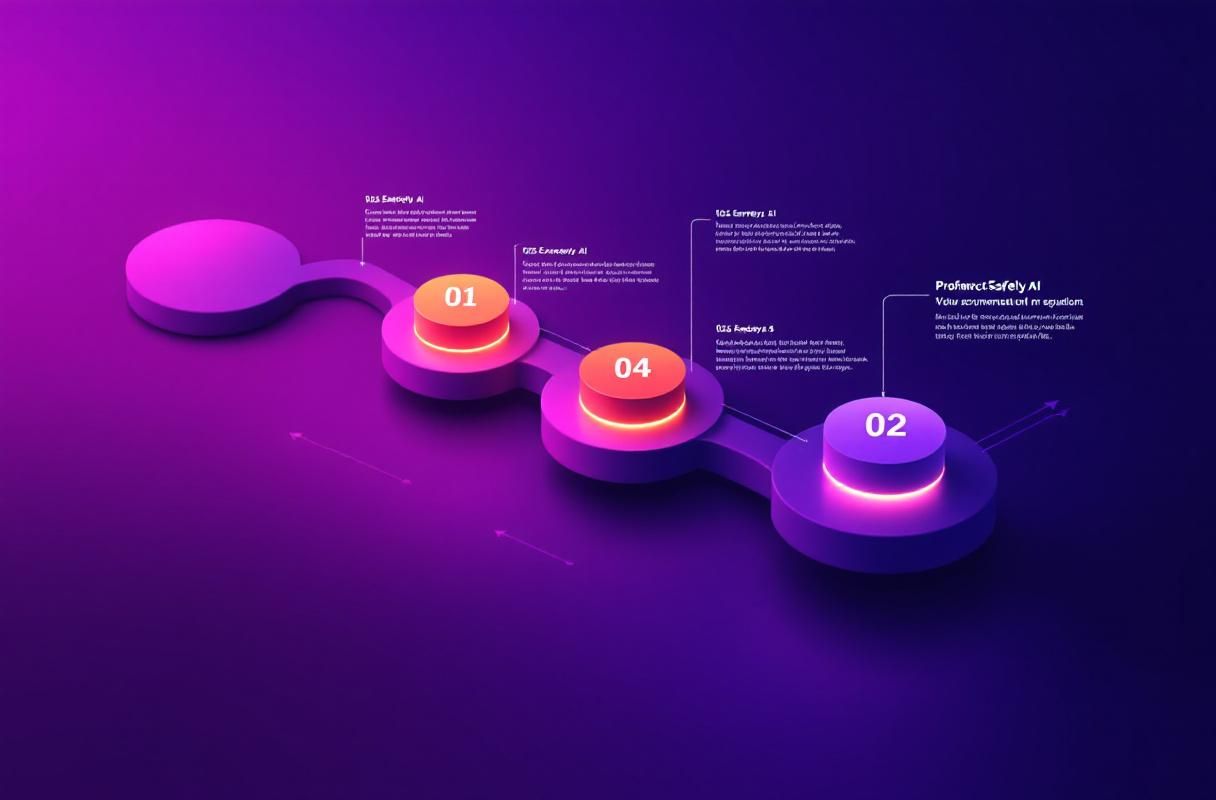
Before building a campaign, understand the five structural components every automated multichannel sequence requires.
| Component | Purpose | Example |
|---|---|---|
| Channels | Where messages are delivered | LinkedIn, email, phone, SMS |
| Triggers | What starts or modifies the sequence | List enrollment, email open, LinkedIn connection accepted |
| Timing | Delays between touches | 2-day gap between email and LinkedIn follow-up |
| Branching logic | Conditional paths based on behavior | If opened but no reply, switch to LinkedIn; if replied, exit sequence |
| CRM sync | Data flows back to your system of record | Every touch, open, reply, and meeting logged to HubSpot |
The most effective campaigns in 2026 use all five. Linear sequences -- the same touches in the same order regardless of behavior -- underperform branching campaigns by 35-50% on reply rates.
Step-by-Step: Building Your Automated Multichannel Campaign
Step 1: Define Your ICP and Build the Prospect List
Automation amplifies your targeting. Bad targeting at scale means bad results at scale, faster.
Start with three ICP filters: firmographic (company size, industry, revenue), technographic (tools they use), and behavioral (recent funding, hiring signals, content engagement). Apollo's ICP framework recommends scoring prospects on all three dimensions before enrollment.
Build your list from Sales Navigator, Apollo, or ZoomInfo. Aim for 200-500 prospects per campaign cycle. Smaller lists allow meaningful personalization. Larger lists dilute quality and trigger platform rate limits.
Critical step most teams skip: deduplicate against your CRM. Enrolling existing customers into a cold prospecting campaign destroys credibility instantly.
Step 2: Choose Your Channel Mix
The three-channel stack of LinkedIn, email, and phone remains the highest-performing combination for B2B prospecting in 2026. The question is sequencing priority.
LinkedIn-first works best when your profile has authority signals -- regular content, engagement history, and 1,000+ connections. The prospect can verify your credibility before responding. See our guide on inbound vs outbound sales on LinkedIn.
Email-first works best when you have verified addresses and strong deliverability. Email scales higher than LinkedIn (no weekly connection limits) but converts lower cold.
Phone works best as a mid-sequence pattern break on Day 7-10. Cognism's cold calling research shows call connect rates increase 2.7X when the prospect has already seen your name in another channel.
Step 3: Map Your Sequence with Conditional Branches
A strong automated multichannel campaign is not a list of messages. It is a decision tree. Here is a proven 14-day, 10-touch template:
| Day | Channel | Action | Condition |
|---|---|---|---|
| 1 | Personalized cold email | -- | |
| 2 | Profile view | -- | |
| 3 | Connection request with note | -- | |
| 5 | Follow-up (value-add) | If no reply to Day 1 | |
| 7 | Phone | Call attempt | If email opened but no reply |
| 7 | DM (if connected) | If connection accepted | |
| 9 | Case study / social proof | If no reply to any channel | |
| 11 | Engage with their content | If still no reply | |
| 13 | Breakup email | If no reply to any channel | |
| 14 | Phone | Final call attempt | If email opened 2+ times |
For a deeper breakdown of touch sequencing, see our multi-touch multichannel sales cadence playbook. For the branching logic templates behind each condition, see our guide on advanced multichannel conditions.
Step 4: Configure Automation Triggers and Timing
Three trigger categories drive campaign behavior:
Enrollment triggers start the sequence: list upload, form submission, Sales Navigator saved search match, or CRM stage change.
Behavior triggers modify the sequence mid-flight: email open, link click, LinkedIn connection acceptance, reply detection. These feed the conditional branches from Step 3.
Exit triggers stop the sequence: positive reply, meeting booked, unsubscribe, or manual removal. Exit triggers prevent the most damaging automation failure -- continuing to prospect someone who already responded.
Lemlist's analysis of 680,000 campaigns found that 2-3 day gaps between same-channel touches and 1-2 day gaps between cross-channel touches produce optimal engagement.
Step 5: Connect to CRM (HubSpot Integration)
HubSpot is the most common CRM for B2B teams running multichannel campaigns. The integration has three layers.
Native HubSpot Sequences handle email automation and task creation, syncing every send, open, click, and reply automatically. As covered in our HubSpot sequence best practices guide, LinkedIn and phone steps are manual tasks -- reminders, not automation.
Third-party LinkedIn tools like La Growth Machine, Lemlist, or ConnectSafely.ai connect to HubSpot via native integrations or Zapier to log LinkedIn touches on the contact record.
HubSpot Workflows tie it together -- moving contacts between lifecycle stages, triggering notifications on replies, and routing hot leads. See our LinkedIn-HubSpot integration guide for a full setup walkthrough.
Step 6: Set Up Monitoring and Optimization Rules
Automation without monitoring is a liability. Set up these dashboards on day one:
- Deliverability: Bounce rate, spam complaints, domain reputation. If bounces exceed 3%, pause and clean your list.
- Channel performance: Reply rate, positive reply rate, and meeting rate by channel and touch number.
- Branch performance: Which conditional paths convert highest? Double down there.
- Rep activity: Are reps completing manual tasks (calls, personalized LinkedIn messages)?
- Pipeline impact: Meetings booked, opportunities created, revenue influenced.
Review weekly. Optimize monthly. "Set and forget" campaigns see performance decay within 60 days as templates go stale.
HubSpot Sequence Integration for Multichannel Campaigns
HubSpot Sequences are the backbone of most B2B automated prospecting stacks, but they have a hard architectural limit: only email steps are truly automated.
The practical workaround in 2026 involves three patterns:
Pattern 1: HubSpot emails + LinkedIn task reminders. Automate emails and create LinkedIn tasks at scheduled intervals. Reps execute LinkedIn touches manually but on schedule. Works for teams under 50 prospects per week per rep.
Pattern 2: HubSpot emails + external LinkedIn automation. Run email in HubSpot, LinkedIn in a separate tool. Use our drip campaign software comparison to select the right LinkedIn tool. Sync data via native integrations or Zapier.
Pattern 3: External orchestration + HubSpot as CRM. Use a dedicated multichannel tool (Lemlist, La Growth Machine, or ConnectSafely.ai) across all channels, pushing activity data to HubSpot for reporting. Cleanest automation, but adds tool complexity.
See our HubSpot sequence multichannel best practices guide for a full breakdown of each pattern.
Conversion Benchmarks by Campaign Type
Not all automated campaigns perform equally. The table below reflects 2026 benchmarks compiled from HubSpot's sales statistics, Lemlist's campaign data, and ConnectSafely.ai's internal benchmarks across 12,000+ campaigns.
| Campaign Type | Avg Reply Rate | Positive Reply Rate | Meeting Rate | Cost per Meeting |
|---|---|---|---|---|
| Cold email only | 3-5% | 1-2% | 0.5-1% | $150-300 |
| Cold LinkedIn only | 8-15% | 3-5% | 1.5-3% | $100-200 |
| Automated multichannel (cold) | 12-20% | 4-7% | 2-4% | $75-150 |
| Automated multichannel (warm) | 20-30% | 8-12% | 5-8% | $40-80 |
| Inbound-assisted outbound | 25-40% | 12-18% | 8-15% | $20-50 |
The pattern is clear. Each layer of channel coordination improves results, but the largest jump comes from moving the prospect from cold to warm before the first automated touch.
Real Results: Automated vs Manual Prospecting
The productivity difference is structural, not marginal.
| Metric | Manual Prospecting | Automated Multichannel |
|---|---|---|
| Prospects touched per rep per week | 40-60 | 200-400 |
| Average touches per prospect | 3-5 (before reps give up) | 8-12 (full sequence) |
| Follow-up consistency | 56% completed | 98%+ executed |
| CRM logging accuracy | 60-70% | 100% auto-logged |
| Time on prospecting admin | 15-20 hrs/week | 3-5 hrs/week |
| Cost per meeting booked | $200-400 | $50-150 |
Outreach.io's sales engagement report confirms these ratios: 3.2X more pipeline per rep with 65% less prospecting time. But the efficiency gains plateau. Doubling volume does not double meetings if every message arrives cold.
Where Automated Outbound Campaigns Hit Their Ceiling
Honesty about the limitations prevents wasted budget.
Reply rate plateaus are real. Pure cold automated outbound caps at 3-5% positive reply rates for most industries. Woodpecker's cold email benchmark data confirms this ceiling has held steady since 2024 despite tooling improvements.
LinkedIn restricts automation aggressively. Weekly connection limits (~100) and behavior detection mean scaling requires sender rotation across multiple identities -- adding complexity and compliance risk.
Prospect fatigue compounds. The same ICP receives sequences from dozens of competitors using the same tools and templates. Differentiation through automation alone is mathematically impossible.
CRM data decay erodes targeting. ZoomInfo estimates that 30% of B2B contact data goes stale annually. Campaigns fired at bad data waste budget and damage sender reputation.
The ceiling is not the automation. The ceiling is that every message arrives from a stranger.
How ConnectSafely.ai Enables This
ConnectSafely.ai approaches the problem from the other direction. Instead of making cold outreach faster, it makes outbound warmer by building LinkedIn authority that prospects see before your automated sequence reaches them.
LinkedIn authority building -- automated content scheduling, engagement workflows, and profile optimization -- means prospects recognize your name and expertise before the first email lands. That recognition moves campaigns from the "cold" row to the "inbound-assisted" row in the benchmark table above.
Outreach Campaigns within ConnectSafely.ai let you run multichannel sequences with built-in LinkedIn safety limits, conditional branching logic, and CRM sync -- without a separate tool stack.
Teams using ConnectSafely.ai's combined inbound authority and outbound automation see 3-5X higher positive reply rates compared to cold automation alone, starting from USD $10/month. For teams already running the outbound prospecting playbook, adding the inbound layer is the highest-leverage improvement available.
Frequently Asked Questions
How do I build an automated multichannel prospecting campaign?
Define your ICP and build a deduplicated prospect list of 200-500 contacts. Choose your channel mix (LinkedIn + email + phone is standard for B2B). Map a 14-day, 8-12 touch sequence with conditional branches -- email opens trigger LinkedIn touches, connection acceptances trigger DMs, replies exit the sequence. Connect to your CRM for data sync and set up monitoring dashboards for deliverability, channel performance, and pipeline impact.
What is the best tool for automated multichannel prospecting in 2026?
It depends on your stack. HubSpot teams typically pair HubSpot Sequences (email) with a LinkedIn automation tool like Lemlist, La Growth Machine, or ConnectSafely.ai. For a single-platform solution, ConnectSafely.ai handles LinkedIn automation, email outreach, and inbound authority building with CRM sync. See our drip campaign software comparison for a feature-by-feature breakdown.
How do I connect HubSpot sequences to a multichannel campaign?
HubSpot Sequences automate email natively but treat LinkedIn and phone as manual task reminders. Layer a LinkedIn tool on top using one of three patterns: (1) HubSpot emails with manual LinkedIn tasks, (2) HubSpot emails plus external LinkedIn automation via Zapier, or (3) external multichannel orchestration with HubSpot as CRM backend. Details in our HubSpot sequence multichannel best practices guide.
What conversion rate should I expect from automated prospecting campaigns?
It depends on campaign type. Cold email-only averages 0.5-1% meeting rates. Cold multichannel automated reaches 2-4%. Warm multichannel achieves 5-8%. Inbound-assisted outbound hits 8-15%. The biggest lever is not better automation -- it is warming prospects through LinkedIn authority before the first automated touch.
Is automated prospecting better than manual outreach for B2B sales?
Automated prospecting wins on every operational metric: throughput (200-400/week vs 40-60), consistency (98% vs 56%), CRM accuracy (100% vs 60-70%), and cost per meeting ($50-150 vs $200-400). Manual outreach can still win for deep personalization on ultra-high-value accounts (10 target accounts with handcrafted sequences). For most B2B teams, automation is the baseline. The real advantage comes from pairing it with inbound authority that makes every touch warmer.
Ready to make your automated outbound actually convert? ConnectSafely.ai combines LinkedIn authority building with multichannel outreach campaigns -- so your prospects recognize you before the first automated touch. Start building inbound authority from $10/month.
See How It Works
Watch how people get more LinkedIn leads with ConnectSafely




Related Articles